TheirTube
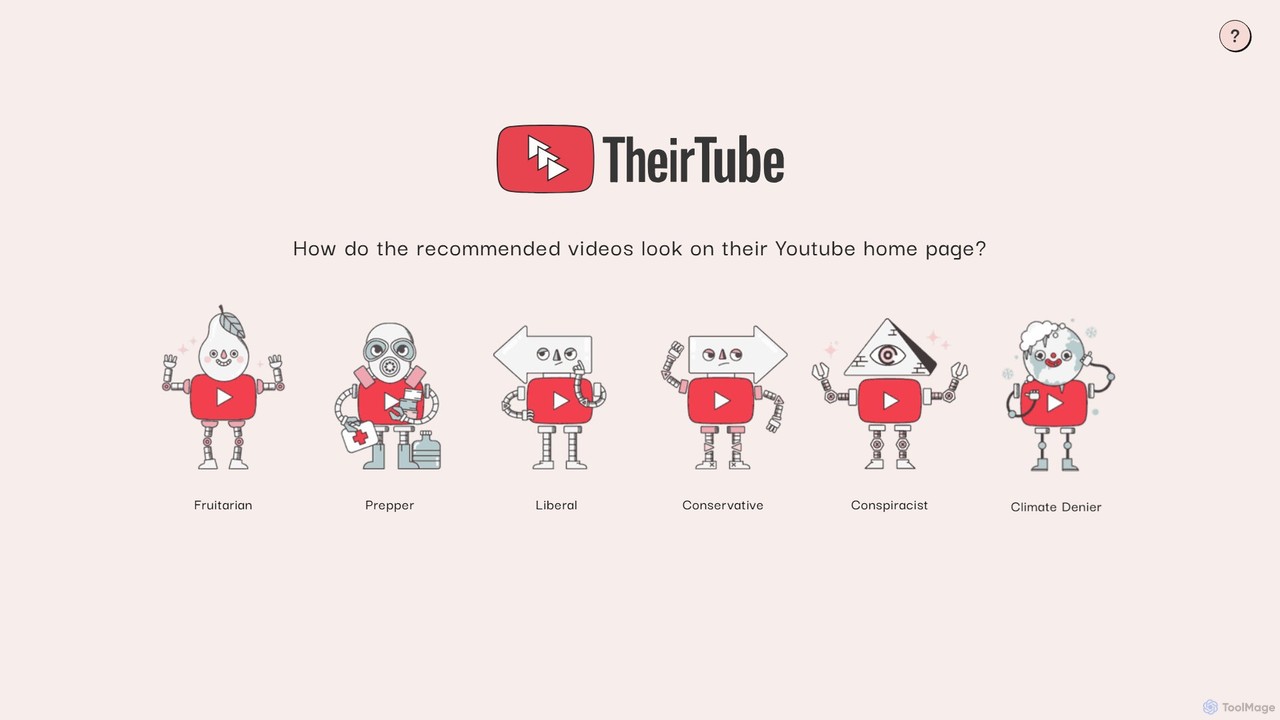
TheirTube is an educational tool that simulates YouTube's homepage to reveal how algorithmic filter bubbles work. By selecting …
TheirTube is an educational tool that simulates YouTube's homepage to reveal how algorithmic filter bubbles work. By selecting different user personas like 'Conservative' or 'Climate Denier,' you can see the specific video recommendations they would receive, offering a powerful insight into online echo chambers and media polarization.
About Politics
AI tools for Politics are specialized artificial intelligence applications designed to analyze, predict, and manage various aspects of the political landscape. These tools leverage advanced technologies like natural language processing, sentiment analysis, and predictive modeling to process vast amounts of political data. They provide invaluable insights for political campaigns, government agencies, and public policy research, enabling data-driven decision-making and more effective civic engagement within the broader societal context.
Core Features
- Public Opinion & Sentiment Analysis: Tracks and analyzes public sentiment across social media, news, and other platforms to gauge voter mood and issue perception.
- Predictive Election Modeling: Uses historical data and real-time trends to forecast election outcomes and voter behavior.
- Policy Impact Simulation: Models the potential effects of proposed policies on different demographics and economic sectors.
- Campaign Management Automation: Automates tasks such as targeted messaging, donor outreach, and volunteer coordination.
- Disinformation Detection: Identifies and flags misleading or false information circulating online to maintain informational integrity.
Applicable Scenarios
These tools are crucial for political campaigns optimizing voter outreach and messaging, government bodies seeking to understand public sentiment on new policies, and think tanks conducting in-depth policy research. They also assist media organizations in analyzing political discourse and identifying emerging trends.
How to Choose
When selecting AI tools for Politics, prioritize data accuracy and the transparency of algorithms to mitigate bias. Consider the tool's compliance with data privacy regulations, its integration capabilities with existing systems, and its scalability to handle varying data volumes. Ethical considerations regarding data usage and potential for manipulation are paramount.
PoliticsUse Cases
Optimize Political Campaign Strategy
Political campaign managers utilize AI tools to analyze vast datasets of voter demographics, past voting behaviors, and social media interactions. By identifying key voter segments and predicting their responses to specific messages, AI helps tailor communication strategies, allocate resources efficiently, and optimize outreach efforts, leading to more impactful and targeted campaigns.
Monitor Public Opinion and Sentiment in Real-time
Government agencies and political analysts employ AI tools to continuously monitor public discourse across news outlets, social media platforms, and forums. These tools perform sentiment analysis to gauge public mood on specific policies or events, identifying emerging trends, potential crises, or areas requiring immediate attention, enabling proactive communication and policy adjustments.
Analyze Policy Impact and Legislative Documents
Policy researchers and legislative aides use AI to rapidly analyze complex policy proposals, legal texts, and legislative documents. AI can identify key clauses, potential loopholes, and predict the socio-economic impact of new laws on various demographics, significantly accelerating the research phase and informing more robust policy formulation.
Combat Disinformation and Misinformation
Fact-checking organizations and electoral bodies deploy AI tools to detect and flag disinformation campaigns during critical political periods. These tools use natural language processing and pattern recognition to identify fake news, deepfakes, and coordinated propaganda efforts across digital platforms, helping to preserve the integrity of public discourse and democratic processes.
Automate Constituent Communication and Engagement
Political offices and representatives leverage AI-powered chatbots and virtual assistants to manage high volumes of constituent inquiries. These tools can provide instant answers to common questions about policies, services, or events, direct complex issues to appropriate staff, and personalize communication, significantly improving responsiveness and citizen engagement without overwhelming human resources.
Predict Voter Behavior and Election Outcomes
Political scientists and data strategists use AI's predictive modeling capabilities to forecast voter turnout, analyze demographic shifts, and estimate election results with greater accuracy. By processing historical election data, polling results, and real-time social indicators, these tools provide crucial insights for strategic planning and resource allocation during electoral cycles.