Software Development Best in category 1 results Version Control AI Tool

Popular AI tools in the Version Control field of Software Development include GitusAI, etc., helping you quickly improve efficiency.

GitusAI

GitusAI

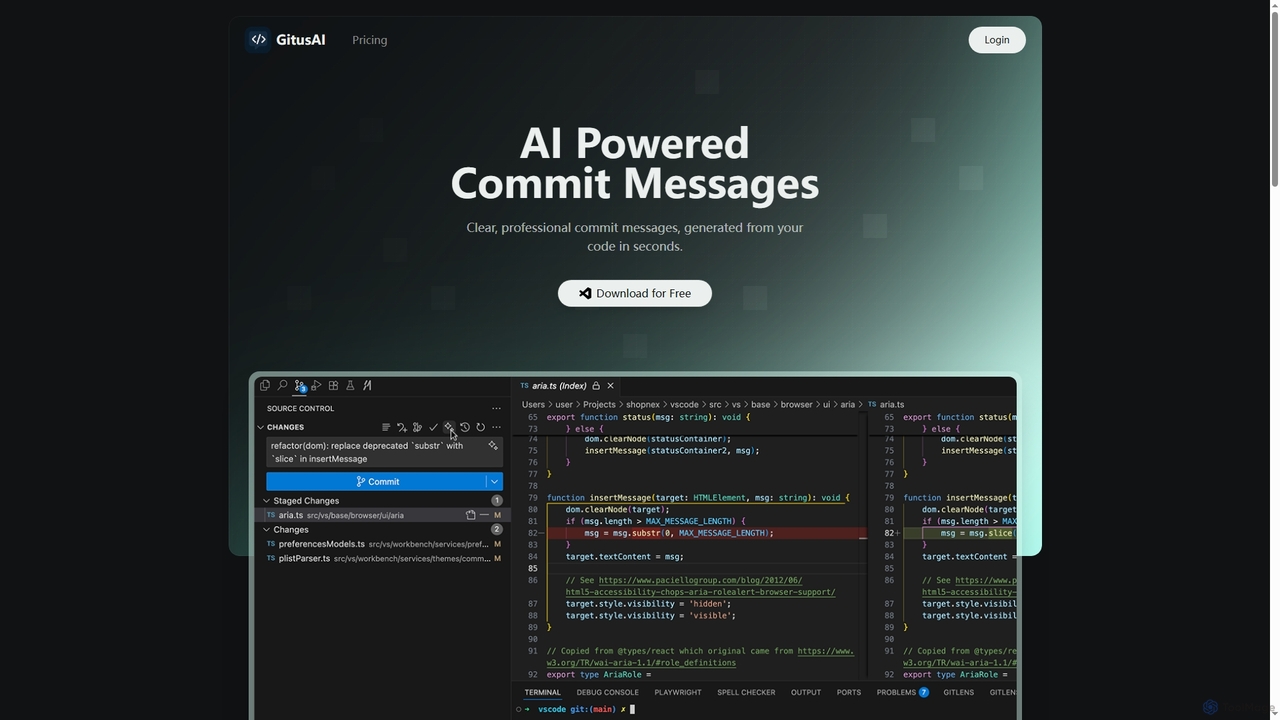
GitusAI is an AI-powered VS Code extension that automates the generation of clear, professional commit messages from your …

2.2K

About Version Control

Version Control systems are essential tools within software development that track and manage changes to files, especially source code, over time. These systems record every modification, allowing developers to revert to previous versions, compare changes, and identify who made specific alterations. By providing a comprehensive history of a project's evolution, version control ensures code integrity, facilitates seamless collaboration among development teams, and supports parallel development efforts without conflicts.

Core Features

  • Change Tracking: Records every modification made to files, including who, what, and when, providing a detailed audit trail.
  • Version History: Maintains a complete chronological record of all project versions, enabling easy retrieval and comparison of past states.
  • Branching & Merging: Allows developers to work on separate features or fixes concurrently in isolated branches and integrate their changes later.
  • Collaboration: Centralizes code repositories, making it easy for multiple team members to contribute, synchronize work, and share updates efficiently.
  • Conflict Resolution: Provides tools and mechanisms to identify and resolve discrepancies when merging different versions of files or code.

Applicable Scenarios

Version control is indispensable for any project involving code or critical documents that undergo frequent changes and require team collaboration. It's widely used by software development teams for managing source code, by data scientists for tracking model iterations and experimental code, and by content creators for managing document revisions in a structured and auditable manner.

How to Choose

When selecting a version control system, consider factors like the project's scale, team size, preferred workflow (e.g., centralized vs. distributed), and integration with existing development tools. Evaluate features such as ease of branching and merging, conflict resolution capabilities, performance with large files, and hosting options (on-premise vs. cloud-based) to find the best fit for your specific needs and technical requirements.

Version ControlUse Cases

1

Managing Collaborative Software Projects

Software development teams use version control to allow multiple developers to work simultaneously on the same codebase. Each developer can commit their changes independently, and the system helps integrate these contributions, preventing overwrites and ensuring a consistent project state. This streamlines teamwork, accelerates development cycles, and maintains code integrity across the team.

2

Implementing Feature Development Branches

Developers create separate branches for new features, experimental work, or bug fixes, isolating changes from the main production code. This allows for iterative development and testing without impacting the stable version. Once a feature is complete and thoroughly tested, it can be seamlessly merged back into the main branch, maintaining code stability and enabling continuous integration.

3

Tracking & Reverting Code Changes

For critical projects, version control provides an immutable history of every code modification. If a new change introduces bugs or breaks functionality, developers can quickly identify the problematic commit and revert to a stable previous version. This capability is crucial for disaster recovery, maintaining application reliability, and ensuring a quick response to unforeseen issues.

4

Facilitating Code Reviews and Audits

Version control systems enable structured code reviews by highlighting specific changes made between versions. Team leads or peers can easily review proposed modifications, provide feedback, and ensure code quality and adherence to standards before integration. This also serves as an invaluable audit trail for compliance requirements and historical analysis of project development.

5

Versioning Infrastructure as Code (IaC)

DevOps teams leverage version control to manage infrastructure configurations as code. This includes server settings, network configurations, and deployment scripts. Treating infrastructure definitions like application code allows for consistent, repeatable deployments, easy rollbacks, and collaborative management of IT environments, significantly reducing manual errors and improving operational efficiency.

6

Managing Content & Documentation Revisions

Beyond source code, version control is highly valuable for managing changes in technical documentation, user manuals, website content, or legal documents. Writers and editors can track every revision, compare different drafts, and collaborate on documents, ensuring accuracy, providing a clear history of content evolution, and facilitating compliance with regulatory requirements.

Version ControlFrequently Asked Questions