Speech Processing Best in category 1 results Voice Assistant AI Tool

Popular AI tools in the Voice Assistant field of Speech Processing include Locally AI, etc., helping you quickly improve efficiency.

Locally AI

Locally AI

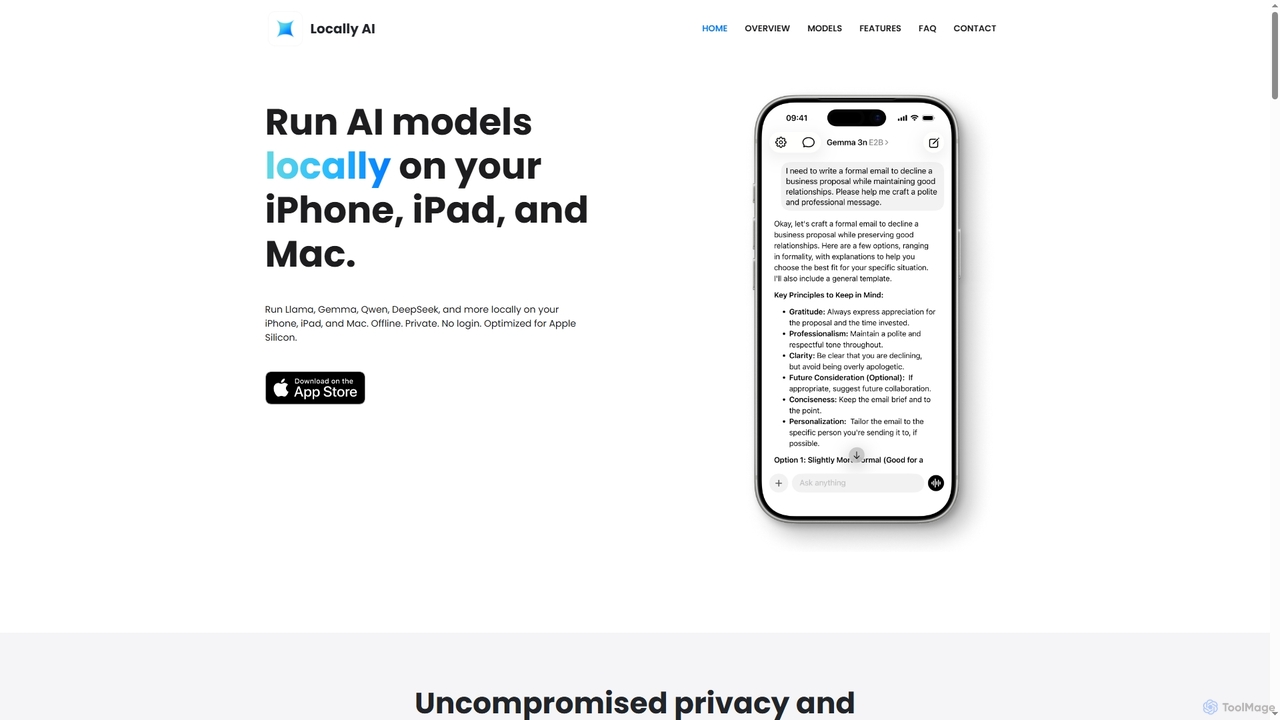
Locally AI enables users to run powerful AI models directly on their iPhone, iPad, and Mac devices. It …

62.1K

About Voice Assistant

Voice Assistants are AI-powered tools that enable users to interact with devices and services using natural spoken language. Leveraging advanced speech recognition and natural language processing (NLP) within the broader field of Speech Processing, these assistants can understand commands, answer questions, and perform tasks hands-free. They offer a convenient and intuitive interface for accessing information, controlling smart devices, and streamlining daily routines across various platforms.

Core Features

  • Natural Language Understanding (NLU): Interprets user intent and context from spoken queries.
  • Speech Recognition (ASR): Converts spoken words into text for processing.
  • Command Execution: Performs actions like setting alarms, playing music, or sending messages.
  • Contextual Awareness: Maintains continuity in multi-turn conversations and remembers past interactions.
  • Integration with Services: Connects with third-party apps and smart home ecosystems for extended functionality.

Use Cases

Voice assistants are widely adopted in smart homes for controlling lighting, thermostats, and entertainment systems. In automotive settings, they provide hands-free navigation, media control, and communication. Businesses utilize them for automating customer service inquiries, directing calls, and providing instant information, enhancing user experience and operational efficiency.

How to Choose

When selecting a voice assistant, consider its accuracy in understanding diverse accents and languages, its integration capabilities with your existing devices and services, and the range of tasks it can perform. Evaluate privacy policies regarding data collection and storage, and assess customization options for wake words or personalized responses to ensure it meets your specific needs and preferences.

Voice AssistantUse Cases

1

Smart Home Device Control

For homeowners, voice assistants simplify managing smart devices. Users can verbally command their assistant to adjust thermostat settings, turn lights on or off, lock doors, or play specific music tracks across different rooms, all without needing to physically interact with switches or apps. This enhances convenience and creates a more integrated living environment, especially for those with mobility challenges.

2

Hands-Free Navigation in Vehicles

Drivers can utilize voice assistants for safer, hands-free operation while on the road. By simply speaking, they can get real-time navigation directions, make calls, send messages, control in-car entertainment, or check traffic updates without diverting their attention from driving. This significantly improves road safety and reduces distractions, making journeys more efficient and enjoyable.

3

Automated Customer Service & Support

Businesses deploy voice assistants to enhance their customer service operations. These assistants can handle a high volume of routine inquiries, provide instant answers to FAQs, guide users through troubleshooting steps, or direct complex issues to human agents. This reduces call wait times, improves customer satisfaction, and allows human agents to focus on more intricate problems, optimizing resource allocation.

4

Personal Productivity & Scheduling

Individuals leverage voice assistants to manage their daily schedules and boost productivity. Users can verbally set reminders, create calendar events, add items to shopping lists, or dictate notes and emails on the go. This allows for efficient task management and information capture, freeing up hands and mental focus for other activities, whether at home or in a professional setting.

5

Accessibility for Users with Disabilities

Voice assistants play a crucial role in making technology more accessible. For individuals with visual impairments, motor disabilities, or other challenges, voice commands offer an alternative and often primary method of interaction with computers, smartphones, and smart home devices. They can read out screen content, control applications, and perform web searches, fostering greater independence.

6

Information Retrieval & Quick Answers

Users frequently turn to voice assistants for immediate access to information. Whether it's checking the weather forecast, asking for sports scores, converting units, or looking up factual data, these assistants can quickly process queries and provide concise, relevant answers from vast databases. This instant information retrieval saves time and offers a convenient way to satisfy curiosity or get quick facts.

Voice AssistantFrequently Asked Questions