Surveys Best in category 1 results Polling AI Tool

Popular AI tools in the Polling field of Surveys include Indie Polls, etc., helping you quickly improve efficiency.

Indie Polls

Indie Polls

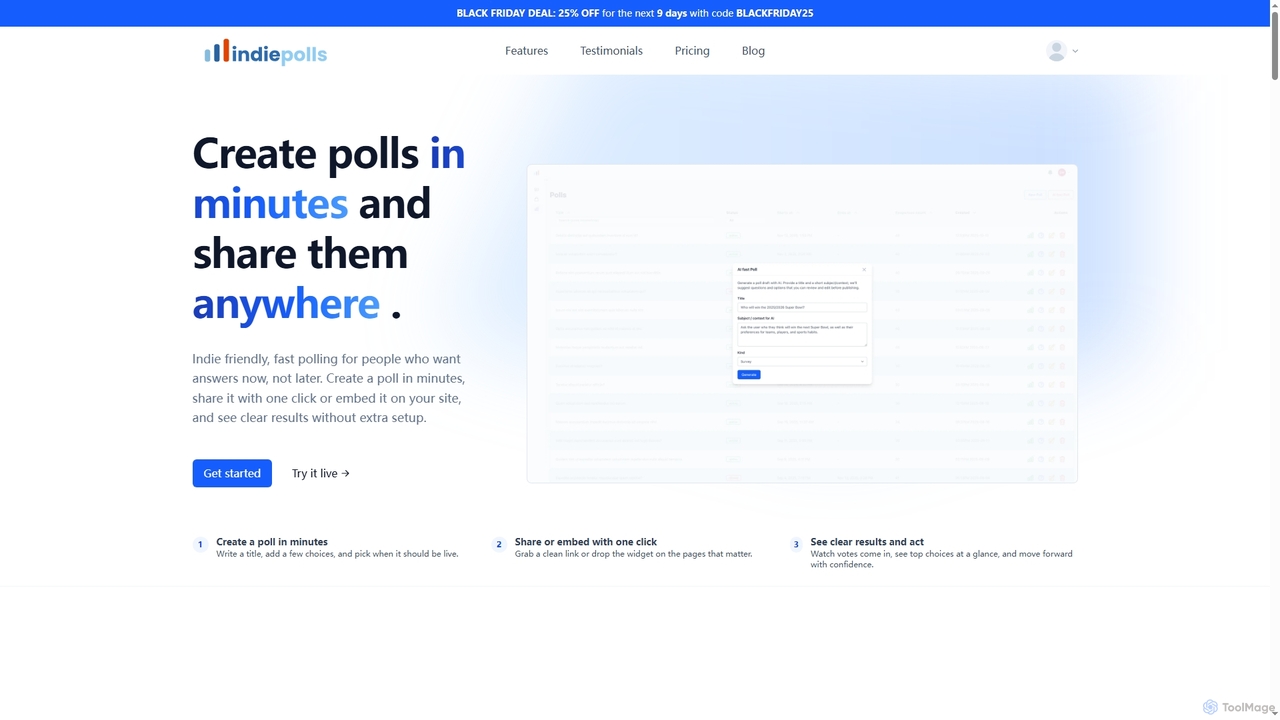
Indie Polls is a fast, lightweight, and privacy-friendly online polling tool designed for indie hackers, product teams, and …

2.6K

About Polling

Polling tools are AI-powered platforms designed for rapidly gathering opinions and data from a target audience through structured questions, often with predefined answer choices. These tools leverage AI to streamline question generation, analyze responses in real-time, and provide immediate insights for decision-making. They are invaluable for capturing instant feedback, assessing preferences, and fostering interactive engagement in various settings, serving as a focused subset within broader survey methodologies.

Core Features

  • Instant Feedback Collection: Gathers responses in real-time, allowing for immediate data visualization and analysis.
  • Automated Question Generation: AI assists in crafting relevant and unbiased polling questions based on specified topics.
  • Audience Segmentation: Filters and analyzes poll results based on demographic or behavioral criteria for targeted insights.
  • Interactive Presentation Modes: Displays live poll results dynamically during presentations, webinars, or events.
  • Bias Detection & Mitigation: AI algorithms identify potential biases in question phrasing or response patterns to ensure fairness.

Applicable Scenarios

Polling tools are widely used in live events, educational settings, and marketing campaigns. For instance, event organizers use them to gauge audience sentiment during a conference, educators employ them for quick comprehension checks in classrooms, and marketers utilize them to test product preferences or ad copy effectiveness in real-time.

How to Choose

When selecting a polling tool, consider its real-time analytics capabilities, ease of integration with presentation software, and the range of question types supported. Evaluate its audience engagement features, such as live result displays and anonymity options, along with its scalability for different audience sizes and data security protocols.

PollingUse Cases

1

Real-time Audience Engagement in Live Events

Event organizers or presenters use AI polling tools to instantly gauge audience sentiment, preferences, or understanding during conferences, webinars, or workshops. By posing questions like 'Which topic should we discuss next?' or 'How do you feel about this new feature?', they collect immediate feedback, making sessions more interactive and tailoring content on the fly to keep attendees engaged and informed, leading to higher satisfaction rates.

2

Quick Decision-Making in Team Meetings

Project managers and team leaders leverage AI polling tools to make rapid, democratic decisions during internal meetings. Instead of lengthy discussions, a quick poll on 'Which strategy should we pursue?' or 'What's the priority for this task?' allows team members to vote anonymously or openly. This streamlines the decision-making process, ensures collective buy-in, and saves valuable meeting time, leading to more efficient project execution.

3

Market Research for Product Preferences

Marketing professionals and product developers use AI polling tools to quickly gather consumer preferences for new products, features, or branding concepts. By launching targeted polls to specific demographics, they can ask questions like 'Which design do you prefer?' or 'What's your favorite color for this product?'. This provides rapid, actionable insights into market demand, reducing the risk of launching unpopular products and optimizing development cycles.

4

Educational Assessment and Feedback

Educators and trainers utilize AI polling tools for instant classroom assessments and to gather student feedback. A teacher might ask 'What is the main concept of today's lesson?' or 'How clear was the explanation?' to quickly check comprehension or identify areas needing more attention. This real-time data helps adjust teaching methods, clarify doubts, and ensure effective learning, improving educational outcomes for students.

5

Content Preference for Publishers and Creators

Content creators, bloggers, and publishers use AI polling tools to understand their audience's content preferences and guide future content strategy. By asking 'Which topic would you like us to cover next?' or 'What format do you prefer for our articles?', they gather direct input. This ensures that new content resonates with the audience, increases engagement, and builds a loyal readership by consistently delivering what users want to see.

6

Employee Feedback for Internal Communications

HR departments and internal communications teams deploy AI polling tools to gather quick, anonymous feedback from employees on various workplace topics. Questions like 'How satisfied are you with the new remote work policy?' or 'Which team-building activity do you prefer?' help assess employee morale, identify pain points, and inform policy adjustments. This fosters a more responsive and employee-centric work environment, improving overall satisfaction and retention.

PollingFrequently Asked Questions