
Systems Best in category 1 results Distributed Systems AI Tool

Popular AI tools in the Distributed Systems field of Systems include DevBlogs, etc., helping you quickly improve efficiency.

DevBlogs

DevBlogs

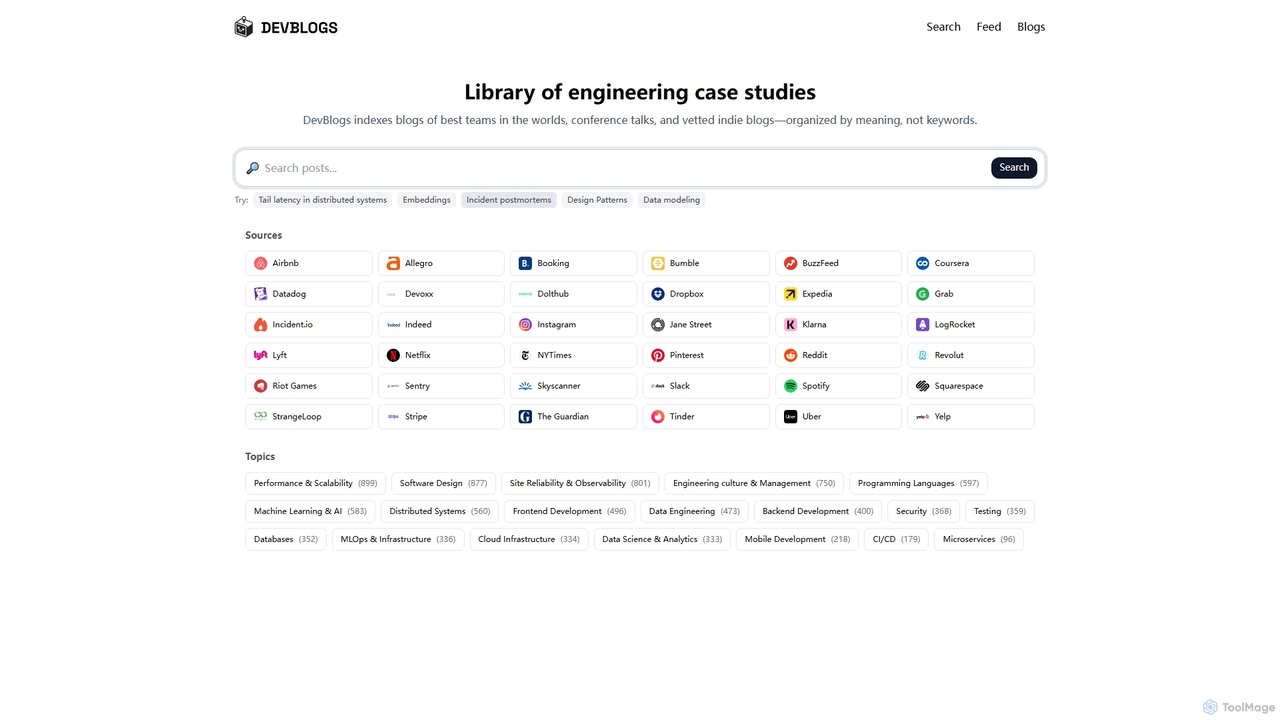
DevBlogs is a curated library indexing engineering case studies, tech blogs, and conference talks from leading global teams. …

2.2K

About Distributed Systems

Distributed Systems are a collection of independent computing elements that work together as a single, coherent system. These systems leverage networked computers to enhance scalability, fault tolerance, and performance beyond what a single machine can offer. They are fundamental for modern applications requiring high availability and the ability to handle massive workloads, representing a key architectural approach within the broader "Systems" category.

Core Features

  • Scalability: Distribute workloads across multiple nodes to handle increased demand seamlessly.
  • Fault Tolerance: Maintain system operation and data integrity even if individual components fail.
  • Concurrency Management: Efficiently manage simultaneous operations and resource access across distributed nodes.
  • Data Consistency: Implement strategies to ensure data remains accurate and synchronized across the network.
  • Service Discovery & Orchestration: Automatically locate and manage services, simplifying deployment and scaling.

Applicable Scenarios

Distributed systems are crucial for large-scale web services, e-commerce platforms, and social media applications that demand high availability and can serve millions of users concurrently. They are also essential for big data processing pipelines, real-time analytics, and IoT platforms that ingest and process vast amounts of data from numerous sources.

How to Choose

When selecting or designing a distributed system, consider your specific scalability and fault tolerance requirements. Evaluate the desired data consistency model (e.g., strong vs. eventual consistency) and the complexity of managing distributed transactions. Assess the integration needs with existing infrastructure and the operational overhead, including monitoring, debugging, and deployment strategies.

Distributed SystemsUse Cases

1

Building High-Concurrency E-commerce Platforms

E-commerce businesses need to handle millions of concurrent users, process orders, manage product catalogs, and ensure payment security. Distributed systems allow these platforms to scale dynamically, distribute traffic across multiple servers, and maintain high availability during peak sales events, preventing downtime and ensuring a smooth customer experience even under extreme load.

2

Real-time Big Data Analytics and Processing

Organizations dealing with vast streams of data from sensors, user interactions, or financial markets require real-time processing capabilities. Distributed systems enable the ingestion, transformation, and analysis of petabytes of data across clusters of machines, facilitating immediate insights for fraud detection, personalized recommendations, or operational monitoring, far exceeding the capacity of a single server.

3

Microservices Architecture Deployment and Management

For complex applications, breaking down monolithic services into smaller, independent microservices improves development agility and maintainability. Distributed systems provide the underlying infrastructure for deploying, orchestrating, and managing these microservices, allowing teams to develop and deploy features independently, scale specific services as needed, and isolate failures to prevent cascading impacts across the entire application.

4

Internet of Things (IoT) Device Data Aggregation

IoT platforms collect data from millions of geographically dispersed devices, requiring robust systems to ingest, store, and process this continuous data flow. Distributed systems offer the necessary scalability and fault tolerance to handle massive data volumes and high ingress rates, ensuring that data from smart devices, industrial sensors, or connected vehicles is reliably collected and made available for analysis and action.

5

Global Content Delivery Networks (CDNs)

To deliver web content (images, videos, static files) quickly to users worldwide, CDNs rely on distributed systems. By caching content on servers located closer to end-users, these systems minimize latency and improve loading times. This global distribution enhances user experience, reduces the load on origin servers, and provides resilience against regional network outages, ensuring content availability.

6

High Availability for Financial Trading Systems

Financial institutions require systems that can process transactions with extremely low latency and zero downtime. Distributed systems are critical for building fault-tolerant trading platforms that can continue operating even if some servers fail. They ensure data consistency across replicated databases and provide rapid failover mechanisms, safeguarding critical financial operations and preventing significant losses due.

Distributed SystemsFrequently Asked Questions