Talent Acquisition Best in category 1 results Candidate Screening AI Tool

Popular AI tools in the Candidate Screening field of Talent Acquisition include EasyHire, etc., helping you quickly improve efficiency.

EasyHire

EasyHire

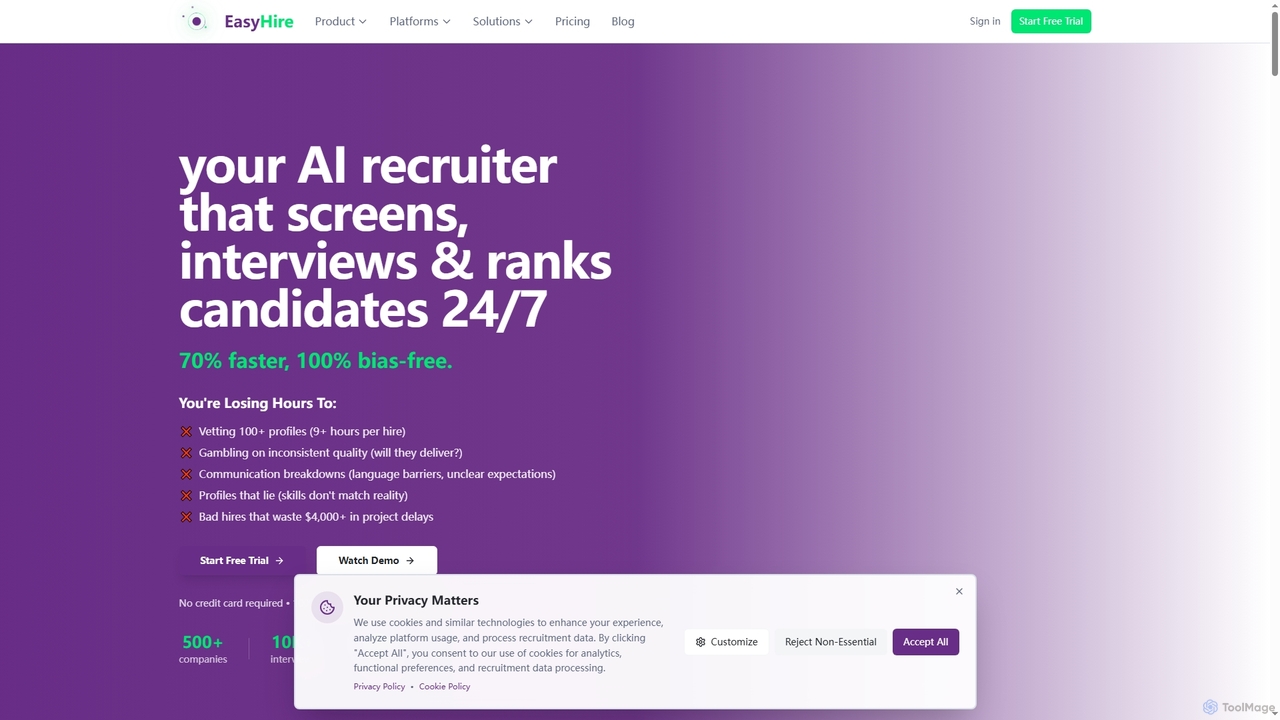
EasyHire is an AI-powered hiring platform designed to streamline recruitment by automating CV screening and candidate interviews. It …

2.8K

About Candidate Screening

Candidate Screening tools are AI-powered solutions designed to automate and enhance the initial evaluation of job applicants. These platforms leverage advanced natural language processing (NLP), machine learning, and sometimes computer vision to analyze resumes, cover letters, video interviews, and assessment results. Their primary goal is to efficiently identify the most qualified candidates, reduce manual workload for recruiters, and ensure a more objective and consistent screening process. By quickly sifting through large volumes of applications, they help talent acquisition teams focus on high-potential individuals, accelerating time-to-hire and improving recruitment quality.

Core Features

  • Resume Parsing: Automatically extracts and structures key information from resumes, such as skills, experience, and education.
  • Skill Matching: Compares candidate skills and qualifications against job requirements to identify best fits.
  • Behavioral Analysis: Evaluates candidate responses in video interviews or assessments for traits relevant to job success.
  • Bias Detection: Identifies and helps mitigate potential biases in application materials or screening processes.
  • Automated Communication: Sends personalized updates or scheduling requests to candidates based on their screening status.

Applicable Scenarios

Candidate Screening tools are essential for organizations facing high application volumes, such as large enterprises, fast-growing startups, and recruitment agencies. They are particularly valuable for roles requiring specific technical skills or where cultural fit is crucial. Recruiters and HR managers use these tools to streamline the initial review phase, ensuring no qualified candidate is overlooked due to manual oversight, and to free up time for more strategic engagement.

How to Choose

When selecting a Candidate Screening tool, consider its integration capabilities with existing ATS/HRIS systems, the accuracy and customization of its AI algorithms for your specific job roles, and its commitment to ethical AI and bias mitigation. Evaluate the types of data it can process (e.g., text, video, audio), its reporting features for transparency, and the scalability to handle fluctuating application volumes. User-friendliness and support for multiple languages are also important factors.

Candidate ScreeningUse Cases

1

Automating Initial Resume Review for High-Volume Roles

For large enterprises or recruitment agencies hiring for entry-level or high-volume positions (e.g., customer service, sales), AI candidate screening tools can automatically parse thousands of resumes. Recruiters define key skills and experience, and the AI ranks candidates, filtering out unqualified applicants and highlighting top matches, significantly reducing the manual review time from days to hours and ensuring a consistent evaluation process.

2

Identifying Best-Fit Candidates for Specialized Technical Roles

Tech companies or engineering departments often struggle to find candidates with precise technical skill sets. AI screening tools can analyze GitHub profiles, project portfolios, and technical assessment results alongside resumes. This allows hiring managers to quickly identify individuals with specific programming languages, frameworks, or domain expertise, ensuring a stronger technical match beyond keyword searches.

3

Enhancing Objectivity and Reducing Bias in Early-Stage Screening

HR departments committed to diversity and inclusion can leverage AI screening to minimize unconscious bias. These tools can be configured to focus solely on skills and experience, anonymizing demographic data or identifying potentially biased language in job descriptions and resumes. This helps create a more equitable shortlisting process, ensuring candidates are judged on merit rather than background.

4

Streamlining Video Interview Analysis for Behavioral Insights

Companies using one-way video interviews for early-stage assessment can employ AI screening to analyze candidate responses. The AI can evaluate communication patterns, sentiment, and keyword usage to identify behavioral traits relevant to the job role, such as problem-solving skills or teamwork aptitude. This provides recruiters with deeper insights than traditional resume reviews, without requiring extensive manual video playback.

5

Pre-screening Candidates for Cultural Fit and Values Alignment

For organizations where cultural fit is paramount, AI screening tools can incorporate custom assessments or analyze open-ended responses to gauge alignment with company values. By identifying candidates whose responses reflect desired traits like collaboration, innovation, or customer-centricity, HR teams can prioritize individuals who are more likely to thrive within the organizational culture, reducing turnover.

6

Accelerating Candidate Communication and Engagement

Recruitment teams can use AI screening tools to automate personalized communication with applicants throughout the screening process. Based on their qualification status, candidates can receive automated emails regarding next steps, assessment invitations, or polite rejection notices. This improves the candidate experience by providing timely updates and frees up recruiters to focus on engaging top-tier talent directly.

Candidate ScreeningFrequently Asked Questions