ToolMage
Sign in

Best 1 Employee Development AI tools for Talent Management

Popular Employee Development AI tools in Talent Management include Cuvera, helping you work more efficiently.

Cuvera

Cuvera

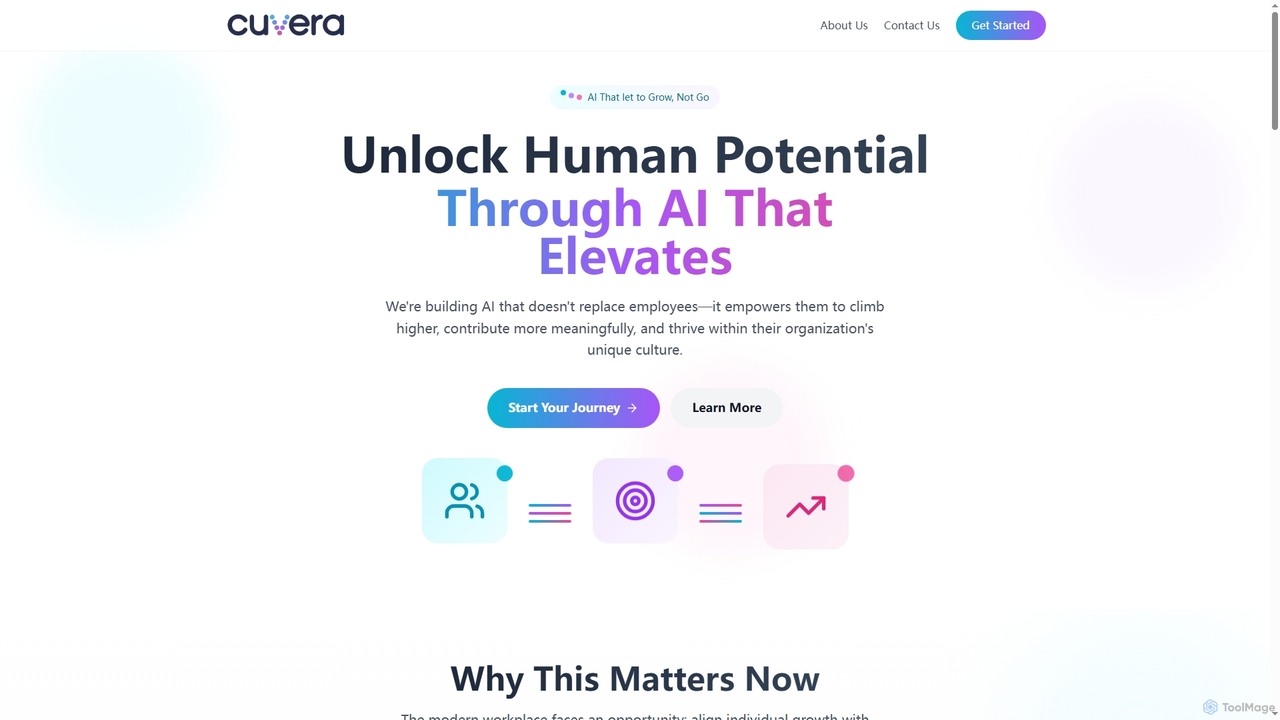
Cuvera is an AI-powered platform designed to unlock human potential within organizations by aligning individual employee growth with company objectives. It fosters a culture of continuous development, meaningful contributions, and enhanced retention, empowering employees rather than replacing them.

Performance Management
Visits 5.4KFavorites 108Likes 115

About Employee Development

Employee Development AI tools are a category of artificial intelligence solutions designed to enhance the skills, knowledge, and career growth of an organization's workforce. These tools leverage machine learning, natural language processing, and data analytics to offer personalized learning experiences, identify skill gaps, and provide targeted training recommendations. They empower employees to take ownership of their professional journey, fostering a culture of continuous learning and aligning individual growth with strategic business objectives within the broader Talent Management framework.

Core Features

  • Personalized Learning Paths: AI algorithms create tailored educational journeys based on individual roles, skills, and career aspirations.
  • Skill Gap Analysis: Automatically identifies discrepancies between current employee skills and future organizational needs.
  • AI-Powered Coaching & Feedback: Provides real-time, constructive suggestions and guidance for performance improvement.
  • Content Recommendation Engine: Suggests relevant courses, articles, and resources to support specific development goals.
  • Career Path Planning: Helps employees visualize potential career trajectories and the skills necessary to achieve them.

Use Cases

These tools are invaluable for HR departments, Learning & Development specialists, and team managers seeking to cultivate a highly skilled and engaged workforce. They are used for upskilling existing employees, reskilling for new roles, leadership development programs, and fostering a proactive learning environment across various industries.

How to Choose

When selecting an Employee Development AI tool, consider its integration capabilities with existing HRIS, the depth and breadth of its content library, the customization options for learning paths, the robustness of its analytics and reporting features, and its user-friendliness for both employees and administrators. Evaluate how well it aligns with your organization's specific development goals and budget.

Employee Development use cases

1

Creating Personalized Upskilling Programs

An L&D manager in a tech company uses an AI employee development tool to design bespoke upskilling programs for software engineers. By analyzing each engineer's current skill set, project performance, and desired career trajectory, the AI recommends specific courses, certifications, and mentorship opportunities. This ensures relevant and engaging learning, leading to a 20% improvement in project delivery efficiency and reduced skill obsolescence.

2

Automating Skill Gap Identification for Teams

A department head in a marketing agency needs to identify collective skill gaps within their creative team to prepare for new digital trends. The AI tool integrates with performance reviews and project data, automatically pinpointing areas where the team lacks proficiency, such as advanced video editing or SEO analytics. This allows the head to allocate training budgets effectively, ensuring the team remains competitive and agile, saving weeks of manual assessment.

3

Providing AI-Driven Performance Coaching

Sales representatives in a large enterprise utilize an AI coaching feature to refine their pitching and negotiation skills. After each client interaction, the AI analyzes call transcripts or recorded simulations, providing immediate, objective feedback on communication style, objection handling, and product knowledge. This continuous, private coaching helps reps quickly identify weaknesses and practice improvements, leading to a 15% increase in conversion rates.

4

Generating On-Demand Training Content

A training specialist at a manufacturing firm needs to rapidly create new safety training modules for updated machinery. The AI employee development platform can generate initial drafts of training materials, quizzes, and interactive simulations based on technical specifications and safety guidelines. This significantly reduces content creation time by 50%, allowing for quicker deployment of critical training and ensuring workforce compliance and safety.

5

Facilitating Employee Career Path Exploration

Employees at a financial services company use the AI tool to explore potential internal career paths. By inputting their current role, skills, and interests, the AI suggests various advancement opportunities within the organization, outlining the required skills, experience, and recommended learning resources for each path. This proactive career guidance boosts internal mobility and retention, reducing external recruitment costs by fostering internal talent.

6

Enhancing Leadership Development Programs

HR leaders implement AI tools to augment their leadership development initiatives. The AI analyzes feedback from 360-degree reviews and team performance data to identify specific leadership competencies that need improvement for individual managers. It then curates personalized development plans, including recommended workshops, articles, and peer coaching suggestions, leading to more effective and impactful leadership within the organization.

Employee Development FAQ

What are AI Employee Development tools?

AI Employee Development tools are software solutions that use artificial intelligence to optimize and personalize employee learning and growth within an organization. They leverage technologies like machine learning and natural language processing to analyze individual performance, identify skill gaps, recommend tailored training, and facilitate career progression. Their core purpose is to foster a skilled, engaged, and adaptable workforce.

How do AI tools personalize employee learning?

AI tools personalize learning by analyzing vast amounts of data, including an employee's current skills, job role, performance reviews, career aspirations, and even learning preferences. Based on this analysis, AI algorithms can dynamically generate unique learning paths, recommend specific courses or modules, and suggest relevant content that directly addresses individual development needs and goals, making learning highly relevant and engaging.

What are the key benefits of using AI for employee development?

The key benefits include increased personalization of learning, which leads to higher engagement and retention of knowledge. AI tools can efficiently identify and address skill gaps at scale, automate administrative tasks for L&D teams, and provide objective, continuous feedback and coaching. This results in a more skilled, adaptable, and motivated workforce, ultimately boosting productivity and reducing employee turnover.

How do AI Employee Development tools differ from traditional HRIS training modules?

Traditional HRIS training modules typically offer a static catalog of courses and basic tracking. AI Employee Development tools, however, are dynamic and adaptive. They use AI to personalize content delivery, recommend learning based on individual needs, provide intelligent coaching, and offer predictive analytics on skill trends. This makes them far more proactive, engaging, and effective in fostering continuous growth compared to conventional systems.

What should I consider when choosing an AI Employee Development platform?

When selecting a platform, consider its ability to integrate with your existing HR systems, the quality and breadth of its learning content library, the level of personalization it offers, and its analytics capabilities for tracking progress and ROI. Also, evaluate its user experience for both employees and administrators, scalability for your organization's size, and the vendor's support and security protocols. Ensure it aligns with your specific development goals.