
ToolMage
Sign in

Best 1 Skill Development AI tools for Talent Management

Popular Skill Development AI tools in Talent Management include Axell, helping you work more efficiently.

Axell
Paid

Axell

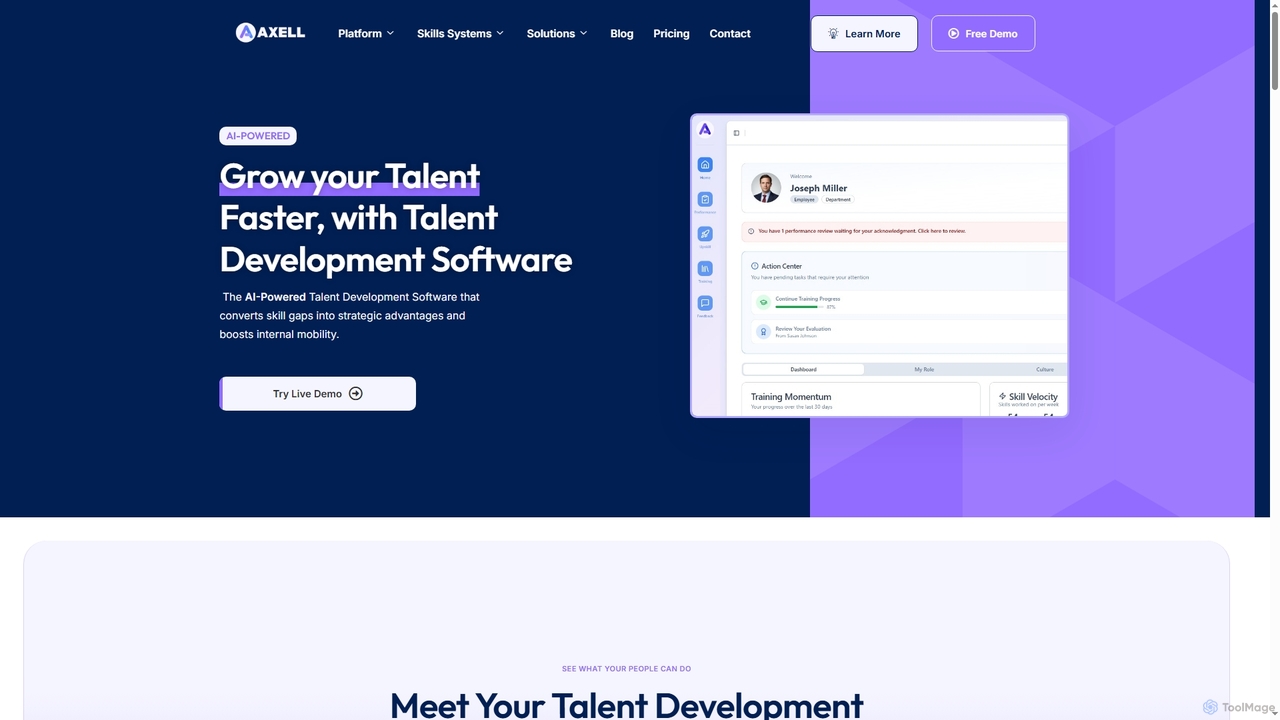
Axell is an AI-powered talent development software designed to transform skill gaps into strategic advantages. It automates performance reviews, personalizes training, and clarifies career paths, significantly boosting internal mobility and aligning talent strategy with business objectives.

Performance Management
Visits 4.8KFavorites 95Likes 108

About Skill Development

Skill Development AI tools are platforms that leverage artificial intelligence to personalize and optimize the learning and growth of individuals and teams. These tools analyze existing skills, identify gaps, and recommend tailored learning paths, content, and training modules. They empower users to acquire new competencies, enhance existing ones, and stay competitive in a rapidly evolving professional landscape, contributing significantly to overall talent management strategies.

Core Features

  • Personalized Learning Paths: AI algorithms create customized educational journeys based on individual skill levels, career goals, and learning styles.
  • Skill Gap Analysis: Automatically identifies discrepancies between current skills and required competencies for specific roles or future aspirations.
  • Adaptive Content Delivery: Adjusts the difficulty and type of learning materials in real-time based on user performance and engagement.
  • Intelligent Mentoring & Feedback: Provides AI-driven coaching, practice exercises, and immediate, constructive feedback to accelerate learning.
  • Progress Tracking & Reporting: Monitors learning progress, skill acquisition, and overall development, offering insights for individuals and organizations.

Applicable Scenarios

Professionals seeking career advancement use these tools to identify necessary skills for promotion and access targeted training. Companies implement them to upskill their workforce in new technologies like AI or data science, ensuring their teams remain relevant. Educational institutions can offer personalized supplementary learning experiences to students.

How to Choose

Evaluate the breadth and depth of skill coverage relevant to your needs, the personalization capabilities and adaptability of the learning paths, the quality and format of the learning content, and the integration options with existing HR or learning management systems. Consider the user experience, reporting features, and pricing model.

Skill Development use cases

1

Upskilling Employees in New Technologies

A tech company uses an AI skill development platform to train its engineering team on emerging programming languages and cloud platforms. The tool assesses each engineer's current knowledge, recommends specific courses and projects, and tracks their progress, ensuring the team stays at the forefront of innovation and maintains a competitive edge in the market.

2

Personalized Career Pathing for Individuals

An individual professional utilizes an AI tool to map out their career progression. The tool analyzes their current resume, identifies desired future roles, and suggests specific skills to acquire, along with recommended online courses, certifications, and practical projects to achieve their goals, providing a clear and actionable roadmap for advancement.

3

Onboarding New Hires with Tailored Training

A large enterprise integrates an AI skill development solution into its onboarding process. New employees receive customized training modules based on their role, department, and prior experience, accelerating their time to productivity and ensuring a consistent understanding of company procedures and culture, leading to faster integration and higher retention rates.

4

Identifying & Closing Skill Gaps for Teams

A project manager employs an AI platform to assess the collective skill set of their team against project requirements. The tool highlights critical skill gaps, recommends targeted training for specific team members, and helps allocate resources effectively to ensure project success and optimize team performance, preventing potential bottlenecks.

5

Adaptive Language Learning for Global Teams

A multinational corporation uses an AI-powered language learning tool to help its diverse workforce improve communication skills. The tool adapts lessons to individual proficiency levels, provides real-time pronunciation feedback, and simulates business conversations, fostering better cross-cultural collaboration and enhancing overall global team effectiveness.

6

Developing Leadership Competencies

HR departments leverage AI skill development tools to cultivate leadership qualities among high-potential employees. The platform offers interactive simulations, case studies, and personalized coaching modules focused on strategic thinking, decision-making, and team management, preparing them for future leadership roles and ensuring a strong internal talent pipeline.

Skill Development FAQ

What are AI Skill Development tools?

AI Skill Development tools are software platforms that use artificial intelligence to analyze, personalize, and deliver learning experiences aimed at improving an individual's or team's competencies. They move beyond traditional e-learning by offering adaptive content, intelligent recommendations, and real-time feedback to accelerate skill acquisition and professional growth, making learning more efficient and engaging.

How do AI Skill Development tools personalize learning?

These tools personalize learning by first assessing a user's current skills, knowledge, and learning style through various evaluations and data analysis. AI algorithms then create a unique learning path, recommending specific courses, modules, and resources tailored to their identified skill gaps, career goals, and preferred pace, ensuring highly relevant and effective training that adapts as the user progresses.

What's the difference between AI Skill Development and traditional e-learning platforms?

Traditional e-learning platforms typically offer a fixed curriculum or a library of courses that users navigate independently. AI Skill Development tools, however, are dynamic and adaptive. They use AI to personalize content, provide intelligent feedback, identify skill gaps automatically, and adjust the learning journey in real-time based on user performance, making the process significantly more efficient, engaging, and tailored to individual needs compared to static e-learning.

Who benefits most from using AI Skill Development tools?

Both individuals and organizations benefit significantly. Individuals can accelerate career growth, acquire in-demand skills, and stay competitive in the job market. Organizations can efficiently upskill and reskill their workforce, identify and close critical skill gaps, improve employee retention, and foster a culture of continuous learning, directly impacting talent management and overall business performance.

What key features should I look for in an AI Skill Development tool?

When choosing an AI Skill Development tool, prioritize features like robust skill gap analysis, truly personalized learning path generation, adaptive content delivery, and interactive practice environments. Also, look for comprehensive progress tracking and reporting, integration capabilities with existing HR or LMS systems, a high-quality and relevant content library, and strong AI-driven feedback mechanisms to ensure a holistic and effective learning experience.