ToolMage
Sign in

Best 3 Testing AI tools

Popular Testing AI tools include BrowserBook, Cogsmith, and Browserman, helping you work more efficiently.

BrowserBook
Freemium

BrowserBook

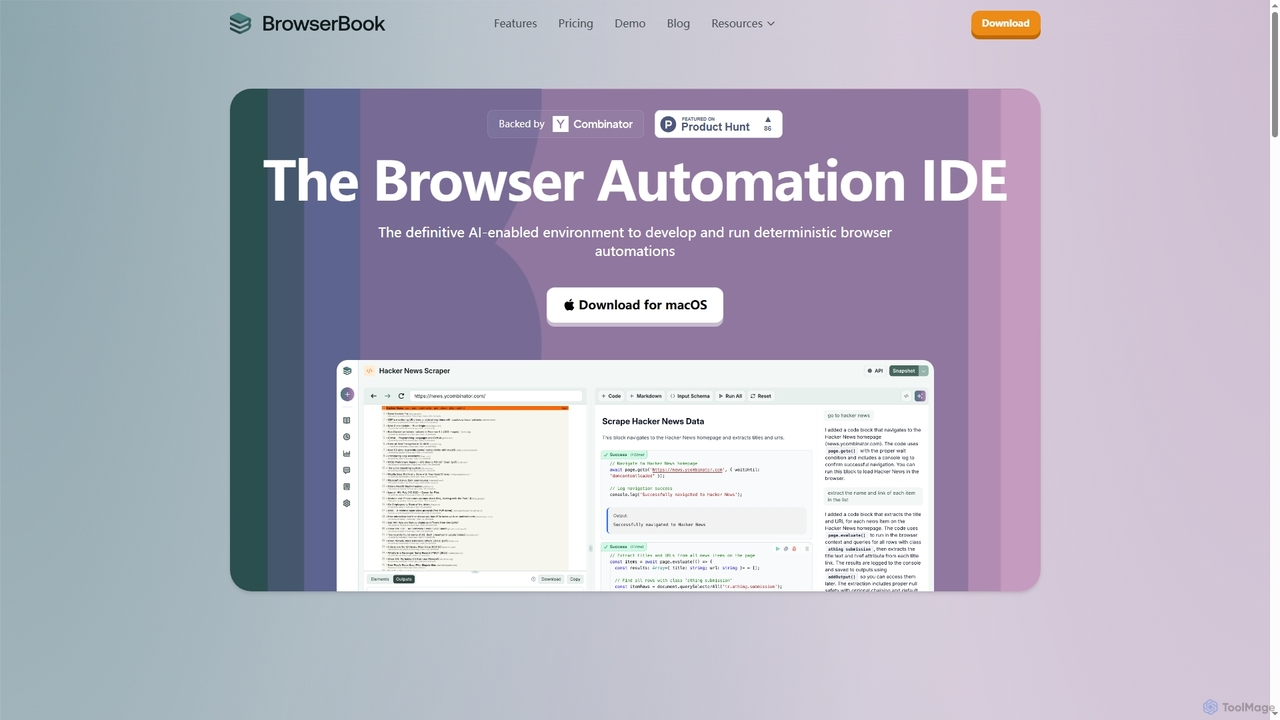
BrowserBook is an AI-powered integrated development environment (IDE) designed for building, deploying, and scaling deterministic browser automations. It simplifies complex web automation tasks, offering speed, stability, and cost savings by combining AI code generation with reliable scripted execution. Ideal for AI agents, web scraping, UI testing, and industry-specific workflows in healthcare and finance.

Ai Agent Development
Visits 4KFavorites 54Likes 66
Cogsmith
Paid

Cogsmith

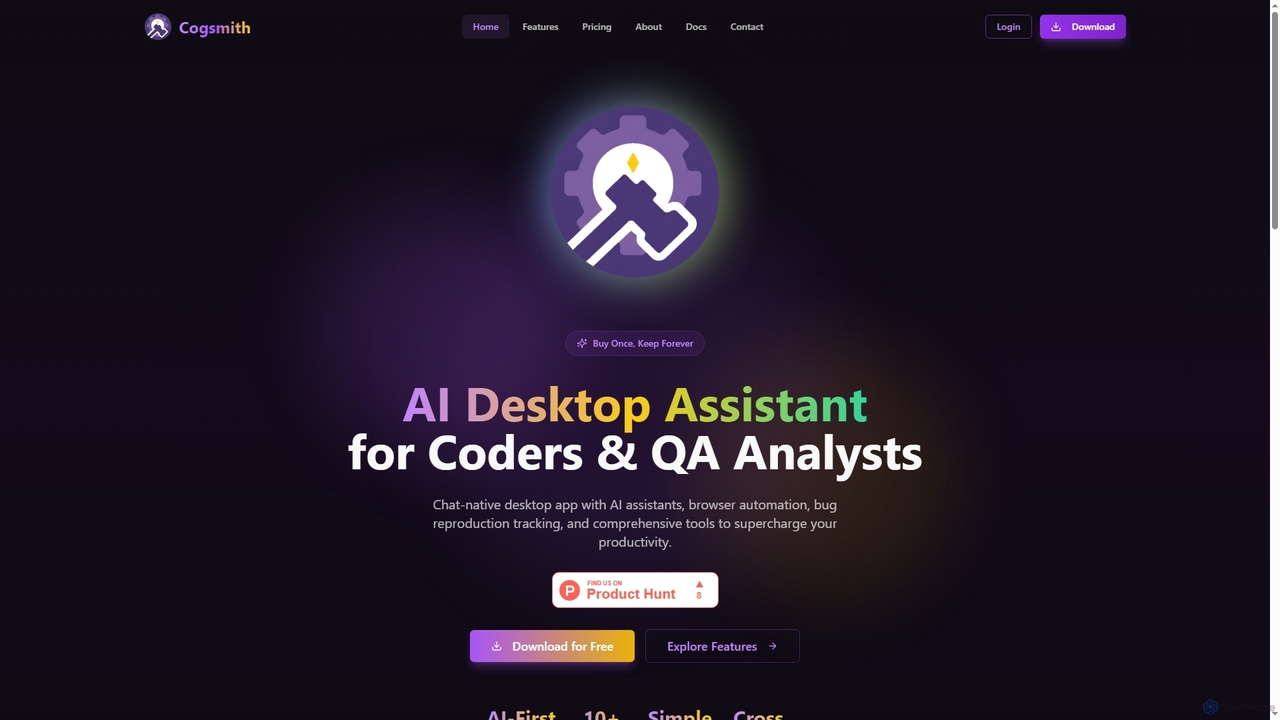
An AI-first desktop assistant for developers and QA analysts, featuring a chat interface, browser automation, bug reproduction tracking, and a suite of pre-configured tools to enhance productivity with a 'buy once, keep forever' model.

Code Assistant
Visits 3.5KFavorites 86Likes 81

About Testing

Testing are AI-powered tools that revolutionize the software quality assurance process by automating and enhancing various testing activities. These tools leverage machine learning, natural language processing, and computer vision to generate test cases, identify defects, predict potential failures, and optimize test execution. They empower development teams and QA engineers to accelerate release cycles, improve software reliability, and ensure a superior user experience across applications and platforms.

Core Features

  • Intelligent Test Case Generation: Automatically creates comprehensive test scenarios and data based on requirements, code changes, or user behavior.
  • Predictive Defect Identification: Uses AI to analyze historical data and code patterns to predict and pinpoint potential defects early in the development cycle.
  • Automated UI/UX Testing: Employs computer vision and machine learning to autonomously navigate, interact with, and validate user interfaces across devices.
  • Performance Bottleneck Detection: Analyzes application performance data to proactively identify and diagnose performance issues and scalability limits.
  • Self-Healing Tests: Automatically adapts test scripts to minor UI changes, reducing maintenance overhead for automated tests.

Use Cases

AI testing tools are indispensable for software development teams, QA departments, and DevOps engineers aiming to streamline their quality assurance processes. They are particularly valuable in agile environments requiring rapid feedback and continuous integration/delivery (CI/CD) pipelines. These tools help ensure the robustness of web applications, mobile apps, APIs, and complex enterprise systems by providing intelligent automation and insights.

How to Choose

When selecting an AI testing tool, consider its compatibility with your existing tech stack and CI/CD pipeline, the breadth of its testing capabilities (e.g., functional, performance, security), its ability to integrate with other tools (e.g., bug trackers, project management), and the level of AI sophistication for features like self-healing or predictive analytics. Evaluate the learning curve, vendor support, and pricing model to ensure it aligns with your team's needs and budget.

Featured tool rankings

Testing use cases

1

Automating Regression Testing Cycles

For large software projects with frequent updates, QA teams use AI testing tools to automatically execute extensive regression test suites. The AI identifies relevant test cases based on code changes, runs them across various environments, and reports any regressions, significantly reducing manual effort and ensuring new features don't break existing functionality.

2

Generating Test Data for Complex Scenarios

Data engineers and testers often struggle to create realistic and diverse test data for edge cases or performance testing. AI testing tools can analyze existing data patterns or system requirements to intelligently generate synthetic test data, including sensitive information, ensuring comprehensive test coverage without compromising privacy.

3

Predicting Software Defects in Early Stages

Development teams integrate AI testing tools into their CI/CD pipelines to proactively identify potential defects. By analyzing code commits, historical bug data, and static analysis results, the AI predicts areas prone to errors, allowing developers to address vulnerabilities and bugs before they escalate, saving significant rework time.

4

Cross-Browser and Cross-Device UI Validation

Front-end developers and UI/UX designers leverage AI-powered visual testing tools to ensure consistent user interface and experience across numerous browsers, operating systems, and device types. The AI automatically compares screenshots, detects visual discrepancies, and flags layout issues that human eyes might miss, ensuring pixel-perfect rendering.

5

Optimizing Test Suite Execution and Prioritization

In large test suites, running all tests can be time-consuming. DevOps and QA leads use AI to analyze code changes and test execution history to prioritize and select the most impactful tests to run. This intelligent prioritization reduces overall test execution time, provides faster feedback, and optimizes resource utilization in CI/CD pipelines.

6

Enhancing API Testing with Intelligent Assertions

Backend developers and API testers utilize AI testing tools to go beyond basic API endpoint validation. The AI can learn expected response patterns, automatically generate complex assertions for data validation, and detect anomalies in API behavior, ensuring the robustness and reliability of microservices and backend systems under various load conditions.

Testing FAQ

What are AI Testing Tools?

AI testing tools are software applications that integrate artificial intelligence and machine learning capabilities to automate, optimize, and enhance various aspects of the software testing process. They go beyond traditional automation by offering features like intelligent test case generation, predictive analytics for defect identification, and self-healing test scripts, aiming to improve efficiency and accuracy in quality assurance.

How do AI Testing Tools differ from Traditional Test Automation?

Traditional test automation relies on predefined scripts and rules, requiring manual updates for UI changes or new features. AI testing tools, however, use machine learning to adapt to changes, learn from past executions, and make intelligent decisions. They can generate test cases, predict defects, and self-heal scripts, offering greater flexibility, reduced maintenance, and deeper insights compared to rigid traditional automation.

What are the main benefits of using AI in Software Testing?

The main benefits include accelerated test cycles, improved test coverage, early defect detection, reduced manual effort, and enhanced software quality. AI tools can handle complex scenarios, adapt to dynamic environments, and provide predictive insights, leading to faster releases, lower costs, and more reliable applications. They free up QA engineers to focus on exploratory testing and complex problem-solving.

Who primarily uses AI Testing Tools?

AI testing tools are primarily used by software development teams, Quality Assurance (QA) engineers, DevOps professionals, and product managers. Developers leverage them for unit and integration testing, QA teams for functional, regression, and performance testing, and DevOps for continuous testing in CI/CD pipelines. Product managers benefit from faster feedback loops and higher quality releases.

What should I look for when choosing an AI Testing Tool?

When choosing an AI testing tool, prioritize features like intelligent test generation, self-healing capabilities, integration with your existing development ecosystem (CI/CD, bug trackers), support for your target platforms (web, mobile, API), and robust reporting/analytics. Also, consider the vendor's reputation, community support, scalability, and pricing model to ensure it meets your specific project requirements and budget.