Sentiance
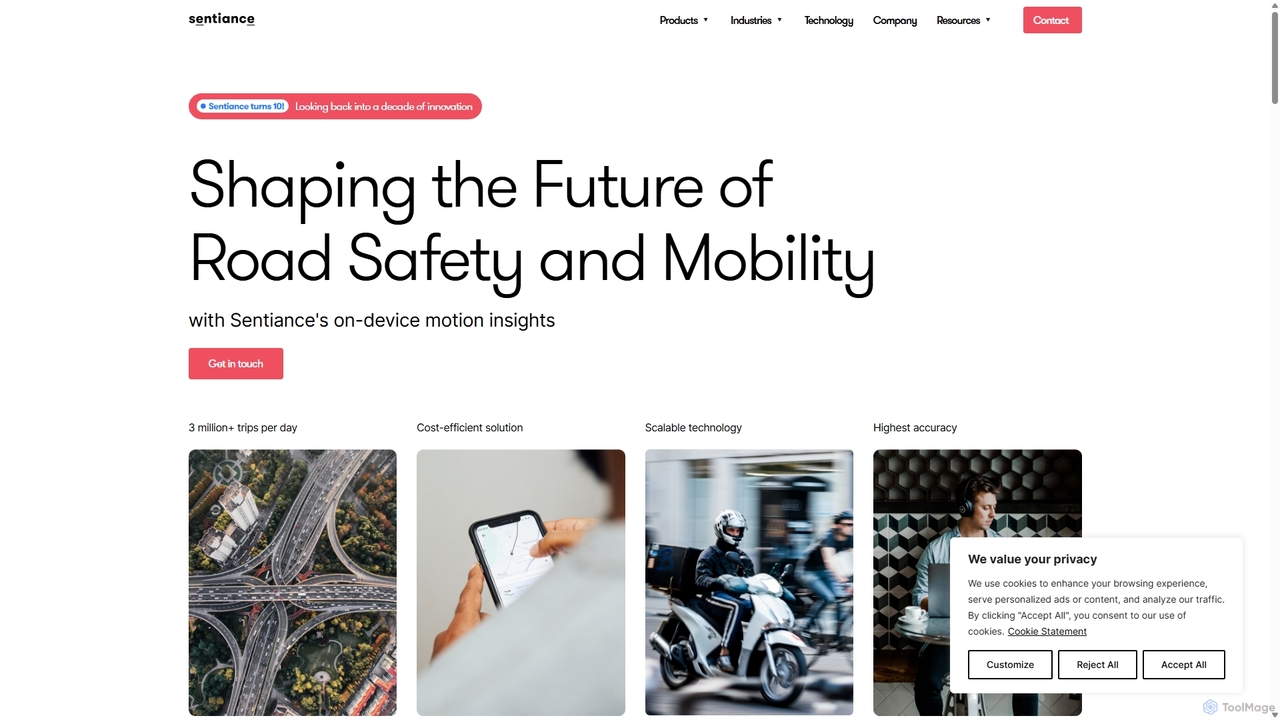
Sentiance is a leader in motion insights, utilizing on-device AI to analyze smartphone sensor data. It provides deep …
Sentiance is a leader in motion insights, utilizing on-device AI to analyze smartphone sensor data. It provides deep understanding of driver behavior, mobility patterns, and lifestyle profiles to enhance road safety, power usage-based insurance, and enable smarter mobility solutions for various industries.
About Telematics
Telematics are AI-powered tools that integrate telecommunications and informatics to provide advanced vehicle services. These systems leverage GPS, onboard diagnostics (OBD), and wireless communication to collect, transmit, and analyze vehicle data in real-time. Their primary value lies in enhancing vehicle safety, operational efficiency, and connectivity across various transportation applications, from personal cars to large commercial fleets.
Core Features
- Vehicle Tracking & Monitoring: Real-time location, speed, and route history for individual vehicles or entire fleets.
- Fleet Management Optimization: Tools for route planning, fuel consumption analysis, and driver behavior monitoring to improve operational efficiency.
- Remote Diagnostics & Maintenance: Proactive alerts on vehicle health, engine performance, and predictive maintenance scheduling.
- Emergency & Roadside Assistance: Automatic crash notification (eCall) and immediate dispatch of assistance based on vehicle location.
- Usage-Based Insurance (UBI) Support: Data collection on driving habits to enable personalized insurance premiums and risk assessment.
Applicable Scenarios
Telematics tools are crucial for logistics companies optimizing delivery routes and monitoring driver safety. They also empower insurance providers to offer fair, data-driven premiums based on actual driving behavior. Furthermore, individuals benefit from enhanced vehicle security and emergency response capabilities.
How to Choose
When selecting a Telematics solution, consider the specific data points you need (e.g., GPS, engine diagnostics, driver behavior), the scalability for your fleet size, and its integration capabilities with existing management systems. Evaluate the reporting features, real-time alert options, and the provider's data security protocols to ensure comprehensive and reliable service.

TelematicsUse Cases
Commercial Fleet Route Optimization
Logistics managers use telematics to track delivery vehicles, analyze traffic patterns, and dynamically adjust routes, reducing fuel costs and delivery times by up to 15%. This ensures timely deliveries and maximizes operational efficiency across the entire fleet.
Enhancing Driver Safety & Training
Fleet operators monitor driving behaviors like harsh braking or speeding using telematics data, providing targeted feedback and training programs that can decrease accident rates by 20%. This proactive approach fosters safer driving habits and reduces insurance claims.
Predictive Maintenance for Heavy Equipment
Construction companies deploy telematics on excavators and bulldozers to monitor engine hours and performance, scheduling maintenance proactively to avoid costly breakdowns and extend equipment lifespan. This minimizes downtime and optimizes asset utilization in demanding environments.
Personal Vehicle Theft Recovery
Car owners utilize telematics for GPS tracking, enabling law enforcement to quickly locate and recover stolen vehicles, significantly increasing recovery rates. This feature provides peace of mind and acts as a strong deterrent against vehicle theft.
Usage-Based Insurance Premium Calculation
Insurance companies collect anonymized driving data (mileage, speed, time of day) via telematics to offer personalized, fair premiums, rewarding safe drivers with lower costs. This data-driven approach promotes safer driving and allows for more accurate risk assessment.
Optimizing Public Transportation Schedules
City transport authorities analyze aggregated telematics data from buses to understand route efficiency, passenger flow, and punctuality, leading to improved service reliability and reduced wait times. This helps enhance the overall urban mobility experience for commuters.