
ToolMage
Sign in

Best 1 Marketing Automation AI tools for Travel

Popular Marketing Automation AI tools in Travel include Travai.co, helping you work more efficiently.

Travai.co
Freemium

Travai.co

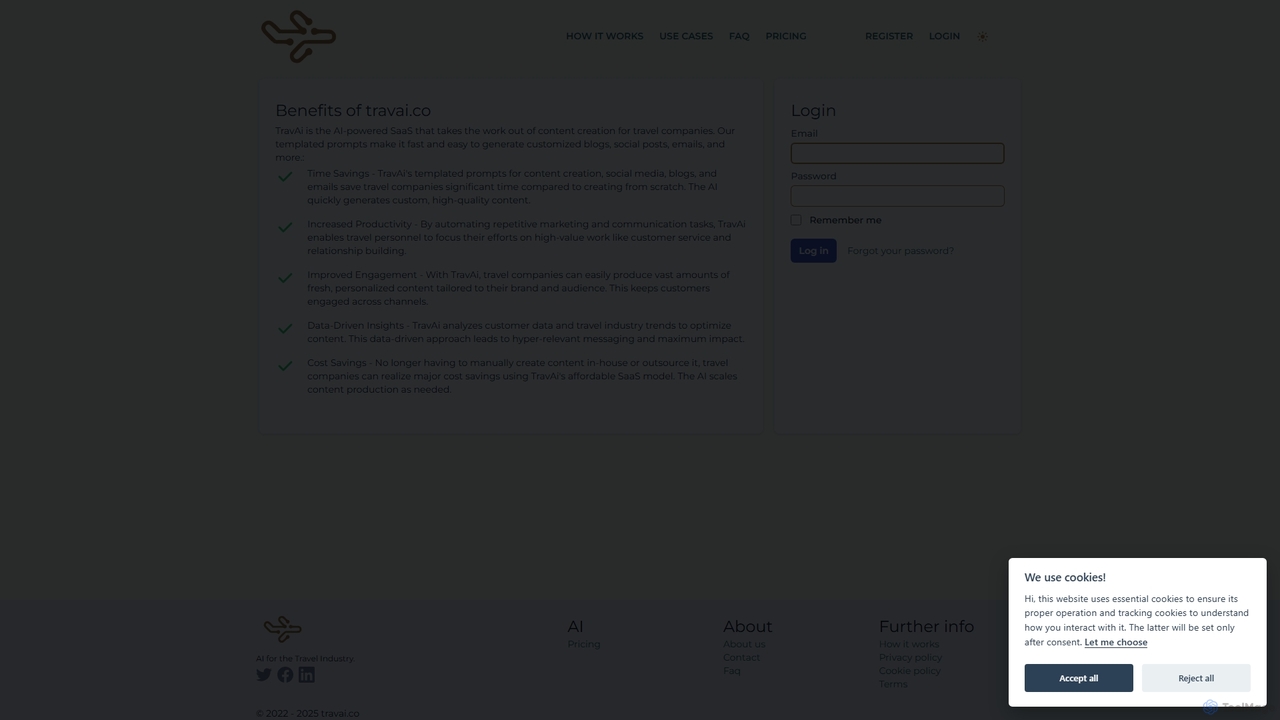
Travai.co is an AI-powered SaaS platform designed specifically for the travel industry. It streamlines content creation for travel companies, enabling them to easily generate customized blogs, social media posts, emails, and marketing copy using templated prompts and a generative AI co-pilot. This saves time, increases productivity, and enhances customer engagement.

Content Creation
Visits 6KFavorites 138Likes 137

About Marketing Automation

Marketing Automation tools for travel are specialized AI platforms designed to automate personalized communication and marketing campaigns throughout the traveler's journey. These tools leverage AI to analyze customer data, such as search history and past bookings, to deliver timely and relevant messages. They are crucial for increasing direct bookings, enhancing guest experiences, and building customer loyalty in the competitive travel industry. By automating repetitive tasks, they allow travel businesses to focus on strategy and service.

Core Features

  • Traveler Journey Automation: Create automated workflows triggered by specific travel-related actions like booking, check-in, or trip completion.
  • AI-Powered Segmentation: Group travelers based on behavior, preferences (e.g., luxury vs. budget), and booking history for hyper-targeted campaigns.
  • Dynamic Content Personalization: Automatically insert personalized travel recommendations, destination info, or pricing into emails and messages.
  • Multi-Channel Communication: Engage travelers across various platforms, including email, SMS, push notifications, and social media, with consistent messaging.
  • Booking & Ancillary Upsell Triggers: Automate offers for room upgrades, tours, or travel insurance based on the initial booking details.

Use Cases

These tools are essential for travel agencies, hotels, airlines, online travel agencies (OTAs), and tour operators. For instance, a hotel can automate pre-arrival emails with local guides and post-stay feedback requests. An airline can send automated alerts for price drops on monitored flights or promotions for frequent flyers' favorite destinations.

How to Choose

When selecting a tool, prioritize its integration capabilities with your existing Property Management System (PMS), Global Distribution System (GDS), or CRM. Evaluate the sophistication of its segmentation and personalization features. Also, consider the range of supported communication channels and the quality of its analytics for tracking campaign ROI and booking conversions.

Marketing Automation use cases

1

Automate Personalized Vacation Package Offers

A boutique travel agency wants to nurture leads interested in honeymoon packages. When a user browses 'Bali honeymoon packages' on their site, a marketing automation tool triggers a personalized email sequence. The first email shares a 'Top 10 Romantic Spots in Bali' guide. Two days later, a second email showcases partner hotels with exclusive honeymoon perks. Finally, a third email offers a limited-time discount for booking a complete package. This automated workflow nurtures interest without manual follow-up, significantly increasing the conversion rate for high-value travel packages.

2

Manage Pre-Arrival Communication for Hotel Guests

A hotel chain uses marketing automation to enhance the guest experience. Once a booking is confirmed, the system automatically sends a confirmation email. Seven days before arrival, it sends an email with a city guide and an offer to book airport transfers. Three days prior, another email offers a paid room upgrade. On the day of arrival, a welcome SMS is sent with the hotel's address and contact number. This proactive, automated communication stream improves guest satisfaction, reduces inquiries to the front desk, and generates ancillary revenue through upsells.

3

Send Dynamic Price Drop Alerts for Flights

An Online Travel Agency (OTA) aims to convert users who search for flights but don't book immediately. They use a marketing automation tool that tracks user searches. When a user searches for a 'New York to London' flight for specific dates, the system saves this preference. If the price for that route drops by more than 10% within the next two weeks, the tool automatically triggers an email alert to the user. This timely notification creates a sense of urgency and relevance, often leading to a direct booking that might otherwise have been lost.

4

Automate Post-Trip Feedback and Loyalty Campaigns

A tour operator wants to improve service quality and encourage repeat business. Two days after a customer completes a tour, their marketing automation platform sends an email requesting feedback via a short survey. Based on the rating, different actions are triggered. Customers who give a high rating receive a thank-you email with a 15% discount on their next tour. Those who provide a low rating are flagged for a customer service representative to follow up personally. This automates the feedback loop and personalizes loyalty incentives, fostering a stronger customer relationship.

5

Re-engage Past Cruisers with Targeted Itineraries

A cruise line uses its customer data to drive repeat bookings. Their marketing automation system segments past passengers based on the destinations they've sailed to (e.g., 'Caribbean Cruisers', 'Alaskan Adventurers'). When a new Caribbean itinerary is launched, the system automatically sends a promotional campaign exclusively to the 'Caribbean Cruisers' segment. The email content is personalized with a subject line like 'Ready for Your Next Caribbean Escape?' and highlights new ports of call. This targeted approach is far more effective than a generic blast to all past customers, resulting in higher open rates and booking conversions.

6

Nurture Corporate Travel Inquiries

A travel management company (TMC) receives inquiries for corporate travel programs. Instead of manual follow-ups, they use automation. When a lead submits an inquiry form, they are entered into a nurturing sequence. The first automated email thanks them and provides a link to a case study. A few days later, a second email details their cost-saving features. If the lead clicks a link in either email, they are scored as 'highly engaged,' and a notification is sent to a sales representative for a personal call. This process ensures that sales reps focus their time on the most qualified leads.

Marketing Automation FAQ

What is Marketing Automation for the Travel industry?

Marketing Automation for Travel refers to using specialized software to automate marketing and communication tasks throughout the entire traveler lifecycle. Unlike generic platforms, these tools are built with the travel industry in mind, featuring triggers for actions like booking confirmations, flight searches, and post-trip follow-ups. Their primary goal is to deliver personalized, timely communication to increase bookings, enhance the guest experience, and build loyalty.

How to choose a Travel Marketing Automation tool?

When selecting a tool, consider these key factors:

  • Integrations: Ensure it connects seamlessly with your core systems like your Property Management System (PMS), booking engine, or CRM.
  • Travel-Specific Features: Look for capabilities like traveler segmentation, itinerary-based triggers, and dynamic content for destinations.
  • Multi-Channel Capabilities: Check if it supports the channels your customers use, such as email, SMS, and social media messaging.
  • Analytics and Reporting: The tool should provide clear insights into campaign performance, booking attribution, and customer lifetime value.
What's the difference between general and travel-specific marketing automation?

The main difference lies in context and specialization. General marketing automation tools (like HubSpot or Mailchimp) are powerful but require extensive customization for the travel industry. Travel-specific platforms come with pre-built features tailored to the traveler's journey, such as integrations with booking engines (GDS, PMS), templates for pre-arrival emails, and triggers based on travel dates or destination searches. This specialization saves time and provides more relevant automation capabilities out of the box.

What role does AI play in Travel Marketing Automation?

AI significantly enhances travel marketing automation by enabling deeper personalization and predictive capabilities. AI algorithms can analyze vast amounts of data to:

  • Predict Traveler Behavior: Identify which customers are most likely to book a trip soon.
  • Personalize Recommendations: Suggest hotels, tours, or destinations based on a user's unique browsing and booking history.
  • Optimize Campaign Timing: Determine the best time to send an offer to an individual for maximum engagement.
  • Dynamic Pricing: Automate alerts and offers based on real-time changes in flight or hotel prices.
Who benefits from Travel Marketing Automation tools?

A wide range of businesses in the travel and hospitality sector can benefit. This includes:

  • Hotels and Resorts: To manage guest communication from booking to post-stay and upsell services.
  • Airlines: To send flight reminders, promotional fares, and loyalty program updates.
  • Online Travel Agencies (OTAs): To nurture leads, send price alerts, and promote package deals.
  • Tour Operators: To automate tour inquiries, send pre-trip information, and gather post-trip feedback.
  • Cruise Lines: To promote new itineraries to past passengers and manage booking communications.