Trust & Safety Best in category 1 results Misinformation AI Tool

Popular AI tools in the Misinformation field of Trust & Safety include Orivfy, etc., helping you quickly improve efficiency.

Orivfy

Orivfy

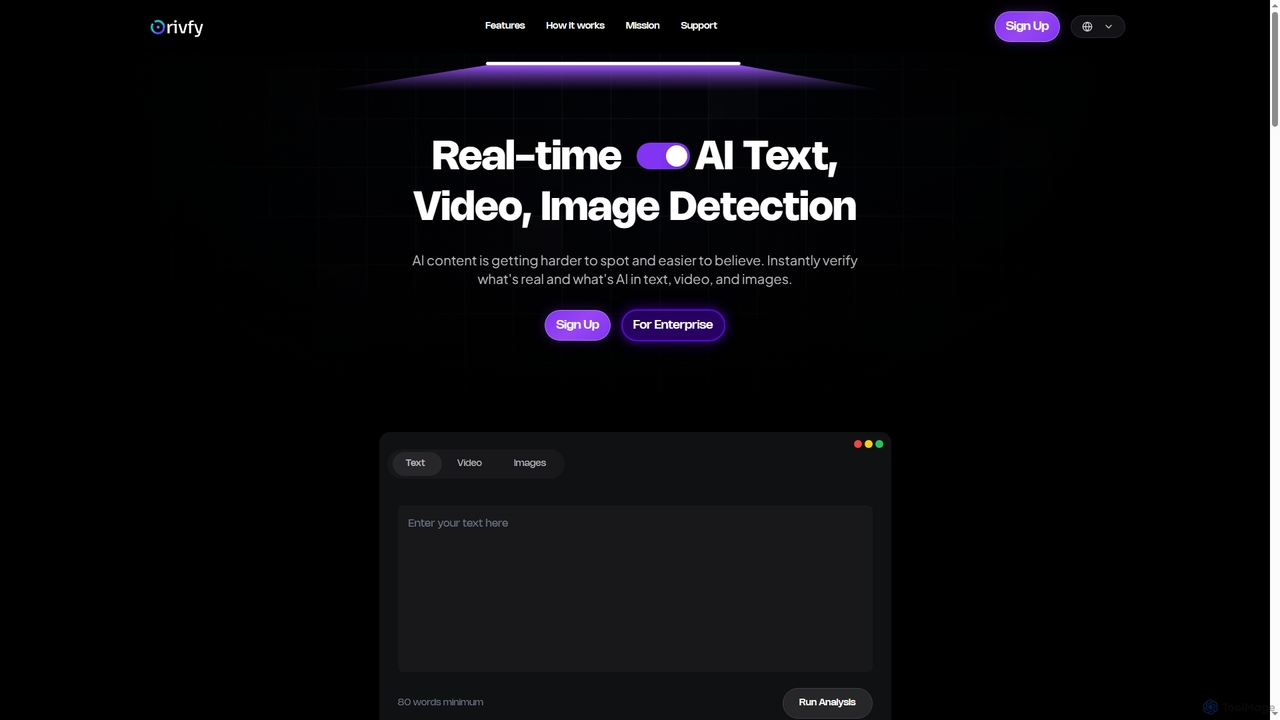
Orivfy is an advanced AI content authenticator and digital content police, designed to instantly verify whether text, video, …

3.2K

About Misinformation

Misinformation tools are AI-powered solutions designed to identify, analyze, and combat the spread of false or misleading information. Leveraging advanced algorithms like natural language processing (NLP) and machine learning, these tools can detect inconsistencies, verify sources, and uncover coordinated disinformation campaigns across various digital platforms. They play a crucial role in maintaining digital integrity, protecting public trust, and safeguarding against the harmful impacts of deceptive content.

Core Features

  • Content Verification: Authenticates text, images, and videos by cross-referencing facts and detecting manipulations.
  • Source Credibility Analysis: Evaluates the trustworthiness and historical accuracy of information sources.
  • Disinformation Campaign Detection: Identifies coordinated efforts to spread false narratives, including bot networks and propaganda.
  • Real-time Monitoring: Tracks emerging false narratives and misleading content across social media, news sites, and other online channels.
  • Deepfake Detection: Utilizes computer vision to identify AI-generated or manipulated media, such as deepfake videos and images.

Applicable Scenarios

These tools are vital for media organizations to fact-check news, for social media platforms to moderate harmful content, and for public relations teams to protect brand reputation from false claims. They also assist researchers and government agencies in understanding and countering large-scale influence operations.

How to Choose

When selecting misinformation tools, prioritize accuracy and reliability of detection algorithms, the scope of content analysis (text, image, video, cross-platform), and integration capabilities with existing workflows. Consider the granularity of reporting and analytics, as well as the tool's ability to adapt to evolving disinformation tactics.

MisinformationUse Cases

1

Detecting Fake News in Real-time

News organizations and social media managers utilize AI misinformation tools to rapidly identify and flag potentially fake news during breaking events. The tools analyze headlines, sources, and content for inconsistencies and suspicious patterns, allowing human editors to review and prevent the spread of false narratives. This ensures journalistic integrity and helps maintain public trust in critical information.

2

Verifying User-Generated Content (UGC)

Social media platforms and content moderators face the challenge of verifying vast volumes of user-generated images and videos. AI misinformation tools analyze metadata, visual cues, and contextual information to determine the authenticity of UGC, detecting deepfakes or manipulated media. This process ensures platform safety, reduces the exposure of users to harmful content, and upholds community guidelines effectively.

3

Identifying Disinformation Campaigns

Cybersecurity analysts, government agencies, and research institutions use misinformation tools to uncover coordinated efforts to spread propaganda or influence public opinion. These tools track patterns in content dissemination, account behavior, and narrative evolution across multiple platforms, exposing malicious actors and protecting democratic processes. This proactive approach helps to neutralize large-scale influence operations before they cause significant harm.

4

Protecting Brand Reputation from False Claims

Brand managers and PR teams leverage misinformation tools to monitor online mentions and protect their brand's reputation. These tools identify false claims or rumors spread by competitors or malicious actors about products or the company. By alerting teams for rapid response and providing evidence for debunking, AI tools safeguard brand image and mitigate potential financial and reputational damage effectively.

5

Automated Fact-Checking for Content Creators

Bloggers, journalists, and academic researchers can use AI misinformation tools for automated fact-checking before publishing. These tools scan drafts, cross-reference claims with reputable databases and sources, and highlight unverified or potentially false statements. This significantly improves content accuracy, builds audience trust, and streamlines the editorial process, ensuring that published material is credible and well-researched.

6

Analyzing Public Sentiment Around Controversial Topics

Policy makers, market researchers, and public opinion analysts use misinformation tools to understand how narratives evolve and are perceived online. AI tools analyze large datasets of social media posts and news articles to identify dominant narratives, detect shifts in sentiment, and pinpoint sources of misleading information. This insight informs strategic communication, helps counter harmful narratives effectively, and supports evidence-based decision-making.

MisinformationFrequently Asked Questions