Tat Ink
Tat Ink is an innovative AI-powered platform that transforms your tattoo ideas into unique, high-resolution designs in seconds. …
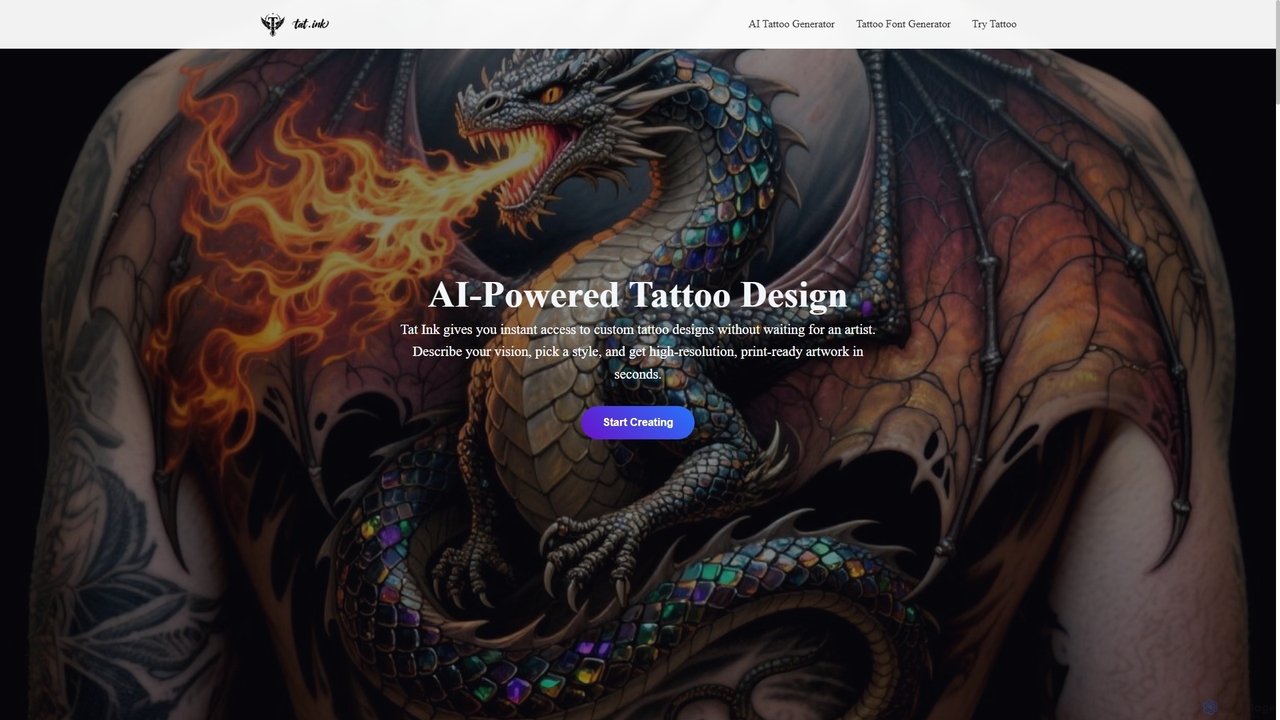
Tat Ink is an innovative AI-powered platform that transforms your tattoo ideas into unique, high-resolution designs in seconds. It offers an AI tattoo generator, a vast idea explorer, a versatile font generator, and a realistic virtual try-on feature, allowing users to visualize custom ink on their skin before commitment. Perfect for enthusiasts, artists, and designers seeking creative inspiration and personalized body art.
About Font Design
AI Font Design tools are a specialized category of software that uses artificial intelligence to generate, modify, and expand entire typefaces. Leveraging generative models and machine learning, these tools can create unique fonts from text prompts, visual styles, or parametric inputs. This enables designers and brands to rapidly produce custom typography for branding, digital products, and creative projects, bypassing traditional manual design processes. Their key advantage lies in generating vast stylistic variations and complete character sets with consistent aesthetics.
Core Features
- Generative Typeface Creation: Produces unique fonts from text descriptions or style examples.
- Parametric Font Control: Allows real-time adjustment of variables like weight, width, and serifs to create a full font family.
- Style Transfer: Applies the visual style of an image or existing font to new letterforms.
- Automated Glyph Completion: Intelligently generates missing characters, symbols, or language support for a font.
- Handwriting-to-Font Conversion: Digitizes and converts handwritten text into a functional font file.
Use Cases
These tools are primarily used by brand identity designers creating unique corporate fonts, UI/UX designers needing variable fonts for responsive interfaces, and game developers seeking stylized typography for in-game text. They are also valuable for rapid prototyping of typographic concepts in advertising and publishing.
How to Choose
When selecting an AI Font Design tool, consider its core generation model (prompt-based vs. parameter-driven), supported output formats (OTF, TTF, WOFF), and the level of control over fine details like kerning and ligatures. Also, evaluate its learning curve and whether it integrates with your existing design software.

Font DesignUse Cases
Creating a Unique Brand Identity Font
A marketing agency needs a custom font for a new tech startup. Using an AI font design tool, they input brand keywords like 'futuristic,' 'minimalist,' and 'bold.' The AI generates dozens of initial concepts. The designers then refine the chosen direction by adjusting parameters for weight and character spacing, resulting in a unique, proprietary font family (OTF/TTF) for all marketing materials in a fraction of the time of manual design.
Generating Variable Fonts for Web Design
A UI/UX designer is building a responsive website that needs text to adapt across different screen sizes. They use an AI tool to create a variable font. By defining the minimum and maximum weight and width, the AI generates a single, efficient font file that allows CSS to smoothly transition between styles, ensuring optimal readability and performance on mobile, tablet, and desktop without loading multiple font files.
Designing Stylized Fonts for Game UI
A game development studio is creating a fantasy RPG and requires a thematic font for menus and dialogue. Instead of drawing each character by hand, the art director uploads concept art of the game's architecture. The AI font tool uses style transfer to generate a complete character set that mimics the rustic, runic aesthetic of the artwork, ensuring a cohesive visual experience across the entire game interface.
Converting Personal Handwriting into a Digital Font
A graphic designer wants to add a personal touch to their client's wedding invitations. They write out the alphabet and numbers on paper, scan it, and upload the image to an AI font design tool. The tool analyzes the handwriting, digitizes each glyph, and automatically generates kerning pairs, producing a functional font file that perfectly captures the designer's unique script for a truly custom result.
Expanding Language Support for an Existing Font
A company is localizing its product and discovers their brand font lacks support for Cyrillic or Greek characters. A typographer uses an AI tool to analyze the existing Latin character set. The AI learns the font's design rules (stroke thickness, serif style, etc.) and generates the missing Cyrillic and Greek glyphs in a perfectly consistent style, saving weeks of manual drawing and ensuring global brand consistency.
Rapid Prototyping of Typographic Concepts
During the initial phase of a rebranding project, a design team needs to explore multiple typographic directions quickly. They use a prompt-based AI font generator to create mood boards with diverse font styles—from elegant serifs to geometric sans-serifs—simply by describing the desired mood. This allows them to present a wide range of visual ideas to the client for feedback before committing to a single design direction, streamlining the creative process.