Zuko
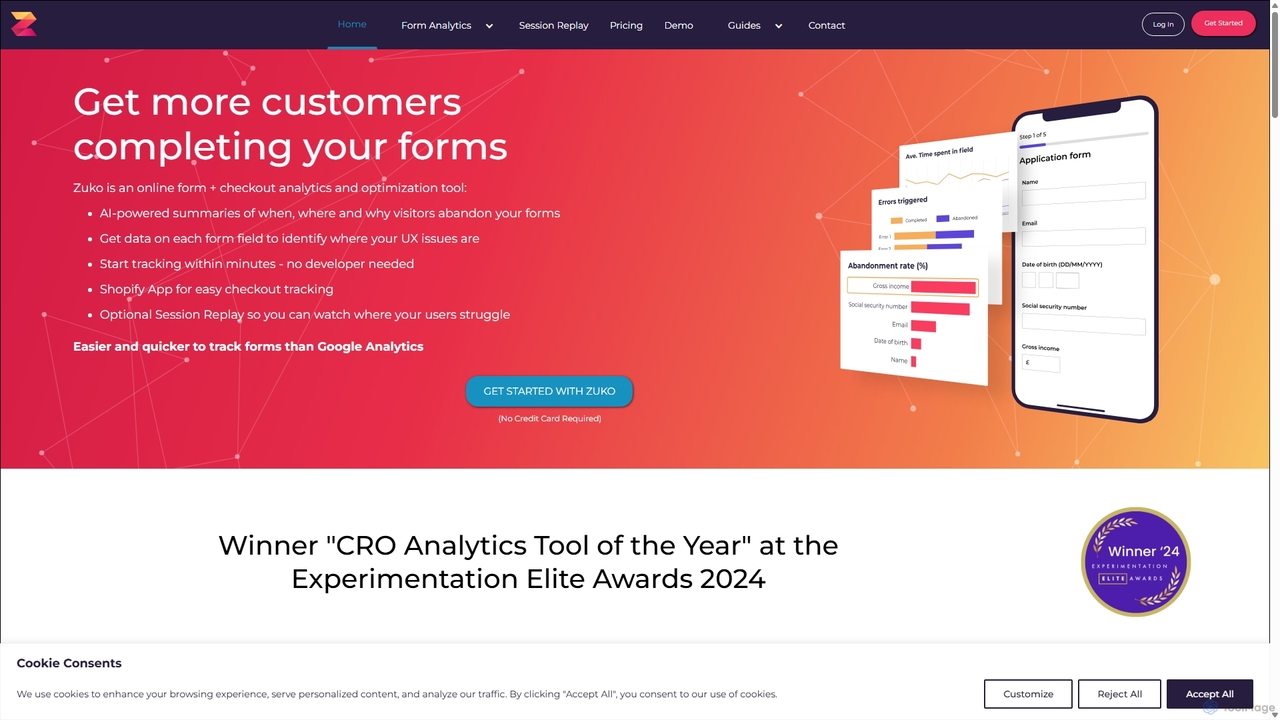
Zuko is a powerful form analytics and optimization tool that helps businesses understand user behavior in online forms …
Zuko is a powerful form analytics and optimization tool that helps businesses understand user behavior in online forms and checkouts. By tracking detailed interactions like field returns, abandonment rates, and time spent, Zuko provides actionable insights to identify friction points, reduce form abandonment, and ultimately increase conversion rates. It's an essential tool for marketers, UX designers, and product managers looking to optimize their digital journeys.
About Behavior Analytics
Behavior Analytics tools are AI-powered platforms designed to collect, analyze, and visualize user interactions on digital products like websites and mobile applications. These tools leverage machine learning to identify patterns, anomalies, and friction points in user journeys, moving beyond simple metrics to understand the "why" behind user actions. They provide deep insights into user engagement, conversion funnels, and overall product usability, enabling data-driven decisions for enhancing user experience and business outcomes.
Core Features
- Session Replays: Record and replay individual user sessions to visually understand their journey, clicks, scrolls, and frustrations.
- Heatmaps: Visualize aggregate user behavior on pages, showing areas of high engagement (clicks, scrolls, attention) and neglect.
- Funnel Analysis: Track user progression through predefined steps (e.g., checkout process) to identify drop-off points and conversion bottlenecks.
- Anomaly Detection: Automatically flag unusual user behaviors or sudden shifts in engagement that might indicate issues or opportunities.
- User Segmentation: Group users based on specific behaviors or demographics to analyze their unique patterns and tailor experiences.
Applicable Scenarios
Behavior Analytics tools are indispensable for product managers, UX designers, marketers, and e-commerce specialists. They are used to optimize website conversion rates by identifying where users abandon carts, improve app onboarding flows by pinpointing confusing steps, and enhance content engagement by understanding what elements users interact with most. These insights help teams prioritize improvements that directly impact user satisfaction and business goals.
How to Choose
When selecting a Behavior Analytics tool, consider its data collection capabilities (e.g., real-time vs. batch, mobile app support), the depth of its analytical features (e.g., advanced segmentation, A/B testing integration), ease of integration with existing tech stacks, and compliance with data privacy regulations (e.g., GDPR, CCPA). Scalability and pricing models based on data volume or user sessions are also crucial factors.

Behavior AnalyticsUse Cases
Optimizing E-commerce Checkout Flows
E-commerce managers use behavior analytics to identify specific steps in the checkout process where customers frequently drop off. By analyzing session replays and funnel data, they can pinpoint confusing forms, broken buttons, or unexpected costs, leading to targeted UX improvements that boost conversion rates.
Improving Mobile App Onboarding
Product teams leverage these tools to understand how new users interact with an app's initial setup. Heatmaps reveal ignored tutorials, while session replays expose frustration points, allowing designers to streamline the onboarding experience and increase user retention.
Enhancing Content Engagement on Websites
Content strategists and marketers utilize heatmaps and scroll maps to see which sections of a blog post or landing page capture the most attention and which are overlooked. This data informs content layout, call-to-action placement, and overall content strategy to maximize user interaction.
Identifying UI/UX Friction Points
UX designers employ behavior analytics to detect areas where users struggle or encounter errors. Observing rage clicks, erratic mouse movements, or repeated form submissions through session replays helps them redesign problematic interface elements for a smoother user experience.
Personalizing User Experiences
Marketing teams use advanced user segmentation based on behavioral data to deliver personalized content, offers, or product recommendations. By understanding distinct user groups' preferences and interaction patterns, they can create more relevant and effective campaigns.
A/B Testing and Experimentation Validation
Product managers integrate behavior analytics with A/B testing platforms to not only see *which* variant performs better but also *why*. Session replays and heatmaps for each variant provide qualitative insights into user behavior differences, validating hypotheses and guiding future iterations.