
StorageIQ
StorageIQ is an AI-powered mobile app that revolutionizes home inventory management. Simply take a photo of your storage …
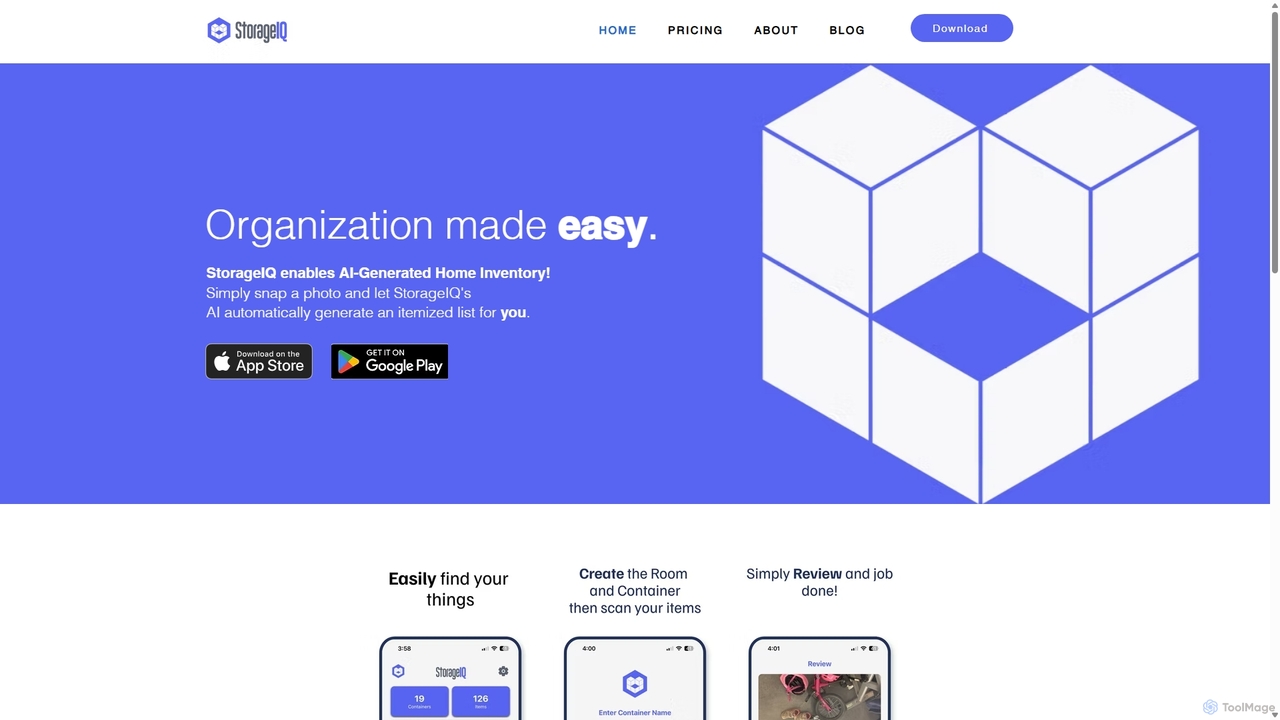
StorageIQ is an AI-powered mobile app that revolutionizes home inventory management. Simply take a photo of your storage containers, and the app's advanced AI automatically identifies, lists, and catalogs your items. It helps you easily find anything you own, estimate its value, and declutter your life with unprecedented ease.
About Inventory Management
AI Inventory Management tools are systems that use machine learning and data analytics to automate and optimize stock control. These tools go beyond simple tracking by analyzing historical sales data, market trends, and seasonality to generate highly accurate demand forecasts. This predictive capability allows businesses to maintain optimal inventory levels, significantly reducing both carrying costs and the risk of stockouts. They serve as an intelligent layer over traditional logistics, transforming inventory from a reactive task into a proactive, data-driven strategy.
Core Features
- Predictive Demand Forecasting: Utilizes AI algorithms to analyze past data and external factors to predict future product demand with high accuracy.
- Automated Reordering: Automatically generates purchase orders when stock levels fall below predefined or dynamically calculated thresholds.
- Inventory Optimization: Recommends the ideal quantity of each item to keep in stock across different locations to maximize profitability and service levels.
- Dead Stock Identification: Proactively identifies slow-moving or obsolete items, suggesting markdowns or promotional strategies to clear them.
- Real-time Analytics & Reporting: Provides dynamic dashboards with key metrics like inventory turnover, stock-to-sales ratio, and forecast accuracy.
Use Cases
These tools are essential for industries with complex supply chains or fluctuating demand, such as e-commerce, retail, manufacturing, and distribution. E-commerce managers use them to prevent stockouts of popular items during peak seasons. Supply chain planners in manufacturing rely on them to ensure a steady supply of raw materials without overstocking. Retail operations managers use them to optimize stock distribution across multiple stores.
How to Choose
When selecting an AI Inventory Management tool, consider its integration capabilities with your existing systems like e-commerce platforms (Shopify, Magento) or ERPs. Evaluate the sophistication and transparency of its forecasting models. Assess its scalability to handle your SKU count and order volume. Finally, consider the user interface's ease of use and the quality of customer support provided.
Inventory ManagementUse Cases
E-commerce Demand Forecasting for Seasonal Products
An online fashion retailer faces the challenge of stocking seasonal items like winter coats and summer dresses. Using an AI Inventory Management tool, the system analyzes past sales data, social media trends, and weather forecasts to predict demand for specific styles and sizes. This allows the retailer to place accurate purchase orders with suppliers, avoiding overstocking on items that won't sell after the season ends and preventing stockouts of popular items. As a result, they can reduce dead stock by up to 30% and increase sales by 15% during peak season.
Automated Replenishment for Multi-Channel Retail
A business sells products through its own website, Amazon, and physical retail stores. Manually tracking inventory across these channels is complex and error-prone. An AI tool centralizes inventory data and uses real-time sales velocity from all channels to automate purchase orders. It dynamically calculates reorder points for each SKU based on channel-specific demand, ensuring that fast-selling items on Amazon are replenished quicker than slower-moving items in-store. This automation reduces manual work by hours each week and cuts stockout incidents by 50%.
Optimizing Stock Levels Across Multiple Warehouses
A distributor with warehouses in different regions needs to decide how much stock of each product to hold at each location. An AI inventory tool analyzes regional demand patterns, shipping costs, and lead times. It then recommends optimal stock levels for each warehouse to minimize overall carrying costs while ensuring fast delivery to customers in all regions. The system can also suggest inter-warehouse transfers to balance stock, preventing regional stockouts and reducing the need for expensive expedited shipping. This leads to a 20% reduction in logistics costs.
Reducing Dead Stock for Electronics Retailers
An electronics retailer struggles with products that quickly become obsolete, like older smartphone models. An AI inventory system monitors the sales velocity of every item. When it detects a product's sales are slowing down significantly and a new model is expected, it flags the item as potential dead stock. The system then recommends a proactive markdown strategy, suggesting optimal discount levels to clear the inventory before it becomes completely worthless. This approach helps the retailer recover capital that would otherwise be tied up in unsellable goods.
Managing Raw Material Inventory for Manufacturing
A furniture manufacturer needs to maintain a steady supply of various raw materials like wood, screws, and fabric. An AI inventory tool integrates with the production schedule. It forecasts the required materials based on upcoming manufacturing orders and calculates the optimal time to order from suppliers, considering lead times. This ensures that materials arrive just-in-time for production, minimizing storage costs for bulky items like lumber and preventing production delays due to a shortage of a single critical component like a specific screw type.
Analyzing Supplier Performance for Better Sourcing
A wholesale distributor works with multiple suppliers for similar products. An AI inventory tool tracks key performance indicators for each supplier, such as lead time accuracy, order fill rate, and price fluctuations. The system analyzes this data to provide a supplier scorecard, highlighting the most reliable and cost-effective partners. When it's time to reorder, the tool can automatically recommend sourcing from the top-performing supplier or splitting the order to mitigate risk. This data-driven approach improves supply chain resilience and can lead to a 5-10% reduction in procurement costs.