Utilities Best in category 1 results Subscription Management AI Tool

Popular AI tools in the Subscription Management field of Utilities include Savvysubs, etc., helping you quickly improve efficiency.

Savvysubs

Savvysubs

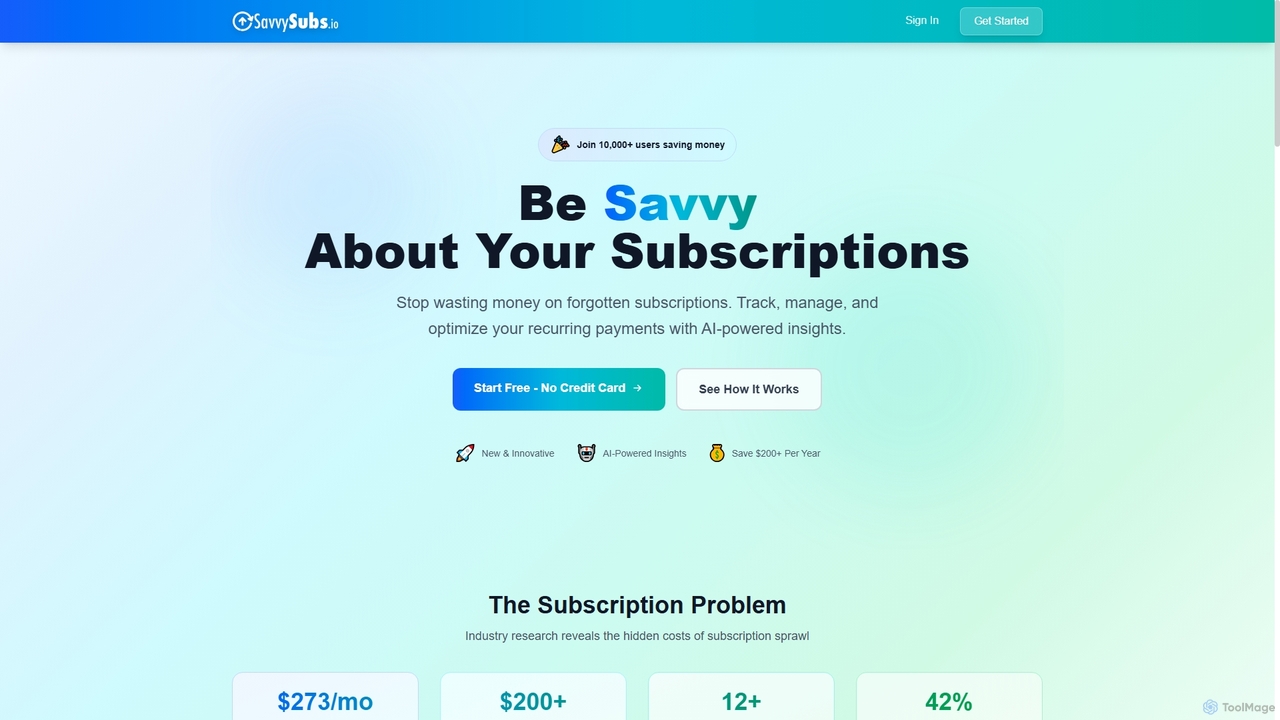
Savvysubs is an AI-powered subscription manager designed to help you track, manage, and optimize recurring payments. It provides …

2.7K

About Subscription Management

Subscription Management tools are specialized utilities designed to track, manage, and optimize all recurring payments in a single interface. By securely connecting to bank accounts or scanning email inboxes, these AI-powered applications automatically detect subscriptions, from software services to streaming platforms. They provide users with a clear, centralized dashboard of their spending, helping to prevent unwanted renewals, identify price increases, and uncover forgotten trials. This gives both individuals and businesses precise control over their digital expenditures and simplifies financial planning.

Core Features

  • Automated Subscription Discovery: Automatically identifies recurring payments from bank transactions and email receipts.
  • Centralized Dashboard: Displays all subscriptions, costs, and renewal dates in one unified view.
  • Spending Analytics: Provides insights and reports on spending habits and predicts future charges.
  • Renewal Alerts: Sends timely notifications before a subscription is due for renewal or a trial ends.
  • Cancellation Assistance: Offers guidance and direct links to simplify the process of unsubscribing from services.

Use Cases

These tools are ideal for individuals seeking to manage personal finances and control spending on digital services like streaming, news, and apps. They are also invaluable for freelancers, startups, and small businesses needing to track their Software-as-a-Service (SaaS) stack, avoid redundant licenses, and manage operational expenses effectively. IT and finance departments in larger organizations use them to monitor software spend and prevent shadow IT.

How to Choose

When selecting a Subscription Management tool, consider its detection accuracy and the breadth of supported bank and email integrations. Evaluate the security protocols, such as data encryption and use of secure APIs for financial data. Assess the user interface for clarity and ease of use, and check the quality of its analytics and alert features. Finally, compare pricing models, from free versions with basic features to premium plans with advanced capabilities.

Subscription ManagementUse Cases

1

Personal Finance Control for Individuals

An individual with numerous digital subscriptions for streaming, music, news, and software often loses track of monthly charges. By using a subscription management tool, they can link their bank and email accounts to get a complete, automated list of all recurring payments. The tool provides a clear dashboard showing total monthly spending and sends alerts for upcoming renewals or the end of free trials. This proactive approach helps them identify and cancel unused services, avoiding unwanted charges and saving a significant amount of money annually.

2

SaaS Spend Management for Startups

A startup's finance manager needs to control the rapidly growing costs of Software-as-a-Service (SaaS) tools used by different teams. A subscription management tool provides a central inventory of all company SaaS subscriptions by scanning company accounts. It helps identify redundant services (e.g., multiple project management tools) and unused licenses. The analytics feature offers insights into departmental spending, enabling better budget allocation and forecasting. This centralized oversight helps the startup optimize its software stack, eliminate wasteful spending, and improve its financial health.

3

Streamlining Freelancer Expense Tracking

A freelance consultant uses various online tools for their work, each with its own subscription fee. Keeping track of these business expenses for tax purposes can be complex. A subscription management tool allows them to automatically identify and categorize all recurring business-related payments. They can tag subscriptions like 'design software' or 'client management' and generate monthly or annual expense reports. This simplifies the process of filing taxes and provides a clear overview of their operational costs, helping them price their services more accurately.

4

Managing Household and Family Subscriptions

A family uses multiple streaming services, educational apps for kids, and gaming subscriptions across different devices and accounts. The head of the household uses a subscription management app to get a consolidated view of all these recurring costs. The app helps identify overlapping services, such as two different music streaming subscriptions. It also highlights opportunities to save money by switching to family plans. By having a single dashboard, the family can better manage their digital entertainment budget and ensure they are only paying for services they actively use.

5

Preventing 'Subscription Creep' in a Business

An IT manager in a growing company notices that departmental budgets for software are increasing without clear justification, a phenomenon known as 'subscription creep'. They implement a subscription management platform to gain visibility into all software being used across the organization. The AI-powered discovery feature uncovers unauthorized 'shadow IT' subscriptions. The platform's analytics highlight underutilized licenses that can be reassigned or canceled. This provides the data needed to create a standardized software policy, control costs, and enhance security by ensuring all tools are properly vetted.

6

Optimizing Digital Service Usage for Cost Savings

A user wants to reduce their monthly expenses but is unsure which of their many subscriptions to cancel. They use a subscription management tool's analytics dashboard to visualize their spending. The tool categorizes expenses (e.g., Entertainment, Productivity) and highlights the most costly subscriptions. It might also show usage data for certain integrated services, revealing which ones are rarely used. Armed with this data, the user can make informed decisions, such as downgrading a premium plan to a basic one or canceling a service that no longer provides value, leading to direct and immediate monthly savings.

Subscription ManagementFrequently Asked Questions