Virtual Try On Best in category 1 results Fashion AI Tool

Popular AI tools in the Fashion field of Virtual Try On include Buzz Cut, etc., helping you quickly improve efficiency.

Buzz Cut

Buzz Cut

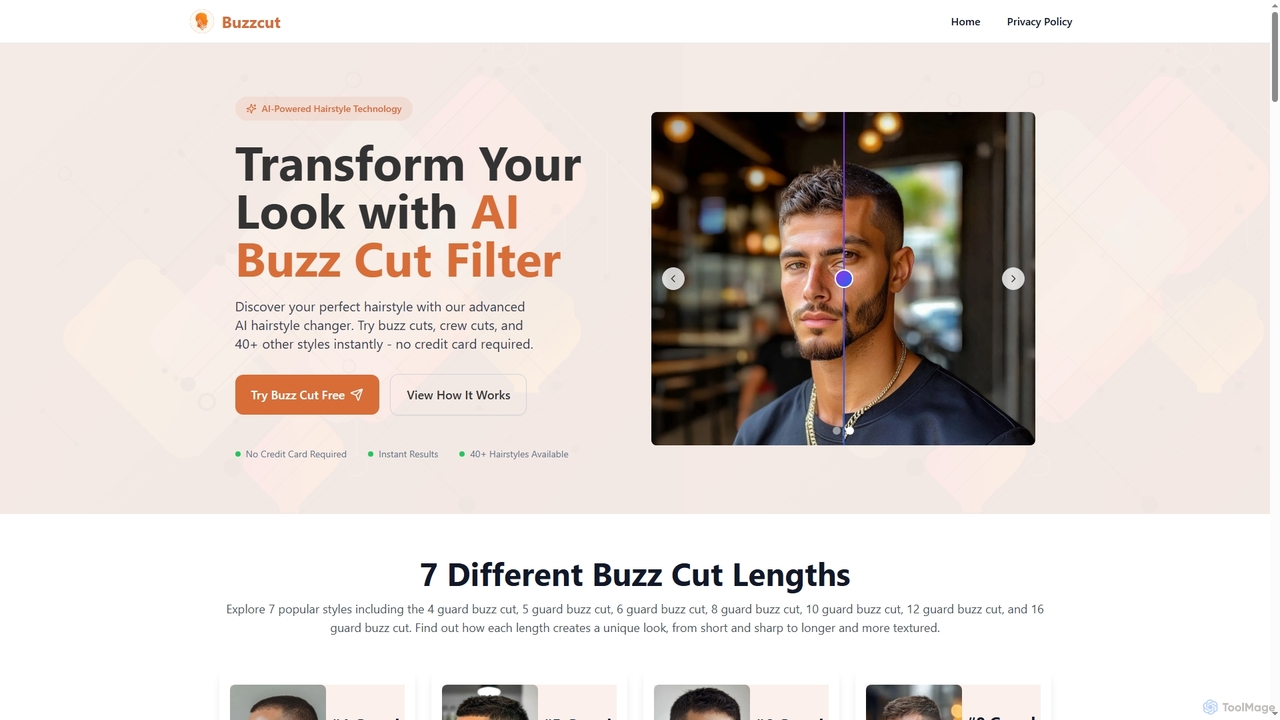
Buzz Cut is an AI-powered online tool that allows users to virtually try on various buzz cut styles …

7.4K

About Fashion

AI Fashion tools are a specialized category of virtual try-on technology that leverages artificial intelligence to revolutionize how we interact with clothing, accessories, and beauty products. These tools utilize advanced computer vision and generative AI to create realistic digital representations, enabling users to virtually try on items, receive personalized styling advice, and explore digital fashion experiences. They enhance online shopping, streamline design processes, and offer immersive brand engagement.

Core Features

  • Virtual Garment Fitting: Realistically overlay clothing onto user photos or live video feeds, simulating fit and drape.
  • AI Styling Recommendations: Suggest outfits, accessories, and makeup based on user preferences, body shape, and current trends.
  • Digital Lookbooks & Showrooms: Create interactive virtual environments for showcasing entire fashion collections.
  • Fabric & Texture Simulation: Accurately render how different materials look and behave in a virtual setting.
  • Body Measurement & Sizing: Utilize AI to derive precise body measurements for personalized sizing recommendations.

Applicable Scenarios

AI Fashion tools are indispensable for e-commerce platforms seeking to reduce returns and boost conversion rates by offering immersive try-on experiences. Fashion brands and designers use them for rapid prototyping, virtual collection presentations, and engaging customers with innovative digital content. Individual consumers benefit from personalized shopping journeys and confident purchasing decisions.

How to Choose

When selecting an AI Fashion tool, consider the accuracy and realism of its virtual try-on capabilities, especially regarding garment drape and texture. Evaluate its integration potential with existing e-commerce platforms or design software. Assess the breadth of fashion categories it supports (e.g., apparel, accessories, makeup) and its ability to provide personalized styling insights. Finally, examine the user interface for ease of use and the vendor's data privacy policies.

FashionUse Cases

1

Online Apparel Try-On for Shoppers

E-commerce customers upload their photo or use a live camera feed to virtually try on various clothing items, seeing how different sizes and styles fit their body shape before making a purchase. This significantly reduces uncertainty and the likelihood of returns, enhancing the online shopping experience.

2

Personalized Style Advisor

An individual seeking fashion advice uses an AI Fashion tool to analyze their existing wardrobe, body type, and style preferences. The AI then generates personalized outfit recommendations for different occasions, suggesting new items that complement their current collection and personal taste.

3

Virtual Fashion Show & Product Launch

A fashion brand hosts an entirely digital fashion show, showcasing its new collection on virtual models in a photorealistic 3D environment. Buyers and consumers can interact with the garments, zoom in on details, and even virtually try them on from anywhere in the world, enhancing global reach and sustainability.

4

Rapid Prototyping for Designers

Fashion designers utilize AI Fashion tools to quickly visualize new garment designs on virtual mannequins. They can experiment with different fabrics, colors, and cuts without the need for physical samples, accelerating the design iteration process and significantly reducing material waste and production costs.

5

Virtual Makeup & Accessory Experimentation

Beauty retailers integrate AI Fashion tools to allow customers to virtually try on different shades of lipstick, eyeshadow, or foundation, as well as various eyeglasses, hats, or jewelry. This helps customers visualize products on themselves before committing to a purchase, leading to more confident decisions.

6

Custom Sizing for Bespoke Clothing

A customer interested in custom-made clothing uses an AI Fashion tool that takes precise body measurements from a few photos or a quick scan. This data is then used by tailors or brands to create perfectly fitting garments, ensuring a highly personalized and satisfactory experience for bespoke apparel.

FashionFrequently Asked Questions