Voice Ai Best in category 1 results Text To Speech AI Tool

Popular AI tools in the Text To Speech field of Voice Ai include Models, etc., helping you quickly improve efficiency.

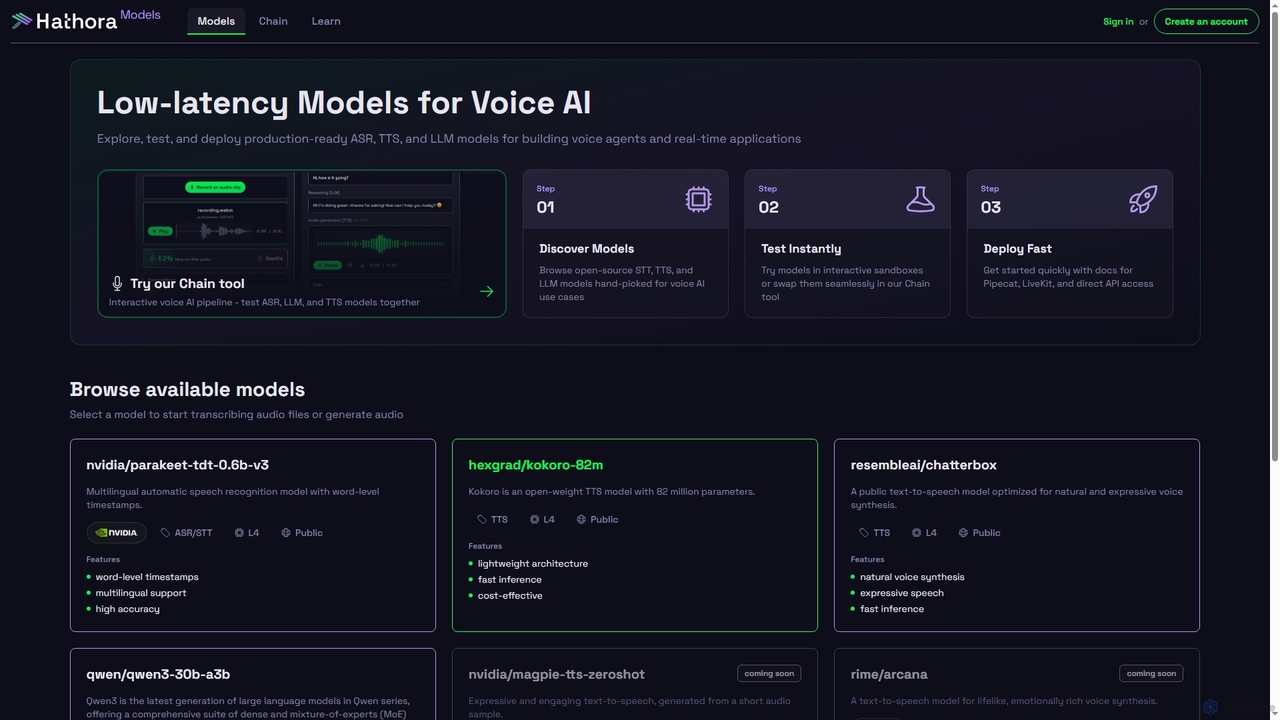
Models

Models

Models by Hathora offers a curated catalog of low-latency ASR, TTS, and LLM models optimized for voice AI …

3.9K

About Text To Speech

Text To Speech (TTS) tools are AI-powered solutions that convert written text into natural-sounding spoken audio. These tools leverage advanced deep learning algorithms to synthesize human-like voices, offering a crucial component within the broader Voice AI category. They enable users to transform any written content into engaging audio, enhancing accessibility, content creation, and user experience across various platforms. This technology provides a versatile and efficient way to consume information, interact with digital interfaces, and automate audio production processes.

Core Features

  • Natural Voice Synthesis: Generates highly realistic and human-like speech with nuanced intonation, rhythm, and pronunciation, mimicking professional voice actors.
  • Multi-language Support: Offers a wide range of languages and regional accents, catering to global audiences and diverse content needs.
  • Emotional Tones & Styles: Allows customization of voice emotions (e.g., happy, sad, angry) and speaking styles (e.g., newscaster, conversational), adding expressiveness to audio.
  • SSML Integration: Supports Speech Synthesis Markup Language for fine-grained control over pronunciation, pauses, emphasis, and speaking rate within the text.
  • Customizable Voice Parameters: Adjusts pitch, speed, volume, and other vocal characteristics to suit specific project requirements and brand identities.

Applicable Scenarios

Text To Speech tools are widely adopted in fields requiring efficient audio content generation or enhanced accessibility. Content creators use them for narrating videos, podcasts, and audiobooks, significantly saving time and resources on professional voice acting. E-learning platforms integrate TTS for voiceovers in educational modules, making content more engaging and accessible to diverse learners, including those with reading difficulties. Additionally, customer service systems employ TTS for automated voice responses and interactive voice response (IVR) menus, improving service efficiency and providing consistent brand voice. They are also vital for public announcements and navigation systems.

How to Choose

When selecting a Text To Speech tool, prioritize voice quality and naturalness, ensuring the output sounds authentic, engaging, and free from robotic artifacts. Evaluate the breadth of language and accent support to accurately match your target audience and global reach requirements. Consider the availability of emotional tones and speaking styles for expressive content that resonates with listeners. Assess integration capabilities with your existing workflows or platforms, such as video editors or content management systems. Compare pricing models based on usage volume and features offered, and finally, check for robust SSML support if fine-grained control over speech output is critical for your projects.

Text To SpeechUse Cases

1

Content Creation for Digital Media

Content creators, podcasters, and YouTubers utilize Text To Speech tools to generate high-quality voiceovers for their videos, audiobooks, and podcast episodes. This eliminates the need for expensive voice actors or time-consuming recording sessions, allowing for rapid content production and iteration. Users can easily convert scripts into natural-sounding audio, maintaining a consistent brand voice and expanding their reach to auditory learners. It significantly streamlines the post-production workflow for various digital platforms.

2

Enhancing E-learning & Training Modules

Educational institutions and corporate trainers leverage TTS to create engaging and accessible e-learning courses. By converting lesson texts, quizzes, and feedback into spoken audio, they cater to diverse learning styles and support students with reading difficulties or visual impairments. This ensures a consistent voice across all modules, reduces production costs for multilingual content, and allows learners to consume material on the go, improving overall learning outcomes and flexibility.

3

Developing Accessibility Solutions

Text To Speech technology is fundamental for building accessibility tools, such as screen readers for visually impaired individuals or reading aids for those with dyslexia. These applications convert digital text from websites, documents, and apps into spoken words, enabling users to access information independently. It empowers a broader audience to engage with digital content, fostering inclusivity and ensuring equal access to information for everyone, regardless of their reading abilities.

4

Automating Customer Service Interactions

Businesses integrate TTS into their customer service operations, particularly for Interactive Voice Response (IVR) systems and voice-enabled chatbots. This allows for automated responses to common queries, guiding customers through menus, and providing real-time information without human intervention. TTS ensures a professional and consistent brand voice, reduces call center workload, and offers 24/7 support, significantly improving customer satisfaction and operational efficiency.

5

Producing Marketing & Advertising Voiceovers

Marketers and advertisers use Text To Speech tools to quickly generate voiceovers for commercials, promotional videos, and product demonstrations. This enables rapid A/B testing of different scripts and voices, optimizing campaign performance without incurring high production costs. It's particularly useful for creating localized ads in multiple languages, ensuring brand messaging is consistent and culturally appropriate across various markets, accelerating time-to-market for campaigns.

6

Enriching Gaming & Entertainment Experiences

Game developers and entertainment companies employ TTS for dynamic character dialogue, in-game narration, and virtual assistant voices. This allows for flexible script changes during development, reduces the need for extensive voice acting sessions, and supports personalized player experiences. It can also be used for generating unique voices for non-player characters (NPCs) or for creating immersive storytelling elements, enhancing the overall engagement and replayability of games.

Text To SpeechFrequently Asked Questions