iztalk
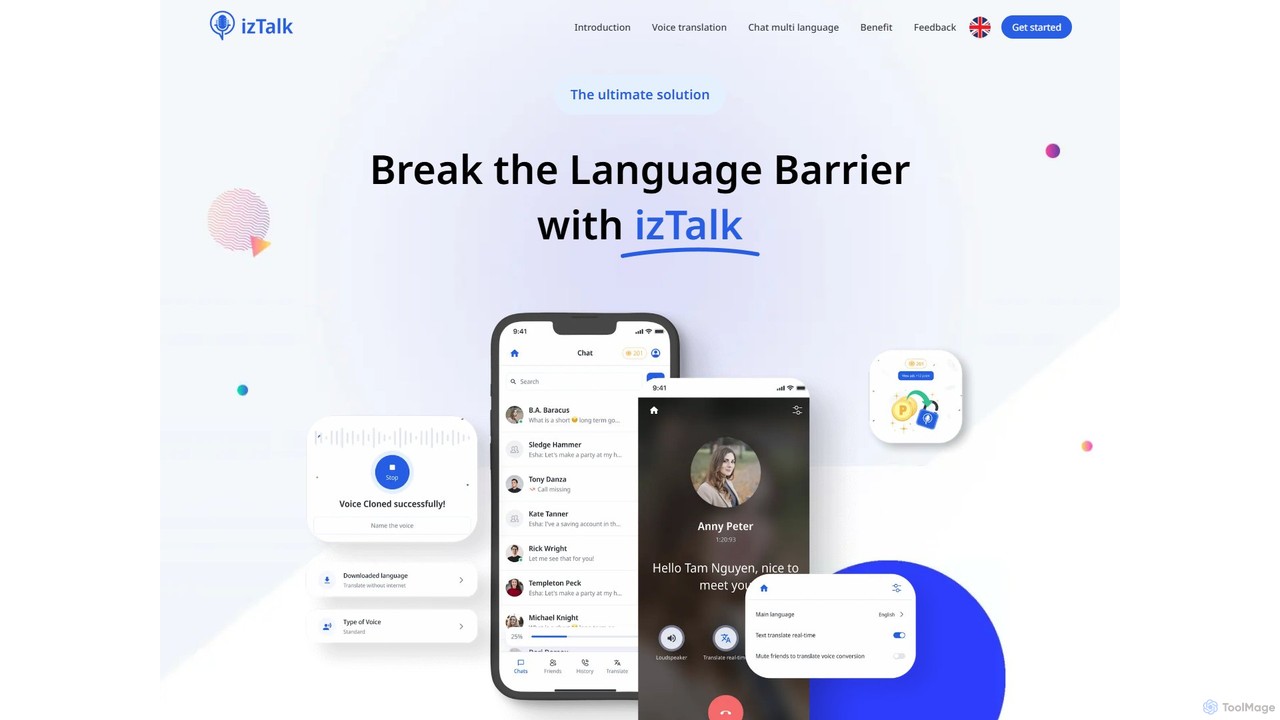
iztalk is an AI-powered mobile application designed to break language barriers through real-time voice and text translation. It …
iztalk is an AI-powered mobile application designed to break language barriers through real-time voice and text translation. It offers seamless translation during calls and messaging, and features a unique AI voice cloning function to maintain your vocal identity across different languages, making it ideal for travelers, professionals, and global communication.
Role Model AI
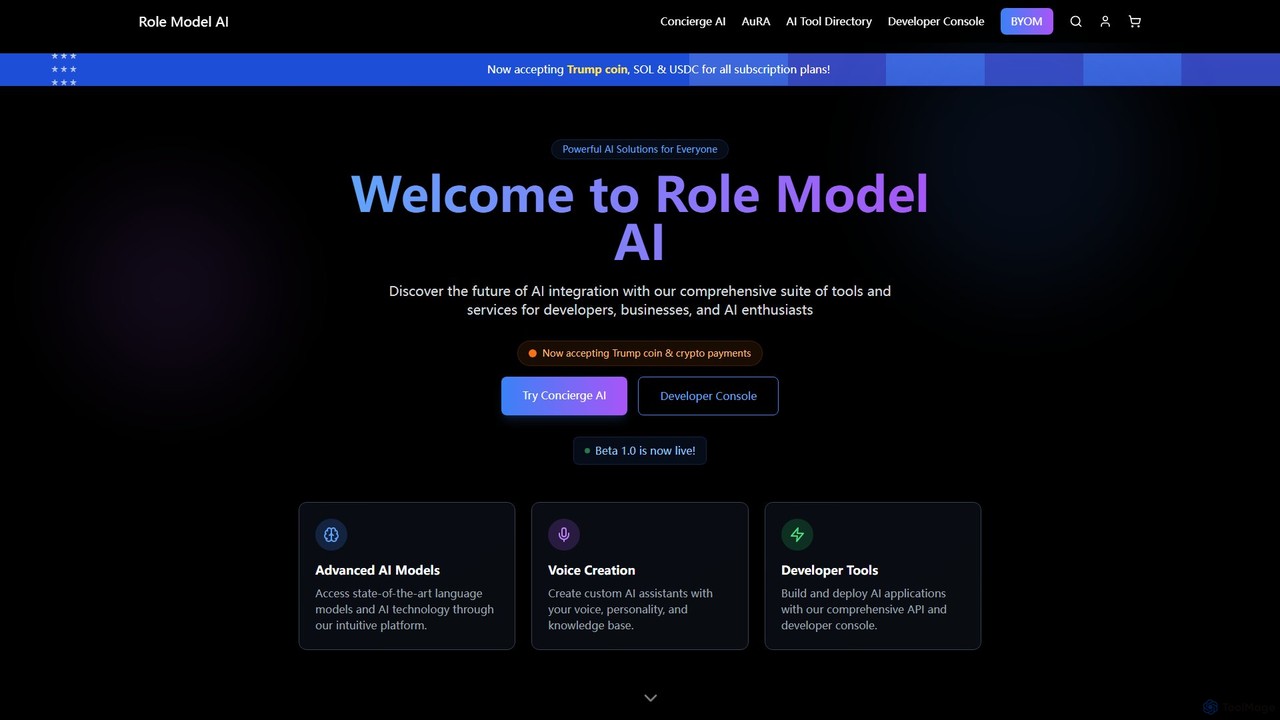
Role Model AI is a powerful platform for creating custom AI assistants with your own voice, personality, and …
Role Model AI is a powerful platform for creating custom AI assistants with your own voice, personality, and knowledge. It offers advanced voice cloning, integration with top AI models like GPT-4 and Claude 3, and a comprehensive suite of developer tools, including an API and console. Users can build specialized agents for tasks ranging from personal assistance and business advising to creative writing and financial analysis. The platform also includes an extensive directory of other AI tools.
About Voice Cloning
Voice Cloning tools are AI-powered solutions that replicate the unique timbre, tone, and speaking style of a specific human voice. These tools leverage advanced deep learning algorithms to analyze audio samples, capturing the intricate acoustic characteristics of a target voice. The primary value lies in their ability to then synthesize new speech from text input, making it sound as if the original person is speaking, complete with natural inflections and emotional nuances. This technology offers unparalleled personalization and consistency for various audio content needs.
Core Features
- High-Fidelity Speech Synthesis: Generates highly realistic speech that closely matches the original voice's timbre, intonation, and pace.
- Emotion & Style Transfer: Capable of capturing and replicating the emotional expressions and speaking style present in the source audio.
- Multi-Language Support: Allows for the synthesis of text in different languages using the cloned voice.
- Minimal Sample Requirement: Some advanced tools can achieve high-quality clones with relatively small amounts of source audio.
Use Cases
Voice cloning is extensively used in content creation for podcasts, audiobooks, and video voiceovers to maintain a consistent brand voice. It also enables personalized customer service by providing AI assistants with a familiar, human-like voice, enhancing user engagement and brand recognition.
How to Choose
When selecting a voice cloning tool, prioritize cloning quality and realism, ensuring the generated voice sounds natural and authentic. Evaluate its support for desired languages and emotional range. Consider data privacy and security measures, especially for sensitive voice data. Finally, assess ease of use, API integration capabilities, and the overall pricing model to match your project's needs.

Voice CloningUse Cases
Audiobook & Podcast Production
Audiobook publishers and podcast creators often face challenges with limited availability or high costs of original voice actors for extensive content. Voice cloning allows them to replicate the original narrator's voice, then use AI to synthesize new content or updates from text, maintaining a consistent sound. This significantly reduces production costs and accelerates content release, ensuring brand voice continuity.
Personalized Customer Service & Virtual Assistants
Businesses aim to enhance customer experience by giving their AI customer service agents or virtual assistants a distinctive, brand-aligned voice. By cloning a brand ambassador's or specific corporate voice, companies can deploy AI-powered voice navigation and intelligent customer responses. This strengthens brand identity, fosters customer familiarity, and provides consistent 24/7 service.
Game Character Voiceover & Localization
Game developers and localization teams frequently require vast amounts of character dialogue, often needing to adapt it for multiple languages while preserving the original voice actor's unique vocal qualities. Voice cloning enables them to replicate an actor's voice and generate dialogue in different languages or fill in unrecorded lines using AI. This saves significant voice acting costs and time, ensuring stylistic consistency across all localized versions.
Film, TV & Advertising Post-Production
In film, television, and advertising, situations arise where actors are unavailable for re-recording lines due to scheduling conflicts or health issues, or there's a need to "revive" the voice of a deceased actor. Voice cloning can replicate an actor's voice to synthesize missing dialogue or new advertising slogans. This resolves post-production challenges, enables creative visions, and reduces costly reshoots.
Educational Content & Training Material Creation
Online education platforms and corporate training departments often need to produce extensive course explanations and training videos, ideally presented in the voice of a specific instructor. By cloning the instructor's voice, text-based course materials can be converted into engaging audio, or existing courses can be updated efficiently. This boosts content production efficiency and maintains the instructor's authoritative and approachable voice.
Assistive Communication & Accessibility
Individuals with speech impairments often desire to communicate using their own unique voice rather than a generic synthetic one. Voice cloning technology can create a personalized voice from a small number of recordings, which can then be used with text-to-speech input devices. This significantly enhances the naturalness and dignity of communication, improving the quality of life for users.