Even Realities
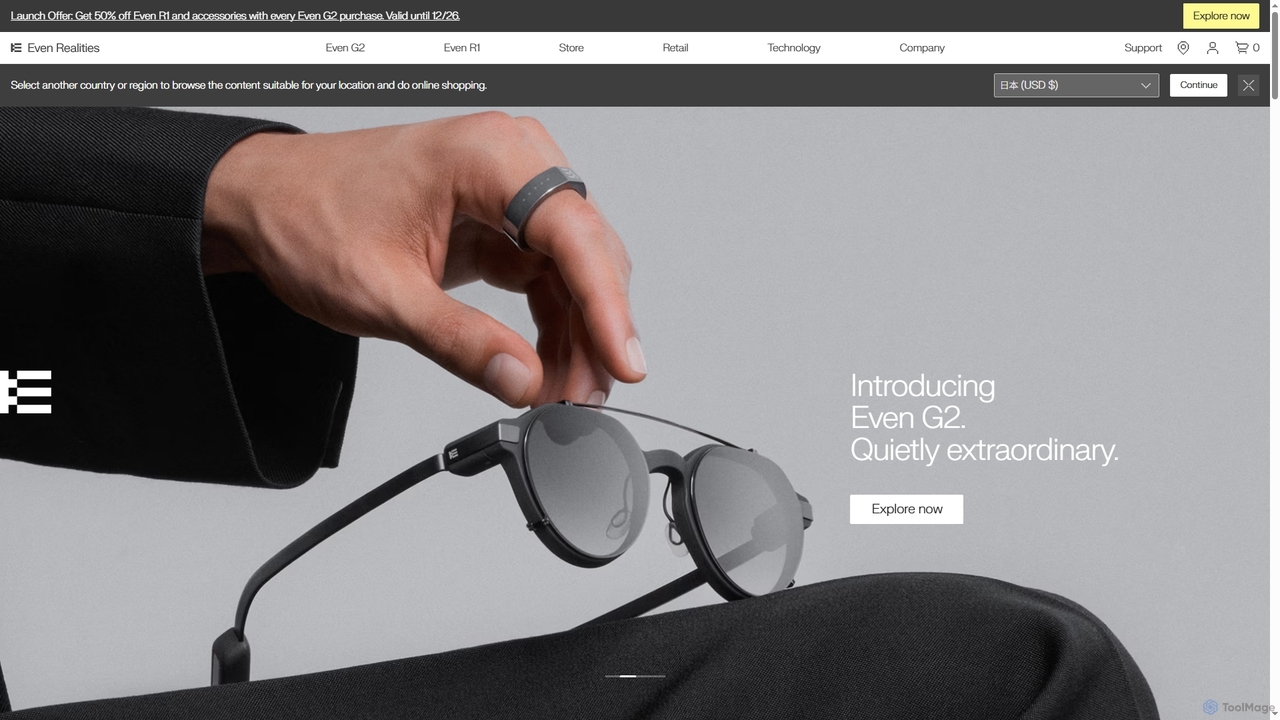
Even Realities offers AI-powered smart glasses (Even G2) and a companion smart ring (Even R1) designed to enhance …
Even Realities offers AI-powered smart glasses (Even G2) and a companion smart ring (Even R1) designed to enhance daily productivity, communication, and well-being. Experience discreet, hands-free interaction, real-time information display, and comprehensive health tracking, all integrated into stylish wearable technology.
About Smart Glasses
Smart Glasses are a specialized segment of wearable technology that integrate computing capabilities and digital displays into eyewear, offering a hands-free interactive experience. These devices leverage advanced AI, sensors, and micro-projectors to overlay digital information onto the real world or provide discreet notifications and data access. They enhance productivity, provide immersive entertainment, and offer new ways to interact with digital content while keeping users connected to their physical environment. With features like augmented reality overlays, real-time data display, and voice control, smart glasses are transforming various professional and personal applications.
Core Features
- Augmented Reality Overlay: Project digital information, 3D models, or interactive elements directly into the user's field of view.
- Hands-Free Interaction: Enable control via voice commands, gesture recognition, or subtle head movements, freeing up hands for other tasks.
- Integrated Cameras & Sensors: Capture photos/videos, track movement, and gather environmental data for context-aware applications.
- Real-time Information Display: Show notifications, navigation directions, health metrics, or work instructions discreetly on the lens.
- Audio & Communication: Built-in speakers and microphones for calls, audio playback, and voice assistant interaction without external devices.
Use Cases
Smart glasses find applications across diverse sectors. In manufacturing, technicians use them for guided assembly and remote assistance, accessing schematics and expert help hands-free. Healthcare professionals can view patient data during surgery or training. Field service engineers utilize them for on-site diagnostics and repair, overlaying digital manuals onto equipment. They also serve consumers for navigation, fitness tracking, and immersive gaming.
How to Choose
Selecting smart glasses requires evaluating several factors. Consider the primary application: industrial use demands ruggedness and specific software integrations, while consumer use prioritizes comfort, style, and entertainment features. Assess display quality (FOV, resolution, brightness) and battery life for prolonged use. Compatibility with existing ecosystems (Android, iOS) and available app support are also crucial. Finally, evaluate the interaction methods (voice, gesture, touch) for ease of use in your intended environment.

Smart GlassesUse Cases
Providing Remote Expert Guidance for Field Repairs
Field service technicians facing complex equipment malfunctions can wear smart glasses to stream live video of the problem to a remote expert. The expert can then annotate the technician's view with digital instructions, diagrams, or arrows, guiding them step-by-step through the repair process, significantly reducing downtime and travel costs.
Enhancing Precision in Manufacturing Assembly Lines
Assembly line workers use smart glasses to receive real-time, step-by-step visual instructions overlaid directly onto the components they are working on. This reduces errors, speeds up the assembly process, and minimizes the need for physical manuals, especially beneficial for complex products or new hires.
Navigating Outdoors with Augmented Reality Directions
Hikers, cyclists, or urban explorers can utilize smart glasses for hands-free navigation. Directions, points of interest, and real-time statistics (like speed or distance) are projected onto their field of view, allowing them to stay aware of their surroundings without constantly looking down at a phone or map.
Delivering Immersive Training for Complex Procedures
Professionals in fields like healthcare or aviation can undergo immersive training using smart glasses. Virtual objects and scenarios are overlaid onto real-world environments, allowing trainees to practice complex procedures, interact with virtual patients, or simulate equipment operation in a safe, controlled, and highly realistic setting.
Optimizing Warehouse Operations with Real-time Data
Warehouse personnel can use smart glasses to access inventory data, picking lists, and package information directly in their line of sight. This enables hands-free scanning, efficient route optimization, and immediate verification of items, drastically improving picking accuracy and operational speed.
Enhancing Accessibility and Real-time Language Translation
Smart glasses can provide real-time captioning for individuals with hearing impairments, displaying spoken words as text overlays. For travelers or international business, they can translate foreign languages in real-time, displaying translated text over signs or conversations, breaking down communication barriers.