SeekerClaw
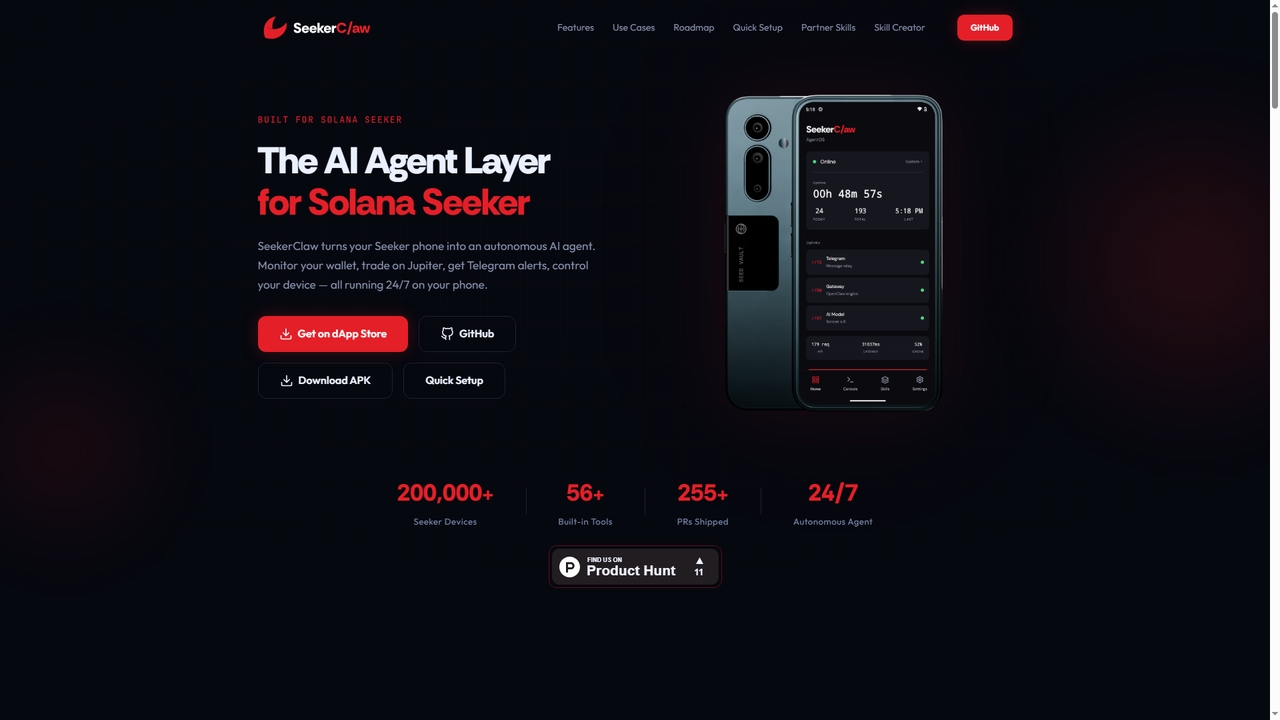
SeekerClaw is a full-stack, self-aware AI agent designed to run natively on the Solana Seeker phone. It integrates …
SeekerClaw is a full-stack, self-aware AI agent designed to run natively on the Solana Seeker phone. It integrates Solana wallet management, device control, messaging via Telegram, and web intelligence into a persistent, autonomous agent that operates 24/7. Powered by Claude or OpenAI, it features a modular skill system and deep self-diagnostic capabilities.
i18nlocale
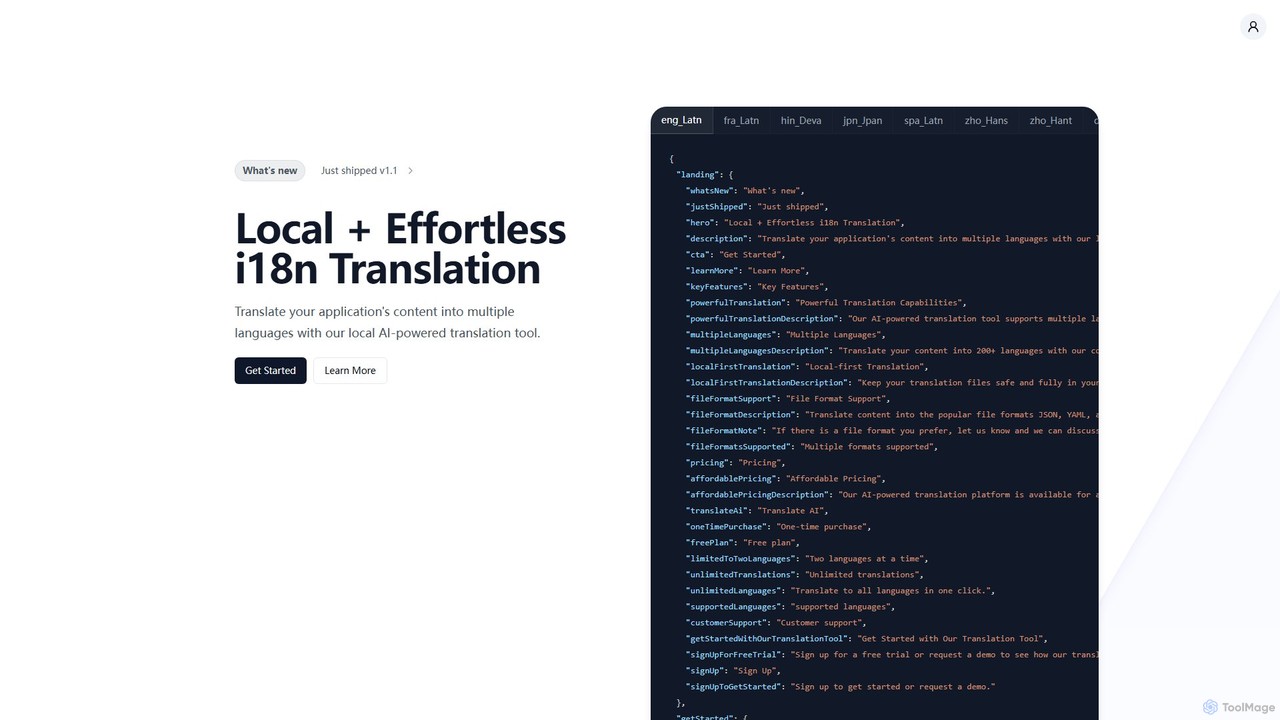
i18nlocale is an AI-powered translation tool for developers that simplifies internationalization (i18n). It operates entirely locally on your …
i18nlocale is an AI-powered translation tool for developers that simplifies internationalization (i18n). It operates entirely locally on your device, ensuring your application's content files (JSON, YAML, JS/TS) are translated into over 200 languages with complete privacy and security. No data ever leaves your computer. It offers a free plan and an affordable one-time purchase for pro features.
About Web
AI Web tools are a class of applications that leverage artificial intelligence to automate, optimize, and enhance the creation and management of websites. These tools utilize machine learning and natural language processing to generate code, design layouts, optimize content for search engines, and personalize user experiences. They empower users of all skill levels, from beginners to experienced developers, to build and maintain high-performing websites more efficiently. The core value lies in accelerating development cycles, improving SEO outcomes, and enabling data-driven design decisions without extensive manual effort.
Core Features
- AI Website Generation: Creates entire website layouts, content structures, and even functional code from simple text prompts or descriptions.
- SEO Content Optimization: Analyzes content for keyword density, readability, and structure, providing real-time suggestions to improve search engine rankings.
- User Experience Personalization: Dynamically adapts website content, product recommendations, and layouts for individual visitors based on their behavior.
- Conversion Rate Optimization (CRO): Automatically runs A/B tests on headlines, images, and calls-to-action to identify the most effective design elements.
- Code Assistance & Automation: Generates code snippets, debugs errors, and automates repetitive coding tasks for developers, integrating with common IDEs.
Use Cases
AI Web tools are widely used across various sectors. Digital marketing agencies employ them for rapid landing page creation and SEO auditing. E-commerce businesses leverage these tools for personalizing shopping experiences and optimizing product pages. Startups and small businesses use AI website builders to establish a professional online presence quickly and affordably, without needing a dedicated development team.
How to Choose
When selecting an AI Web tool, first identify your primary goal: are you building a site from scratch, optimizing an existing one, or seeking development assistance? Evaluate the tool's integration capabilities with your current platforms, such as CMS or analytics software. Consider the user interface and the technical expertise required. Finally, assess the pricing model—whether it's subscription-based, usage-based, or a one-time fee—to ensure it aligns with your budget and project scale.
WebUse Cases
Rapid Landing Page Creation for Startups
A startup founder needs to validate a new business idea quickly by launching a professional landing page to collect user sign-ups. Instead of spending weeks and significant budget on a web developer, they use an AI website builder. By providing a text prompt describing their service, target audience, and desired tone, the AI generates a complete, mobile-responsive landing page with compelling copy, relevant imagery, and a functional sign-up form in under an hour. This allows the founder to start their marketing campaign almost immediately, accelerating the feedback loop and saving critical early-stage resources.
Automated SEO Auditing for Digital Marketers
A digital marketing manager is responsible for improving the organic search ranking of a large corporate website with hundreds of pages. Manually auditing each page for SEO best practices is time-consuming and prone to error. They use an AI-powered SEO tool that automatically crawls the entire site. The tool analyzes on-page elements, technical SEO issues like site speed and mobile-friendliness, and content quality. It then generates a prioritized report with actionable recommendations, such as 'add target keyword to H1 tag on page X' or 'compress images on page Y to improve load time'. This automates 90% of the auditing process, allowing the team to focus on implementing high-impact changes.
Personalizing E-commerce Product Recommendations
An e-commerce manager wants to increase the average order value and conversion rate on their online store. They integrate an AI personalization tool into their website. The tool analyzes a visitor's real-time behavior, including products viewed, items added to the cart, and past purchase history. Based on this data, it dynamically populates 'Recommended for You' sections on the homepage and product pages with highly relevant items. For example, if a user views hiking boots, the AI might recommend waterproof socks and a backpack. This tailored experience feels more helpful to the customer, leading to a measurable increase in cross-sells and overall revenue.
Accelerating Web Development with AI Code Assistance
A front-end developer at a web agency is tasked with building a complex user interface with interactive charts and forms. This involves writing a significant amount of boilerplate HTML, CSS, and JavaScript. They use an AI code assistant integrated into their code editor. By writing comments like '// create a bar chart with monthly sales data', the AI generates the necessary code structure instantly. It also helps debug issues by suggesting fixes for errors and refactoring repetitive code blocks into reusable functions. This tool acts as a pair programmer, reducing manual coding time by over 30% and allowing the developer to focus on more complex logic and user experience challenges.
Optimizing Website Conversion Rates with A/B Testing
A growth marketing team wants to improve the conversion rate of their main sign-up page. Instead of manually creating and tracking a few A/B tests, they use an AI-powered Conversion Rate Optimization (CRO) platform. The platform analyzes the existing page and automatically generates dozens of variations of headlines, button colors, and imagery. It then uses a multi-armed bandit algorithm to intelligently allocate traffic to the best-performing variations in real-time, finding the optimal combination much faster than traditional A/B testing. This data-driven approach removes guesswork and can lead to significant uplifts in conversion rates without requiring a dedicated design or development team for testing.
Generating Web Content for Corporate Blogs
A content manager for a B2B tech company needs to consistently publish high-quality blog posts to attract organic traffic. The process of researching, outlining, and writing is time-intensive. They use an AI web content tool that specializes in long-form articles. By providing a target keyword, such as 'benefits of cloud computing for small business', and a few key points, the AI generates a comprehensive article outline, including H2/H3 headings and key topics to cover. It can then draft entire sections of the article, which the manager reviews, edits, and adds their unique expertise to. This reduces writing time by 50%, allowing the content team to double their output and focus more on strategy and promotion.