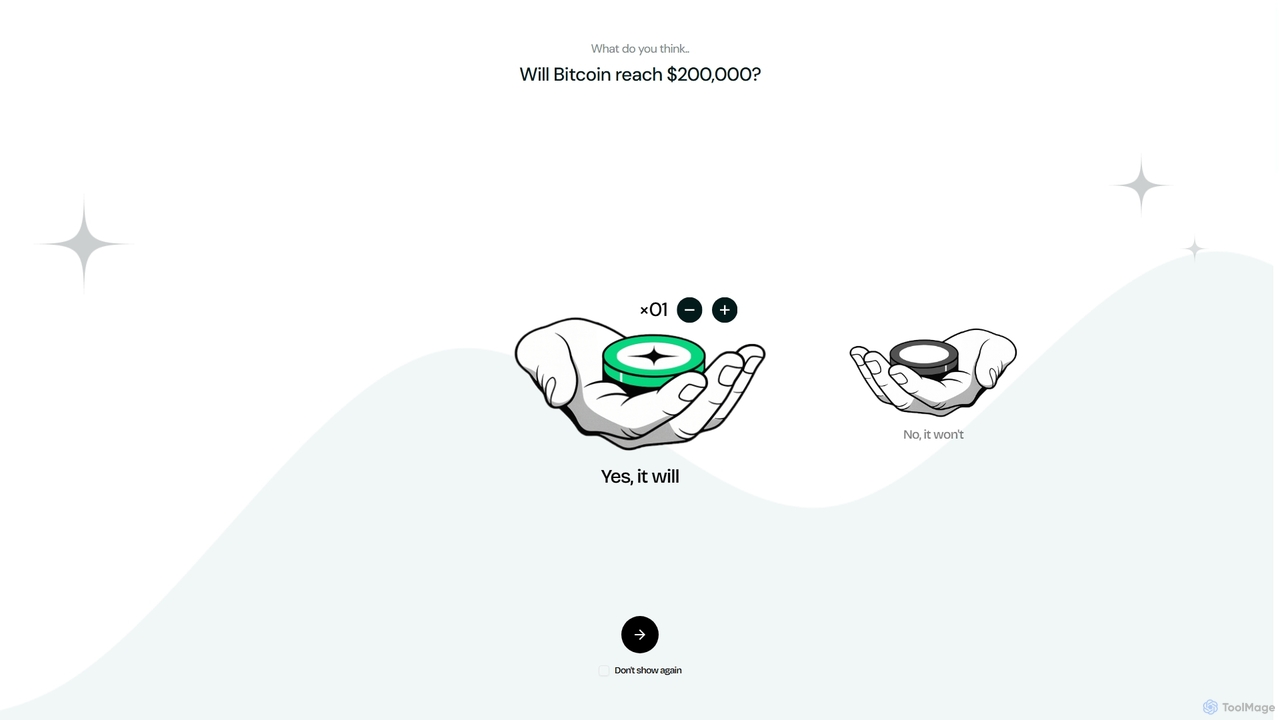
Prediction Markets are a type of Web3 platform that leverages collective intelligence to forecast the outcomes of future events. These decentralized markets allow users to buy and sell "shares" representing specific event outcomes, with prices reflecting the crowd's perceived probability. By aggregating diverse opinions and incentives, prediction markets provide a unique mechanism for real-time information discovery and robust decision support. They offer a transparent and efficient way to gauge public sentiment, anticipate future trends, and even manage risk across various domains, from finance to politics and technology.
Core Features
- Event Creation & Resolution: Users can propose and define specific events with clear, verifiable outcomes, ranging from election results to cryptocurrency price movements. These events are then resolved by trusted oracles or through community consensus mechanisms, ensuring fairness and transparency.
- Tokenized Shares: Outcomes are represented by tradable tokens, allowing users to buy shares in their preferred outcome. The price of these shares fluctuates based on market activity, directly indicating the perceived probability of an event occurring.
- Automated Market Makers (AMMs): Many platforms utilize AMMs, similar to decentralized exchanges, to facilitate trading. This ensures continuous liquidity and efficient price discovery without the need for traditional order books, making markets accessible 24/7.
- Decentralized Governance: Advanced prediction markets often incorporate governance tokens, enabling community participation in crucial decisions. This includes proposing new market categories, resolving ambiguous event outcomes, and even influencing platform development and fee structures.
- Incentivized Participation: Participants are financially incentivized to predict accurately, as correct predictions yield profits, while incorrect ones result in losses. This mechanism encourages honest information contribution and discourages manipulation.
Applicable Scenarios
Prediction markets are invaluable for organizations and individuals seeking data-driven insights that go beyond traditional polling or expert opinions. Financial analysts use them to gauge market sentiment on economic indicators or asset performance. Businesses leverage them to forecast the success of new product launches or the adoption rates of emerging technologies. Furthermore, policymakers and researchers utilize these markets to anticipate the impact of potential regulations or to study collective behavior in response to global events. Their real-time nature and ability to aggregate diverse perspectives make them particularly useful for dynamic situations where rapid, unbiased information is crucial for strategic planning and risk management.
How to Choose
When selecting a prediction market platform, consider its market liquidity and the breadth of events available for trading, as higher liquidity generally leads to more accurate price discovery. Evaluate the fee structure, including trading fees, withdrawal costs, and any gas fees associated with the underlying blockchain. It's also crucial to assess the platform's decentralization level and the security of its smart contracts. Additionally, investigate the clarity and reliability of its event resolution mechanisms, and ensure the overall user experience is intuitive and accessible for your needs.