Wistia
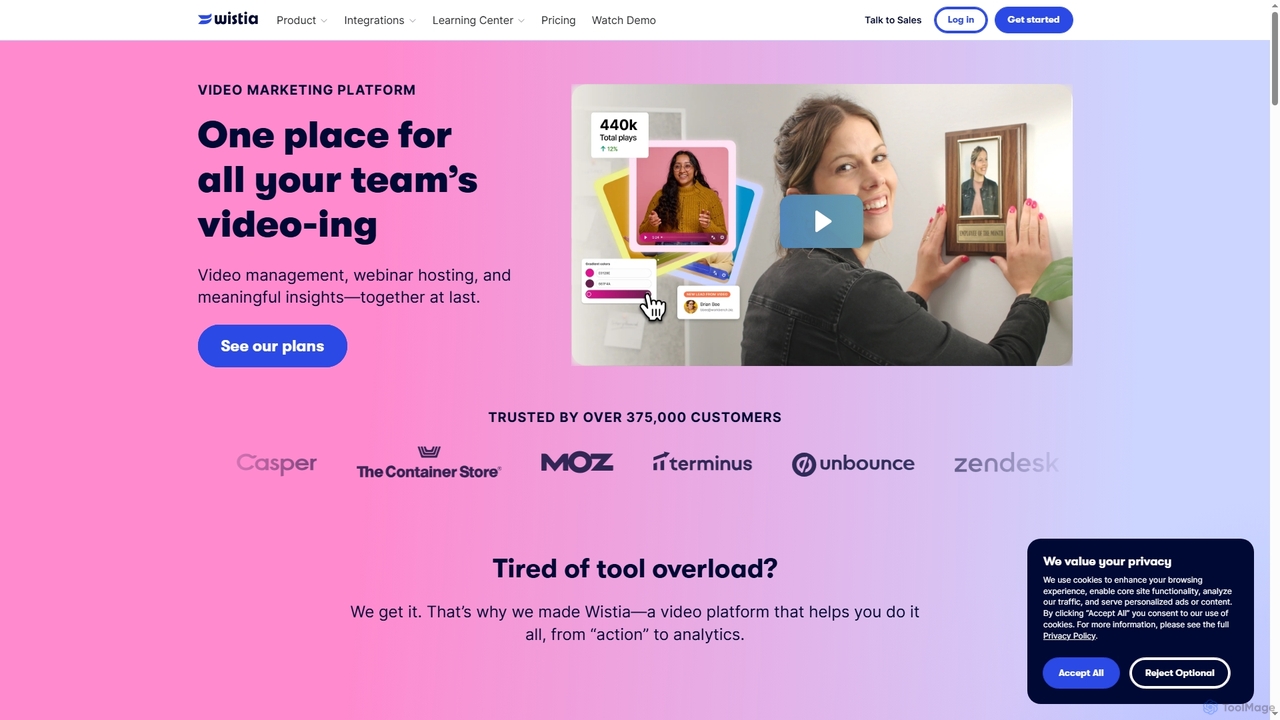
Wistia is an all-in-one video marketing platform for businesses, offering professional video hosting, AI-powered editing, webinar hosting, and …
Wistia is an all-in-one video marketing platform for businesses, offering professional video hosting, AI-powered editing, webinar hosting, and advanced analytics. It helps companies create, manage, market, and measure the impact of their video content to drive engagement and generate leads, streamlining video workflows and integrating with key marketing tools.
About Webinar
AI Webinar tools are platforms that leverage artificial intelligence to automate, analyze, and enhance online seminars. These tools utilize technologies like Natural Language Processing (NLP) for real-time transcription and summarization, and machine learning to analyze audience engagement and score leads. Their primary value lies in transforming standard online presentations into data-rich, interactive experiences that drive marketing, sales, and training objectives. By automating repetitive tasks and providing deep insights, they allow hosts to focus on delivering high-impact content.
Core Features
- Automated Transcription & Summaries: Instantly generates accurate, searchable transcripts and concise summaries with key takeaways and action items from the webinar.
- Engagement Analytics: Analyzes audience participation, sentiment, Q&A patterns, and attention levels to provide actionable insights on content performance.
- AI-Powered Content Repurposing: Automatically creates highlight clips, social media posts, blog articles, and follow-up emails from the webinar recording.
- Predictive Lead Scoring: Scores attendees based on their in-webinar behaviors (e.g., questions asked, polls answered, attentiveness) to identify high-quality leads for sales teams.
- Intelligent Q&A Management: Groups similar questions, prioritizes popular topics, and sometimes suggests answers, helping presenters manage audience interaction efficiently.
Use Cases
AI Webinar tools are widely used by marketing teams for lead generation and product demonstrations, where lead scoring and automated follow-ups are critical. Corporate training and HR departments use them to monitor employee engagement during virtual onboarding and development sessions. Educational institutions also leverage these tools to make online lectures more interactive and accessible through automated captioning and summaries.
How to Choose
When selecting an AI Webinar tool, first evaluate its integration capabilities with your existing CRM and marketing automation platforms. Second, assess the depth and usability of its analytics; look for detailed engagement metrics and lead scoring accuracy. Also, consider the scope of its automation features—does it effectively repurpose content and streamline follow-up workflows? Finally, check its scalability to ensure it can support your expected audience size and streaming quality requirements.
WebinarUse Cases
Automating Post-Webinar Marketing Follow-up
A marketing manager hosts a weekly product demo webinar for hundreds of prospects. Instead of spending hours manually segmenting the audience and writing follow-up emails, they use an AI webinar tool. The AI automatically generates a concise summary, identifies key questions asked, and creates several highlight video clips. It then drafts personalized follow-up emails based on each attendee's engagement score and poll responses, sending targeted content to hot, warm, and cold leads. This automates the entire post-event workflow, saving over 80% of manual effort and increasing lead conversion rates by ensuring timely, relevant communication.
Enhancing Corporate Training and Onboarding
An L&D specialist is conducting a virtual onboarding session for new hires across different time zones. Using an AI webinar platform, they can track engagement in real-time to see which topics are most engaging or confusing. The AI automatically transcribes the entire session and creates a searchable knowledge base. After the session, it generates a summary and a short quiz based on the key topics covered. This helps the L&D team validate understanding, identify knowledge gaps, and provide personalized follow-up resources to new employees, ensuring a more effective and consistent onboarding experience for a distributed workforce.
Maximizing Lead Quality from Product Demos
A sales engineer uses an AI webinar tool for live product demonstrations. The platform's predictive lead scoring algorithm runs in the background, analyzing which attendees ask buying-intent questions, spend the most time engaged, and respond positively to pricing polls. Immediately after the demo, the sales team receives a prioritized list of attendees, ranked from 'demo-qualified' to 'nurture'. This allows them to instantly follow up with the most promising leads while they are still highly engaged, significantly shortening the sales cycle and improving the efficiency of the sales development representatives.
Creating Accessible and Reusable Educational Content
An online course instructor at a university uses an AI webinar tool to deliver weekly lectures. The tool provides real-time, AI-generated captions, making the content accessible to students with hearing impairments and non-native speakers. After each lecture, the platform automatically generates a full transcript, a summary of key concepts, and timestamps for each topic discussed. This content is then added to the course portal, creating a valuable, searchable archive for students to review and study from. It transforms a one-time live event into a permanent and accessible educational asset, enhancing the learning experience for all students.
Streamlining Event Promotion with AI Copywriting
An event coordinator is tasked with promoting an upcoming industry summit hosted on a webinar platform. Instead of writing all promotional copy from scratch, they input the summit's topic, speaker list, and agenda into the platform's AI content generator. The AI produces multiple versions of landing page copy, email invitations, and social media posts tailored for different platforms like LinkedIn and Twitter. This allows the coordinator to quickly A/B test different messages to see what resonates best with their target audience, significantly speeding up the promotion cycle and improving registration numbers through optimized, data-informed copy.
Gauging Audience Sentiment in Real-Time
During a live-streamed town hall meeting, a corporate communications lead uses an AI webinar tool to monitor audience sentiment. As the CEO speaks, the AI analyzes the chat, Q&A, and emoji reactions to provide a real-time sentiment score. When the score dips during a discussion on a sensitive topic, the moderator is alerted. They can then interject with a clarifying question or launch a quick poll to better understand the audience's concerns. This allows the speakers to address issues proactively before they escalate, fostering a more transparent and responsive communication environment and helping to manage the narrative effectively.