Well Being Best in category 1 results Journaling AI Tool

Popular AI tools in the Journaling field of Well Being include Focu, etc., helping you quickly improve efficiency.

Focu

Focu

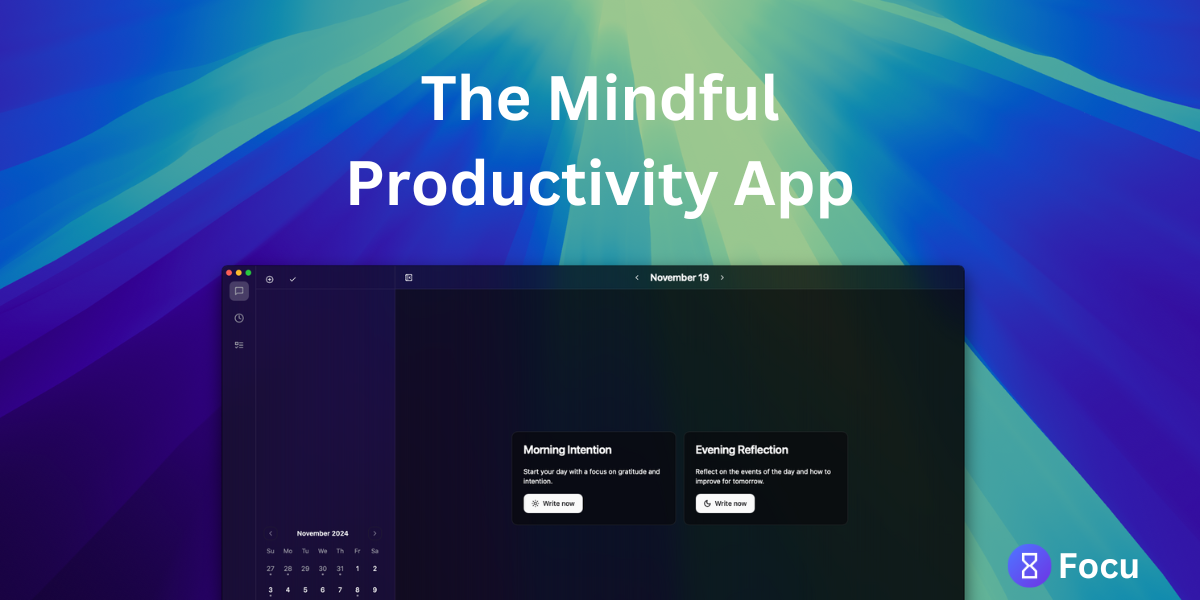
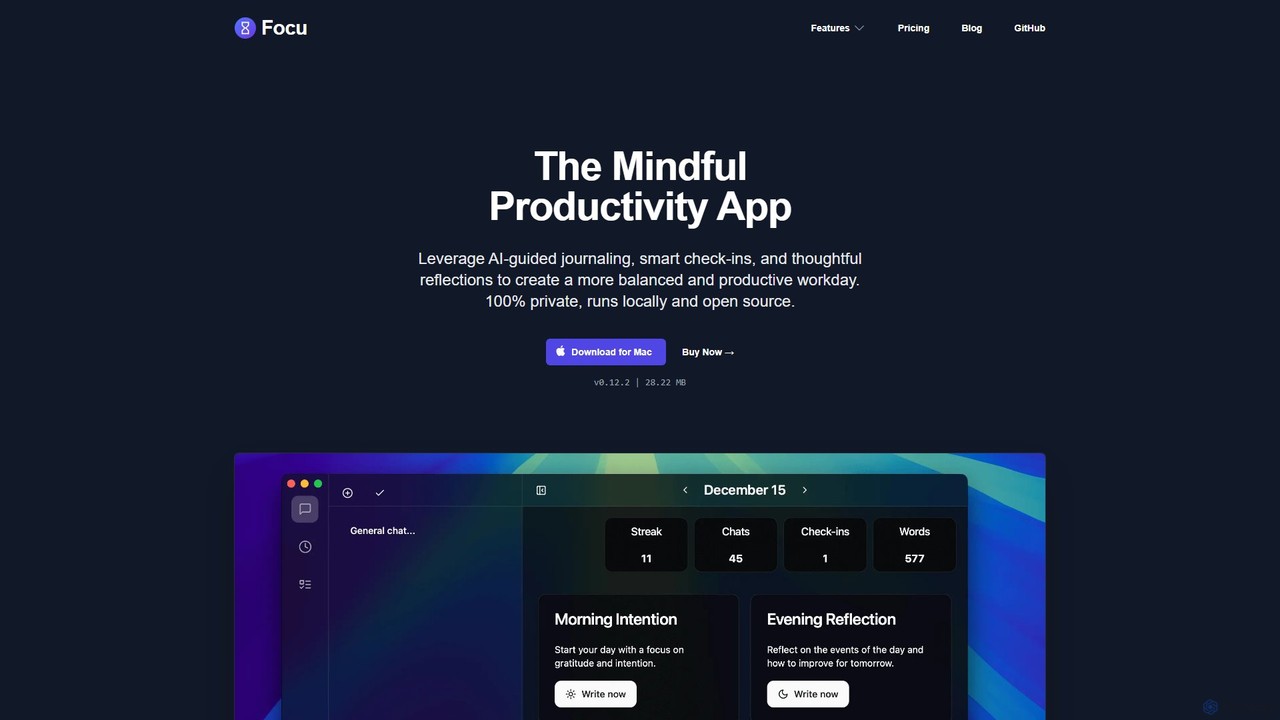
Focu is a mindful productivity app for Mac that enhances your workday with AI-guided journaling, smart check-ins, and …

4.1K

About Journaling

AI Journaling tools are applications that use artificial intelligence to enhance personal reflection and self-discovery. Leveraging Natural Language Processing (NLP), these tools analyze your written or spoken entries to identify emotional patterns, recurring themes, and key insights. This transforms the traditional diary into an interactive experience, helping you gain deeper self-awareness, track your mental well-being, and build positive habits. Unlike static note-taking apps, AI journals provide dynamic feedback and personalized guidance on your personal growth journey.

Core Features

  • Sentiment Analysis: Automatically detects and tracks the mood and emotional tone of your entries over time.
  • Guided Prompts: Provides intelligent, context-aware questions to inspire deeper reflection and overcome writer's block.
  • Pattern & Topic Recognition: Identifies recurring themes, people, and activities mentioned in your journal to reveal hidden patterns.
  • Personalized Insights: Generates summaries and reports on your emotional trends, habits, and progress towards goals.
  • Voice-to-Text Transcription: Allows you to speak your thoughts naturally and have them automatically converted into text entries.

Use Cases

These tools are ideal for individuals seeking to improve their mental wellness, manage stress, or track personal development. Therapists may also recommend them to clients as a way to document thoughts between sessions. Professionals use them for tracking career goals and reflecting on work-related challenges, while students use them to manage academic pressure and personal growth.

How to Choose

When selecting an AI Journaling tool, prioritize data privacy and security; check for end-to-end encryption and a clear privacy policy. Evaluate the depth and quality of the AI-driven insights and analytics. Consider the variety and relevance of the guided prompts, and assess the user interface for ease of use. Finally, check for features like mood tracking, goal setting, and export options to ensure it meets your specific needs.

JournalingUse Cases

1

Tracking Daily Mood and Anxiety

A professional feeling overwhelmed by work stress uses an AI journaling app to log their thoughts at the end of each day. They describe their feelings, challenges, and small wins. The app's sentiment analysis feature automatically tags each entry with an emotional score and identifies recurring keywords like 'deadline pressure' or 'client meeting'. After two weeks, the AI generates a report showing a clear correlation between meetings on Mondays and increased anxiety levels. This insight allows the user to proactively develop coping strategies, such as scheduling short breaks after meetings, to better manage their well-being.

2

Guided Practice for Self-Reflection

A university student struggling with a lack of direction uses an AI journal that offers guided prompts. Each morning, the app presents a question like, 'What is one thing you're curious about today?' or 'Describe a value that is important to you and why.' By consistently responding to these prompts, the student begins to uncover their passions and core values. The AI's topic recognition feature highlights recurring themes such as 'creative writing' and 'social impact'. This helps the student connect the dots between their interests, providing clarity and confidence to choose a major that aligns with their authentic self.

3

Preparing for Therapy Sessions

An individual attending therapy uses an AI journal to document thoughts, feelings, and significant events between sessions. They use the voice-to-text feature to capture emotions in the moment. Before each appointment, they review the AI-generated weekly summary, which highlights key emotional shifts, recurring negative thought patterns, and specific incidents that triggered strong reactions. This summary serves as a concise and objective agenda for their therapy session, allowing them and their therapist to dive directly into the most important issues, making each session more focused and productive.

4

Identifying Cognitive Distortions

Someone working on cognitive behavioral therapy (CBT) principles uses their AI journal to write about daily frustrations. When they write, 'I failed the presentation, so I'm a total failure,' the AI, trained on CBT models, identifies this as a potential cognitive distortion (overgeneralization). It might subtly highlight the phrase and offer a neutral prompt like, 'What is another way to look at this situation?' or 'What did you learn from this experience?'. This interactive feedback helps the user practice identifying and reframing negative thoughts in real-time, accelerating their progress in developing healthier thinking patterns.

5

Cultivating a Gratitude Habit

A user wants to develop a more positive outlook on life. They set a daily reminder in their AI journaling app to write down three things they are grateful for. The app provides unique prompts each day, such as 'Who is someone who helped you this week?' or 'What is a simple pleasure you enjoyed today?'. Over time, the AI's pattern recognition feature creates a 'gratitude cloud' showing the most frequently mentioned topics, like 'family,' 'morning coffee,' and 'walks in the park.' Seeing this visual representation reinforces the positive aspects of their life and solidifies the gratitude practice into a consistent, beneficial habit.

6

Tracking Personal Growth and Goals

A freelance designer sets a goal to improve their client communication skills. They use their AI journal to log interactions, noting what went well and what could be improved. For example, after a call, they might write, 'I felt nervous when discussing the budget but managed to state my terms clearly.' The AI tool can track mentions of keywords like 'nervous,' 'confident,' or 'communication.' Over several months, the user can view a chart showing a decrease in 'nervous' mentions and an increase in 'confident' ones. This data-driven feedback provides tangible proof of their progress, motivating them to continue working on their goal.

JournalingFrequently Asked Questions