Now&Zen
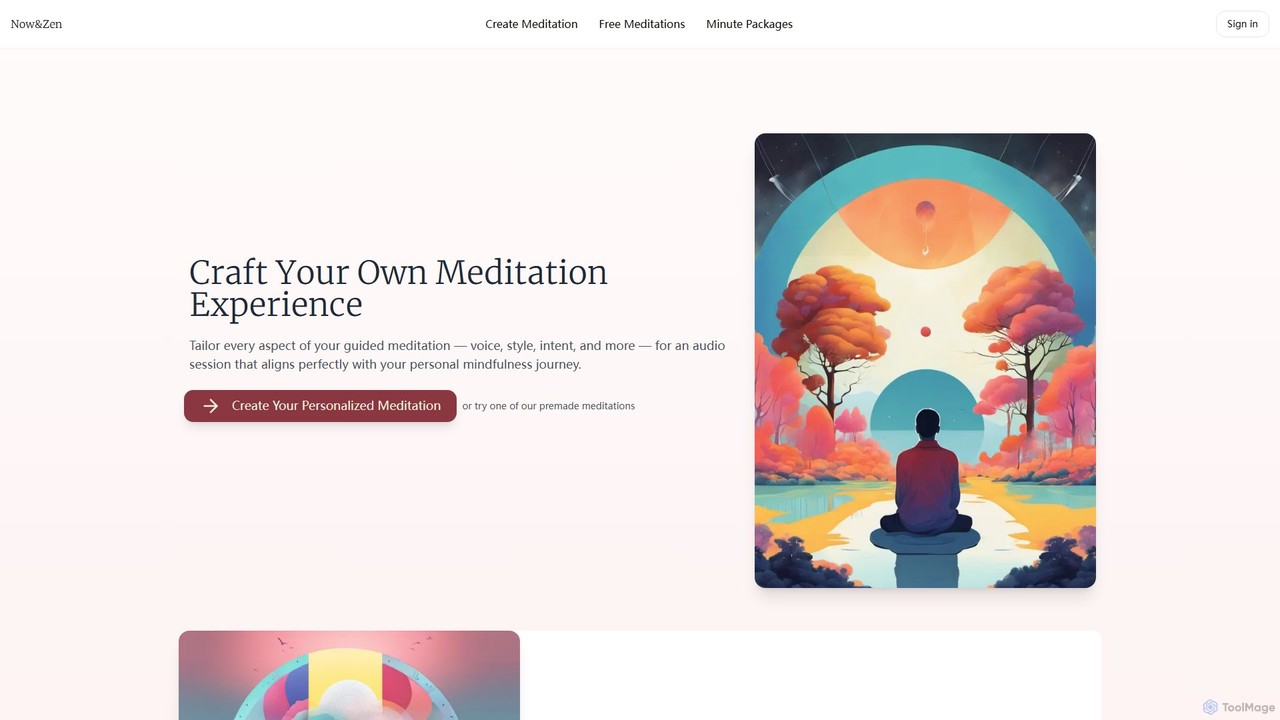
Now&Zen is an AI-powered platform for creating personalized guided meditation experiences. Users can customize every aspect of their …
Now&Zen is an AI-powered platform for creating personalized guided meditation experiences. Users can customize every aspect of their session, including voice, style, duration, and intent, to craft an audio meditation that perfectly aligns with their mindfulness goals. Downloadable for offline use.
About Stress Relief
Stress Relief AI tools are intelligent applications designed to help individuals manage, reduce, and prevent stress through personalized digital interventions. Leveraging artificial intelligence, these tools analyze user input, provide tailored guidance, and create calming environments to promote mental well-being. They offer accessible and adaptive support for improving emotional regulation, enhancing mindfulness, and fostering a sense of calm in daily life.
Core Features
- Personalized Meditation & Mindfulness: AI-guided sessions adapting to user mood, stress levels, and preferences.
- Mood Tracking & Analysis: Monitoring emotional patterns over time to identify triggers and progress.
- Cognitive Behavioral Techniques (CBT): Interactive exercises to challenge negative thought patterns and develop coping strategies.
- Soundscapes & Breathwork Guidance: Generating calming audio environments and leading users through guided breathing exercises.
- Stressor Identification: AI-driven insights into potential stress sources based on user data and habits.
Applicable Scenarios
These tools are invaluable for individuals navigating demanding professional lives, students facing academic pressures, or anyone seeking daily practices to maintain emotional balance. They provide immediate support during acute stress episodes and offer long-term strategies for building resilience against chronic stress.
How to Choose
When selecting a Stress Relief AI tool, consider its personalization capabilities, the variety and scientific backing of its content (e.g., evidence-based CBT, mindfulness), data privacy policies, and integration with other wellness platforms. Evaluate user interface intuitiveness and whether it offers features like mood tracking or guided breathwork that align with your specific needs.
Stress ReliefUse Cases
Daily Mindfulness Practice
For busy professionals or individuals seeking to integrate mindfulness into their daily routine, AI stress relief tools offer short, guided meditation sessions. Users can select a duration and focus (e.g., focus, sleep, anxiety), and the AI adapts the session based on their real-time mood or past preferences, helping to cultivate a consistent practice and reduce everyday mental clutter.
Managing Acute Stress Episodes
When sudden stress or anxiety strikes, individuals can turn to these AI tools for immediate support. Features like guided breathwork, calming soundscapes, or quick cognitive reframing exercises provide instant relief. The AI can suggest specific techniques based on the user's reported stress level, helping to de-escalate intense emotional responses effectively.
Improving Sleep Quality
Many people struggle with sleep due to stress and an overactive mind. Stress Relief AI tools offer pre-sleep meditations, sleep stories, and ambient sound generators designed to calm the nervous system. By creating a relaxing pre-sleep routine, these tools help users quiet racing thoughts, fall asleep faster, and achieve more restorative rest.
Developing Emotional Resilience
For those looking to build long-term resilience against stress, AI tools provide structured programs incorporating elements of CBT and positive psychology. Users engage in interactive journaling, thought record exercises, and gratitude practices, guided by AI insights. This helps them identify and challenge negative thought patterns, fostering a more positive and resilient mindset over time.
Workplace Stress Reduction
Employees in high-pressure environments can utilize AI stress relief tools for quick mental breaks during the workday. Short guided meditations, focus-enhancing soundscapes, or micro-mindfulness exercises can be accessed discreetly. These tools help maintain concentration, reduce burnout, and improve overall mental well-being in a demanding professional setting.
Personalized Mental Wellness Coaching
Individuals seeking a more tailored approach to mental wellness can benefit from AI tools that act as a personal coach. By tracking mood, activity, and sleep, the AI provides personalized insights and recommendations for stress management techniques. It can suggest specific exercises, articles, or practices based on the user's unique patterns and goals, supporting a holistic approach to well-being.