ToolMage
Sign in

AI TOOL COMPARISON

Back4app vs Dropbase

What is the difference, and which fits your workflow? Compare features, usage, pricing models and traffic side by side.

Jump to key differences

Product overview

Back4app Product overview

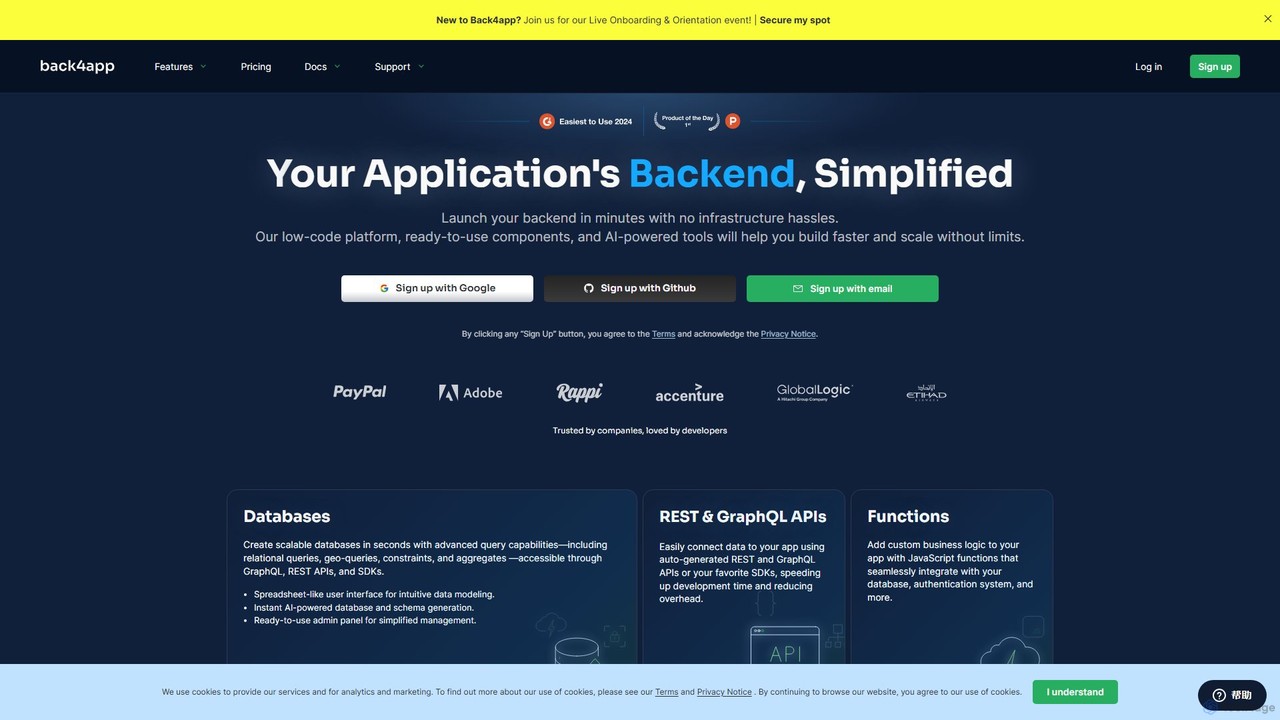
Back4app is an AI-powered, low-code Backend-as-a-Service (BaaS) platform that simplifies application development. It enables developers to launch scalable backends in minutes, handling infrastructure complexities like databases, APIs, authentication, and storage. With its AI Agent, ready-to-use components, and extensive SDK support, Back4app accelerates the development process, allowing teams to build faster and scale without limits for both web and mobile applications.

Preview

Dropbase Product overview

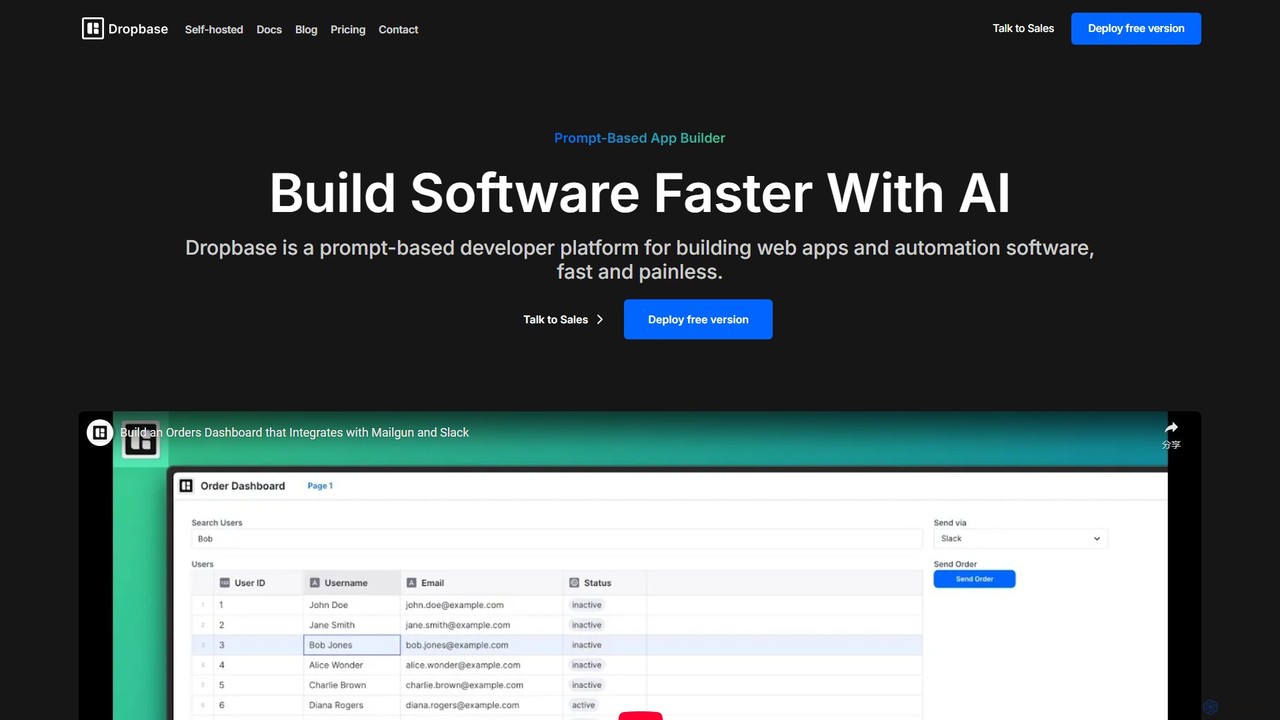
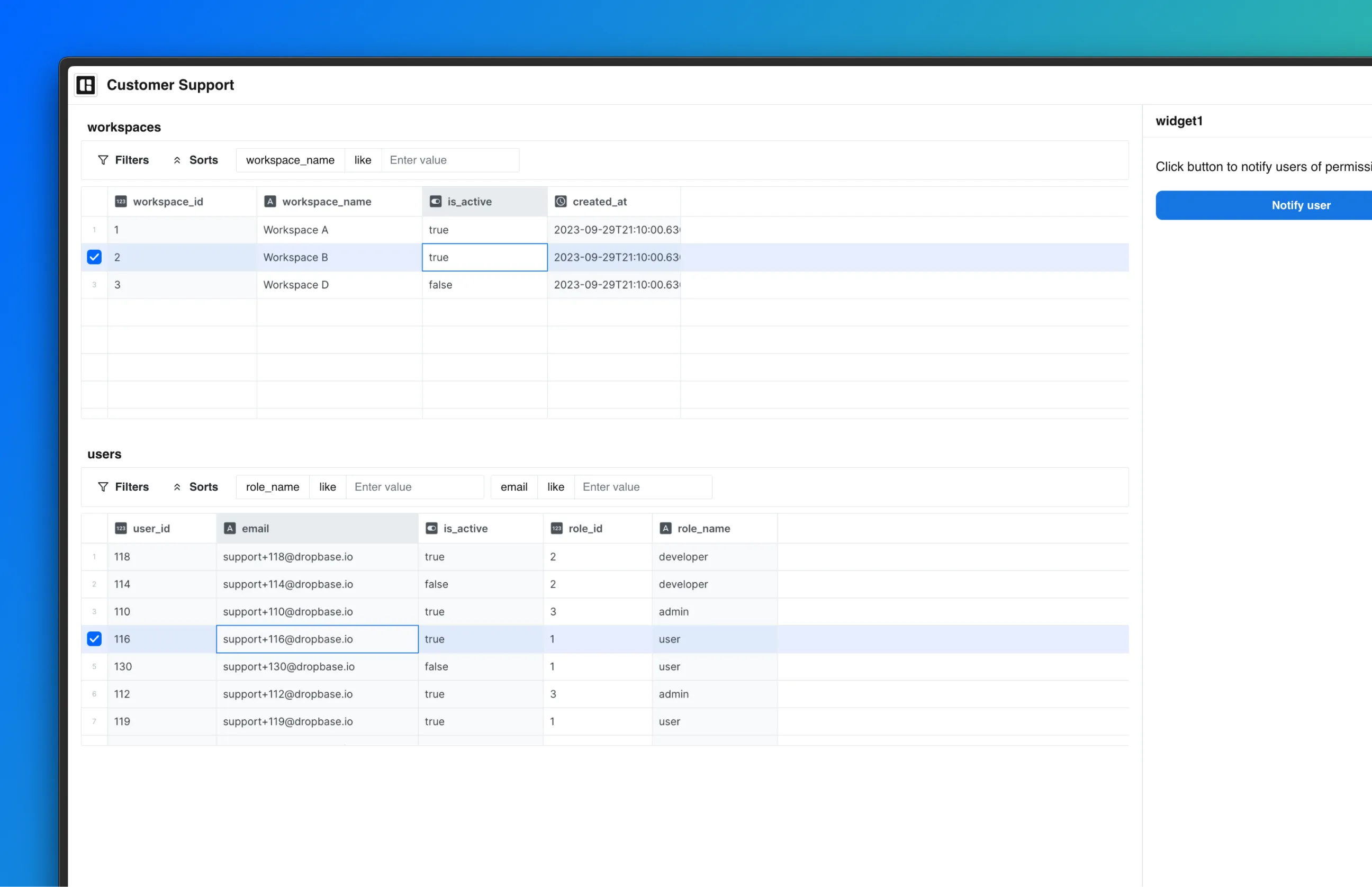
Dropbase is an AI-powered, prompt-based application builder designed for Python developers. It enables the rapid creation of internal tools, admin panels, and database editors directly within your existing codebase. By leveraging AI for code generation and providing essential UI components, Dropbase accelerates development, offers full Python flexibility, and ensures security with self-hosting options.

Preview

Quick facts

Compare product focus, pricing models and audiences. Highlighted rows indicate different listed information; unknown pricing does not mean free.

Back4app VS Dropbase — Quick facts
Quick factsBack4appDropbase
Pricing modelFreemiumFreemium
Product typeWebWeb
Primary focusBackend As A Service (Baas)Database
Audience and rolesNo data availableNo data available
CategoriesBackend As A Service (Baas) · Database · Low Code No Code · Developer ToolsDatabase · Low Code No Code · Web App · Internal Tools
AddedAug 6, 2025Aug 14, 2025
UpdatedNov 19, 2026Nov 19, 2026

Features, usage and use cases

Explore the listed product descriptions, features and workflows. Taxonomy labels alone are not feature evaluations.

Back4app

Back4app is a comprehensive, developer-centric platform designed to streamline and accelerate the backend development process for web and mobile applications. It operates as a low-code Backend-as-a-Service (BaaS) and Platform-as-a-Service (PaaS), built on a robust open-source foundation, including the popular Parse Server. The platform's core mission is to eliminate infrastructure hassles, allowing developers to focus on creating exceptional user experiences and business logic. By providing ready-to-use components, powerful APIs, and innovative AI-powered tools, Back4app empowers individual developers and large companies alike to build, deploy, and scale applications with unprecedented speed and efficiency.

The platform's standout feature is the AI Agent, which can transform an application idea described in natural language into a fully provisioned backend, including the database, authentication, APIs, real-time services, and storage. This dramatically lowers the barrier to entry for creating complex applications. For those who prefer a hands-on approach, Back4app offers an intuitive, spreadsheet-like interface for data modeling, making database creation and management accessible to everyone.

How to use Back4app

Getting started with Back4app is a straightforward process designed for rapid development:

  1. Sign Up: Create an account quickly using Google, GitHub, or email. The free tier allows you to explore all features without commitment.
  2. Create Your Backend: You can either use the AI Agent by describing your application's requirements to have the entire backend (database, schema, APIs) generated automatically, or you can manually set up your application.
  3. Model Your Data: Use the intuitive, spreadsheet-like dashboard to create database classes (tables), define columns, and establish relational data links.
  4. Connect Your Frontend: Integrate your frontend application (web or mobile) with the backend using the automatically generated REST or GraphQL APIs. Back4app provides a wide range of SDKs for popular frameworks like JavaScript, React, Flutter, iOS, Android, and .NET to simplify this process.
  5. Implement Business Logic: Write custom server-side logic using JavaScript Cloud Functions. These functions can be triggered by database events or called directly from your client application, allowing for complex operations and integrations.
  6. Deploy and Host: Deploy your full-stack web applications or Docker containers directly from a GitHub repository. The platform handles the hosting, scaling, and monitoring.
  7. Monitor and Scale: Use the built-in dashboard to monitor real-time metrics, view logs, and manage your application's performance. As your user base grows, Back4app automatically scales the infrastructure to meet demand.

Core Features of Back4app

  • AI Agent: Generate a complete backend stack—database, authentication, APIs, and more—simply by describing your app idea.
  • Scalable Databases: Create powerful, scalable databases with advanced capabilities like relational queries, geo-queries, constraints, and aggregations. Features an intuitive spreadsheet-like UI.
  • REST & GraphQL APIs: Automatically generated, fully documented APIs for seamless data connection to any frontend.
  • Cloud Functions: Add custom server-side business logic with JavaScript functions that integrate with your database and authentication systems.
  • Web Deployment & Container Hosting: Deploy full-stack web apps and Docker containers directly from GitHub, with real-time monitoring and seamless scaling.
  • Real-time Capabilities: Implement live updates in your apps with Live Queries, track online user presence, and broadcast data to subscribed clients in real-time.
  • CDN Storage: Efficiently store and deliver content like images and videos at high speed with a ready-to-use Content Delivery Network (CDN).
  • Authentication & Messaging: Secure user sign-ups and logins with robust authentication tools and enhance engagement with push notifications and verification messages.
  • Security & Compliance: Adheres to high security standards, offering compliance with GDPR, SOC 2, ISO 27001, and HIPAA (on dedicated plans).

Use Cases for Back4app

Back4app is versatile enough to support a wide range of projects, from simple prototypes to large-scale enterprise applications.

  • Rapid Prototyping: Quickly build and validate an idea for a CRM, social media app, or e-commerce platform without writing extensive backend code.
  • Mobile App Development: Provide a complete backend for native (iOS/Android) or cross-platform (Flutter, React Native) mobile apps, handling user accounts, data storage, and push notifications.
  • Real-time Applications: Build chat applications, live-tracking dashboards, or collaborative tools like a Slack clone using the real-time Live Query feature.
  • SaaS Products: Develop and scale Software-as-a-Service applications, leveraging the managed infrastructure to focus on feature development rather than DevOps.
  • Enterprise Solutions: Deploy mission-critical applications on dedicated, secure, and compliant infrastructure, ensuring high performance and reliability.

Advantages of Back4app

Developers and companies choose Back4app for several key reasons:

  • Speed to Market: The low-code environment and AI tools can reduce development time from months to weeks, or even days.
  • Cost-Effective Scalability: Predictable pricing and automatic scaling prevent surprise bills and allow applications to grow smoothly from a few users to millions.
  • No Vendor Lock-In: Built on open-source technologies like Parse Server, giving you the flexibility to migrate your backend if needed.
  • Developer-Centric: Comprehensive documentation, extensive SDKs, and a supportive community via Slack and Stack Overflow make development easier.
  • Fully Managed Infrastructure: Frees up developers from managing servers, databases, and security, allowing them to focus on building value.

Pricing and Plans

Back4app offers a flexible pricing structure to suit different project needs:

  • Free Plan: Ideal for development, learning, and prototyping. Includes 25K requests, 250 MB data storage, 1 GB transfer, and 1 GB file storage per month.
  • MVP Plan: Starts at $15/app/month (billed annually). Designed for validating ideas, offering 500K requests, 1 GB data storage, and 50 GB file storage.
  • Pay As You Go Plan: Starts at $80/app/month (billed annually). For running and scaling applications, with 5M requests, 3 GB data storage, and 250 GB file storage. Includes SOC 2 and ISO 27001 compliance.
  • Dedicated Plan: Starts at $400/app/month (billed annually). Provides production-grade speed and flexibility on dedicated resources, with unlimited requests (hardware-limited), 8 GB data storage, and HIPAA compliance options.
  • Enterprise Plan: Custom solutions for unique requirements, including on-premise deployment, advanced monitoring, and dedicated support.

Overage charges apply for exceeding plan limits on requests, data storage, file storage, and data transfer.

Dropbase

Dropbase is a revolutionary platform designed to accelerate software development, particularly for internal tools, by leveraging the power of Artificial Intelligence. It positions itself as a prompt-based app builder specifically tailored for Python developers. The core philosophy of Dropbase is to integrate seamlessly into a developer's existing workflow and codebase, allowing them to build, debug, and deploy applications faster than ever before. It eliminates the traditional complexities of frontend development and state management, enabling developers to focus solely on backend logic using Python.

The platform operates on the principle of AI-driven code generation. Developers can use natural language prompts to describe the functionality they need, and Dropbase's AI Studio generates the corresponding code. This code can then be previewed, edited, and refined, giving developers full control while significantly speeding up the initial development process. By living directly within your Python codebase, Dropbase allows for the reuse of existing functions, APIs, and ORM models, promoting code consistency and reducing redundant work.

How to use Dropbase

Using Dropbase is a developer-centric experience designed for efficiency. The process typically follows these steps:

  1. Setup and Integration: Start by integrating Dropbase into your existing Python project. As a self-hostable solution, you can deploy it within your own infrastructure (VPC) for maximum security and control.
  2. Connect Data Sources: Connect to your databases, such as PostgreSQL, or any internal or external REST API. This allows your applications to interact with your existing data and services.
  3. Use the AI Studio: Open the AI Studio, the central hub for development. Here, you can write prompts to generate application logic and UI. For example, you could prompt: "Create a table to display users from the Postgres DB and add a button to deactivate a user."
  4. Write and Debug Python Code: While the AI generates code, you have full flexibility to write custom Python functions. You can leverage popular libraries like numpy and pandas for complex data manipulation. The integrated environment allows for writing, debugging, and previewing the application in one place.
  5. Build the UI: Dropbase provides a comprehensive set of pre-built UI components (tables, buttons, forms, charts, etc.). The platform handles the client-server state synchronization, so you don't need to write any React or other frontend framework code.
  6. Deploy: Once your application is ready, you can deploy it. Dropbase is designed to work with existing CI/CD pipelines, making the deployment process smooth and familiar for development teams.

Core Features of Dropbase

  • AI Studio: An integrated development environment where you can write, debug, and preview your applications using AI-powered, prompt-based code generation.
  • All Python Backend: Build your entire application, including complex logic, using only Python. This provides full code flexibility and access to the rich Python ecosystem, including libraries like numpy and pandas.
  • Lives in Your Codebase: Seamlessly integrates with your existing codebase, allowing you to reuse functions, APIs, and ORM models, ensuring consistency and saving time.
  • Self-Hosted & Dev-Friendly: Can be self-hosted in your own VPC for maximum security. It works with your existing CI/CD and development workflows.
  • Synced State Management: Automatically handles the state synchronization between the client and server, removing the need for frontend state management libraries like React.
  • Rich UI Component Library: Offers all the essential UI components needed to build professional-grade internal software, such as admin panels and data editors.
  • Database and API Integrations: Natively connects to PostgreSQL and any REST API, whether internal or external.

Use Cases for Dropbase

Dropbase is ideal for a variety of internal application development scenarios:

  • Admin Panels: Quickly build powerful admin panels for managing users, orders, content, and other application data.
  • Database Editors: Create custom, user-friendly SQL data editors for databases like PostgreSQL, empowering operations teams to interact with data safely and efficiently without direct database access.
  • Internal Tools: Develop custom tools for operations, support, and marketing teams to automate manual workflows, manage data, and visualize metrics.
  • Rapid Prototyping: Build and test functional prototypes of applications in a fraction of the time it would take with traditional methods.
  • Migration from Other Platforms: Serve as a powerful alternative for teams migrating from other internal tool builders like Retool or Airplane.dev, especially for those who prefer a Python-native environment.

Advantages of Dropbase

Dropbase offers significant advantages for development teams:

  • Speed: The AI-powered, prompt-based approach dramatically reduces development time from weeks to hours.
  • Developer-Centric: Built by developers, for developers. It respects existing workflows and provides the flexibility of writing pure Python code.
  • Security and Control: The self-hosting option ensures that your data and applications remain within your secure infrastructure. Enterprise features include audit logs, granular permissions, and SAML/SSO.
  • Cost-Effective: By simplifying the development stack and reducing development time, Dropbase lowers the overall cost of building and maintaining internal applications.
  • No Frontend Expertise Required: Developers can build full-stack applications without needing to be experts in frontend technologies like JavaScript or React.

Pricing and Plans

Dropbase offers a freemium pricing model with two main tiers:

  • Free Plan: This plan is ideal for individual developers and founders getting started. It is self-hosted and costs $0 per user/month. It includes the AI Studio and the ability to build unlimited apps.
  • Enterprise Plan: Designed for larger organizations that require advanced security, control, and support. This plan is also self-hosted and includes all features of the Free plan, plus unlimited users, audit logs, granular permissions, self-hosting in your VPC, SAML/SSO integration, source control, a dedicated Customer Success Manager (CSM), and an SLA. Pricing for the Enterprise plan is available upon request by contacting the sales team.

Positioning

Their taxonomy shows where the products overlap and where each one has a more distinct focus. Unknown fields are shown explicitly and are never filled with assumptions.

Categories

Shared
DatabaseLow Code No Code
Only Back4app
Backend As A Service (Baas)Developer Tools
Only Dropbase
Web AppInternal Tools

Tags

Shared
low-code
Only Back4app
AI agentAPIapplication developmentBaaSbackenddatabaseGraphQLmobile backendno-codeparse serverrest apiserverlessweb hosting
Only Dropbase
admin panelAI code generationapp builderdatabase editordeveloper toolsinternal toolspostgrespythonself-hosted

Audience and roles

Shared
No listed items
Only Back4app
No listed items
Only Dropbase
No listed items

Traffic comparison

Traffic is shown on the same scale so differences in market visibility are not visually understated.

How to interpret the traffic data

Both charts share the same months and vertical scale. Each tool identifies its latest reporting month; missing months are left blank, not counted as zero. Regional and source visit counts are estimates calculated from the reported shares.

Back4app monthly traffic:

Latest traffic · 2026-05

Monthly visits
311.5K
Avg. visit duration
1:10
Pages per visit
3.84
Bounce rate
39.28%
Data updated 2026-06-15

Monthly traffic trend

  • 2025-09: 335.9K
  • 2026-01: 331.4K
  • 2026-02: 209.4K
  • 2026-03: 251.1K
  • 2026-04: 592.4K
  • 2026-05: 311.5K

Top regions

Top 5 countries/regions
Country/regionPercentageEstimated visits
🇺🇸United States48.8%152K
🇮🇳India14.59%45.5K
🇸🇳Senegal12.65%39.4K
🇨🇳China12.47%38.8K
🇧🇷Brazil11.49%35.8K

Traffic sources

Source typePercentageEstimated visits
Direct59.68%185.9K
Referral38.98%121.4K
Email1.34%4.2K

Search keywords

back4appfirebaseinstant deploypostcode singaporesingapore postal code

Dropbase

No data available

Community signals

Ratings, comments, favorites, and likes are community signals—not a substitute for product fit.

Back4app

Rating
No data available
Comments
0
Favorites
172
Likes
173

Dropbase

Rating
No data available
Comments
0
Favorites
196
Likes
197

Back4app vs Dropbase · Comparison FAQ

What do Back4app and Dropbase have in common?
Both tools are listed under Database、Low Code No Code. These categories indicate overlapping use cases; compare their detailed descriptions for workflows, capabilities and limitations.
Are Back4app and Dropbase free?
Listed pricing models: Back4app — Freemium; Dropbase — Freemium. Missing pricing is not proof of a free plan, and freemium does not mean every feature is free. Check official sites for current plans, limits and trials.
How should I choose between Back4app and Dropbase?
The primary listed category is Backend As A Service (Baas) for Back4app, and Database for Dropbase. Compare features, steps and use cases, then verify pricing, data permissions and deployment needs. This page does not include hands-on testing and does not declare a winner from traffic or tags.

Sources and comparison methodology

This page is assembled from ToolMage product listings, taxonomy, traffic statistics and on-site user feedback. It is not a hands-on test or an independent review.
  • Feature and plan descriptions reflect information in the listings, not real-time guarantees. Verify pricing, quotas, availability and privacy terms on the official sites.
  • Traffic uses the reporting months shown. Missing statistics do not mean zero visits, and different periods do not establish growth or superiority. Regional and source visit counts are estimates based on shares.
  • Different tags indicate differences in the listings, not proof that the other product lacks a capability. Ratings, favorites and visits are not used to declare a winner.

Related comparisons