ToolMage
Sign in

AI TOOL COMPARISON

BasicAI vs Grably

What is the difference, and which fits your workflow? Compare features, usage, pricing models and traffic side by side.

Jump to key differences

Product overview

BasicAI Product overview

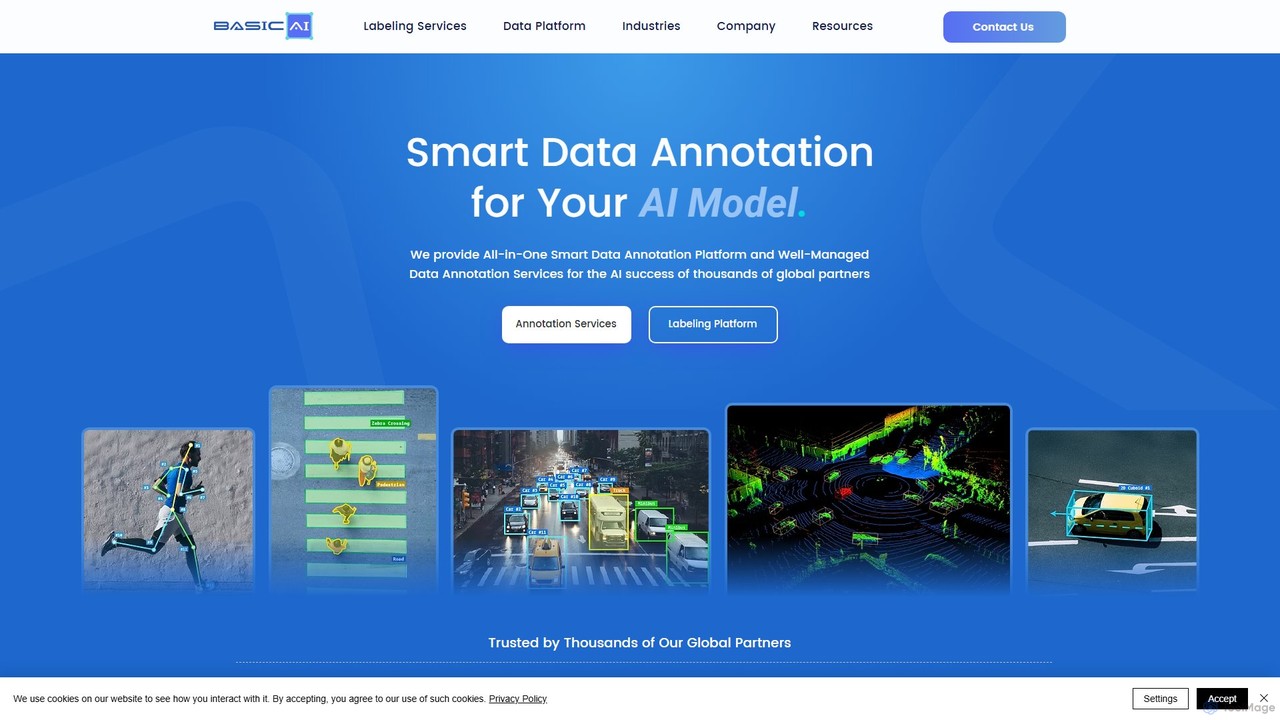
BasicAI offers a comprehensive data annotation platform and managed services to create high-quality training data for AI models. It specializes in 3D LiDAR, image, video, and NLP data, providing AI-assisted tools, scalable workflows, and enterprise-grade security to accelerate AI development.

Preview

Grably Product overview

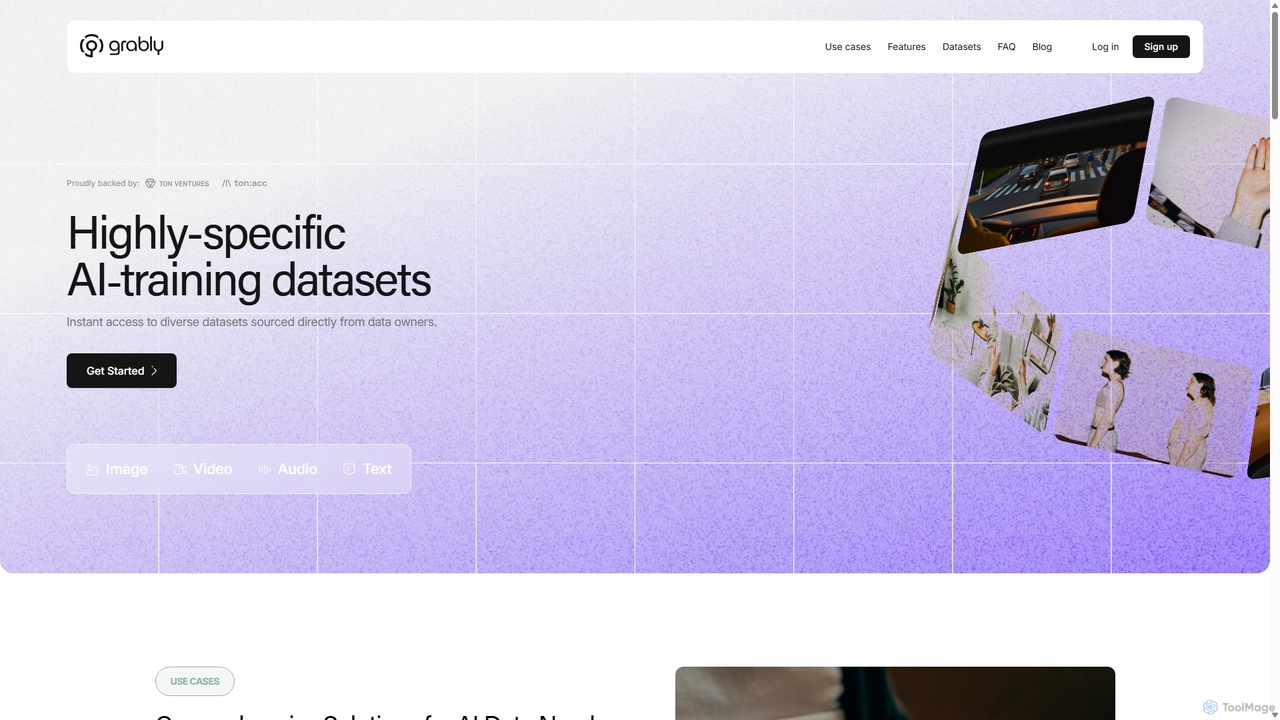
Grably is a decentralized data ownership network (DeDON) providing high-quality, ethically sourced AI training data. It offers a vast collection of off-the-shelf datasets, custom data collection, curation, and annotation services to accelerate AI development while allowing users to monetize their data securely and transparently.

Preview

Quick facts

Compare product focus, pricing models and audiences. Highlighted rows indicate different listed information; unknown pricing does not mean free.

BasicAI VS Grably — Quick facts
Quick factsBasicAIGrably
Pricing modelPaidPaid
Product typeWebWeb
Primary focusData LabelingData Labeling
Audience and rolesNo data availableAI Researcher · CTO · Data Analyst · Data Scientist · Machine Learning Engineer · Product Manager · Software Developer
CategoriesData Labeling · Annotation · Machine LearningData Labeling · Datasets · Machine Learning
AddedAug 12, 2025Sep 19, 2025
UpdatedNov 19, 2026Nov 19, 2026

Features, usage and use cases

Explore the listed product descriptions, features and workflows. Taxonomy labels alone are not feature evaluations.

BasicAI

BasicAI is a leading provider of data annotation solutions, offering both a sophisticated, all-in-one smart data annotation platform and fully managed data labeling services. With a mission to build human-centered AI training data infrastructure, BasicAI empowers thousands of global partners to transform promising ideas into high-performance AI models that solve real-world problems. The company has over seven years of experience in the data labeling industry, having successfully built over 300,000 datasets.

The platform and services are designed to handle a wide variety of data types, ensuring that AI models can truly understand their environment. By converting raw data into precise, ground-truth datasets, BasicAI significantly elevates machine learning performance across numerous applications, from autonomous driving to geographic information systems (GIS).

How to use BasicAI

Engaging with BasicAI can be done through two primary models: Managed Services or the self-serve Platform.

For Managed Annotation Services:

  1. Free Consultation: Start by contacting BasicAI for a free consultation to discuss your project's specific needs, data types, and quality requirements.
  2. Project Scoping: BasicAI's experts work with you to define annotation guidelines, quality metrics, and project timelines.
  3. Data Transfer: Securely upload your raw data to the BasicAI platform.
  4. Annotation by Experts: One of BasicAI's 160+ specialized global teams, with industry-specific knowledge, performs the annotation. They do not use crowdsourcing, ensuring context-aware and high-quality results.
  5. Quality Assurance: The annotated data undergoes multi-level inspections and validations to ensure it meets the 99%+ quality standard.
  6. Dataset Delivery: Receive the high-quality, validated training dataset ready for your AI model development.

For the Data Annotation Platform (Private Deployment):

  1. Request a Demo: Contact BasicAI to request a demonstration of their platform and discuss private deployment options.
  2. Installation: The platform is installed within your own environment, giving you direct control over data processing and security.
  3. Workflow Customization: Set up and customize project management workflows to match your team's structure and needs.
  4. Data Annotation: Your team uses the platform's advanced tools, including AI-assisted features, to annotate data efficiently.
  5. Quality Control: Utilize the built-in smart quality check system, which combines real-time feedback and customizable rules to catch issues early.
  6. Export Data: Export the finished datasets for use in your machine learning pipelines.

Core Features of BasicAI

  • Comprehensive Data Type Support: Specializes in complex annotation tasks, including 3D LiDAR point clouds, 2D images (bounding boxes, semantic segmentation), audio/video tagging, and Natural Language Processing (NLP) data.
  • RLHF & SFT Dataset Creation: Provides services for creating Reinforcement Learning from Human Feedback (RLHF) and Supervised Fine-Tuning (SFT) datasets, crucial for training large language models.
  • AI-Assisted Annotation: The platform includes automated and AI-assisted tools that accelerate the annotation process for images, point clouds, and audio, reducing manual labor while maintaining high accuracy.
  • Scalable Workflow and Project Management: Enterprise-ready tools allow for customizable workflows, comprehensive project tracking, and detailed performance reporting, adapting to any team size.
  • Smart Quality Check: An integrated quality inspection system with real-time feedback and customizable batch QA rules ensures high-quality output and enables targeted human review.
  • Private Deployment: For enterprises with strict data security requirements, the platform can be deployed privately within their own infrastructure.
  • Open-Source Contribution: BasicAI is the creator of Xtreme1, the world's first open-source multi-sensory training data platform, demonstrating a commitment to the AI community.

Use Cases for BasicAI

BasicAI's solutions are applicable across various industries:

  • Autonomous Driving: Annotating 3D LiDAR point clouds and camera imagery for object detection, tracking, and semantic segmentation to train self-driving vehicles.
  • GIS & Remote Sensing: As demonstrated in a property tax assessment use case, performing semantic segmentation on satellite or aerial imagery to identify land features, buildings, and other elements.
  • Smart Cities: Using bounding box annotation on city-wide camera feeds to monitor traffic, detect pedestrians, and manage urban infrastructure.
  • Healthcare: Annotating medical images (X-rays, MRIs) for disease detection and diagnosis.
  • Retail & E-commerce: Labeling product images for visual search, automated tagging, and inventory management.
  • Robotics: Creating training data for robots to perceive and interact with their environment.

Advantages of BasicAI

  • 99%+ Quality Assurance: A rigorous, multi-level inspection and validation process guarantees that training datasets meet precise requirements, minimizing rework.
  • Specialized Annotation Teams: Instead of relying on anonymous crowdsourcing, BasicAI utilizes over 160 specialist teams with deep, industry-specific knowledge, ensuring a better understanding of data context.
  • Competitive Pricing: Efficiency gains from purpose-built tools and refined project management allow BasicAI to offer its high-quality services at competitive rates.
  • Enterprise-Grade Security: The option for private, on-premise deployment gives organizations full control over their data, meeting the highest security and compliance standards.
  • All-in-One Solution: BasicAI provides a unified solution with both a powerful platform and expert services, offering flexibility for different project needs and scales.

Pricing and Plans

BasicAI operates on a custom pricing model tailored to the specific needs of each project. Pricing is determined by factors such as the volume and complexity of the data, the type of annotation required, and whether the client opts for managed services or a private platform deployment. Interested parties are encouraged to request a Free Consultation for the annotation services or a Request Demo for the platform to receive a detailed quote.

Grably

Grably is a pioneering platform built on the concept of a Decentralized Data Ownership Network (DeDON). It serves as a critical bridge between the growing demand for high-quality AI training data and the individuals and businesses who own that data. By creating a transparent and ethical ecosystem, Grably empowers AI teams to build more accurate and robust models while enabling data owners to monetize their assets securely and with full consent.

The platform addresses a core challenge in the AI industry: the scarcity of diverse, real-world, and ethically sourced data. Grably unlocks zettabytes of previously inaccessible data by sourcing it directly from users who have given explicit consent for its use in AI training. This approach not only ensures compliance with global privacy regulations like GDPR and CCPA but also enhances the quality and diversity of the datasets, leading to less biased and more effective AI models.

How to use Grably

Grably offers a streamlined process for both AI teams (clients) and data providers (partners):

For AI Teams & Developers:

  1. Explore Datasets: Browse Grably's extensive library of ready-to-use, off-the-shelf datasets spanning various industries, including healthcare, automotive, and retail.
  2. Request Custom Data: If your project has unique requirements, you can leverage Grably's platform to request custom data collection. Specify your needs, and Grably will gather high-quality, user-consented data tailored to your model.
  3. Enhance & Label: Utilize Grably's data curation and annotation services to clean, organize, and precisely label your datasets, ensuring they are optimized for model training and accuracy.
  4. Integrate & Train: Access and integrate the fully compliant, high-quality data into your AI development pipeline to train, test, and validate your models more efficiently.

For Data Providers & Partners:

  1. Join the Network: Become a Business Data Partner to list and monetize your datasets, such as medical records, media kits, or customer databases.
  2. Provide Consent: Individual users can join the network (often through associated apps) and provide explicit, granular consent for sharing specific types of data.
  3. Ensure Privacy: Data is often processed on-device to protect privacy before being added to the network.
  4. Earn Rewards: Monetize your data in an ethical and transparent way, receiving compensation for contributing to the advancement of AI.

Core Features of Grably

  • Off-the-Shelf Datasets: Access a vast and growing collection of pre-curated datasets, including multi-race facial recognition, medical imaging (X-rays, MRIs), dashcam traffic scenes, and more.
  • Custom Data Collection: A bespoke service to gather specific, high-quality data directly from consented users according to your project's unique needs.
  • Data Curation: Professional services to enhance datasets, ensuring relevance, accuracy, and compliance for optimal AI performance.
  • Expert Data Annotation: Precise data labeling and annotation services to improve the training process and accuracy of machine learning models.
  • Decentralized Data Ownership Network (DeDON): A foundational technology that ensures data is ethically sourced, transparent, and user-consented.
  • Compliance and Security: Adherence to global privacy standards like GDPR and CCPA, with a focus on secure, on-device processing and ethical data handling.
  • Data Monetization: A platform for businesses and individuals to monetize their data assets in a transparent and ethical manner.

Use Cases for Grably

Grably's datasets and services are applicable across numerous domains:

  • Healthcare: Training diagnostic AI models with medical images like X-rays and brain MRIs, or analyzing anonymized medical records.
  • Automotive: Developing autonomous driving systems using dashcam traffic scenes and object segmentation datasets.
  • Security & Biometrics: Building advanced recognition systems with datasets of multi-race faces, handprints, and palm images.
  • Retail: Enhancing customer experience and inventory management with datasets of indoor objects and human activity.
  • Insurance: Automating claims processing by training models on datasets of damaged cars.

Advantages of Grably

Grably offers a distinct competitive edge in the AI data market:

  • Unprecedented Data Quality: By sourcing directly from users, Grably provides diverse, real-world data that is significantly higher in quality than synthetic or scraped data.
  • Ethical and Compliant: Full user consent and adherence to privacy regulations mitigate legal and ethical risks for AI developers.
  • Scalability: The platform is designed to scale from small batch requests to massive, zettabyte-scale data needs without compromising quality.
  • Access to Unique Data: The DeDON model unlocks access to unique and previously unavailable datasets, giving AI teams a competitive advantage.
  • Transparency: The entire process, from data sourcing to client delivery, is built on a foundation of transparency for all stakeholders.

Pricing and Plans

Grably operates on a custom pricing model tailored to the specific needs of each client. Pricing is determined by factors such as the type of service (off-the-shelf dataset purchase, custom collection, annotation), the volume of data required, and the complexity of the project. To get a detailed quote, potential clients are encouraged to contact the Grably team directly through their website to discuss their requirements.

Positioning

Their taxonomy shows where the products overlap and where each one has a more distinct focus. Unknown fields are shown explicitly and are never filled with assumptions.

Categories

Shared
Data LabelingMachine Learning
Only BasicAI
Annotation
Only Grably
Datasets

Tags

Shared
AI training datacomputer visiondata annotationdata labelingmachine learning
Only BasicAI
autonomous drivingimage annotationLiDAR annotationNLPRLHFSFT
Only Grably
CCPAdata collectiondata monetizationdatasetsdecentralized dataDeDONethical aiGDPR

Audience and roles

Shared
No listed items
Only BasicAI
No listed items
Only Grably
AI ResearcherCTOData AnalystData ScientistMachine Learning EngineerProduct ManagerSoftware Developer

Traffic comparison

Traffic is shown on the same scale so differences in market visibility are not visually understated.

How to interpret the traffic data

Both charts share the same months and vertical scale. Each tool identifies its latest reporting month; missing months are left blank, not counted as zero. Regional and source visit counts are estimates calculated from the reported shares.

BasicAI monthly traffic:

Latest traffic · 2026-05

Monthly visits
21.5K
Avg. visit duration
0:15
Pages per visit
1.92
Bounce rate
38.67%
Data updated 2026-06-11

Monthly traffic trend

  • 2025-09: 26.6K
  • 2026-01: 41.9K
  • 2026-02: 36K
  • 2026-03: 30.5K
  • 2026-04: 22.5K
  • 2026-05: 21.5K

Top regions

Top 5 countries/regions
Country/regionPercentageEstimated visits
🇺🇸United States31.2%6.7K
🇮🇳India21.65%4.7K
🇻🇳Vietnam18.02%3.9K
🇳🇬Nigeria17.51%3.8K
🇮🇩Indonesia11.62%2.5K

Search keywords

basicaibasic.ai docsbasick.aisigmentation imagevideo recognition

Grably

No data available

Community signals

Ratings, comments, favorites, and likes are community signals—not a substitute for product fit.

BasicAI

Rating
No data available
Comments
0
Favorites
176
Likes
177

Grably

Rating
No data available
Comments
0
Favorites
175
Likes
172

BasicAI vs Grably · Comparison FAQ

What do BasicAI and Grably have in common?
Both tools are listed under Data Labeling、Machine Learning. These categories indicate overlapping use cases; compare their detailed descriptions for workflows, capabilities and limitations.
Are BasicAI and Grably free?
Listed pricing models: BasicAI — Paid; Grably — Paid. Missing pricing is not proof of a free plan, and freemium does not mean every feature is free. Check official sites for current plans, limits and trials.
How should I choose between BasicAI and Grably?
The primary listed category is Data Labeling for BasicAI, and Data Labeling for Grably. Compare features, steps and use cases, then verify pricing, data permissions and deployment needs. This page does not include hands-on testing and does not declare a winner from traffic or tags.

Sources and comparison methodology

This page is assembled from ToolMage product listings, taxonomy, traffic statistics and on-site user feedback. It is not a hands-on test or an independent review.

  • Feature and plan descriptions reflect information in the listings, not real-time guarantees. Verify pricing, quotas, availability and privacy terms on the official sites.
  • Traffic uses the reporting months shown. Missing statistics do not mean zero visits, and different periods do not establish growth or superiority. Regional and source visit counts are estimates based on shares.
  • Different tags indicate differences in the listings, not proof that the other product lacks a capability. Ratings, favorites and visits are not used to declare a winner.

Related comparisons