ToolMage
Sign in

AI TOOL COMPARISON

Codara vs Sourcery

What is the difference, and which fits your workflow? Compare features, usage, pricing models and traffic side by side.

Jump to key differences

Product overview

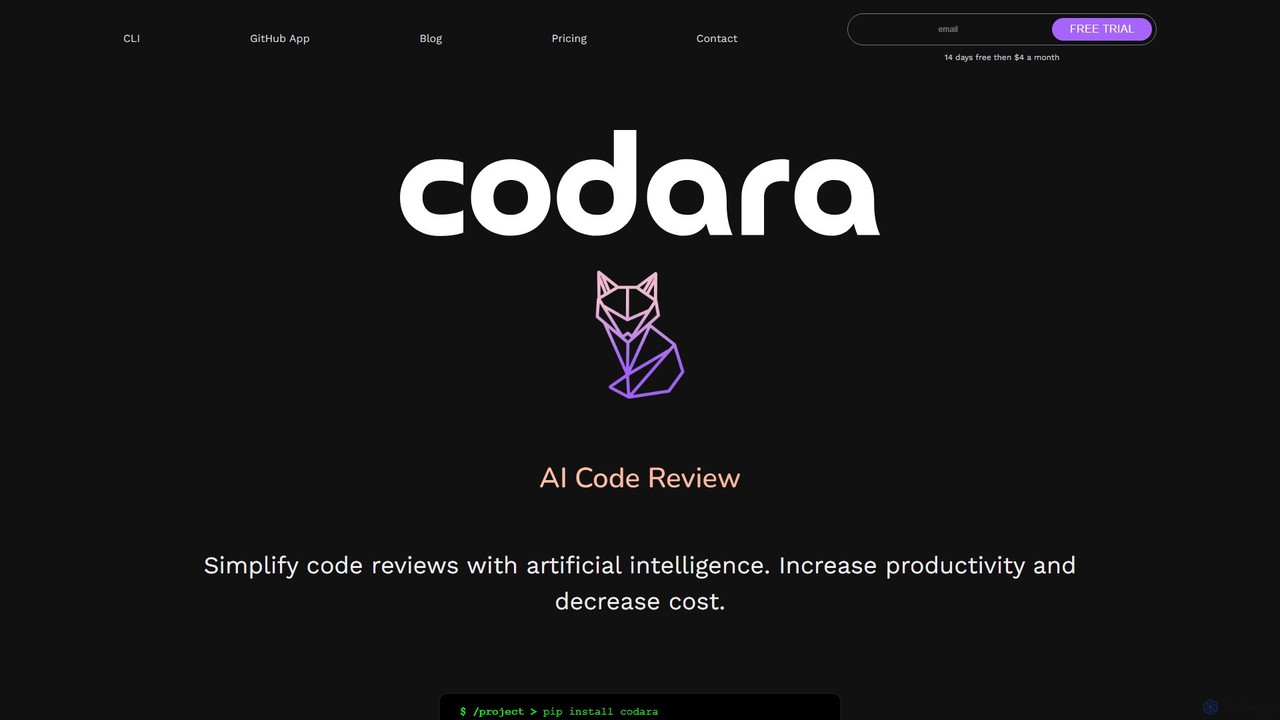
Codara Product overview

Codara is an AI-powered command-line tool designed to streamline software development. It automates code reviews and diagnoses errors, helping developers increase productivity, improve code quality, and accelerate release cycles. It integrates seamlessly into existing workflows, providing real-time feedback and actionable suggestions.

Preview

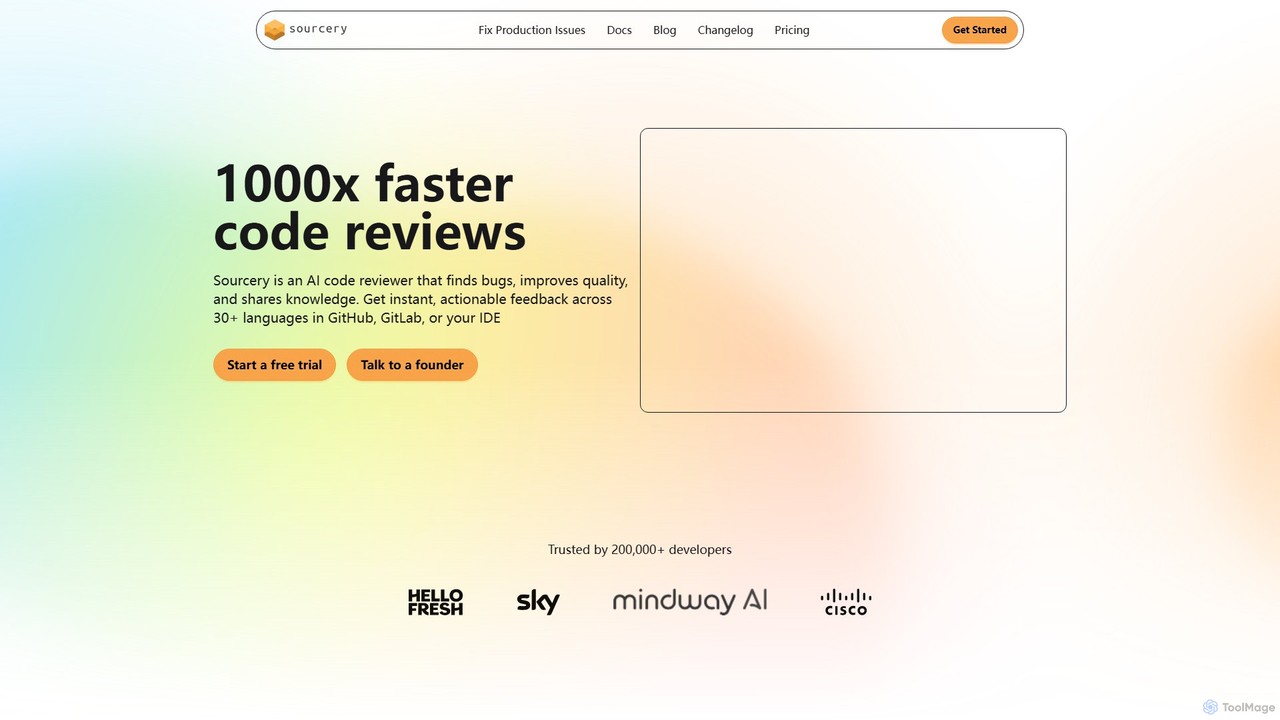
Sourcery Product overview

Sourcery is an AI-powered code reviewer that automates code reviews, finds bugs, improves code quality, and accelerates knowledge sharing. It integrates directly into your IDE, GitHub, and GitLab workflows, providing instant feedback and refactoring suggestions for over 30 languages.

Preview

Quick facts

Compare product focus, pricing models and audiences. Highlighted rows indicate different listed information; unknown pricing does not mean free.

Codara VS Sourcery — Quick facts
Quick factsCodaraSourcery
Pricing modelFreemiumFreemium
Product typeAppWeb
Primary focusCode ReviewCode Assistant
Audience and rolesNo data availableNo data available
CategoriesCode Review · Debugging · AutomationCode Assistant · Code Review · Automation · Vulnerability Scanning
AddedAug 15, 2025Aug 11, 2025
UpdatedNov 19, 2026Nov 19, 2026

Features, usage and use cases

Explore the listed product descriptions, features and workflows. Taxonomy labels alone are not feature evaluations.

Codara

Codara is a revolutionary AI-powered tool designed to simplify and enhance the software development lifecycle. Operating as a command-line interface (CLI) tool, it seamlessly integrates into any developer's existing environment, offering powerful features for AI code review and error diagnosis. The primary goal of Codara is to boost team productivity, reduce development costs, and significantly shorten release times by automating the traditionally time-consuming process of manual code reviews. By leveraging proprietary AI models, Codara analyzes code for potential issues, suggests optimizations, and ensures the codebase is clean, efficient, and maintainable.

The tool is built for developers of all levels, from juniors seeking guidance to seniors looking to optimize their workflow. It helps bridge the experience gap within teams by providing consistent, high-quality feedback. Codara's intelligent analysis goes beyond simple syntax checking, delving into code complexity, style consistency, and performance, all of which can be tailored to meet a team's specific coding standards. This ensures that every piece of code committed adheres to the highest quality benchmarks, reducing churn and preventing bugs from reaching production.

How to use Codara

Getting started with Codara is straightforward and designed for quick integration. Here are the basic steps:

  1. Prerequisites: Ensure you have Python 3 and Git installed on your system.
  2. Installation: Open your terminal and run the command: pip install codara.
  3. Login: To connect the tool to your account, run codara --login. You will need to register with the same email used for your subscription.
  4. AI Code Review: To review staged commits against a specific branch (e.g., 'main'), use: codara review --target main. To review unstaged changes in your current branch, use: codara review --unstaged. The review results are printed directly to the console and also saved in a 'reviews' directory within your project for future reference.
  5. AI Code Diagnosis: If you encounter an error from a command (e.g., npm run build), you can get AI-powered suggestions for a fix by running: codara diagnose "npm run build". The diagnosis is displayed in the console and saved to a 'diagnostics' directory.

Core Features of Codara

  • AI-Powered Code Review: Automatically analyzes code for bugs, vulnerabilities, and style violations, providing intelligent suggestions for improvement.
  • AI Code Diagnosis: Interprets error messages from command-line outputs and offers potential fixes, significantly speeding up the debugging process.
  • Effortless CLI Integration: Fits smoothly into any development workflow as a simple-to-use command-line tool.
  • Real-Time Feedback: Delivers instant, actionable feedback as you code, allowing you to catch and fix errors before they escalate.
  • Customizable Review Criteria: Allows teams to tailor the AI's analysis to their specific coding standards, including style, complexity, and performance metrics.
  • Local and Secure: Reviews and diagnostics are saved locally to your project, and Codara ensures your code's privacy and confidentiality at all times. Enterprise plans offer dedicated and private AI models.

Use Cases for Codara

Codara is versatile and beneficial in various development scenarios:

  • Streamlining Pull Requests: Automate the initial review of pull requests on platforms like GitHub, allowing human reviewers to focus on logic and architecture rather than syntax and style.
  • Onboarding Junior Developers: Provides an invaluable learning tool for new developers, offering immediate feedback and guidance that helps them adhere to team standards and improve their coding skills faster.
  • Individual Developer Productivity: Helps solo developers maintain high code quality and catch mistakes early without needing a second pair of eyes.
  • Complex Debugging: When faced with cryptic error messages from build tools or scripts, the `diagnose` feature can provide clarity and a path to a solution, saving hours of frustration.
  • Team-wide Code Consistency: Enforces a unified coding standard across the entire team, leading to a more maintainable and readable codebase.

Advantages of Codara

Codara offers a significant competitive edge by transforming the development process. Key advantages include a reported 10x increase in review speed and 99% quicker releases. It drastically reduces developer churn by up to 80% by minimizing tedious review tasks. The tool enhances collaboration, facilitates knowledge sharing, and scales with projects of any size. Its focus on data privacy, with confidential and secure processing, makes it a reliable choice for any organization.

Pricing and Plans

Codara offers a simple and accessible pricing model:

  • Free Trial: A 14-day free trial is available for all new users to explore the full capabilities of the tool.
  • Standard Plan: For $4 per month, users get unlimited reviews, access to the diagnostic feature, use of proprietary AI models, and the ability to review both unstaged code and code between branches.
  • Enterprise Plan: This plan includes all features of the standard plan, plus a dedicated AI instance, private and local AI models for maximum security, and first-class support. Pricing is available upon contacting the sales team.

Sourcery

Sourcery is an advanced AI code reviewer designed to make code reviews 1000x faster. It acts as an automated assistant for developers, meticulously analyzing code to find bugs, identify security vulnerabilities, and suggest improvements to enhance quality and maintainability. By integrating seamlessly into existing development environments, Sourcery helps teams streamline their workflows, reduce technical debt, and foster a culture of continuous improvement.

Trusted by over 200,000 developers, Sourcery provides immediate, actionable feedback on every pull request or code commit. It goes beyond simple linting by understanding the context and logic of the code, offering intelligent refactoring suggestions that can be applied with a single click. The tool is designed to learn from your team's feedback and coding style, becoming a more effective and personalized reviewer over time.

How to use Sourcery

Getting started with Sourcery is straightforward and designed for a smooth integration into your current workflow:

  1. Connect your Git Platform: Integrate Sourcery with your GitHub or GitLab repositories. Once connected, it will automatically start reviewing new pull requests.
  2. Install the IDE Extension: For real-time feedback, install the Sourcery plugin for your favorite IDE, such as VS Code, JetBrains (PyCharm, IntelliJ), Sublime Text, or Vim. This allows you to get suggestions and refactor code before you even commit.
  3. Review Suggestions: In pull requests, Sourcery posts comments with suggestions and explanations. In the IDE, it highlights code that can be improved and offers quick fixes.
  4. Customize Rules: Teams can configure Sourcery to enforce their specific coding standards and style guides, ensuring consistency across the entire codebase.
  5. Use the AI Assistant: Leverage the in-IDE chat feature to ask coding questions, generate unit tests, explain complex code blocks, or create documentation.

Core Features of Sourcery

  • AI-Powered Code Review: Automatically reviews every pull request, providing in-line suggestions to fix bugs, improve performance, and enhance readability.
  • Multi-Language Support: Offers comprehensive analysis for over 30 programming languages, including Python, JavaScript, TypeScript, and more.
  • Seamless IDE & Git Integration: Works directly within GitHub, GitLab, VS Code, and JetBrains IDEs, providing feedback where developers work.
  • Advanced Security Scanning: Includes SAST (Static Application Security Testing) and secrets scanning to identify and fix security vulnerabilities early in the development cycle.
  • Knowledge Sharing Tools: Automatically generates summaries for pull requests and creates Mermaid diagrams to visually explain complex changes, making reviews easier for human collaborators.
  • Customizable Rule Engine: Allows teams to create and enforce their own custom review rules and style guides, ensuring code consistency.
  • Continuous Learning: The AI model adapts to your team's feedback, learning from accepted and rejected suggestions to provide more relevant comments over time.
  • Enterprise-Grade Security: Offers self-hosting options for maximum control, ensures your code is never stored on Sourcery's servers, and uses LLM providers that do not train on your data.

Use Cases for Sourcery

Sourcery is versatile and benefits various aspects of the software development lifecycle:

  • Accelerating Development Velocity: By automating the initial, repetitive parts of code review, it frees up senior developers' time and eliminates review bottlenecks, leading to faster release cycles.
  • Improving Code Quality and Consistency: Enforces best practices and team-specific style guides automatically, leading to a more maintainable, stable, and consistent codebase.
  • Onboarding New Developers: Acts as a patient mentor, providing instant, constructive feedback that helps new team members learn the codebase and best practices quickly.
  • Proactive Security Hardening: Catches security flaws and exposed secrets before they are merged, shifting security left and reducing risk.
  • Managing Technical Debt: Continuously identifies opportunities for refactoring, helping teams to systematically reduce technical debt and improve the long-term health of their projects.

Advantages of Sourcery

Sourcery offers significant advantages over manual reviews and traditional static analysis tools:

  • Speed and Efficiency: Delivers feedback in seconds, not hours or days, dramatically speeding up the review process.
  • Actionable Intelligence: Provides not just problem identification but also concrete, one-click solutions and clear explanations.
  • Developer-Centric Workflow: Integrates non-intrusively into the tools developers already use, minimizing context switching.
  • Scalability: Scales effortlessly from individual developers to large enterprise teams, maintaining high-quality standards regardless of team size.
  • Data Privacy and Security: Strong commitment to security with self-hosting, zero-retention options, and a 'Bring Your Own LLM' feature for enterprise clients.

Pricing and Plans

Sourcery offers a range of plans to suit different needs:

  • Open Source Plan (Free): Fully featured for public, open-source repositories.
  • Pro Plan ($12 per seat/month): Designed for individual developers or small teams working on private repositories. Includes code review, pull request summaries, and custom rules.
  • Team Plan ($24 per seat/month): Includes all Pro features, plus repository analytics, secrets scanning, SAST scanning, and the ability to bring your own LLM.
  • Enterprise Plan (Custom Pricing): Tailored for large organizations, offering everything in the Team plan plus a self-hosting option, priority support, a dedicated customer success manager, and invoice billing.

A free trial is available for the Pro and Team plans.

Positioning

Their taxonomy shows where the products overlap and where each one has a more distinct focus. Unknown fields are shown explicitly and are never filled with assumptions.

Categories

Shared
Code ReviewAutomation
Only Codara
Debugging
Only Sourcery
Code AssistantVulnerability Scanning

Tags

Shared
code qualitycode reviewgithubpython
Only Codara
AI developer toolclicode assistantdebuggingdeveloper productivitystatic analysis
Only Sourcery
AI code assistantautomationdeveloper toolsgitlabjavascriptrefactoringSASTsecurity scanningtechnical debt

Audience and roles

Shared
No listed items
Only Codara
No listed items
Only Sourcery
No listed items

Traffic comparison

Traffic is shown on the same scale so differences in market visibility are not visually understated.

How to interpret the traffic data

Both charts share the same months and vertical scale. Each tool identifies its latest reporting month; missing months are left blank, not counted as zero. Regional and source visit counts are estimates calculated from the reported shares.

Codara

No data available

Sourcery monthly traffic:

Latest traffic · 2026-05

Monthly visits
82.5K
Avg. visit duration
0:42
Pages per visit
2.93
Bounce rate
43.34%
Data updated 2026-06-15

Monthly traffic trend

  • 2025-09: 48K
  • 2026-01: 81.3K
  • 2026-02: 75.7K
  • 2026-03: 81.1K
  • 2026-04: 79.7K
  • 2026-05: 82.5K

Top regions

Top 5 countries/regions
Country/regionPercentageEstimated visits
🇸🇪Sweden33.94%28K
🇺🇸United States31.49%26K
🇮🇳India14.45%11.9K
🇷🇺Russia10.26%8.5K
🇻🇳Vietnam9.86%8.1K

Traffic sources

Source typePercentageEstimated visits
Direct73.98%61K
Referral23.75%19.6K
Email2.27%1.9K

Search keywords

how do i sign up for sourcery.ai student discount/apply for itjwt confusion attacksourcerysourcery aisourcery.ai student plans

Community signals

Ratings, comments, favorites, and likes are community signals—not a substitute for product fit.

Codara

Rating
No data available
Comments
0
Favorites
183
Likes
185

Sourcery

Rating
No data available
Comments
0
Favorites
207
Likes
201

Codara vs Sourcery · Comparison FAQ

What do Codara and Sourcery have in common?
Both tools are listed under Code Review、Automation. These categories indicate overlapping use cases; compare their detailed descriptions for workflows, capabilities and limitations.
Are Codara and Sourcery free?
Listed pricing models: Codara — Freemium; Sourcery — Freemium. Missing pricing is not proof of a free plan, and freemium does not mean every feature is free. Check official sites for current plans, limits and trials.
How should I choose between Codara and Sourcery?
The primary listed category is Code Review for Codara, and Code Assistant for Sourcery. Compare features, steps and use cases, then verify pricing, data permissions and deployment needs. This page does not include hands-on testing and does not declare a winner from traffic or tags.

Sources and comparison methodology

This page is assembled from ToolMage product listings, taxonomy, traffic statistics and on-site user feedback. It is not a hands-on test or an independent review.

  • Feature and plan descriptions reflect information in the listings, not real-time guarantees. Verify pricing, quotas, availability and privacy terms on the official sites.
  • Traffic uses the reporting months shown. Missing statistics do not mean zero visits, and different periods do not establish growth or superiority. Regional and source visit counts are estimates based on shares.
  • Different tags indicate differences in the listings, not proof that the other product lacks a capability. Ratings, favorites and visits are not used to declare a winner.

Related comparisons