ToolMage
Sign in

AI TOOL COMPARISON

CodeConductor vs ubdroid

What is the difference, and which fits your workflow? Compare features, usage, pricing models and traffic side by side.

Jump to key differences

Product overview

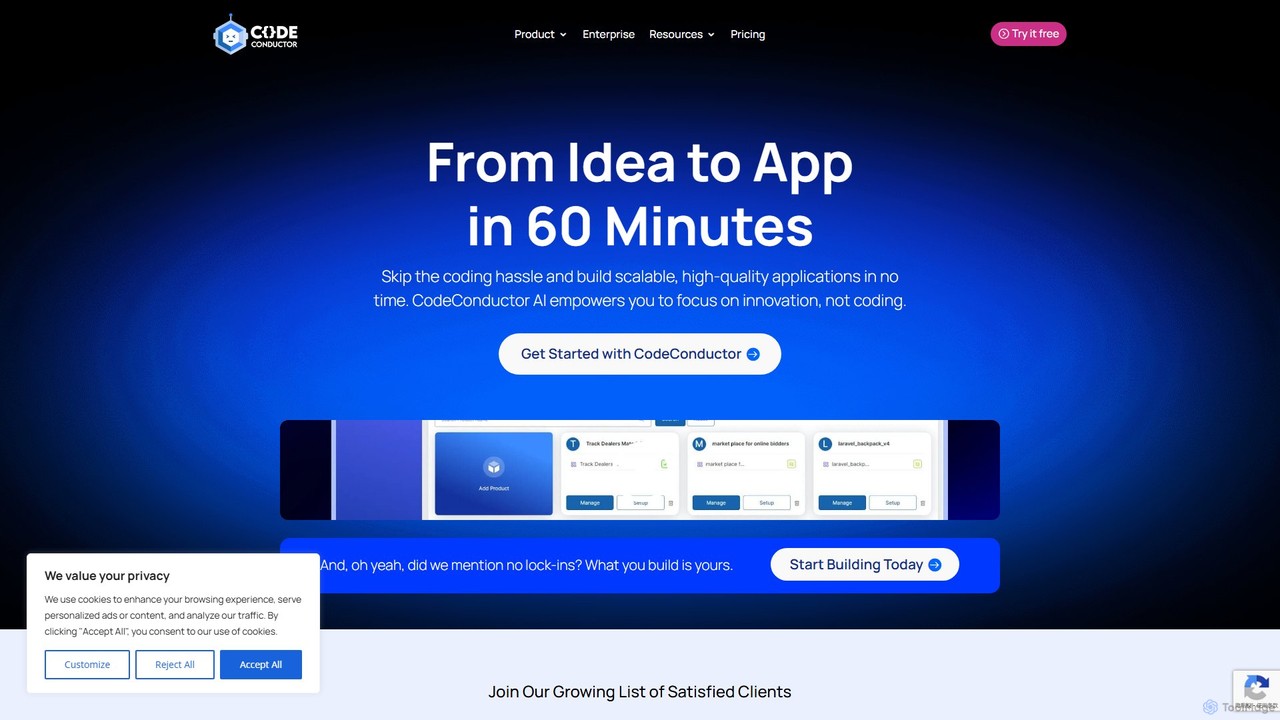
CodeConductor Product overview

CodeConductor is an AI-powered software development platform that transforms natural language prompts into scalable, production-ready full-stack applications. It enables users to build, deploy, and scale web and mobile apps in minutes, offering full code ownership and eliminating vendor lock-in. Designed for startups and enterprises, it accelerates development, from MVPs to complex internal tools.

Preview

ubdroid Product overview

ubdroid is an AI-powered no-code platform that enables users to create native Android applications from simple text descriptions or design mockups. It automates the entire development process, from UI design to backend logic, making app creation accessible to everyone, regardless of their technical skills.

Preview

Quick facts

Compare product focus, pricing models and audiences. Highlighted rows indicate different listed information; unknown pricing does not mean free.

CodeConductor VS ubdroid — Quick facts
Quick factsCodeConductorubdroid
Pricing modelPaidFreemium
Product typeWebWeb
Primary focusApplication BuilderApp Builder
Audience and rolesNo data availableNo data available
CategoriesApplication Builder · No Code & Low Code · PrototypingApp Builder · No Code & Low Code · Prototyping
AddedAug 7, 2025Aug 4, 2025
UpdatedNov 19, 2026Nov 19, 2026

Features, usage and use cases

Explore the listed product descriptions, features and workflows. Taxonomy labels alone are not feature evaluations.

CodeConductor

CodeConductor is a revolutionary AI-driven software development platform designed to dramatically accelerate the application creation process. It empowers both technical and non-technical users to turn an idea into a fully functional, scalable, and high-quality application in as little as 60 minutes. By interpreting natural language prompts, CodeConductor generates complete, production-ready code for web and mobile applications, effectively bridging the gap between vision and reality without the traditional complexities of coding.

The platform is built on the principle of 'no lock-in,' meaning that whatever you build is entirely yours. You receive the full source code, giving you complete control, transparency, and the freedom to deploy your application anywhere—on VMs, Kubernetes, bare metal, or any cloud provider like AWS, Azure, or Google Cloud. This makes CodeConductor an ideal solution for startups needing to build MVPs quickly and for enterprises looking to develop custom internal tools or streamline their software development lifecycle.

How to use CodeConductor

The development process with CodeConductor is streamlined into a few simple steps:

  1. Share Your Vision: Begin by describing your application or website idea in plain English. You work with product creation experts and use an intuitive prompt-based interface to detail your requirements.
  2. Leverage AI to Build: The platform's AI engine takes your vision and generates the full-stack application, including the frontend, backend, database schemas, and APIs.
  3. Fine-tune with Expert Input: Review the AI-generated application. You can use the interactive visual editor and AI-driven insights to customize and enhance every aspect of your project. The platform also includes developer hours for custom modifications.
  4. Launch and Grow: Once satisfied, you can deploy your application instantly. CodeConductor provides seamless CI/CD pipelines and auto-scaled cloud hosting with a global CDN, or you can take the code and deploy it on your own infrastructure.

Core Features of CodeConductor

  • AI-Powered Full-Stack Generation: Instantly creates complete applications, including frontend (React) and backend (Springboot, or other major frameworks).
  • Hallucination-Free Code: Utilizes a proprietary model to generate accurate, reliable, and deployable code, minimizing bugs and errors.
  • Full Code Ownership: Provides complete access to the modular source code with no platform lock-in.
  • Dynamic Data Modeling: The AI generates live, visual diagrams of your data models, making complex database structures easy to understand and modify.
  • Seamless CI/CD & Auto-Scaled Hosting: Automates deployment with efficient CI/CD pipelines and offers reliable, auto-scaled cloud hosting.
  • Flexible Deployment: Supports deployment to any cloud (Google Cloud, Azure, AWS), VMs, Kubernetes, or bare-metal servers.
  • Complete Customization Control: An interactive visual editor combined with AI insights allows for effortless tailoring and enhancement of projects.
  • Intelligent Feature Suggestions: The AI provides recommendations on the best features to add to enhance your app's functionality and user experience.
  • Third-Party Integrations: Automatically integrate with a wide range of tools and services like Plaid, Xero, Google Analytics, Slack, and more.
  • Transparent Code History: Track all code changes and clearly distinguish between AI-generated and human-written code contributions.

Use Cases for CodeConductor

CodeConductor is versatile and caters to a wide range of development needs:

  • Startups & MVP Development: Rapidly build and launch Minimum Viable Products (MVPs) to attract investors and validate market ideas in a fraction of the traditional time and cost.
  • Enterprise Internal Tools: Quickly create custom internal applications, dashboards, and workflow automation tools tailored to specific business needs without extensive coding resources.
  • SaaS Product Development: Build and scale full-featured Software-as-a-Service (SaaS) platforms with robust backends, secure authentication, and scalable infrastructure.
  • Dynamic Websites: Craft complex, data-driven websites and web applications with dynamic content and user interactions.

A real-world example is CPA Pilot, which used CodeConductor to build an application for tax professionals, securing major clients shortly after its 90-day launch.

Advantages of CodeConductor

CodeConductor offers a significant competitive edge by combining the speed of no-code with the power of full-code development. Key advantages include accelerated time-to-market, reduced development costs, enterprise-grade security, and ultimate flexibility. Unlike closed-off no-code platforms, it provides full transparency and ownership, ensuring that your application can scale and evolve without limitations. It is positioned as a safer and more robust alternative to other AI coding tools, with built-in guardrails to protect production data.

Pricing and Plans

CodeConductor offers several tiered plans tailored to different needs:

  • Starter: Designed for new founders. Includes one AI-generated product (Springboot/React), Git version control, 4 developer hours/month for customization, cloud hosting, and CI/CD.
  • Standard: Aimed at new startups. Includes everything in Starter for up to 2 products, plus support for any major framework, expanded version control (SVN, Mercurial), 16 developer hours/month, and phone support.
  • Pro: For small companies. Builds on the Standard plan for up to 5 products, adding 24/7 customer support, 80 developer hours/month, and advanced integration support.
  • Enterprise: A custom plan for large companies. Includes all Pro features plus API access, custom authentication/authorization, air-gapped deployment options, compliance certifications, and dedicated consultation services.

ubdroid

ubdroid is a revolutionary AI-driven platform designed to democratize Android app development. It empowers entrepreneurs, designers, small businesses, and individuals to transform their ideas into fully functional, native Android applications without writing a single line of code. By leveraging advanced generative AI models, ubdroid interprets natural language prompts, UI sketches, or design files to automatically generate the application's structure, user interface, and backend logic. This drastically reduces the time, cost, and complexity traditionally associated with mobile app development.

The platform is built around an intuitive, user-friendly interface that guides you through every step of the creation process. Whether you're looking to build a minimum viable product (MVP) to test a market, create a custom app for your business, or simply bring a personal project to life, ubdroid provides the tools and intelligence to make it happen efficiently.

How to use ubdroid

Using ubdroid is a straightforward, three-step process designed for maximum simplicity and efficiency:

  1. Describe Your App: Start by signing up and creating a new project. In the project dashboard, describe your app idea in plain English. For example, you could write, "Create a task management app with user login, project categories, due dates, and push notification reminders." You can also upload a wireframe or a design from a tool like Figma.
  2. AI Generation & Customization: The ubdroid AI will analyze your input and generate a complete initial version of your app, including multiple screens, a functional database, and user flows. You can then use the intuitive drag-and-drop visual editor to customize every aspect of the app. Change colors, fonts, layouts, add new components, and modify the AI-generated logic to perfectly match your vision.
  3. Test & Deploy: Once you are satisfied with your app, you can test it in real-time using the built-in emulator. The platform helps you debug and refine the functionality. When ready, ubdroid provides a streamlined, one-click deployment process to publish your app directly to the Google Play Store, even assisting with generating the necessary listings and screenshots.

Core Features of ubdroid

  • AI-Powered App Generation: Converts natural language descriptions or design files into functional Android app source code and UI.
  • No-Code Visual Editor: An intuitive drag-and-drop interface to customize layouts, components, and branding without coding.
  • Automated Backend & Database: Automatically sets up a scalable cloud backend and a managed database for your application.
  • AI Logic Builder: Define complex app logic and workflows using simple, human-readable commands and visual flows.
  • One-Click Google Play Deployment: Simplifies the entire publishing process, from generating an APK to creating a store listing.
  • Pre-built Templates & Components: A rich library of templates for various app types (e-commerce, booking, social, etc.) and ready-to-use UI components.
  • Figma/Sketch Integration: Directly import your designs from popular UI/UX tools to turn them into interactive applications.
  • Real-time Testing & Debugging: Instantly preview and test your app on a virtual device to identify and fix issues.

Use Cases for ubdroid

ubdroid is versatile and can be used by a wide range of users:

  • Entrepreneurs & Startups: Quickly build and launch an MVP to validate a business idea and attract investors without a large initial investment.
  • Small & Medium Businesses: Create custom apps for customer engagement, such as loyalty programs, booking systems, or online stores.
  • Designers (UI/UX): Transform static mockups into fully interactive and functional prototypes or complete apps to showcase their work.
  • Marketers: Develop simple, campaign-specific apps for promotions, events, or brand engagement without needing a development team.
  • Students & Educators: An excellent tool for learning the principles of app design and logic in a hands-on, code-free environment.

Advantages of ubdroid

The primary advantage of ubdroid is its ability to significantly lower the barrier to entry for app development. It offers incredible speed, reducing development cycles from months to mere hours or days. This leads to substantial cost savings by eliminating the need for a dedicated development team. The platform's no-code nature makes it accessible to non-technical users, fostering innovation from a broader audience. Finally, apps built with ubdroid are native and scalable, ensuring a high-quality user experience and readiness for growth.

Pricing and Plans

ubdroid operates on a freemium model, offering a range of plans to suit different needs:

  • Free Plan: Ideal for individuals and hobbyists to explore the platform. Includes 1 app, limited AI generations, and ubdroid branding.
  • Pro Plan: Designed for entrepreneurs and small businesses. Offers multiple apps, higher AI generation limits, custom branding, and priority email support.
  • Business Plan: Tailored for agencies and larger teams. Includes unlimited apps, team collaboration features, API access, and dedicated support.

Detailed pricing is available on the official website after signing up.

Positioning

Their taxonomy shows where the products overlap and where each one has a more distinct focus. Unknown fields are shown explicitly and are never filled with assumptions.

Categories

Shared
No Code & Low CodePrototyping
Only CodeConductor
Application Builder
Only ubdroid
App Builder

Tags

Shared
MVP builderno-codesoftware development
Only CodeConductor
AI code generationapplication builderCI/CDcode ownershipfull-stackinternal toolslow-codeprompt to app
Only ubdroid
ai app generatorAndroid developmentapp buildermobile appprototypingtext-to-app

Audience and roles

Shared
No listed items
Only CodeConductor
No listed items
Only ubdroid
No listed items

Traffic comparison

Traffic is shown on the same scale so differences in market visibility are not visually understated.

How to interpret the traffic data

Both charts share the same months and vertical scale. Each tool identifies its latest reporting month; missing months are left blank, not counted as zero. Regional and source visit counts are estimates calculated from the reported shares.

CodeConductor monthly traffic:

Latest traffic · 2026-05

Monthly visits
49.6K
Avg. visit duration
0:59
Pages per visit
2.67
Bounce rate
38.83%
Data updated 2026-06-15

Monthly traffic trend

  • 2025-09: 42K
  • 2026-01: 58.5K
  • 2026-02: 65.9K
  • 2026-03: 78.5K
  • 2026-04: 57.4K
  • 2026-05: 49.6K

Top regions

Top 5 countries/regions
Country/regionPercentageEstimated visits
🇺🇸United States59.49%29.5K
🇮🇳India13.64%6.8K
🇳🇬Nigeria12.96%6.4K
🇻🇳Vietnam7.22%3.6K
🇧🇷Brazil6.69%3.3K

Traffic sources

Source typePercentageEstimated visits
Direct84.81%42.1K
Email8.89%4.4K
Referral6.3%3.1K

Search keywords

antigravity alternativecodeconductorcode maker skills aiopencode vs dyadwhats the most important skill to learn in ai right now for creatives

ubdroid

No data available

Community signals

Ratings, comments, favorites, and likes are community signals—not a substitute for product fit.

CodeConductor

Rating
No data available
Comments
0
Favorites
170
Likes
174

ubdroid

Rating
No data available
Comments
0
Favorites
144
Likes
136

CodeConductor vs ubdroid · Comparison FAQ

What do CodeConductor and ubdroid have in common?
Both tools are listed under No Code & Low Code、Prototyping. These categories indicate overlapping use cases; compare their detailed descriptions for workflows, capabilities and limitations.
Are CodeConductor and ubdroid free?
Listed pricing models: CodeConductor — Paid; ubdroid — Freemium. Missing pricing is not proof of a free plan, and freemium does not mean every feature is free. Check official sites for current plans, limits and trials.
How should I choose between CodeConductor and ubdroid?
The primary listed category is Application Builder for CodeConductor, and App Builder for ubdroid. Compare features, steps and use cases, then verify pricing, data permissions and deployment needs. This page does not include hands-on testing and does not declare a winner from traffic or tags.

Sources and comparison methodology

This page is assembled from ToolMage product listings, taxonomy, traffic statistics and on-site user feedback. It is not a hands-on test or an independent review.

  • Feature and plan descriptions reflect information in the listings, not real-time guarantees. Verify pricing, quotas, availability and privacy terms on the official sites.
  • Traffic uses the reporting months shown. Missing statistics do not mean zero visits, and different periods do not establish growth or superiority. Regional and source visit counts are estimates based on shares.
  • Different tags indicate differences in the listings, not proof that the other product lacks a capability. Ratings, favorites and visits are not used to declare a winner.

Related comparisons