ToolMage
Sign in

AI TOOL COMPARISON

CodeRocket vs Kombai

What is the difference, and which fits your workflow? Compare features, usage, pricing models and traffic side by side.

Jump to key differences

Product overview

CodeRocket Product overview

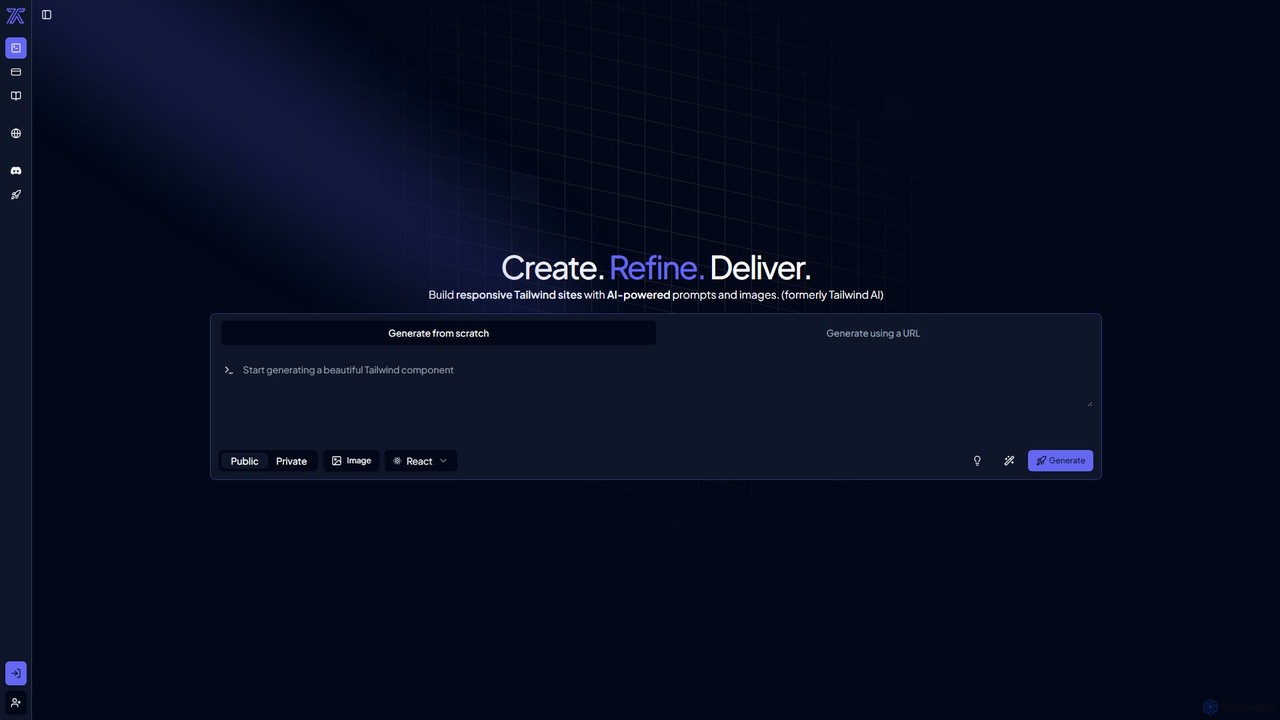
CodeRocket is an AI-powered development tool that generates responsive websites and components using Tailwind CSS. Simply provide a text prompt, an image, or a URL, and CodeRocket will generate clean, ready-to-use code for HTML, React, and Vue.js. It's designed to accelerate frontend development, from rapid prototyping to building complete user interfaces.

Preview

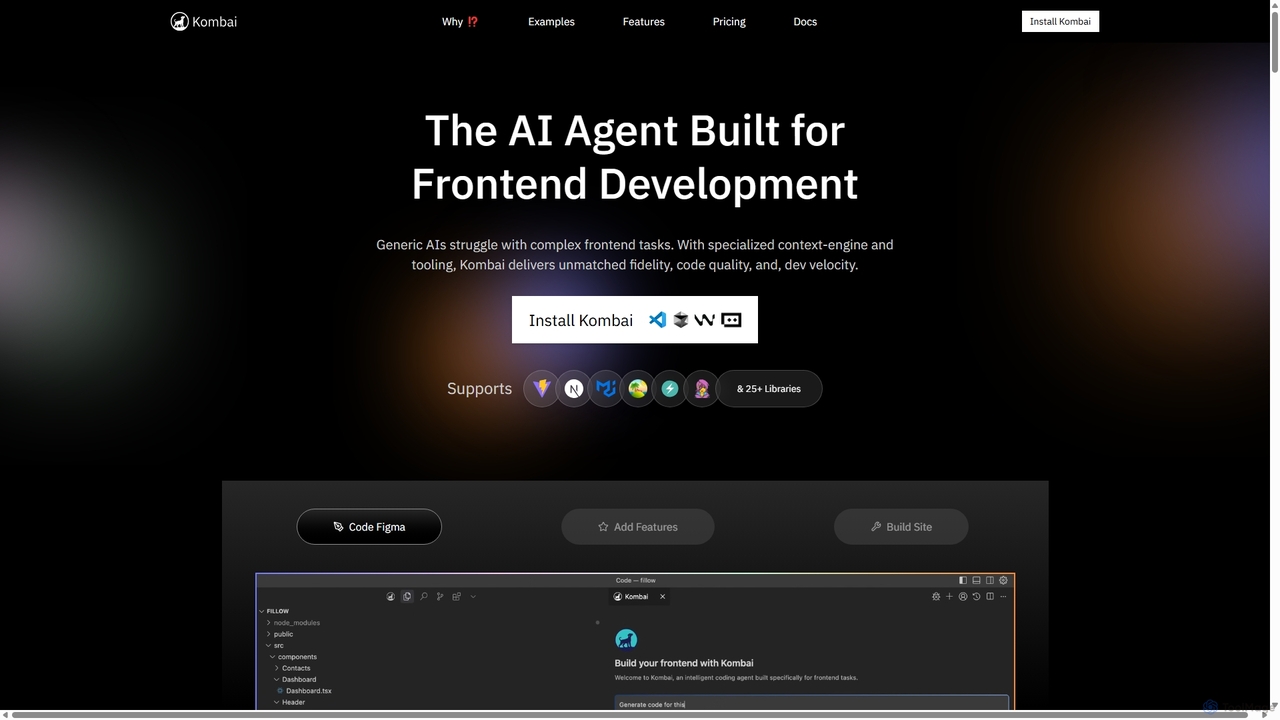
Kombai Product overview

Kombai is a specialized AI agent for frontend development that transforms Figma designs, images, and text prompts into high-fidelity, production-ready code. It understands your existing codebase, supports 25+ libraries, and integrates directly into your IDE to accelerate development velocity.

Preview

Quick facts

Compare product focus, pricing models and audiences. Highlighted rows indicate different listed information; unknown pricing does not mean free.

CodeRocket VS Kombai — Quick facts
Quick factsCodeRocketKombai
Pricing modelFreemiumFreemium
Product typeWebExtensions
Primary focusUi UxCode Generation
Audience and rolesNo data availableFrontend Developer · Full-Stack Developer · Software Developer · UI/UX Designer · Web Developer
CategoriesUi Ux · Code Generation · Developer ToolsCode Generation · Frontend Development · Developer Tools
AddedAug 2, 2025Sep 11, 2025
UpdatedNov 19, 2026Nov 19, 2026

Features, usage and use cases

Explore the listed product descriptions, features and workflows. Taxonomy labels alone are not feature evaluations.

CodeRocket

CodeRocket (formerly Tailwind AI) is a cutting-edge AI tool designed to revolutionize the way developers and designers build websites with Tailwind CSS. It acts as an intelligent coding assistant, capable of transforming simple text prompts, images, or even existing website URLs into fully responsive, high-quality code. By supporting popular frameworks like React, Vue.js, and standard HTML, CodeRocket streamlines the entire frontend development process, enabling users to create, refine, and deliver stunning web interfaces with unprecedented speed and efficiency.

The platform is built for rapid iteration. Users can start from scratch by describing a component, upload a design mockup to convert it into code, or clone the layout of a site they admire. The AI is not just a one-off generator; it allows for continuous refinement, making it a powerful partner for both prototyping and production-level work. With a public gallery of components generated by the community, users can find inspiration, learn new techniques, and see the vast possibilities of AI-driven development.

How to use CodeRocket

Using CodeRocket is an intuitive, three-step process designed for maximum efficiency:

  1. Provide Input: Start by choosing your preferred method of input. You can write a detailed text prompt describing the UI component you need (e.g., "a modern, dark-themed dashboard sidebar with icons and a user profile section"). Alternatively, you can use the powerful vision feature by uploading an image or screenshot of a design. For replicating existing designs, simply paste the URL of the website you want to analyze.
  2. Generate and Preview: Select your target framework (HTML, React, or Vue.js). CodeRocket's AI will then process your input and generate the corresponding code along with a live, interactive preview. You can instantly see how the component looks and behaves. The platform also offers a "Improve prompt" feature to help you refine your request for more accurate results.
  3. Refine and Deliver: Review the generated code. You can copy it directly into your project or use the platform's iterative features to make adjustments. For paid users, advanced features like GitHub Sync (in development) will further streamline the workflow, allowing for seamless integration with your existing codebase.

Core Features of CodeRocket

  • AI-Powered Code Generation: Generates clean, semantic, and responsive Tailwind CSS code from natural language prompts.
  • Image-to-Code Conversion: Utilizes advanced vision AI to transform UI designs from images or screenshots into functional code.
  • URL-to-Code Cloning: Replicates the structure and style of any website from its URL, providing a great starting point for new projects.
  • Multi-Framework Support: Provides code output for vanilla HTML5, React, and Vue.js, catering to a wide range of development stacks.
  • Iterative Refinement: Allows users to continuously modify and improve the generated components without starting over.
  • AI Prompt Enhancer: An intelligent assistant that helps you write better, more detailed prompts to achieve the desired output.
  • Public Component Gallery: A community-driven library of user-generated components for inspiration, learning, and reuse.
  • GitHub Integration: Upcoming feature to connect with GitHub repositories for a more integrated development experience.
  • API Access: A public API is in development to allow for integration with other services and custom workflows.

Use Cases for CodeRocket

CodeRocket is a versatile tool suitable for various professionals and tasks:

  • Frontend Developers: Accelerate the creation of UI components, landing pages, and complex layouts, freeing up time to focus on logic and functionality.
  • UI/UX Designers: Quickly convert static designs from Figma, Sketch, or Adobe XD into interactive, live prototypes for user testing and stakeholder feedback.
  • Entrepreneurs & Startups: Rapidly build and iterate on MVPs (Minimum Viable Products) and marketing websites with minimal frontend resources.
  • Students & Learners: A fantastic educational tool to understand how professional-grade, responsive layouts are constructed with Tailwind CSS.
  • Marketing Teams: Create custom landing pages for campaigns without deep coding knowledge.

Advantages of CodeRocket

The primary advantage of CodeRocket is its massive boost to productivity. It significantly reduces the time spent on writing boilerplate HTML and styling with Tailwind CSS. Its multi-modal input (text, image, URL) offers unparalleled flexibility, catering to different workflows. The tool lowers the barrier to entry for creating visually appealing websites, making modern web design more accessible. Furthermore, the focus on iteration and refinement, combined with upcoming features like GitHub sync and API access, positions it as a serious tool for professional development environments.

Pricing and Plans

CodeRocket offers a freemium model to suit different needs:

  • Trial Plan: $0/month. This plan is perfect for exploring the tool. It includes 3 versions per month, a 1500-character prompt limit, and access to core features like Generate with Image, AI Full Power, and GitHub Sync.
  • Starter Plan: $15/month. Ideal for individuals and small projects, this plan offers 50 versions per month, a 16,000-character prompt limit, and all core features plus extended support.
  • Pro Plan: $30/month. Designed for professionals and frequent users, this plan provides 150 versions per month and unlocks the full potential of the platform.
  • Extra Versions: If you exceed your plan's limit, you can purchase extra versions for $1 each. These versions never expire.

Kombai

Kombai is a specialized AI agent engineered specifically for frontend development. Unlike generic AI coding assistants that often struggle with the nuances of complex user interfaces, Kombai leverages a specialized context-engine and purpose-built tooling to deliver unparalleled fidelity, superior code quality, and a significant boost in developer velocity. It's designed to understand and translate visual designs from Figma, images, or even simple text descriptions into clean, production-ready frontend code, seamlessly integrating into your existing development workflow and codebase.

How to use Kombai

Using Kombai is an intuitive process designed to augment the modern frontend developer's workflow directly within their Integrated Development Environment (IDE).

  1. Installation: Begin by installing the Kombai extension into your IDE (e.g., Cursor).
  2. Provide Input: Initiate a task by providing a prompt. This can be a link to a Figma design, an image of a UI, or a detailed text description of the component or feature you want to build. You can even attach multiple designs to describe different states or user flows.
  3. Contextual Analysis: Kombai analyzes your prompt and, crucially, indexes your current codebase. It understands your tech stack (React, Next.js, etc.), component libraries (MUI, AntD, Shadcn), styling conventions, and even theme files to ensure the generated code is consistent with your project.
  4. Review the Plan: For complex tasks, such as building a new multi-component page, Kombai first generates a high-level development plan. You can review, edit, and approve this plan before any code is written, ensuring the AI's approach aligns with your requirements.
  5. Code Generation & Preview: Once the plan is approved, Kombai generates the frontend code. It then spawns an isolated dev server, allowing you to see a live preview of the output without affecting your main codebase.
  6. Automated Error Fixing: Kombai automatically runs checks to find and iteratively fix TypeScript errors, compilation issues, and runtime bugs in the generated code.
  7. Accept and Merge: Once you are satisfied with the high-fidelity, error-free code, you can accept the changes, and Kombai will apply them directly to your files, ready to be committed.

Core Features of Kombai

  • High-Fidelity UX Interpretation: Utilizes custom ensemble models to accurately translate complex, real-world Figma designs, images, and text prompts into beautiful and scalable UX code.
  • Deep Codebase Understanding: Features purpose-built indexing and search tools to analyze your entire frontend repository. It identifies and reuses existing components, theme files, and coding patterns for maximum consistency.
  • Broad Tech Stack Support: Follows coding best practices for over 30 popular libraries and frameworks, including React, Next.js, TypeScript, AntD, Mantine, MUI, Shadcn, and Tailwind CSS.
  • Task Planning & Preview: Generates editable, task-optimized plans for complex requests and provides an isolated live preview environment to review code output before implementation.
  • Automated Error Correction: Proactively detects and fixes TypeScript, compilation, and runtime errors after code generation, ensuring the output is robust and ready to merge.
  • IDE Integration: Works as an agent directly inside your IDE, making the code generation process a seamless part of your natural workflow.
  • Backend Agnostic: Focuses exclusively on the frontend, ensuring it never mistakenly modifies your database, backend logic, or server configurations.

Use Cases for Kombai

Kombai is versatile and can be used by modern frontend teams for a variety of tasks:

  • Rapid Prototyping: Quickly convert new Figma designs into interactive prototypes to test user flows and gather feedback.
  • Feature Implementation: Add complex new features to large, existing codebases. For example, building a complete 'Roles and Permissions' settings page for a SaaS application with over 500,000 lines of code.
  • Component Generation: Create individual UI components, like a multi-step modal or a data-rich dashboard widget, from a simple text description or image.
  • Full-Page & Website Creation: Build entire responsive web pages or even a complete website from scratch, including fetching dynamic content from a Headless CMS like DatoCMS.
  • Application Development: Scaffold the entire frontend for new applications, such as an EdTech portal, a habit tracker app, or an inventory management dashboard.

Advantages of Kombai

  • Superior Performance: Benchmarks show Kombai significantly outperforms generic coding agents and frontier models in compilation success, feature implementation accuracy, and code review criteria.
  • Increased Developer Velocity: Automates the time-consuming task of writing boilerplate UI code, allowing developers to focus on complex logic and application architecture.
  • Code Quality and Consistency: By understanding and adhering to your project's existing stack and conventions, Kombai produces clean, maintainable code that feels human-written.
  • Enterprise-Grade Security & Privacy: Kombai is Soc2 certified and guarantees that your code is never used for model training, providing peace of mind for organizations of all sizes. For enterprise clients, custom context-engines can be set up for complex, proprietary stacks.
  • Reduced Rework: The plan-and-preview workflow minimizes the chances of misinterpretation, reducing the time spent on debugging and refactoring AI-generated code.

Pricing and Plans

Kombai offers a tiered pricing model to suit different levels of usage:

  • Free Plan: $0. Includes 200 credits (with a limited-time offer for an additional 300 credits), perfect for personal projects and exploring core features.
  • Plus Plan: $20/month. Provides 2,000 credits per month, ideal for builders who use Kombai occasionally.
  • Pro Plan: $40/month. Offers 4,200 credits per month, best suited for professionals who regularly integrate Kombai into their workflow.
  • Premium Plan: $100/month. Comes with 11,000 credits per month, designed for heavy users and power builders.
  • Enterprise Plan: Custom pricing is available for large teams and organizations requiring features like org-specific context-engines and enhanced security.

Positioning

Their taxonomy shows where the products overlap and where each one has a more distinct focus. Unknown fields are shown explicitly and are never filled with assumptions.

Categories

Shared
Code GenerationDeveloper Tools
Only CodeRocket
Ui Ux
Only Kombai
Frontend Development

Tags

Shared
frontend developmentreactweb development
Only CodeRocket
AI developer toolcode generatorhtmlimage to codeTailwind CSSui generatorvue
Only Kombai
AI agentAI code generationcode assistantdeveloper toolsfigma to codeNextJSUI development

Audience and roles

Shared
No listed items
Only CodeRocket
No listed items
Only Kombai
Frontend DeveloperFull-Stack DeveloperSoftware DeveloperUI/UX DesignerWeb Developer

Traffic comparison

Traffic is shown on the same scale so differences in market visibility are not visually understated.

How to interpret the traffic data

Both charts share the same months and vertical scale. Each tool identifies its latest reporting month; missing months are left blank, not counted as zero. Regional and source visit counts are estimates calculated from the reported shares.

CodeRocket monthly traffic:

Latest traffic · 2026-05

Monthly visits
29.5K
Avg. visit duration
0:03
Pages per visit
1.28
Bounce rate
46.75%
Data updated 2026-06-15

Monthly traffic trend

  • 2025-09: 5.2K
  • 2026-01: 18.4K
  • 2026-02: 9K
  • 2026-03: 9.1K
  • 2026-04: 8.1K
  • 2026-05: 29.5K

Top regions

Top 5 countries/regions
Country/regionPercentageEstimated visits
🇺🇸United States31.93%9.4K
🇻🇳Vietnam22.05%6.5K
🇮🇳India18.71%5.5K
🇧🇷Brazil15.34%4.5K
🇹🇭Thailand11.97%3.5K

Search keywords

anonclub premium ccschatgpt сdk keyreds exploit cornertailwindcss aitailwind page builder for windows

Kombai monthly traffic:

Latest traffic · 2026-05

Monthly visits
155.6K
Avg. visit duration
1:42
Pages per visit
2.31
Bounce rate
39.74%
Data updated 2026-06-15

Monthly traffic trend

  • 2025-09: 223.2K
  • 2026-01: 245.9K
  • 2026-02: 218.1K
  • 2026-03: 199.9K
  • 2026-04: 163.4K
  • 2026-05: 155.6K

Top regions

Top 5 countries/regions
Country/regionPercentageEstimated visits
🇺🇸United States30.9%48.1K
🇳🇬Nigeria22.15%34.5K
🇮🇳India19.65%30.6K
🇸🇳Senegal14.12%22K
🇧🇷Brazil13.18%20.5K

Traffic sources

Source typePercentageEstimated visits
Direct93.12%144.9K
Referral5.97%9.3K
Email0.91%1.4K

Search keywords

background blur tailwindkombaikombai aitailwind line heighttailwind text size

Community signals

Ratings, comments, favorites, and likes are community signals—not a substitute for product fit.

CodeRocket

Rating
No data available
Comments
0
Favorites
187
Likes
162

Kombai

Rating
No data available
Comments
0
Favorites
185
Likes
182

CodeRocket vs Kombai · Comparison FAQ

What do CodeRocket and Kombai have in common?
Both tools are listed under Code Generation、Developer Tools. These categories indicate overlapping use cases; compare their detailed descriptions for workflows, capabilities and limitations.
Are CodeRocket and Kombai free?
Listed pricing models: CodeRocket — Freemium; Kombai — Freemium. Missing pricing is not proof of a free plan, and freemium does not mean every feature is free. Check official sites for current plans, limits and trials.
How should I choose between CodeRocket and Kombai?
The primary listed category is Ui Ux for CodeRocket, and Code Generation for Kombai. Compare features, steps and use cases, then verify pricing, data permissions and deployment needs. This page does not include hands-on testing and does not declare a winner from traffic or tags.

Sources and comparison methodology

This page is assembled from ToolMage product listings, taxonomy, traffic statistics and on-site user feedback. It is not a hands-on test or an independent review.

  • Feature and plan descriptions reflect information in the listings, not real-time guarantees. Verify pricing, quotas, availability and privacy terms on the official sites.
  • Traffic uses the reporting months shown. Missing statistics do not mean zero visits, and different periods do not establish growth or superiority. Regional and source visit counts are estimates based on shares.
  • Different tags indicate differences in the listings, not proof that the other product lacks a capability. Ratings, favorites and visits are not used to declare a winner.

Related comparisons