ToolMage
Sign in

AI TOOL COMPARISON

Codia vs V0

What is the difference, and which fits your workflow? Compare features, usage, pricing models and traffic side by side.

Jump to key differences

Product overview

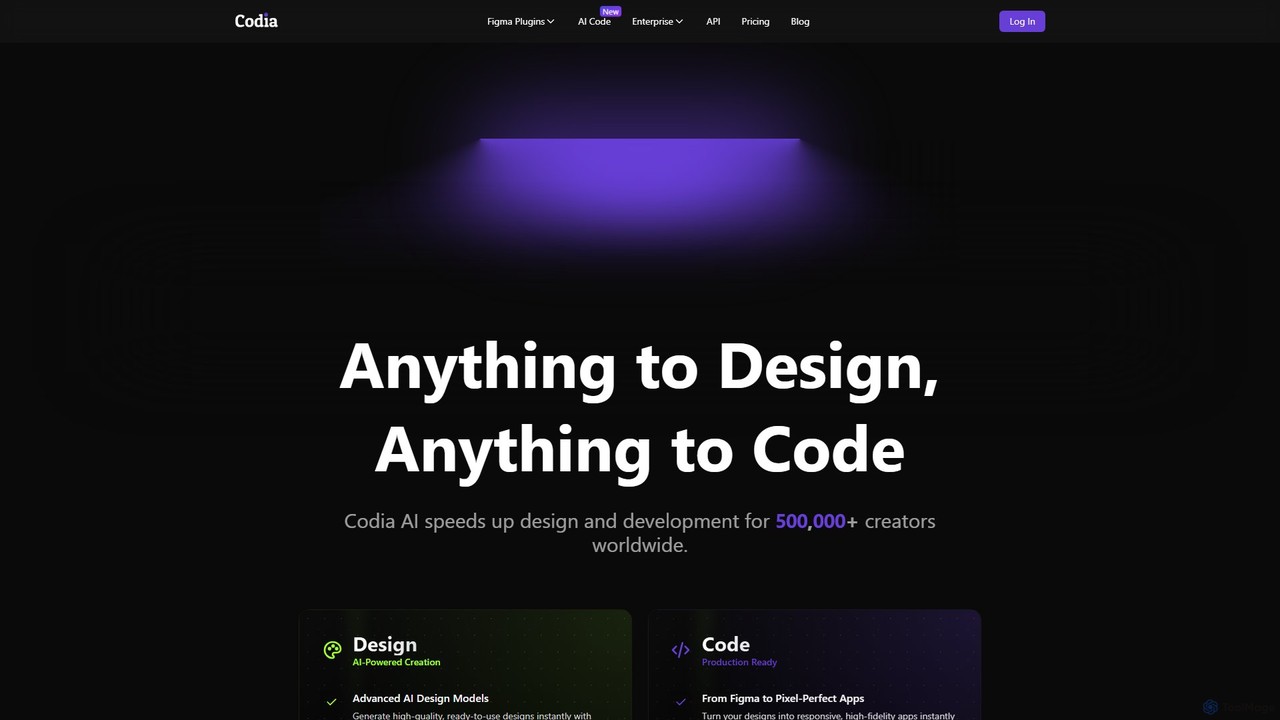
Codia Product overview

Codia is a leading AI-powered platform that automates the design-to-development workflow. It instantly converts designs from Figma, screenshots, PSD, and more into high-quality, production-ready code for various frameworks like React, Vue, and SwiftUI. It also features AI tools to generate editable UI from text prompts or transform static images into scalable vector graphics, dramatically accelerating the entire product creation process for developers and designers.

Preview

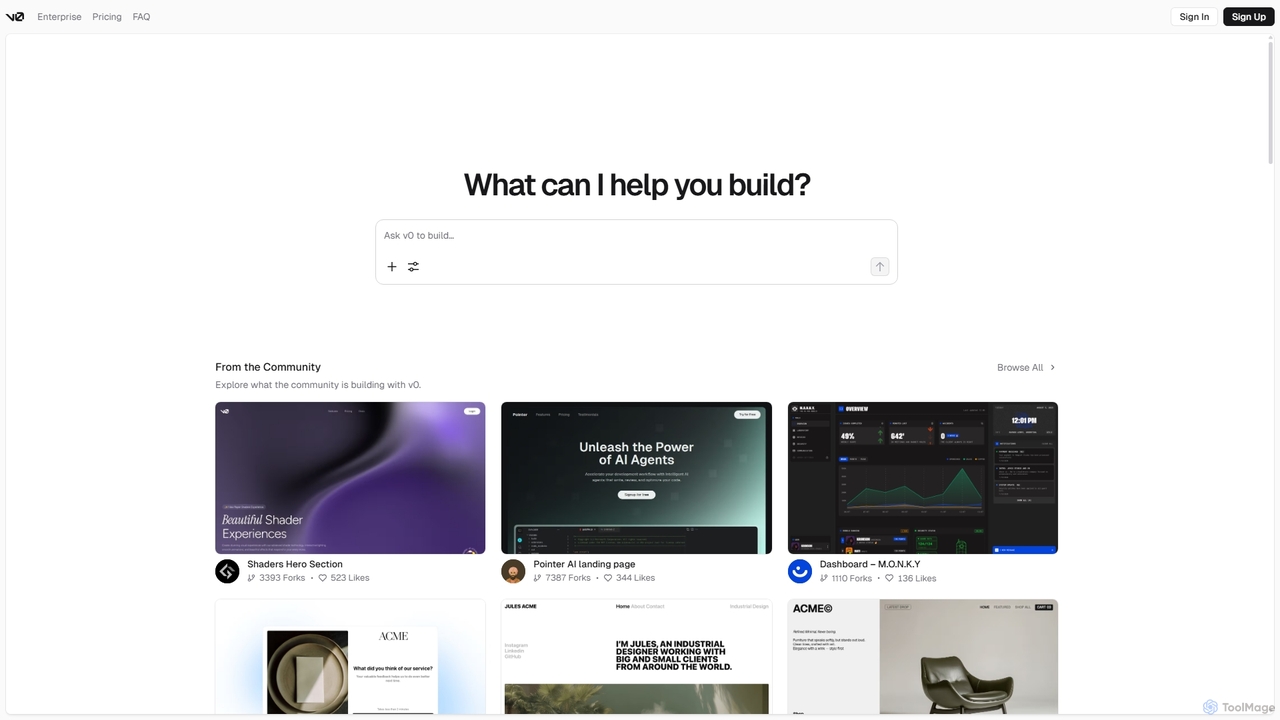
V0 Product overview

V0 by Vercel is a generative AI platform that transforms text prompts, screenshots, and Figma designs into production-ready frontend code. It acts as an AI pair-programmer, enabling users to rapidly build and iterate on UI components and full-stack applications using React, Svelte, and Vue. With its chat-based interface, it accelerates the development workflow for engineers, designers, and product managers, allowing for seamless deployment to the Vercel platform.

Preview

Quick facts

Compare product focus, pricing models and audiences. Highlighted rows indicate different listed information; unknown pricing does not mean free.

Codia VS V0 — Quick facts
Quick factsCodiaV0
Pricing modelFreemiumFreemium
Product typeWebWeb
Primary focusUi UxUi Ux
Audience and rolesNo data availableFounder · Frontend Developer · Marketing Manager · Product Manager · Software Developer · UI/UX Designer
CategoriesUi Ux · Frontend · AutomationUi Ux · Low Code No Code · Developer Tools
AddedAug 13, 2025Sep 18, 2025
UpdatedNov 19, 2026Nov 19, 2026

Features, usage and use cases

Explore the listed product descriptions, features and workflows. Taxonomy labels alone are not feature evaluations.

Codia

Codia is a pioneering AI-driven platform designed to fundamentally transform the design and development landscape. With its core mission to make "Anything to Design, Anything to Code" a reality, Codia bridges the gap between creative vision and technical execution. It empowers over 300,000 creators worldwide, from individual developers and designers to large enterprises, by automating tedious manual processes and accelerating the entire workflow. The platform leverages a sophisticated combination of advanced Visual AI, powerful Large Language Models (LLMs), and custom-trained AI models to deliver unprecedented accuracy in design recognition and code generation.

How to use Codia

Using Codia is an intuitive process tailored to different creative and development needs:

  1. Design-to-Code Conversion: Users can upload or link a design file from various sources like Figma, Adobe Photoshop (PSD), PDF, or even a simple screenshot. Codia's AI analyzes the design's structure, layout, and styling. The user then selects their desired output framework (e.g., React, Vue, HTML/CSS, SwiftUI, React Native). With a single click, Codia generates clean, maintainable, and pixel-perfect code that developers can immediately use and integrate into their projects.
  2. AI-Powered Design Generation: For rapid ideation, users can leverage the "Prompt to Design" feature. By simply typing a text description of a desired UI component (e.g., "a login form with a social media button"), Codia's AI generates a fully editable UI design in Figma. Alternatively, the "Screenshot to Design" tool can transform any static screenshot of a website or app into a structured, editable Figma file, eliminating the need to recreate designs from scratch.
  3. Asset and File Conversion: Codia simplifies cross-platform workflows. Designers can effortlessly convert files from Canva, Adobe Illustrator, or even Office documents into fully editable Figma layers. The "Image to Vector" tool (VectorMagic) can also convert raster images like JPEGs and PNGs into scalable SVG graphics with high precision.

Core Features of Codia

  • AI Design to Code: Converts designs from Figma, screenshots, PSD, PDF, and websites into production-ready code for React, Vue.js, HTML/CSS, SwiftUI, React Native, and Android (Jetpack Compose).
  • AI Design Generation: Creates fully editable UI components and designs from simple text prompts.
  • Screenshot to Editable Design: Transforms static screenshots into structured and editable Figma designs.
  • Multi-Format Asset Conversion: Seamlessly converts files between different design tools, including PSD to Figma, Canva to Figma, Illustrator to Figma, and PDF to Figma.
  • Image to Vector Conversion: Transforms bitmap images into high-quality, scalable vector graphics (SVG).
  • LLM-Powered Development: Enables users to build features through a chat-based interface without writing code manually.
  • Enterprise-Grade Solutions: Offers a robust API for workflow integration, large-scale legacy asset migration, and dedicated enterprise support with enhanced security (SOC 2, GDPR, ISO 27001 compliant).
  • High-Fidelity Output: Generates clean, optimized, and maintainable code that adheres to best practices.

Use Cases for Codia

Codia is versatile and serves a wide range of professionals:

  • Frontend Developers: Can instantly generate boilerplate code from Figma designs, cutting development time by up to 40% and allowing them to focus on logic and functionality.
  • UI/UX Designers: Can quickly turn wireframes, ideas, or existing app screenshots into interactive, editable prototypes in Figma, facilitating rapid iteration and validation.
  • Product Teams and Agencies: Accelerate the entire product lifecycle, from ideation to launch, by fostering seamless collaboration between design and development teams.
  • Enterprises: Can automate the migration of thousands of legacy design assets (e.g., Photoshop files) to modern platforms like Figma and integrate Codia's AI capabilities into their internal development pipelines via API.

Advantages of Codia

The primary advantages of using Codia include:

  • Massive Time Savings: Automates the most time-consuming parts of frontend development and design conversion.
  • Enhanced Productivity: Streamlines the workflow, allowing teams to build and ship products faster.
  • Unmatched Accuracy: Utilizes advanced AI to achieve high-fidelity, pixel-perfect conversions from design to code.
  • Increased Collaboration: Breaks down silos between designers and developers by providing a common, automated bridge.
  • Scalability: Offers flexible plans and powerful enterprise solutions that grow with your team's needs.
  • Creative Empowerment: AI tools like prompt-to-design unlock new possibilities for rapid ideation and creativity.

Pricing and Plans

Codia offers a flexible, transparent pricing model based on usage, with different plans for its various products (e.g., Figma to Code, Screenshot to Design).

  • Free Plan: A generous free-forever tier is available for all products, providing a set number of monthly credits. It's perfect for students, educators, freelancers, and for exploring the platform's capabilities. No credit card is required.
  • Starter Plan: Priced per developer/month (e.g., $29/mo for Figma to Code, $49/mo for Screenshot to Design), this plan offers a significantly higher number of monthly credits, priority support, and advanced features like higher resolution limits and the option to opt out of data training.
  • Pro Plan: Designed for professional developers and teams, this plan provides even more credits (e.g., 1000/mo for Figma to Code) and all the benefits of the Starter plan, catering to higher-volume needs.
  • Enterprise Plan: A custom-priced solution for organizations with specific requirements. It includes full API access, custom feature development, dedicated infrastructure, priority support, and Service Level Agreements (SLAs).

Users can choose between monthly and annual billing, with the annual option offering a 20% discount.

V0

V0 is a groundbreaking generative AI platform developed by Vercel, designed to revolutionize the web development process. It functions as an intelligent pair-programmer, capable of understanding natural language prompts, visual mockups, and even Figma designs to generate high-quality, production-ready frontend code. By leveraging advanced AI models trained on vast datasets of web technologies, V0 empowers developers, designers, and product teams to build and iterate on user interfaces at unprecedented speed. It supports modern frameworks like React, Svelte, and Vue, and often utilizes best-in-class libraries such as shadcn/ui and Tailwind CSS to ensure the generated code is clean, responsive, and maintainable.

How to use V0

Using V0 is an intuitive and conversational process, designed to fit seamlessly into any development workflow:

  1. Start with a Prompt: Begin by describing the UI component or page you want to build in the chat interface. You can be as simple or as detailed as you like, for example, "Create a responsive pricing table for a SaaS with three tiers" or "Generate a login form with email, password fields, and a 'Forgot Password' link."
  2. Use Visual Inputs: For more precise results, you can upload a screenshot or a wireframe of the desired interface. V0 will analyze the image and generate code that matches the visual design with remarkable accuracy. You can also directly import designs from Figma to convert them into functional components.
  3. Iterate and Refine: Once the initial UI is generated, you can continue the conversation to make changes. Use follow-up prompts like "Make the primary button blue," "Add a dark mode toggle," or "Ensure the form is mobile-responsive." V0 will update the code and preview in real-time.
  4. Integrate and Deploy: When you are satisfied with the result, you can copy the generated code (available in React, Svelte, Vue, or plain HTML/CSS) and paste it into your project. For deeper integration, you can use the shadcn CLI to install components directly or leverage the bi-directional Git sync to keep your local development environment and V0 in sync. Finally, you can deploy your application with a single click to the Vercel platform.

Core Features of V0

  • Multi-Modal Input: Generates code from text prompts, screenshots, wireframes, and direct Figma imports.
  • Multi-Framework Support: Outputs clean, production-ready code for React, Svelte, Vue, and HTML with Tailwind CSS.
  • Generative Chat Interface: An interactive, conversational experience that allows for real-time iteration and refinement of UI components.
  • AI Pair-Programming: Goes beyond UI generation to provide technical guidance, write and execute JavaScript/Python code, and explain complex programming concepts.
  • Seamless Vercel Integration: Offers one-click deployment, bi-directional Git sync, and leverages Vercel's robust infrastructure.
  • Team Collaboration: Team plans allow multiple users to share projects, collaborate on designs, and manage billing centrally.
  • API Access: Premium and higher plans include API access, enabling programmatic generation and integration of UI components into custom workflows.
  • Enterprise-Ready Security: Enterprise plans offer features like SAML SSO, priority access, and the ability to opt out of model training to ensure data confidentiality.

Use Cases for V0

V0 is a versatile tool suitable for a wide range of professionals and tasks:

  • Software Developers: Accelerate frontend development by generating boilerplate code for complex components, data tables, and dashboards, freeing up time to focus on business logic.
  • Product Managers: Quickly create interactive prototypes and MVPs from product requirement documents (PRDs) or simple ideas to validate concepts with stakeholders.
  • UI/UX Designers: Convert static Figma designs or mockups into live, interactive components for user testing and seamless handoff to developers.
  • Marketing Teams: Independently build and deploy responsive landing pages, promotional sites, and newsletter templates without requiring engineering resources.
  • Founders & Startups: Rapidly build and ship the first version of a product, significantly reducing time-to-market and development costs.

Advantages of V0

V0 offers a significant competitive edge in web development:

  • Unmatched Speed: Drastically shortens the development cycle from concept to deployment, enabling teams to ship features faster.
  • Enhanced Productivity: Automates repetitive coding tasks, allowing developers to focus on more complex and creative challenges.
  • Democratized Development: Empowers non-technical team members to contribute to the creation of web interfaces, fostering better collaboration.
  • High-Quality Output: Generates code that adheres to modern best practices, ensuring consistency, accessibility, and maintainability.
  • Cost-Effective: Reduces the need for extensive frontend development resources, making it an economical solution for teams of all sizes.

Pricing and Plans

V0 offers a flexible, credit-based pricing model to suit different needs:

  • Free Plan: $0/month. Includes $5 of monthly credits, perfect for individuals and hobbyists looking to explore the platform.
  • Premium Plan: $20/month. Includes $20 of monthly credits, higher attachment size limits, Figma import functionality, and API access. Ideal for power users and professionals.
  • Team Plan: $30/user/month. Includes $30 of monthly credits per user, shared credits, centralized billing, and collaborative features. Designed for fast-moving teams.
  • Enterprise Plan: Custom pricing. Offers advanced security features like SAML SSO, the ability to opt out of data training, priority access with no queues, and dedicated support.

Usage is measured in tokens for both input and output, with costs varying based on the AI model used. Users can purchase additional credits as needed.

Positioning

Their taxonomy shows where the products overlap and where each one has a more distinct focus. Unknown fields are shown explicitly and are never filled with assumptions.

Categories

Shared
Ui Ux
Only Codia
FrontendAutomation
Only V0
Low Code No CodeDeveloper Tools

Tags

Shared
code generationfigma to codefrontend developmentreactui generator
Only Codia
AI developerasset conversionautomationdesign to codescreenshot to codeSwiftUIvue
Only V0
ai pair programmerlow-codeno-codeshadcn/uiTailwind CSSvercelweb development

Audience and roles

Shared
No listed items
Only Codia
No listed items
Only V0
FounderFrontend DeveloperMarketing ManagerProduct ManagerSoftware DeveloperUI/UX Designer

Traffic comparison

Traffic is shown on the same scale so differences in market visibility are not visually understated.

How to interpret the traffic data

Both charts share the same months and vertical scale. Each tool identifies its latest reporting month; missing months are left blank, not counted as zero. Regional and source visit counts are estimates calculated from the reported shares.

Codia monthly traffic:

Latest traffic · 2026-05

Monthly visits
236.5K
Avg. visit duration
0:53
Pages per visit
1.78
Bounce rate
47.11%
Data updated 2026-06-15

Monthly traffic trend

  • 2025-09: 167.8K
  • 2026-01: 322.2K
  • 2026-02: 316.3K
  • 2026-03: 289.9K
  • 2026-04: 221.1K
  • 2026-05: 236.5K

Top regions

Top 5 countries/regions
Country/regionPercentageEstimated visits
🇮🇳India25.15%59.5K
🇹🇭Thailand22.15%52.4K
🇮🇩Indonesia20.05%47.4K
🇹🇼Taiwan17.67%41.8K
🇺🇸United States14.98%35.4K

Traffic sources

Source typePercentageEstimated visits
Direct56.55%133.7K
Referral41.88%99K
Email1.57%3.7K

Search keywords

codiacodia aicodia ai designhtml to figmanoteslide

V0 monthly traffic:

Latest traffic · 2026-05

Monthly visits
4.1M
Avg. visit duration
5:04
Pages per visit
4.12
Bounce rate
38.97%
Data updated 2026-06-15

Monthly traffic trend

  • 2025-09: 7.5M
  • 2026-01: 5M
  • 2026-02: 4.8M
  • 2026-03: 4.7M
  • 2026-04: 4.2M
  • 2026-05: 4.1M

Top regions

Top 5 countries/regions
Country/regionPercentageEstimated visits
🇺🇸United States38.53%1.6M
🇮🇳India30.1%1.2M
🇧🇷Brazil15%616.7K
🇨🇳China8.2%337.1K
🇩🇪Germany8.17%335.9K

Traffic sources

Source typePercentageEstimated visits
Direct85.69%3.5M
Referral12.26%504.1K
Email2.05%84.3K

Search keywords

v0v0 by vercelv0 vercelvercelvercel v0

Community signals

Ratings, comments, favorites, and likes are community signals—not a substitute for product fit.

Codia

Rating
No data available
Comments
0
Favorites
166
Likes
183

V0

Rating
No data available
Comments
0
Favorites
183
Likes
151

Codia vs V0 · Comparison FAQ

What do Codia and V0 have in common?
Both tools are listed under Ui Ux. These categories indicate overlapping use cases; compare their detailed descriptions for workflows, capabilities and limitations.
Are Codia and V0 free?
Listed pricing models: Codia — Freemium; V0 — Freemium. Missing pricing is not proof of a free plan, and freemium does not mean every feature is free. Check official sites for current plans, limits and trials.
How should I choose between Codia and V0?
The primary listed category is Ui Ux for Codia, and Ui Ux for V0. Compare features, steps and use cases, then verify pricing, data permissions and deployment needs. This page does not include hands-on testing and does not declare a winner from traffic or tags.

Sources and comparison methodology

This page is assembled from ToolMage product listings, taxonomy, traffic statistics and on-site user feedback. It is not a hands-on test or an independent review.

  • Feature and plan descriptions reflect information in the listings, not real-time guarantees. Verify pricing, quotas, availability and privacy terms on the official sites.
  • Traffic uses the reporting months shown. Missing statistics do not mean zero visits, and different periods do not establish growth or superiority. Regional and source visit counts are estimates based on shares.
  • Different tags indicate differences in the listings, not proof that the other product lacks a capability. Ratings, favorites and visits are not used to declare a winner.

Related comparisons