Devspace
Code Generation
AI TOOL COMPARISON
What is the difference, and which fits your workflow? Compare features, usage, pricing models and traffic side by side.
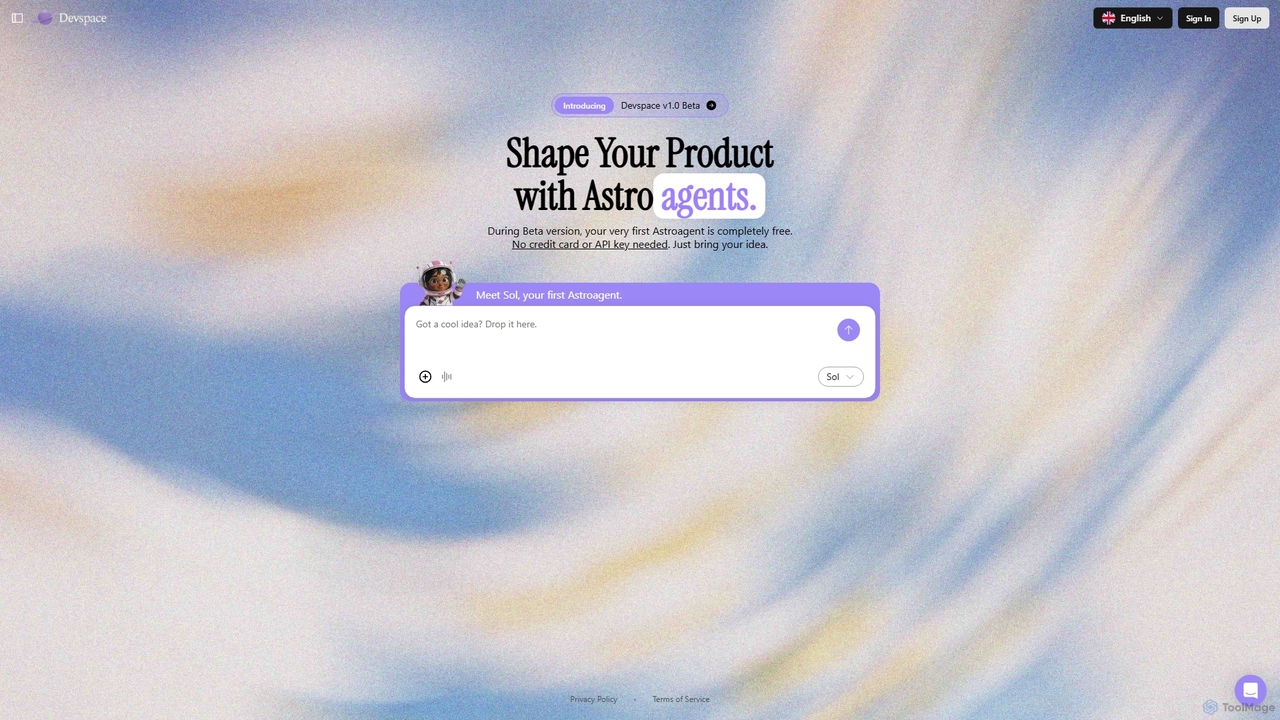
Devspace is an AI-powered development platform that allows users to build and shape products using conversational agents called "Astroagents." Currently in its v1.0 Beta, it enables you to turn your ideas into reality simply by describing them. The first Astroagent is free, requiring no credit card or API key to get started.
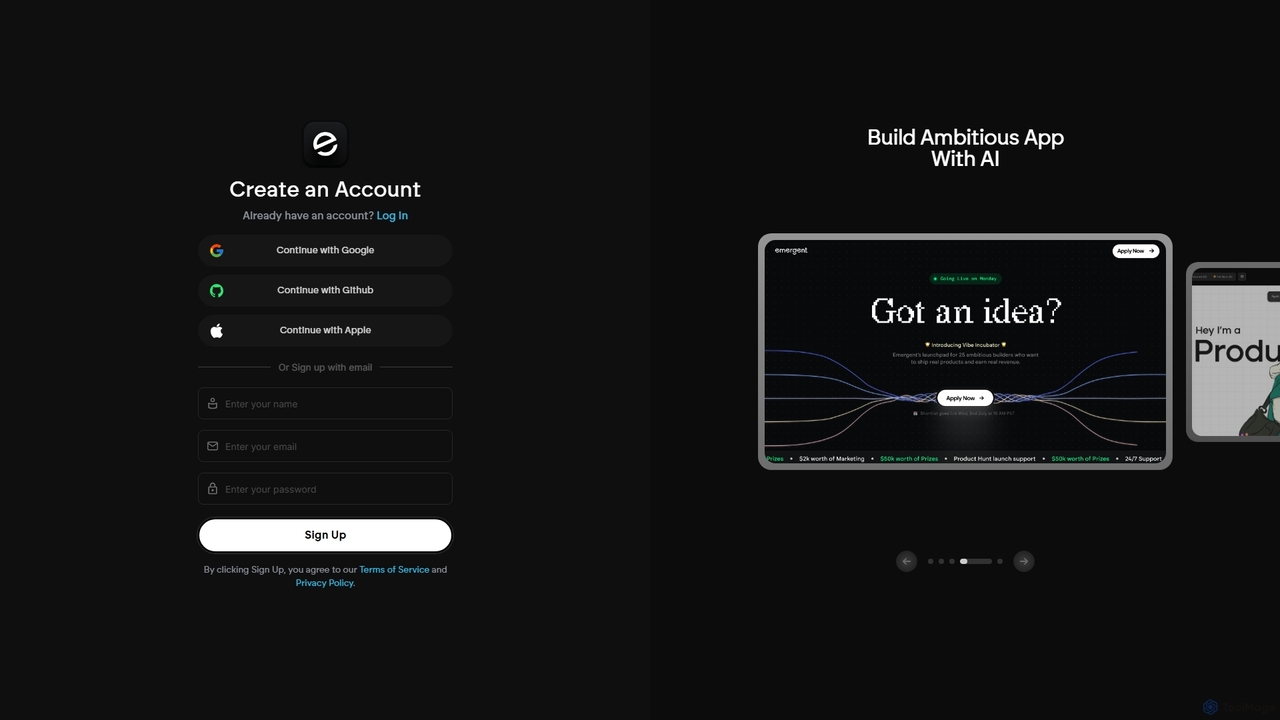
Emergent is the world's first agentic vibe-coding platform, designed to build ambitious full-stack applications using AI. It translates natural language descriptions and intent into functional code, empowering developers and teams to prototype, build, and iterate on software faster than ever before.
Compare product focus, pricing models and audiences. Highlighted rows indicate different listed information; unknown pricing does not mean free.
| Quick facts | Devspace | Emergent |
|---|---|---|
| Pricing model | Freemium | Freemium |
| Product type | Web | Web |
| Primary focus | Code Generation | Development |
| Audience and roles | Entrepreneur · Product Manager · Software Developer · Startup Founder · UI/UX Designer | Backend Developer · Frontend Developer · Full-Stack Developer · Product Manager · Software Developer · Tech Entrepreneur · UI/UX Designer |
| Categories | Code Generation · Application Building · Prototyping | Development · Code Generation · Low Code No Code |
| Added | Nov 10, 2025 | Sep 13, 2025 |
| Updated | Nov 19, 2026 | Nov 19, 2026 |
Explore the listed product descriptions, features and workflows. Taxonomy labels alone are not feature evaluations.
Devspace is an innovative AI platform designed to transform your product ideas into tangible outcomes through a simple conversational interface. By interacting with intelligent "Astroagents," users can describe what they want to build, and the AI will work to shape the product accordingly. The platform is currently in its v1.0 Beta phase, offering an accessible entry point for creators, developers, and entrepreneurs to bring their concepts to life without immediate technical or financial barriers.
To begin using Devspace, simply sign up for a free account. Once logged in, you can start a new chat with your first Astroagent, named Sol. In the chat interface, describe your product idea or the features you want to build. The Astroagent will then process your instructions to help shape your product. The process is designed to be intuitive, requiring only your idea to get started.
Devspace is ideal for entrepreneurs looking to quickly prototype a new business idea, developers seeking to automate parts of their coding process, and product managers wanting to visualize a new feature. It can be used for building simple applications, creating proof-of-concepts, or shaping the initial framework of a more complex software product without writing extensive code manually.
The primary advantage of Devspace is its simplicity and accessibility. It lowers the barrier to software development, allowing non-technical users to participate in the creation process. For experienced developers, it can accelerate prototyping and initial development. The free beta offer makes it a risk-free tool for experimenting with AI-driven development.
Devspace is currently in its v1.0 Beta. During this period, your first Astroagent is available completely free of charge. The platform emphasizes that no credit card or API key is needed to sign up and start using the service.
Emergent introduces a revolutionary approach to software development with its pioneering agentic vibe-coding platform. It is engineered for developers, product managers, and tech entrepreneurs who aim to build complex, full-stack applications with unprecedented speed and efficiency. By leveraging a team of specialized AI agents, Emergent transforms high-level ideas and natural language prompts—the "vibe"—into robust, production-ready code. This eliminates the need for tedious boilerplate setup and allows creators to focus on the core logic and user experience of their applications.
The platform is designed to handle the entire development lifecycle, from initial concept to deployment. It intelligently generates both frontend and backend components, sets up databases, and configures APIs based on user descriptions. This holistic approach ensures that all parts of the application are seamlessly integrated, significantly reducing development friction and accelerating the path to a minimum viable product (MVP) and beyond.
Using Emergent is an intuitive and collaborative process with AI agents. The workflow is designed to be straightforward and iterative:
Emergent is versatile and can be used for a wide range of software projects:
The primary advantage of Emergent is its ability to dramatically accelerate the software development process. By translating intent into code, it bridges the gap between idea and execution. This leads to a 10x increase in development speed, reduces costs, and allows teams to be more agile and responsive to market changes. The platform empowers both seasoned developers and individuals with less technical expertise to build sophisticated applications, democratizing software creation.
Emergent likely offers a freemium model to cater to different user needs. While specific details are not provided on the registration page, a typical structure would be:
Their taxonomy shows where the products overlap and where each one has a more distinct focus. Unknown fields are shown explicitly and are never filled with assumptions.
Traffic is shown on the same scale so differences in market visibility are not visually understated.
Both charts share the same months and vertical scale. Each tool identifies its latest reporting month; missing months are left blank, not counted as zero. Regional and source visit counts are estimates calculated from the reported shares.
No data available
| Country/region | Percentage | Estimated visits |
|---|---|---|
| 🇮🇳India | 45.07% | 3.4M |
| 🇺🇸United States | 30.1% | 2.3M |
| 🇬🇧United Kingdom | 10.52% | 795.7K |
| 🇮🇩Indonesia | 7.4% | 559.7K |
| 🇧🇷Brazil | 6.91% | 522.6K |
| Source type | Percentage | Estimated visits |
|---|---|---|
| Direct | 61.31% | 4.6M |
| Referral | 34.83% | 2.6M |
| 3.86% | 292K |
Ratings, comments, favorites, and likes are community signals—not a substitute for product fit.
During the Devspace v1.0 Beta version, your very first Astroagent is completely free. According to the official website, no credit card is required to get started.
No, the website explicitly states that no API key is needed to use the service during its Beta phase. You only need to bring your idea.
An Astroagent is the AI entity within Devspace that you interact with to build your product. The website introduces 'Sol' as your first Astroagent, which you instruct by telling it what to build.
No, Devspace is currently in its v1.0 Beta version, as stated on its homepage. This means the platform is still under development and may evolve over time.
This page is assembled from ToolMage product listings, taxonomy, traffic statistics and on-site user feedback. It is not a hands-on test or an independent review.