ToolMage
Sign in

AI TOOL COMPARISON

Devtron vs Prodvana

What is the difference, and which fits your workflow? Compare features, usage, pricing models and traffic side by side.

Jump to key differences

Product overview

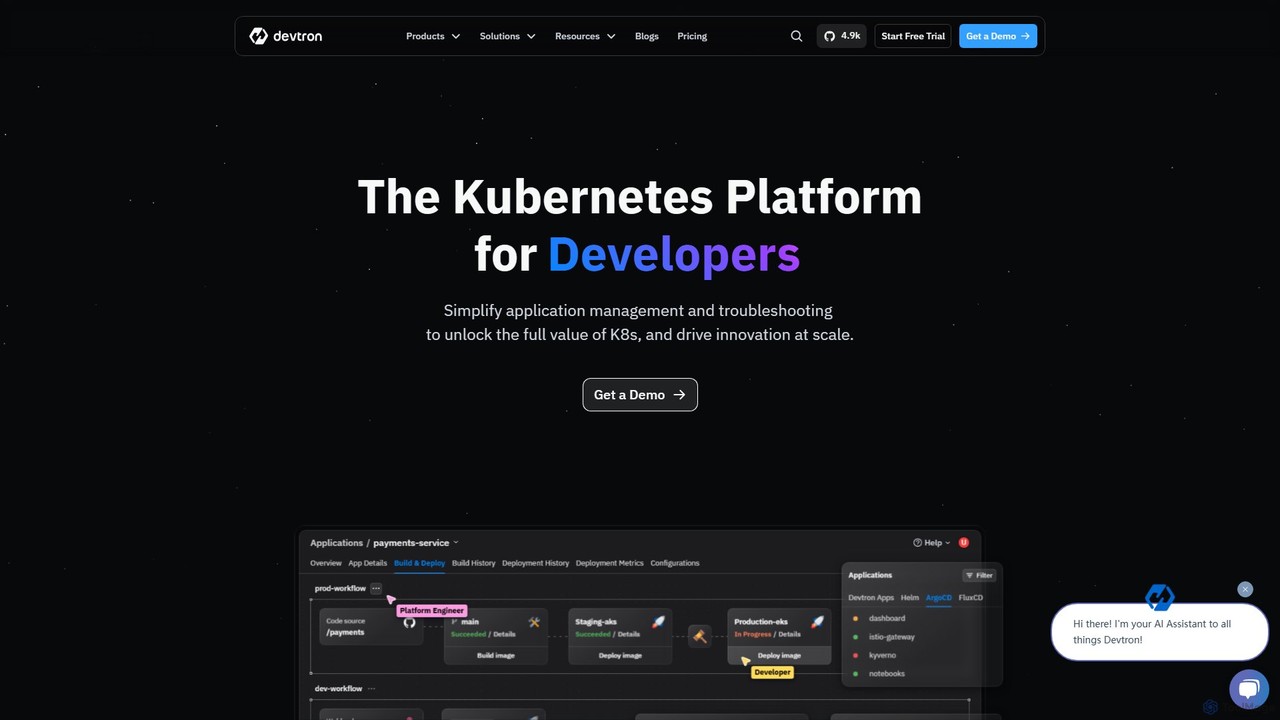
Devtron Product overview

Devtron is an open-source, Kubernetes-native software delivery platform that simplifies application management. It integrates CI/CD, GitOps, security, and observability into a unified dashboard, empowering developers and DevOps teams to manage complex Kubernetes environments with ease, accelerate release cycles, and improve productivity without a steep learning curve.

Preview

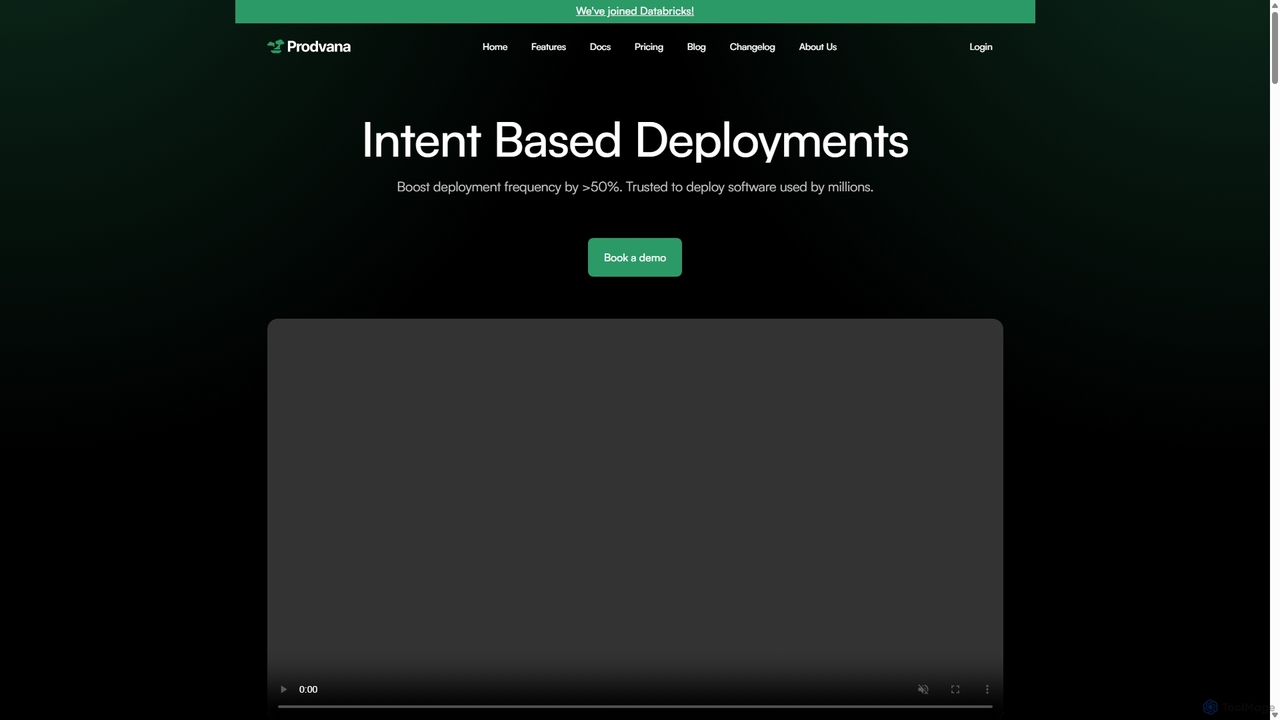
Prodvana Product overview

Prodvana is an intelligent, intent-based deployment platform designed for modern software delivery. It helps engineering teams accelerate deployment frequency, enhance reliability, and reduce operational overhead by automating release paths, providing pre-deployment insights, and seamlessly integrating with existing infrastructure like Kubernetes, Terraform, and serverless providers.

Preview

Quick facts

Compare product focus, pricing models and audiences. Highlighted rows indicate different listed information; unknown pricing does not mean free.

Devtron VS Prodvana — Quick facts
Quick factsDevtronProdvana
Pricing modelFreemiumPaid
Product typeWebWeb
Primary focusCloud ComputingInfrastructure Management
Audience and rolesNo data availableCTO · DevOps Engineer · Engineering Manager · Platform Engineer · Site Reliability Engineer (SRE) · Software Developer
CategoriesCloud Computing · Deployment Automation · Devops · Project ManagementInfrastructure Management · Deployment · Devops
AddedAug 4, 2025Sep 10, 2025
UpdatedNov 19, 2026Nov 19, 2026

Features, usage and use cases

Explore the listed product descriptions, features and workflows. Taxonomy labels alone are not feature evaluations.

Devtron

Devtron is a comprehensive, open-source software platform designed for Kubernetes application management. It aims to democratize Kubernetes by providing an intuitive, unified interface that abstracts away the underlying complexities. Born in the cloud, Devtron is tailored for modern teams, integrating Continuous Integration/Continuous Deployment (CI/CD), GitOps, security, and observability into a single, seamless platform. This allows development and operations teams to build, deploy, and run applications on Kubernetes with confidence, efficiency, and scale, regardless of their size or industry.

The platform directly addresses common challenges in the DevOps lifecycle, such as the steep learning curve of Kubernetes, deployment bottlenecks caused by microservice dependencies, fragmented tooling, and the inefficiencies of manual processes. By offering a centralized dashboard, Devtron empowers developers to become self-sufficient, reducing their dependency on dedicated DevOps personnel for routine tasks like deployments, log checking, and troubleshooting.

How to use Devtron

Using Devtron involves a streamlined workflow that simplifies the entire software delivery process on Kubernetes:

  1. Integration: Connect your code repositories (like Git) and container registries. Devtron seamlessly integrates with your existing tool ecosystem.
  2. Application Setup: Use the intuitive UI to create and configure your applications. You can use ready-made Helm charts or define your own configurations without writing complex YAML files from scratch.
  3. Build & Deploy Pipelines: Configure CI/CD pipelines through the dashboard. Define build stages, testing integrations, and deployment strategies (e.g., Blue-Green, Canary). The platform supports multi-language and multi-architecture builds.
  4. GitOps-based Deployment: Leverage GitOps for automated, auditable, and reliable deployments. Devtron synchronizes your cluster state with your Git repository, enabling features like drift detection and automated rollbacks.
  5. Management & Observability: Use the Kubernetes Dashboard to manage all your applications across multiple clusters. View logs, monitor resource utilization and DORA metrics, debug with ephemeral containers, and manage user access with fine-grained RBAC.
  6. Security & Governance: Implement DevSecOps practices with built-in security scanning for container images and Kubernetes manifests. Enforce policies for deployments, access control, and compliance.

Core Features of Devtron

  • Kubernetes Dashboard: A single pane of glass for managing applications, clusters, permissions, logs, and metrics across multiple Kubernetes environments.
  • Release Orchestration: Advanced pipeline management with approval workflows, environment-specific controls, and detailed tracking for releases.
  • Continuous Deployment with GitOps: Fully automated, Helm-based deployments with drift detection, SLO-based rollbacks, and support for multi-cluster and air-gapped environments.
  • Integrated DevSecOps: Built-in container image and code manifest security scanning using tools like Trivy and Clair, with policy-based controls.
  • Fine-Grained RBAC & Governance: Centralized user management with SSO integration, custom roles, API tokens, and compliance-ready audit logging.
  • Multi-Cluster Management: Unified visibility and management of workloads deployed across multiple clouds and clusters.
  • Automated CI Pipelines: Support for multi-language, multi-architecture builds, buildpacks, Dockerfiles, and comprehensive testing integrations.
  • Auto Remediation: Self-healing capabilities for Kubernetes, with the ability to create and run custom runbooks based on event triggers.

Use Cases for Devtron

Devtron is versatile and has been adopted by businesses of all sizes to solve real-world challenges:

  • Increasing Developer Productivity: Companies like TravClan and Indiamart have used Devtron to boost developer productivity by 40-70% by abstracting K8s complexity and enabling developer self-service.
  • Cost Optimization & Migration: India's largest used-car platform, Spinny, leveraged Devtron's CI capabilities to migrate from AMD to ARM architecture, resulting in a 30% reduction in infrastructure costs and a 25% performance enhancement.
  • Accelerating Time-to-Market: Apica, a global data management company, revolutionized its customer deployment process with Devtron, reducing time-to-market by an incredible 90%.
  • Automating Software Distribution: Fintech company 73 Strings uses Devtron to automate software distribution into their customers' secure, air-gapped environments, ensuring reliability and security.
  • Simplifying Microservices Management: SaaS companies with a growing number of microservices use Devtron to move from scattered scripts to a unified dashboard, improving collaboration and eliminating DevOps bottlenecks.

Advantages of Devtron

Devtron offers a significant competitive edge for teams adopting Kubernetes:

  • Simplified K8s Adoption: Drastically reduces the learning curve, allowing developers to deploy and manage applications without deep Kubernetes expertise.
  • Enhanced Productivity: Empowers developers with self-service capabilities, freeing up DevOps teams to focus on strategic initiatives.
  • Faster Release Cycles: Automates the entire CI/CD pipeline, from build to deployment, leading to up to 60% faster time-to-market.
  • Improved Security & Compliance: Integrates security scanning and governance policies directly into the development lifecycle.
  • Cost Reduction: Optimizes operations and infrastructure usage, as demonstrated by real-world case studies showing up to 30% cost savings.
  • Unified & Open Platform: Provides a single, cohesive platform for all Kubernetes-related tasks, built on an open-source foundation that fosters community and transparency.

Pricing and Plans

Devtron offers flexible pricing plans designed to scale with your team's needs:

  • Free (Open Source): Ideal for individual developers and small teams. This plan includes core features like CI/CD, GitOps, Helm UI, pre-defined RBAC roles, and community support.
  • Startup: A custom-priced plan for growing teams. It includes all features from the Free plan, plus advanced deployment strategies, policy enforcement, centralized audit logs, built-in security, and email/chat support for up to 10 users.
  • Enterprise: A custom-priced plan built for scale and security. It encompasses all Startup features and adds support for unlimited clusters and workloads, compliance-ready audit logging, multi-tenant dashboards, premium support with SLAs, and options for deployment in hybrid or air-gapped environments.

Prodvana

Prodvana is a sophisticated, intelligent deployment platform engineered to streamline and accelerate the software delivery lifecycle for modern engineering teams. Acquired by Databricks, Prodvana addresses the growing complexity of cloud-native environments by introducing an intent-based deployment model. Instead of manually scripting complex deployment pipelines, teams simply declare their desired state, and Prodvana automatically calculates the safest and most efficient release path. This paradigm shift significantly reduces manual effort, minimizes human error, and boosts deployment frequency by over 50%.

The platform is built to integrate seamlessly into existing workflows and infrastructure, embodying a "brownfield solution" approach. It connects with your current runtimes, whether they are Kubernetes, ECS, serverless providers, or even virtual machines, without requiring disruptive changes. This allows teams to unify their deployment processes across disparate services and infrastructure into a single, coherent workflow.

How to use Prodvana

Using Prodvana involves a straightforward, intent-driven process:

  1. Connect Your Infrastructure: Begin by integrating your existing infrastructure with Prodvana. This includes connecting your Kubernetes clusters, ECS, serverless environments, and Infrastructure as Code (IaC) tools like Terraform or Pulumi.
  2. Define Your Intent: Instead of building a step-by-step pipeline, you declare your deployment goal. For example, specify which service version should be running in a particular environment (e.g., staging or production).
  3. Analyze with Clairvoyance: Before deploying, leverage the 'Clairvoyance' feature. It provides a 'spidey sense' by showing you the potential impact of your changes. It highlights high-impact commits, identifies affected infrastructure, and can even auto-generate release notes.
  4. Deploy with Confidence: Initiate the deployment through the UI, CLI, or API. Prodvana orchestrates the release, applying built-in guardrails such as approval gates, database schema validations, and automated deployment checks to ensure safety.
  5. Monitor and Manage: Track the progress of your deployments in real-time. Prodvana provides full visibility, tracing commits from code to production. If an issue arises, you can quickly and reliably roll back to a known good state.

Core Features of Prodvana

  • Intent-Based Deployments: Automatically calculates release paths based on your desired outcome, eliminating the need for brittle, imperative pipelines.
  • Clairvoyance: An intelligence engine that provides pre-deployment insights, showing the impact of changes before they go live to prevent incidents.
  • Managed Delivery: Standardize deployment processes across all services and environments, making it easy to manage regions and scale globally.
  • Bring Your Own Infrastructure (BYOI): Seamlessly integrates with your existing tools and platforms, including Kubernetes, ECS, Terraform, Pulumi, and more.
  • Built-in Guardrails & Protections: Enforce best practices with features like automated approvals, database validations, and custom checks to increase deployment reliability.
  • Advanced Release Strategies: Natively supports complex deployments for microservices, stateful systems (databases, storage), and multi-tenant architectures.
  • Frictionless Developer Experience (DevEx): Offers a unified workflow through a CLI, UI, SDK, and IaC integrations, empowering developers to ship code faster and safer.

Use Cases for Prodvana

Prodvana is ideal for organizations looking to modernize their software delivery practices:

  • Platform Engineering Teams: Build a robust internal developer platform (IDP) that standardizes deployments and provides developers with a self-service, golden path to production.
  • SRE & DevOps Teams: Automate release orchestration, enforce reliability standards, and reduce the operational burden of managing complex deployment systems.
  • Rapidly Scaling Companies: As demonstrated by Doorstead, Prodvana enables engineering teams to stand up new services across multiple release channels in minutes, supporting rapid growth.
  • Complex Infrastructure Management: For companies like Replit, Prodvana unifies deployments across diverse and globally distributed workloads (Kubernetes, VMs, Terraform), migrating from legacy systems like Spinnaker and ArgoCD in weeks.

Advantages of Prodvana

By adopting Prodvana, teams gain a significant competitive edge:

  • Increased Velocity: Boost deployment frequency by over 50%, enabling faster delivery of features to users.
  • Enhanced Reliability: Detect over 20% of issues earlier in the cycle and perform fast, reliable rollbacks when needed.
  • Reduced Overhead: Eliminate the manual effort of building and maintaining deployment pipelines, allowing engineers to focus on product development.
  • Unified Visibility: Gain a single pane of glass for all deployments, tracking every commit from development to production.
  • Future-Proof Architecture: The platform's flexible, intent-based model adapts to evolving infrastructure and application needs.

Pricing and Plans

Prodvana offers transparent pricing designed to scale with your organization. All paid plans include a 30-day free trial.

  • Startup Plan: $500/month. Designed for startups, this plan includes 3 Runtimes, 15 Users, standard protections, and support via Chat & Email.
  • Teams Plan: $2500/month. Aimed at growing infrastructure and teams, it offers 10 Runtimes, 30 Users, advanced protections, and support via Chat, Slack, & Email.
  • Enterprise Plan: Custom Pricing. For sophisticated environments with complex needs, this plan provides unlimited Runtimes, Users, and Protections, along with 24x7 Pager Support. Contact sales for a quote.

Positioning

Their taxonomy shows where the products overlap and where each one has a more distinct focus. Unknown fields are shown explicitly and are never filled with assumptions.

Categories

Shared
No listed items
Only Devtron
Cloud ComputingDeployment AutomationDevopsProject Management
Only Prodvana
Infrastructure ManagementDeploymentDevops

Tags

Shared
CI/CDcloud nativeDeployment Automationdevopskubernetesmicroservicesplatform engineering
Only Devtron
DevSecOpsGitOpsopen source
Only Prodvana
CDcontinuous deliveryintent-based deploymentterraform

Audience and roles

Shared
No listed items
Only Devtron
No listed items
Only Prodvana
CTODevOps EngineerEngineering ManagerPlatform EngineerSite Reliability Engineer (SRE)Software Developer

Traffic comparison

Traffic is shown on the same scale so differences in market visibility are not visually understated.

How to interpret the traffic data

Both charts share the same months and vertical scale. Each tool identifies its latest reporting month; missing months are left blank, not counted as zero. Regional and source visit counts are estimates calculated from the reported shares.

Devtron monthly traffic:

Latest traffic · 2026-05

Monthly visits
49.8K
Avg. visit duration
0:36
Pages per visit
1.88
Bounce rate
39.7%
Data updated 2026-06-15

Monthly traffic trend

  • 2025-09: 77.4K
  • 2026-01: 68.9K
  • 2026-02: 54K
  • 2026-03: 55.9K
  • 2026-04: 51.7K
  • 2026-05: 49.8K

Top regions

Top 5 countries/regions
Country/regionPercentageEstimated visits
🇮🇳India33.05%16.5K
🇺🇸United States20.25%10.1K
🇳🇬Nigeria18.01%9K
🇻🇳Vietnam14.62%7.3K
🇰🇭Cambodia14.07%7K

Traffic sources

Source typePercentageEstimated visits
Direct84.81%42.3K
Referral15.19%7.6K

Search keywords

ai harness frameworkdevtrondevtron secret grafanaharnessk8s cluster alertmanager config

Prodvana

No data available

Community signals

Ratings, comments, favorites, and likes are community signals—not a substitute for product fit.

Devtron

Rating
No data available
Comments
0
Favorites
136
Likes
159

Prodvana

Rating
No data available
Comments
0
Favorites
138
Likes
137

Devtron vs Prodvana · Comparison FAQ

What do Devtron and Prodvana have in common?
The current listings have no shared category. Appearing on the same comparison page does not make the products interchangeable; check each tool against your task.
Are Devtron and Prodvana free?
Listed pricing models: Devtron — Freemium; Prodvana — Paid. Missing pricing is not proof of a free plan, and freemium does not mean every feature is free. Check official sites for current plans, limits and trials.
How should I choose between Devtron and Prodvana?
The primary listed category is Cloud Computing for Devtron, and Infrastructure Management for Prodvana. Compare features, steps and use cases, then verify pricing, data permissions and deployment needs. This page does not include hands-on testing and does not declare a winner from traffic or tags.

Sources and comparison methodology

This page is assembled from ToolMage product listings, taxonomy, traffic statistics and on-site user feedback. It is not a hands-on test or an independent review.

  • Feature and plan descriptions reflect information in the listings, not real-time guarantees. Verify pricing, quotas, availability and privacy terms on the official sites.
  • Traffic uses the reporting months shown. Missing statistics do not mean zero visits, and different periods do not establish growth or superiority. Regional and source visit counts are estimates based on shares.
  • Different tags indicate differences in the listings, not proof that the other product lacks a capability. Ratings, favorites and visits are not used to declare a winner.

Related comparisons