ToolMage
Sign in

AI TOOL COMPARISON

Dify vs OpenSilver

What is the difference, and which fits your workflow? Compare features, usage, pricing models and traffic side by side.

Jump to key differences

Product overview

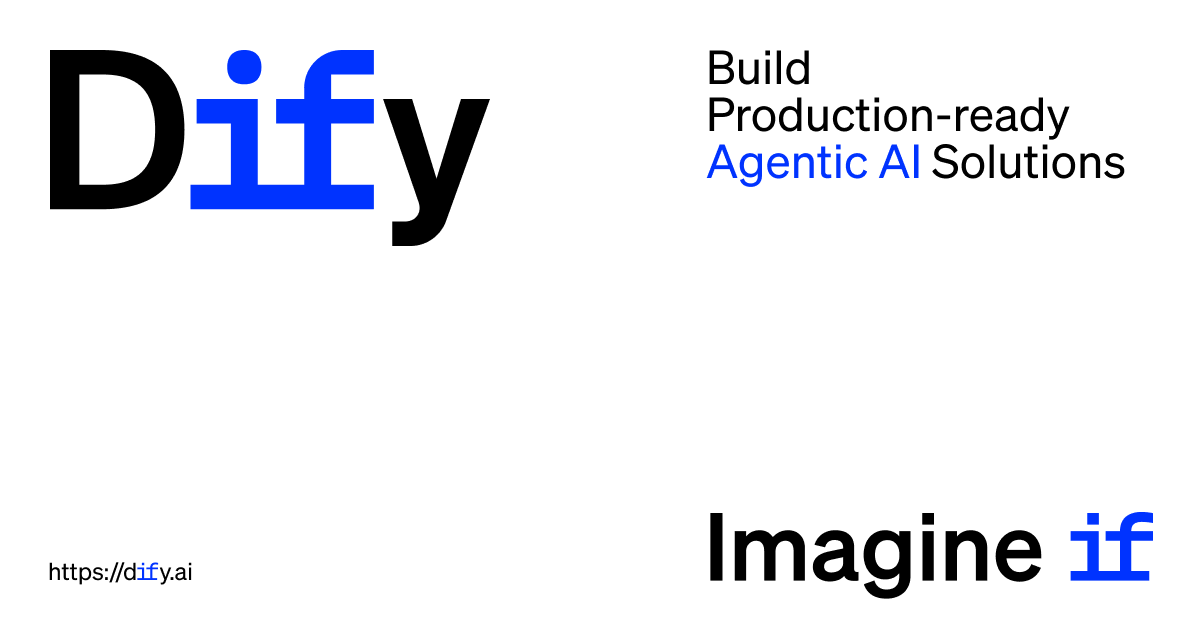
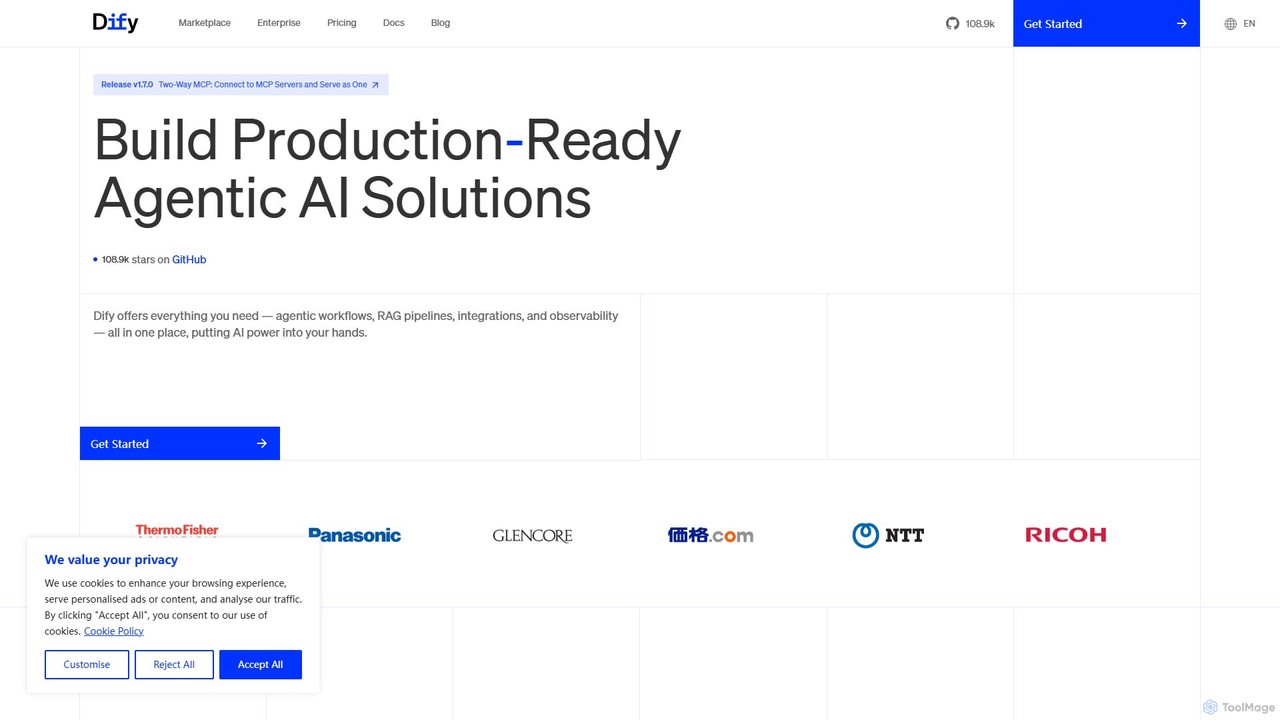
Dify Product overview

Dify is an open-source, low-code AI development platform for building and operating production-ready generative AI applications. It enables the creation of AI agents and workflows powered by RAG pipelines, extensive model support, and full observability, simplifying the entire development lifecycle from idea to deployment.

Preview

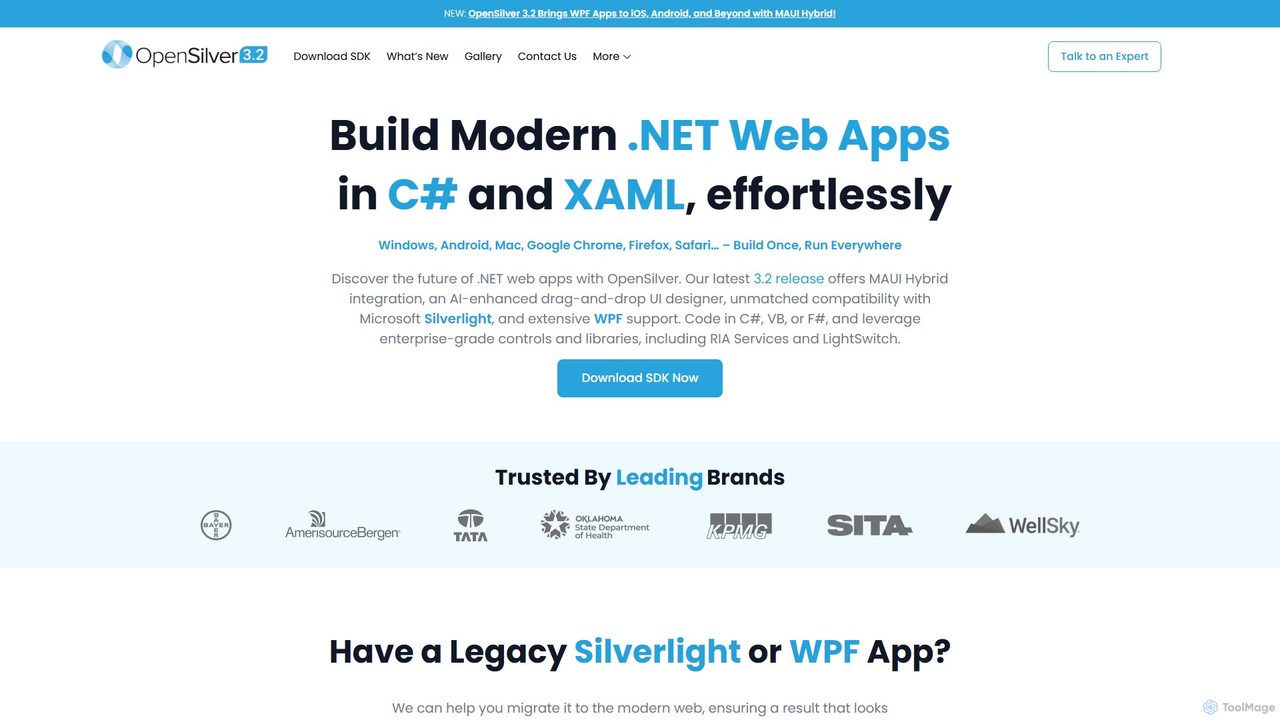
OpenSilver Product overview

OpenSilver is an open-source framework for modernizing legacy Microsoft Silverlight and WPF applications. It enables developers to build cross-platform web apps using C#, XAML, and .NET, ensuring 100% code reusability. It features an AI-enhanced UI designer and MAUI Hybrid integration for extending apps to web, desktop, and mobile, significantly reducing migration time and costs.

Preview

Quick facts

Compare product focus, pricing models and audiences. Highlighted rows indicate different listed information; unknown pricing does not mean free.

Dify VS OpenSilver — Quick facts
Quick factsDifyOpenSilver
Pricing modelFreemiumPaid
Product typeWebWeb
Primary focusAi AgentFramework
Audience and rolesNo data availableNo data available
CategoriesAi Agent · Chatbot · Low Code No Code · Workflow AutomationFramework · Low Code No Code · Migration
AddedAug 10, 2025Aug 13, 2025
UpdatedNov 19, 2026Nov 19, 2026

Features, usage and use cases

Explore the listed product descriptions, features and workflows. Taxonomy labels alone are not feature evaluations.

Dify

Dify is a leading Agentic AI Development Platform designed to empower developers and teams to build, deploy, and scale production-ready AI applications with ease. As an open-source and low-code platform, Dify provides a comprehensive, all-in-one solution that integrates agentic workflows, Retrieval-Augmented Generation (RAG) pipelines, extensive integrations, and full observability. This puts the power of sophisticated AI into the hands of creators, regardless of their technical background, accelerating the journey from initial concept to a live, scalable product.

How to use Dify

Using Dify is an intuitive process designed for rapid development and iteration:

  1. Visual Workflow Creation: Start by using the drag-and-drop interface to visually map out your AI application's logic. You can create complex, multi-step workflows that handle diverse tasks without writing extensive code.
  2. Integrate Language Models: Connect to a wide array of Large Language Models (LLMs), including those from OpenAI, Anthropic, Llama2, Azure, Hugging Face, and even locally hosted models via Ollama. Dify allows you to switch between and compare the performance of different models seamlessly.
  3. Build a Knowledge Base (RAG): Enhance your application with a RAG pipeline. Upload your data from various sources (documents, websites, etc.), and Dify will handle the extraction, transformation, and indexing into a vector database, making your data ready for LLM consumption.
  4. Expand with Tools and Plugins: Supercharge your AI's capabilities by adding tools from Dify's expanding marketplace. Integrate with services like Zapier, Brave Search, or create custom tools to perform specific actions.
  5. Publish and Deploy: Once your application is ready, publish it with flexible options. You can deploy it as a standalone web application or expose it as an API for integration into other services. Dify's Backend-as-a-Service (BaaS) manages the underlying infrastructure complexities.
  6. Monitor and Iterate: Use the built-in observability features to monitor your application's performance, analyze logs, and gather user feedback. This data-driven approach allows you to iterate and improve your product continuously.

Core Features of Dify

  • Visual Workflow Builder: An intuitive drag-and-drop interface for creating and managing complex AI workflows and agentic logic.
  • Advanced RAG Engine: A comprehensive RAG pipeline that supports various data sources, document formats, and advanced retrieval strategies like hybrid search and reranking for high-accuracy responses.
  • Multi-LLM Support: Access, switch, and compare performance across a wide range of global LLMs, including proprietary, open-source, and self-hosted models.
  • Agentic Capabilities: Build autonomous AI agents that can reason, make decisions, and use tools to complete complex tasks.
  • Extensible Plugin Ecosystem: Enhance applications with a versatile set of plugins from the marketplace or build your own to connect to any service.
  • Backend-as-a-Service (BaaS): Dify handles the complex backend infrastructure, providing a scalable, stable, and secure foundation for your applications.
  • Full Observability: Monitor application usage, analyze costs and latency, and review logs to debug and optimize performance.
  • Open-Source and Self-Hostable: Offers full transparency and control, with the option to self-host for maximum data privacy and security.

Use Cases for Dify

Dify is versatile enough to power a wide range of applications across various industries:

  • Enterprise Solutions: Companies like Volvo and Ricoh use Dify for internal Q&A bots serving thousands of employees, automating research, and rapidly validating new AI-driven ideas to gain a competitive edge.
  • Customer Support Automation: Create intelligent chatbots and AI assistants that can access a knowledge base to provide accurate, context-aware answers to customer queries 24/7.
  • Content Creation and Marketing: Build workflows to generate multi-format marketing copy, social media posts, or even AI-generated podcasts by processing information from various sources.
  • Research and Analysis: Develop deep research agents that can automate information gathering from the web, analyze documents, and generate structured summary reports, such as for financial investment analysis.
  • Developer Tools: Create specialized tools like a "Twitter MBTI Analyzer" or multilingual document translators, leveraging Dify's ability to connect various APIs and models.

Advantages of Dify

Dify stands out by democratizing AI development. Its low-code, visual interface makes it accessible to citizen developers and non-technical teams, while its advanced features and open-source nature provide the depth required by professional developers. The platform accelerates time-to-market significantly, allowing teams to build and deploy an MVP in record time. Its all-in-one, production-ready infrastructure ensures applications are scalable, stable, and secure from day one, eliminating the need to piece together multiple tools.

Pricing and Plans

Dify offers a flexible pricing structure to suit different needs, available as both a Cloud Service and a Self-hosted option.

  • Sandbox (Free): Ideal for individuals and hobbyists to explore core features. Includes 200 message credits, 1 team member, 5 apps, and a 50MB knowledge base.
  • Professional ($59/workspace/month): Designed for independent developers and small teams. Includes 5,000 message credits/month, 3 team members, 50 apps, a 5GB knowledge base, and unlimited log history.
  • Team ($159/workspace/month): For medium-sized teams requiring collaboration and higher throughput. Includes 10,000 message credits/month, 50 team members, 200 apps, and a 20GB knowledge base.
  • Enterprise: Custom plans for large organizations requiring advanced security, support, and self-hosting capabilities. Contact sales for details.

Dify also offers free plans for students and educators, making it an accessible tool for learning and innovation.

OpenSilver

OpenSilver is a powerful, open-source reimplementation of Microsoft Silverlight, designed to bring legacy .NET applications into the modern web era. It empowers developers to migrate existing Silverlight and Windows Presentation Foundation (WPF) applications to run on any modern browser and operating system, including Windows, macOS, Android, iOS, and Linux. By leveraging WebAssembly, OpenSilver compiles C#, F#, VB.NET, and XAML code into high-performance, client-side web applications, eliminating the need for browser plugins and breaking free from the limitations of Internet Explorer.

The core mission of OpenSilver is to provide a seamless and cost-effective migration path, saving companies from expensive and time-consuming rewrites. It boasts near-perfect compatibility with Silverlight and extensive support for WPF, allowing for up to 100% code reuse. This ensures that the migrated application maintains its original look, feel, and functionality, which minimizes the need for user retraining and updating documentation. The platform also introduces modern features, including an AI-enhanced drag-and-drop UI designer and compatibility with contemporary tech stacks like Blazor, React, and Angular.

How to use OpenSilver

Getting started with OpenSilver can be approached in several ways depending on your project needs:

  1. Do-It-Yourself (DIY) Migration: Developers can download the free, open-source OpenSilver SDK to begin migrating their Silverlight or WPF applications on their own. The process involves opening the existing project in Visual Studio, adding the OpenSilver NuGet package, and compiling. For assistance, OpenSilver offers professional support plans and a Performance Optimization Pack to help identify bottlenecks and implement best practices.
  2. End-to-End Migration Service: For organizations seeking a turnkey solution, the Userware team (the creators of OpenSilver) offers an all-inclusive migration service. Their experienced team handles the entire process, from code analysis to final deployment, guaranteeing a result that is identical to the original application at a fraction of the cost of a rewrite. You can get a quick quote by uploading your application's XAP file.
  3. New Application Development: OpenSilver is not just for migration. It is also a robust framework for building new, rich, cross-platform web applications from scratch using .NET and XAML. With its MAUI Hybrid integration, developers can even target iOS and Android, creating a single codebase that runs everywhere.

Core Features of OpenSilver

  • High Compatibility: Extensive support for Microsoft Silverlight APIs and a growing list of WPF features, ensuring maximum code reuse.
  • Cross-Platform & Cross-Browser: Applications run natively in all modern browsers (Chrome, Firefox, Safari, Edge) on any desktop or mobile OS via WebAssembly.
  • Multi-Language Support: Develop using your preferred .NET language: C#, VB.NET, or F#.
  • AI-Powered UI Designer: Features a drag-and-drop XAML designer for Visual Studio Code (and online at XAML.io) with AI-enhanced capabilities like smart anchoring and alignment to accelerate UI development.
  • MAUI Hybrid Integration: Extend WPF applications to run as native apps on iOS and Android, in addition to the web, sharing the same UI and business logic.
  • Modern Tech Stack Integration: OpenSilver components can be embedded within Blazor, React, or Angular applications, allowing for gradual modernization or mixed-technology solutions.
  • Legacy Tech Support: Includes compatibility packs for technologies like RIA Services and LightSwitch, preserving critical backend integrations.
  • Open Source: The core SDK is open-source, fostering community collaboration and transparency.

Use Cases for OpenSilver

OpenSilver is ideal for enterprises and developers facing the challenge of outdated technology. A prime example is the migration of a large-scale project management system for Repton Projects. Their legacy Silverlight application, which used Telerik controls and RIA Services, was successfully migrated to OpenSilver. The new version retained its familiar interface, performed faster, and preserved over 99% of the original C# and XAML code. This resulted in a cost and time saving of at least 3x compared to a complete rewrite, allowing them to continue serving their customers on a future-proof platform.

Other key use cases include:

  • Modernizing internal Line-of-Business (LOB) applications stuck on Internet Explorer.
  • Extending complex WPF desktop applications to the web and mobile devices to reach a wider audience.
  • Developing new, feature-rich data visualization dashboards and enterprise resource planning (ERP) systems that require a robust, client-side UI.

Advantages of OpenSilver

The primary advantage of OpenSilver is its ability to dramatically reduce the cost, time, and risk associated with application modernization. Key benefits include:

  • Massive Cost & Time Savings: Avoids the 3-6x higher cost and longer timeline of a full rewrite from scratch.
  • 100% UI and UX Parity: The migrated application looks and functions identically to the original, eliminating user retraining costs.
  • Risk Mitigation: Preserves years of investment in a stable, proven codebase instead of introducing the risks of a new system.
  • Future-Proof Technology: Moves applications to a modern, standard-based stack (WebAssembly) that is actively developed and supported on all platforms.
  • Expert Support: Direct access to the core engineering team for dedicated migration and development support.

Pricing and Plans

While the OpenSilver SDK is open-source and free to use, the company offers a range of paid professional services and support subscriptions to ensure project success. These plans are designed for businesses that require expert guidance, dedicated development resources, or performance optimization.

  • OpenSilver Specialist Consultant: Starts at $2,733/month for up to 10 hours of expert consultation, bug-fixing, and guidance.
  • OpenSilver Dedicated Developer: Starts at $5,177/month for 40 hours of a dedicated developer from the core team.
  • OpenSilver Dedicated Developer Plus: Starts at $8,179/month for up to 70 hours of dedicated monthly support.
  • Performance Engineering Pack: A one-time package for $15,000 that includes 100 hours with a senior architect to identify and resolve performance bottlenecks.
  • End-to-End Migration: Custom pricing is available based on project scope. A quick quote can be requested via their website.

Positioning

Their taxonomy shows where the products overlap and where each one has a more distinct focus. Unknown fields are shown explicitly and are never filled with assumptions.

Categories

Shared
Low Code No Code
Only Dify
Ai AgentChatbotWorkflow Automation
Only OpenSilver
FrameworkMigration

Tags

Shared
open source
Only Dify
AI agentapplication builderchatbot builderdeveloper toolsLLMOpslow-codeno-codeRAGworkflow automation
Only OpenSilver
application migrationc++cross-platform developmentlegacy modernizationMAUI.NETSilverlightUI designerWebAssemblyWPFXAML

Audience and roles

Shared
No listed items
Only Dify
No listed items
Only OpenSilver
No listed items

Traffic comparison

Traffic is shown on the same scale so differences in market visibility are not visually understated.

How to interpret the traffic data

Both charts share the same months and vertical scale. Each tool identifies its latest reporting month; missing months are left blank, not counted as zero. Regional and source visit counts are estimates calculated from the reported shares.

Dify monthly traffic:

Latest traffic · 2026-05

Monthly visits
1.1M
Avg. visit duration
7:16
Pages per visit
5.67
Bounce rate
42.2%
Data updated 2026-06-15

Monthly traffic trend

  • 2025-09: 1.2M
  • 2026-01: 1.3M
  • 2026-02: 1.1M
  • 2026-03: 1.5M
  • 2026-04: 1.2M
  • 2026-05: 1.1M

Top regions

Top 5 countries/regions
Country/regionPercentageEstimated visits
🇨🇳China66.76%708.9K
🇯🇵Japan15.49%164.5K
🇺🇸United States11.18%118.7K
🇭🇰Hong Kong3.33%35.4K
🇸🇬Singapore3.24%34.4K

Traffic sources

Source typePercentageEstimated visits
Direct80.17%851.3K
Referral19.17%203.5K
Email0.66%7K

Search keywords

diffydifidifydify aidify官网

OpenSilver monthly traffic:

Latest traffic · 2026-05

Monthly visits
9.8K
Avg. visit duration
0:03
Pages per visit
1.51
Bounce rate
38.22%
Data updated 2026-06-15

Monthly traffic trend

  • 2025-09: 10.2K
  • 2026-01: 6.4K
  • 2026-02: 5K
  • 2026-03: 6.6K
  • 2026-04: 5.6K
  • 2026-05: 9.8K

Top regions

Top 5 countries/regions
Country/regionPercentageEstimated visits
🇺🇸United States29.34%2.9K
🇧🇷Brazil20.95%2K
🇷🇺Russia19.22%1.9K
🇩🇪Germany17.44%1.7K
🇸🇦Saudi Arabia13.05%1.3K

Search keywords

opensilveropensilver documentaionsilverlight showcasetriggerdisplayactionwebclient silverlight opensivler

Community signals

Ratings, comments, favorites, and likes are community signals—not a substitute for product fit.

Dify

Rating
No data available
Comments
0
Favorites
131
Likes
152

OpenSilver

Rating
No data available
Comments
0
Favorites
172
Likes
171

Dify vs OpenSilver · Comparison FAQ

What do Dify and OpenSilver have in common?
Both tools are listed under Low Code No Code. These categories indicate overlapping use cases; compare their detailed descriptions for workflows, capabilities and limitations.
Are Dify and OpenSilver free?
Listed pricing models: Dify — Freemium; OpenSilver — Paid. Missing pricing is not proof of a free plan, and freemium does not mean every feature is free. Check official sites for current plans, limits and trials.
How should I choose between Dify and OpenSilver?
The primary listed category is Ai Agent for Dify, and Framework for OpenSilver. Compare features, steps and use cases, then verify pricing, data permissions and deployment needs. This page does not include hands-on testing and does not declare a winner from traffic or tags.

Sources and comparison methodology

This page is assembled from ToolMage product listings, taxonomy, traffic statistics and on-site user feedback. It is not a hands-on test or an independent review.
  • Feature and plan descriptions reflect information in the listings, not real-time guarantees. Verify pricing, quotas, availability and privacy terms on the official sites.
  • Traffic uses the reporting months shown. Missing statistics do not mean zero visits, and different periods do not establish growth or superiority. Regional and source visit counts are estimates based on shares.
  • Different tags indicate differences in the listings, not proof that the other product lacks a capability. Ratings, favorites and visits are not used to declare a winner.

Related comparisons