ToolMage
Sign in

AI TOOL COMPARISON

FlowTestAI vs Testkit

What is the difference, and which fits your workflow? Compare features, usage, pricing models and traffic side by side.

Jump to key differences

Product overview

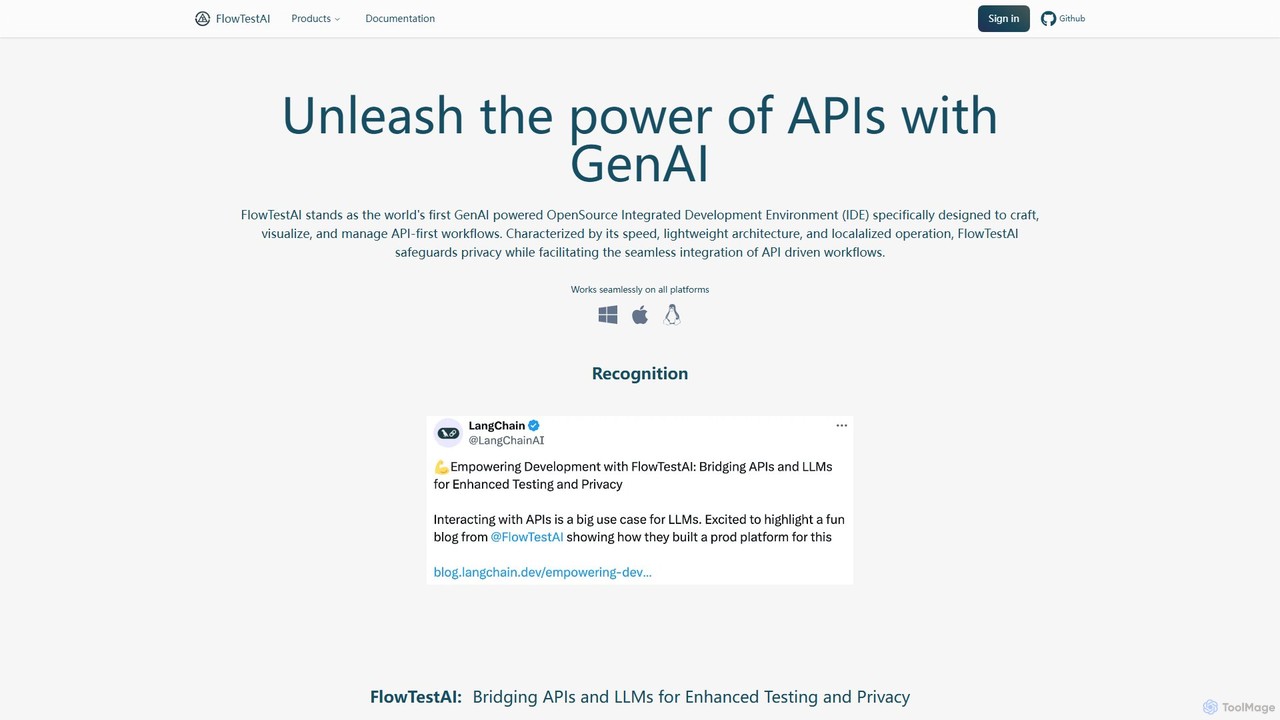
FlowTestAI Product overview

FlowTestAI is the first open-source, GenAI-powered IDE for API-first workflows. It allows developers to describe end-to-end user experiences in natural language and automatically translates them into executable API tests. Featuring a visual interface, CLI for CI/CD integration, and an analytics dashboard, it simplifies API testing, enhances collaboration, and prioritizes privacy with local operation.

Preview

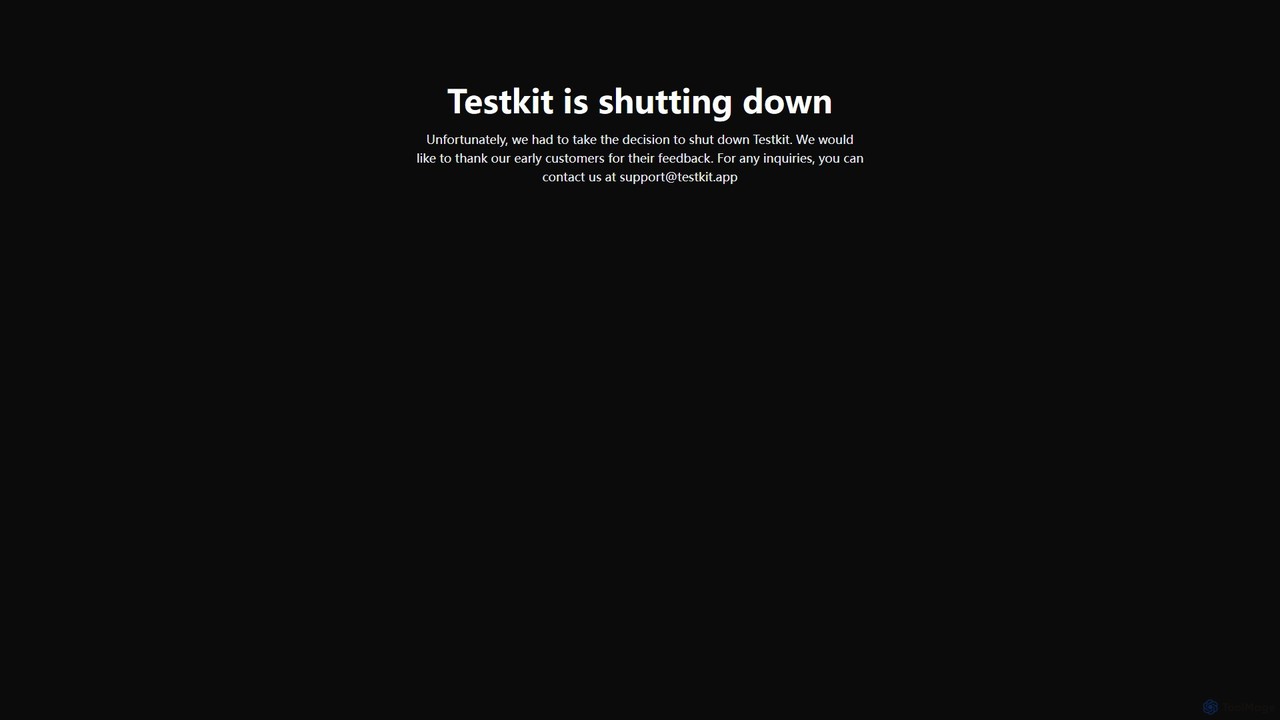
Testkit Product overview

Testkit is an AI-powered platform designed to automate the software testing lifecycle. It helps development and QA teams generate, execute, and maintain test cases with greater speed and accuracy, significantly reducing manual effort and accelerating the delivery pipeline.

Preview

Quick facts

Compare product focus, pricing models and audiences. Highlighted rows indicate different listed information; unknown pricing does not mean free.

FlowTestAI VS Testkit — Quick facts
Quick factsFlowTestAITestkit
Pricing modelFreemiumFreemium
Product typeWebWeb
Primary focusApi ManagementCode Assistant
Audience and rolesNo data availableNo data available
CategoriesApi Management · Testing · Workflow AutomationCode Assistant · Testing · Automation
AddedAug 7, 2025Aug 11, 2025
UpdatedNov 19, 2026Nov 19, 2026

Features, usage and use cases

Explore the listed product descriptions, features and workflows. Taxonomy labels alone are not feature evaluations.

FlowTestAI

FlowTestAI stands as the world's first open-source Integrated Development Environment (IDE) powered by Generative AI, specifically engineered to craft, visualize, and manage API-first workflows. It offers a comprehensive suite of tools—including an IDE, a Command-Line Interface (CLI), and an Analytics dashboard—to revolutionize the way developers approach API testing. Characterized by its speed, lightweight architecture, and localized operation, FlowTestAI ensures user privacy while facilitating the seamless creation and management of complex, API-driven processes.

How to use FlowTestAI

Using FlowTestAI is an intuitive process designed to maximize efficiency:

  1. Describe in Natural Language: Start by describing your desired end-to-end customer experience or system interaction in plain English.
  2. Generate the Flow: FlowTestAI's GenAI engine, with its function-calling capabilities, interprets your description and complex OpenAPI specifications to automatically generate a visual, executable API workflow.
  3. Visualize and Edit: Use the powerful, drag-and-drop visual IDE to review, modify, and manage the generated test flow. This visual representation makes complex interactions easy to understand.
  4. Run and Test: Execute the flow to perform contextual, user-centric tests that mimic real-world scenarios, ensuring your APIs meet practical user needs.
  5. Integrate with CI/CD: Leverage the FlowTestAI CLI to effortlessly integrate your API tests into your existing CI/CD pipeline for continuous, automated testing.
  6. Analyze and Optimize: Use the FlowTestAI Analytics dashboard to monitor the overall health of your tests, identify performance bottlenecks, and pinpoint the exact location of failures for quick resolution.

Core Features of FlowTestAI

  • GenAI-Powered Test Generation: Translates natural language prompts into complete, executable end-to-end API tests.
  • Visual Workflow Builder: An intuitive IDE with a drag-and-drop interface for creating, managing, and collaborating on API tests.
  • Command-Line Interface (CLI): Enables seamless integration with any CI/CD pipeline, allowing for full automation of the testing process.
  • Advanced Analytics Dashboard: Provides a data-rich dashboard to view overall test health, track performance trends, identify flaky tests, and pinpoint failure points.
  • Living Documentation: The visual graphical flows serve as dynamic, always-up-to-date documentation of the system's expected behavior, invaluable for onboarding and collaboration.
  • Multi-LLM Support: Offers the flexibility to choose from leading Large Language Models, including OpenAI and AWS Bedrock, with plans for locally-run LLMs for complete privacy.
  • Privacy and Security by Design: Operates locally, sending API requests directly from your machine to your endpoints, minimizing the risk of credential leakage and exposure of private data.
  • Open Source: A community-driven tool that offers transparency, freedom, and continuous innovation.

Use Cases for FlowTestAI

FlowTestAI is ideal for a variety of scenarios, including:

  • End-to-End Testing: QA engineers and developers can validate complete user journeys that span multiple microservices and APIs.
  • API Development & Debugging: Developers can visually trace API calls to quickly understand system logic and debug issues in complex, distributed architectures.
  • Automated Regression Testing: Teams can integrate FlowTestAI into their CI/CD pipelines to automatically catch regressions before they impact users.
  • System Documentation and Onboarding: The visual flows provide clear, interactive documentation that helps new team members and external partners quickly understand the system's API interactions.

Advantages of FlowTestAI

The primary advantages of using FlowTestAI include:

  • Radical Efficiency: Eliminates the need for writing and maintaining extensive, brittle test scripts, saving significant development time.
  • Improved Test Quality: AI-powered generation and a focus on user journeys lead to more reliable, accurate, and comprehensive testing outcomes.
  • Enhanced Collaboration: The visual interface and living documentation foster a shared understanding of system behavior across development, QA, and product teams.
  • Faster Debugging: Clear, step-by-step traceability in visual flows allows for rapid identification and resolution of failures.
  • Robust Security: The local-first architecture ensures that sensitive credentials and private endpoints are never exposed to third-party servers.

Pricing and Plans

FlowTestAI is fundamentally an open-source tool, making its core IDE and CLI functionalities free for the community to use, modify, and self-host. While specific pricing tiers are not detailed, this model typically implies a free community edition. Paid plans or enterprise versions are likely to be offered for advanced features such as the managed FlowTestAI Analytics cloud dashboard, dedicated enterprise support, and enhanced collaboration tools for larger organizations.

Testkit

Testkit is an intelligent test automation platform that leverages artificial intelligence to streamline and enhance the entire software testing process. Designed for modern development teams, Testkit automates the tedious and time-consuming tasks of writing, executing, and maintaining test suites. By analyzing your application's code and user interface, the platform can autonomously generate meaningful end-to-end, integration, and unit tests, ensuring comprehensive coverage and early bug detection.

The platform aims to bridge the gap between development speed and software quality. In today's fast-paced CI/CD environments, traditional testing methods can become a bottleneck. Testkit addresses this by providing a smart, adaptive solution that keeps pace with development, allowing teams to release new features with confidence and without compromising on quality.

How to use Testkit

Using Testkit is designed to be an intuitive process that integrates seamlessly into existing development workflows. First, you connect your application's repository (e.g., from GitHub, GitLab, or Bitbucket) to the Testkit platform. The AI then scans your codebase and, if applicable, your live application's UI. Based on this analysis, it suggests a suite of relevant test cases. Users can review, modify, and approve these generated tests. Once approved, the tests can be executed on demand or automatically triggered as part of your CI/CD pipeline. The results are presented in a clear, actionable dashboard, highlighting any failures, performance regressions, or visual inconsistencies, making debugging faster and more efficient.

Core Features of Testkit

  • AI-Powered Test Generation: Automatically creates unit, integration, and end-to-end tests by analyzing your application's code and user flows.
  • Self-Healing Tests: When your UI or code changes, Testkit's AI can automatically update the corresponding test scripts, drastically reducing maintenance overhead.
  • Visual Regression Testing: Captures and compares UI snapshots to detect unintended visual changes, ensuring a consistent user experience.
  • CI/CD Integration: Seamlessly integrates with popular CI/CD tools like Jenkins, GitHub Actions, and CircleCI to automate testing within your deployment pipeline.
  • Cross-Browser and Cross-Device Testing: Execute tests across a wide range of browsers, operating systems, and device configurations in the cloud.
  • Detailed Analytics and Reporting: Provides comprehensive dashboards with insights into test coverage, pass/fail rates, and performance metrics.
  • API Testing Automation: Simplifies the process of creating and running tests for your REST and GraphQL APIs.

Use Cases for Testkit

Testkit is versatile and can be applied in various scenarios. For agile development teams, it accelerates sprint cycles by automating regression testing. QA engineers can use it to expand test coverage far beyond what is manually possible, freeing them to focus on more complex exploratory testing. Frontend developers can ensure UI consistency across releases with automated visual testing. For DevOps professionals, integrating Testkit into the CI/CD pipeline establishes a critical quality gate, preventing bugs from reaching production. Startups and small teams can leverage Testkit to build a robust testing culture from the ground up without needing a large, dedicated QA team.

Advantages of Testkit

The primary advantage of Testkit is its massive boost in efficiency. It reduces the time spent on writing and maintaining tests by up to 80%. This leads to faster release cycles and a lower cost of quality assurance. The AI-driven approach ensures higher test coverage and the ability to catch bugs that manual testing might miss. Its self-healing capabilities make test suites more resilient and less brittle, solving a major pain point in traditional test automation. Ultimately, Testkit empowers teams to build and ship higher-quality software faster.

Pricing and Plans

Testkit typically offers a freemium model to cater to different team sizes and needs. A free plan is available for individual developers and small projects with a limited number of test runs per month. Paid plans, such as a 'Pro' tier for growing teams and an 'Enterprise' tier for large organizations, offer higher test volumes, parallel test execution, advanced security features, and dedicated support. Pricing is usually based on the number of test runs or users, providing a scalable solution as your testing needs grow.

Positioning

Their taxonomy shows where the products overlap and where each one has a more distinct focus. Unknown fields are shown explicitly and are never filled with assumptions.

Categories

Shared
Testing
Only FlowTestAI
Api ManagementWorkflow Automation
Only Testkit
Code AssistantAutomation

Tags

Shared
API testingCI/CDdeveloper toolsend-to-end testing
Only FlowTestAI
api managementgenerative AIideopen sourcetesting automationworkflow automation
Only Testkit
code analysisQA automationsoftware testingtest generationvisual regression

Audience and roles

Shared
No listed items
Only FlowTestAI
No listed items
Only Testkit
No listed items

Traffic comparison

Traffic is shown on the same scale so differences in market visibility are not visually understated.

How to interpret the traffic data

Both charts share the same months and vertical scale. Each tool identifies its latest reporting month; missing months are left blank, not counted as zero. Regional and source visit counts are estimates calculated from the reported shares.

FlowTestAI

No data available

Testkit

No data available

Community signals

Ratings, comments, favorites, and likes are community signals—not a substitute for product fit.

FlowTestAI

Rating
No data available
Comments
0
Favorites
152
Likes
152

Testkit

Rating
No data available
Comments
0
Favorites
163
Likes
180

FlowTestAI vs Testkit · Comparison FAQ

What do FlowTestAI and Testkit have in common?
Both tools are listed under Testing. These categories indicate overlapping use cases; compare their detailed descriptions for workflows, capabilities and limitations.
Are FlowTestAI and Testkit free?
Listed pricing models: FlowTestAI — Freemium; Testkit — Freemium. Missing pricing is not proof of a free plan, and freemium does not mean every feature is free. Check official sites for current plans, limits and trials.
How should I choose between FlowTestAI and Testkit?
The primary listed category is Api Management for FlowTestAI, and Code Assistant for Testkit. Compare features, steps and use cases, then verify pricing, data permissions and deployment needs. This page does not include hands-on testing and does not declare a winner from traffic or tags.

Sources and comparison methodology

This page is assembled from ToolMage product listings, taxonomy, traffic statistics and on-site user feedback. It is not a hands-on test or an independent review.

  • Feature and plan descriptions reflect information in the listings, not real-time guarantees. Verify pricing, quotas, availability and privacy terms on the official sites.
  • Traffic uses the reporting months shown. Missing statistics do not mean zero visits, and different periods do not establish growth or superiority. Regional and source visit counts are estimates based on shares.
  • Different tags indicate differences in the listings, not proof that the other product lacks a capability. Ratings, favorites and visits are not used to declare a winner.

Related comparisons