ToolMage
Sign in

AI TOOL COMPARISON

Fluidstack vs Runpod

What is the difference, and which fits your workflow? Compare features, usage, pricing models and traffic side by side.

Jump to key differences

Product overview

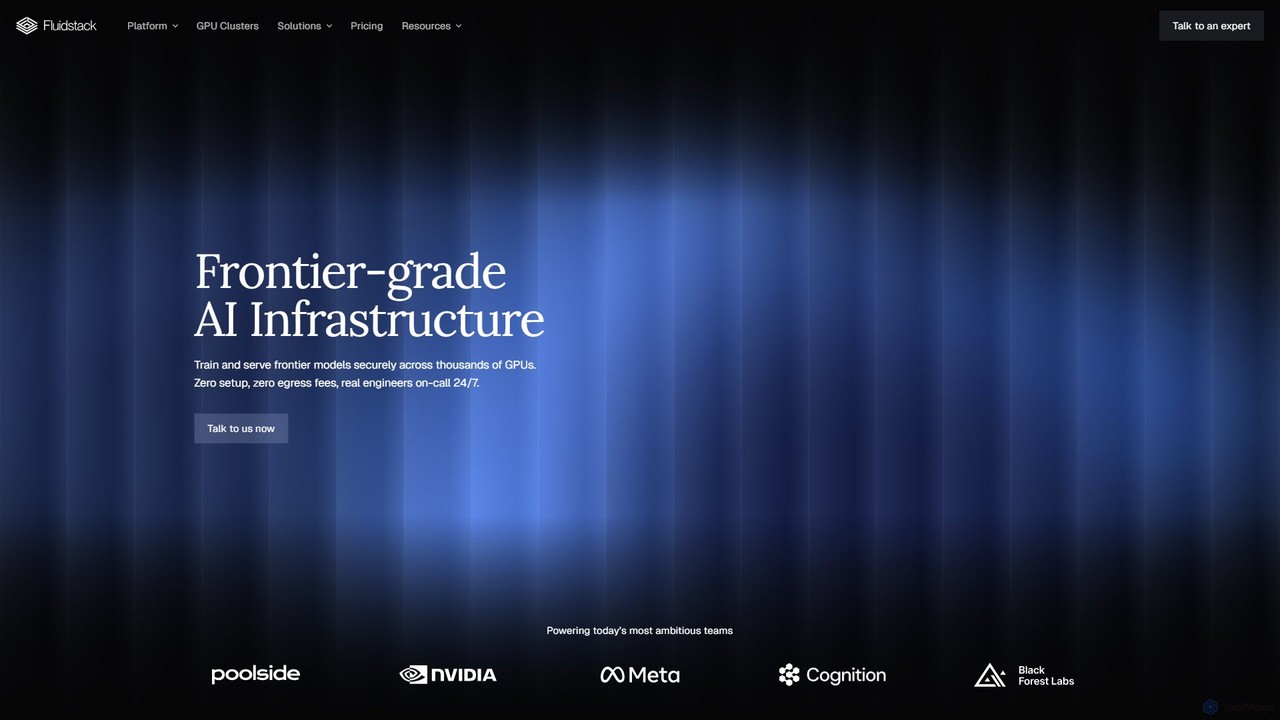
Fluidstack Product overview

Fluidstack is a leading AI cloud platform providing high-performance, dedicated GPU clusters for training and serving frontier AI models. It offers rapid deployment of thousands of GPUs, fully managed services with 24/7 expert support, and transparent pricing with zero egress fees, empowering AI teams to scale without infrastructure friction.

Preview

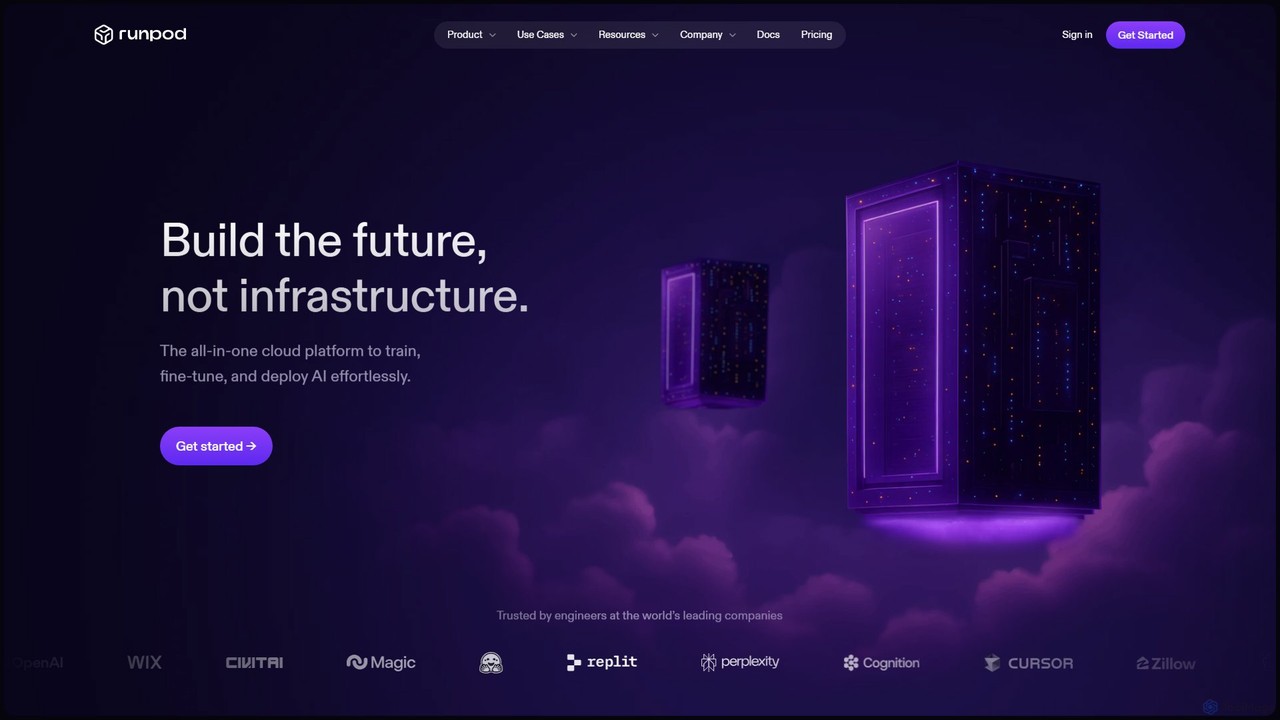
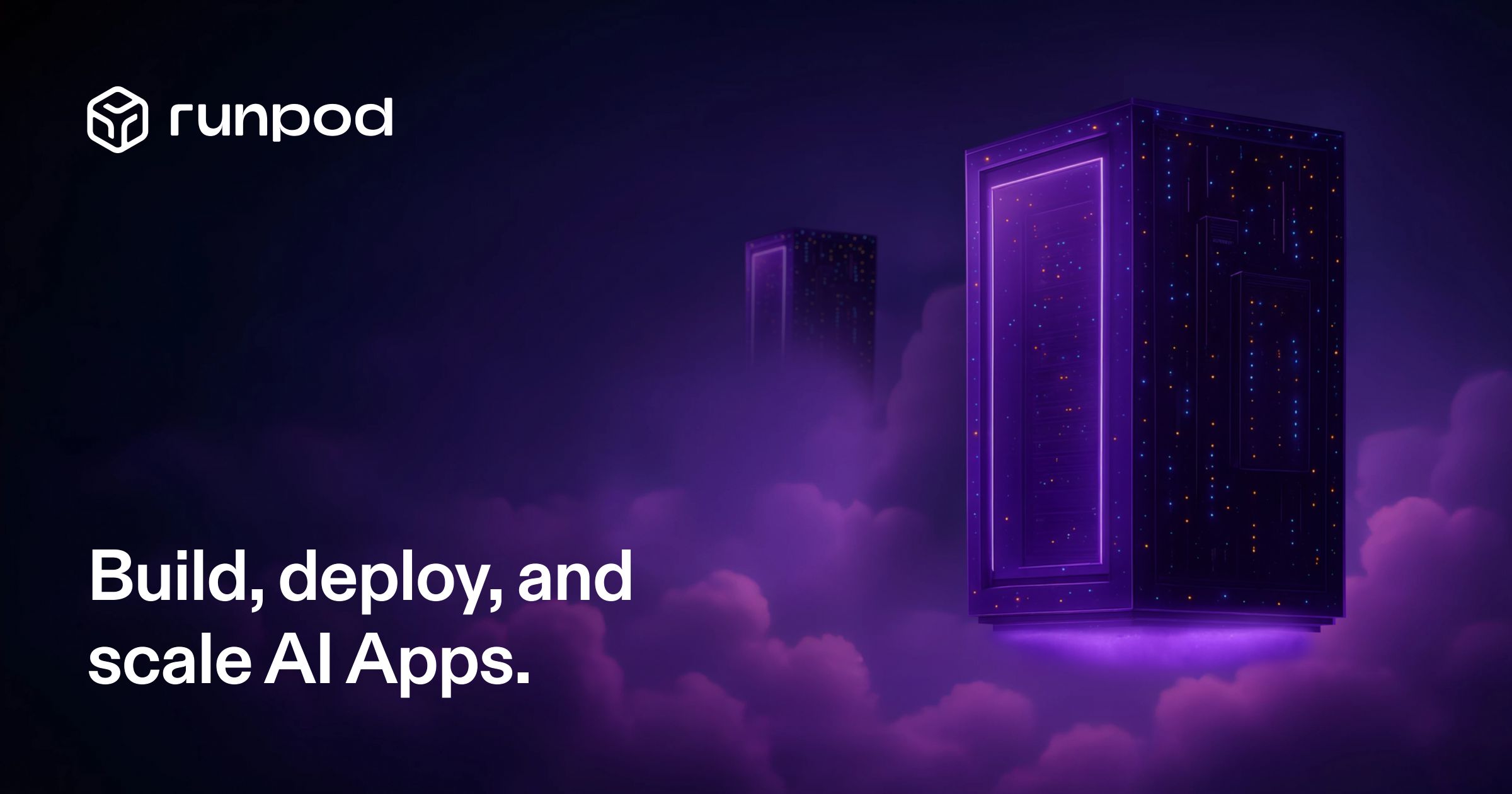
Runpod Product overview

Runpod is a cloud platform designed for AI and machine learning, offering scalable GPU compute for deploying, training, and running AI models. It provides serverless GPUs, pre-built templates, and cost-effective pricing to simplify the entire AI development workflow, from idea to production.

Preview

Quick facts

Compare product focus, pricing models and audiences. Highlighted rows indicate different listed information; unknown pricing does not mean free.

Fluidstack VS Runpod — Quick facts
Quick factsFluidstackRunpod
Pricing modelPaidPaid
Product typeWebWeb
Primary focusEnterprise SolutionsMachine Learning
Audience and rolesNo data availableNo data available
CategoriesEnterprise Solutions · Machine Learning · Cloud ComputingMachine Learning · Cloud Computing · Automation
AddedAug 9, 2025Aug 6, 2025
UpdatedNov 19, 2026Nov 19, 2026

Features, usage and use cases

Explore the listed product descriptions, features and workflows. Taxonomy labels alone are not feature evaluations.

Fluidstack

Fluidstack is a specialized AI cloud platform designed to provide high-performance GPU infrastructure for the world's most ambitious AI teams, from frontier startups to established enterprises. The platform's core mission is to eliminate the complexities and delays associated with setting up and managing large-scale GPU clusters, allowing researchers and developers to focus solely on model development and innovation. Fluidstack delivers fully managed, dedicated GPU clusters that are benchmarked to achieve over 95% of theoretical performance, ensuring maximum throughput for demanding AI workloads.

Trusted by leading AI labs and companies like poolside, Fluidstack has proven its capability to deploy thousands of GPUs, such as NVIDIA H100s and A100s, within days—a stark contrast to the months-long lead times of traditional hyperscalers. The platform is built on a purpose-built stack, including the Atlas OS for fast provisioning and the Lighthouse monitoring system for proactive issue detection and auto-remediation, guaranteeing high uptime and reliability.

How to use Fluidstack

Getting started with Fluidstack is a streamlined, consultative process designed for serious AI development:

  1. Consultation: Begin by contacting Fluidstack's expert team through their website to discuss your specific computational needs, including the required number and type of GPUs, project timeline, and scale.
  2. Cluster Design: Fluidstack's engineers will work with you to design a custom, dedicated GPU cluster optimized for your workloads, whether it's for large-scale model training or high-throughput inference.
  3. Rapid Deployment: Once the contract is signed, Fluidstack provisions your dedicated cluster. This process is incredibly fast, with deployments of thousands of GPUs possible within 48 hours.
  4. Access and Integration: Access your fully managed cluster through standard orchestration tools like SLURM or Kubernetes. Fluidstack handles all the setup, maintenance, and upgrades, allowing for seamless integration into your existing workflow.
  5. Ongoing Management: Leverage Fluidstack's 24/7 hands-on support and the Lighthouse monitoring platform. The system automatically detects and resolves issues, while engineers are available with a 15-minute response SLA for any complex problems.

Core Features of Fluidstack

  • Dedicated GPU Clusters: Access to the latest GPU architectures, including NVIDIA H100, H200, B200, and GB200, with the ability to scale to over 12,000 GPUs on a single fabric.
  • Atlas OS: A proprietary bare-metal operating system for AI infrastructure that enables fast provisioning, smooth orchestration, and total ownership.
  • Lighthouse Monitoring: A proactive monitoring and auto-remediation platform that monitors, heals, and optimizes workloads, catching problems before they impact performance.
  • Fully Managed Service: End-to-end management of your cluster, including setup, orchestration (SLURM or Kubernetes), maintenance, and upgrades.
  • 24/7 Expert Engineering Support: Direct access to real engineers via Slack with a guaranteed 15-minute response time SLA, providing expert answers and hands-on support.
  • High Security and Compliance: Infrastructure is single-tenant by default, ensuring full isolation. The platform is compliant with HIPAA, GDPR, ISO27001, and SOC 2 Type I standards.
  • Transparent Pricing: No hidden fees, including zero egress or ingress charges, and on-node NVMe storage is included.

Use Cases for Fluidstack

Fluidstack is ideal for organizations with demanding, large-scale AI requirements:

  • Research Labs: Enables top researchers to skip infrastructure delays and focus entirely on pushing the boundaries of AI model development.
  • Enterprise AI Teams: Provides reliable, high-performance, and compliant clusters for running business-critical AI applications at scale.
  • Sovereign AI Initiatives: Offers secure, region-specific deployments with full physical and operational security to build national AI capabilities.
  • Financial Services: Powers fast and secure inference, quantitative modeling, and risk analysis workloads.
  • AI Startups: As demonstrated by the poolside case study, Fluidstack allows fast-moving startups to deploy large clusters quickly, accelerate time-to-market, and scale efficiently without large upfront capital or long-term commitments.

Advantages of Fluidstack

Fluidstack offers significant advantages over traditional cloud providers:

  • Unmatched Speed: Deploy multi-thousand GPU clusters in days, not months.
  • Peak Performance: Clusters are fully burned-in and benchmarked to deliver >95% of theoretical performance from day one.
  • Operational Simplicity: Frees your team from the complexities of infrastructure management, from hardware setup to Kubernetes configuration.
  • Cost-Efficiency: Transparent, all-inclusive pricing without surprise data transfer fees, leading to a more predictable and often lower total cost of ownership.
  • Superior Support: Direct, partnership-style support from experienced engineers, not a tiered ticketing system.

Pricing and Plans

Fluidstack offers flexible pricing models tailored to different needs, all with transparent, all-inclusive terms.

  • Reserved Clusters: Designed for large-scale training and inference with terms of 30 days or more. Offers discounted rates and guaranteed resources for 256 to 10,000+ GPUs. Pricing is available upon request.
  • On-Demand: For flexible scaling needs, allowing you to launch GPU instances in under 5 minutes and scale from 8 to 4,000+ GPUs. Billed per hour.
  • Private Cloud: Custom-built, dedicated clusters for complex needs, specific regions, or custom stacks.

Example on-demand hourly rates:

  • NVIDIA H200 SXM: $2.30 / GPU / Hour
  • NVIDIA H100 SXM: $2.10 / GPU / Hour
  • NVIDIA A100 80GB SXM: $1.30 / GPU / Hour

All plans include 24/7 engineering support, a 15-minute response SLA, managed SLURM or K8s, proactive monitoring, and no egress/ingress fees.

Runpod

Runpod is an end-to-end AI cloud platform engineered to eliminate the complexities of building, training, and deploying AI models. It provides developers, researchers, and enterprises with a streamlined, powerful, and cost-effective solution for all their AI/ML compute needs. By offering on-demand access to a vast array of GPUs across a global network of data centers, Runpod empowers users to go from idea to production-ready application without the typical headaches of infrastructure management, scaling, and high costs.

The platform is built for builders, focusing on speed, flexibility, and efficiency. Whether you're fine-tuning a large language model, serving real-time inference for an application, or running compute-intensive simulations, Runpod provides the necessary tools and infrastructure to do so at scale. It aims to be the computational backbone for the next generation of AI companies, allowing them to focus on innovation rather than infrastructure.

How to use Runpod

Using Runpod involves a straightforward workflow designed for rapid development and deployment:

  1. Choose a Service: Select between GPU Cloud for interactive development and long-running tasks, or Serverless for scalable, on-demand inference endpoints.
  2. Select a Template: Kickstart your project by choosing from a wide range of pre-built templates for popular frameworks and applications like PyTorch, TensorFlow, Stable Diffusion, and various LLMs.
  3. Launch a Pod: Spin up a GPU-enabled environment, known as a 'Pod', in under a minute. You can customize the GPU type, vCPUs, RAM, and storage to match your specific needs.
  4. Connect and Build: Access your Pod via SSH or Jupyter Lab to install dependencies, upload your code, and start training or building your application.
  5. Manage Data: Utilize Persistent Volumes or S3-compatible Network Volumes to store your datasets, models, and container data. A key advantage is the absence of ingress or egress fees for data transfer.
  6. Deploy and Scale: For production workloads, deploy your model as a serverless endpoint. Runpod's autoscaling feature will automatically manage the number of GPU workers (from 0 to thousands) based on real-time demand, ensuring you only pay for the compute you use.

Core Features of Runpod

  • Scalable GPU Compute: Access a wide variety of GPUs, from consumer-grade RTX 4090s to enterprise-level H100s and B200s, available in both a cost-effective Community Cloud and a high-security Secure Cloud.
  • Serverless GPUs: Deploy models as API endpoints that automatically scale from zero to handle any workload, eliminating idle costs.
  • FlashBoot Technology: Achieve lightning-fast scaling with sub-200ms cold-start times, ensuring your application is always responsive.
  • Persistent Storage: S3-compatible storage with zero ingress/egress fees, allowing you to run full AI pipelines from data ingestion to deployment seamlessly.
  • Pre-built Templates: A rich library of templates to instantly set up environments for training, inference, and more, significantly reducing setup time.
  • Global Infrastructure: Deploy workloads across 8+ regions worldwide for low-latency performance and global reliability.
  • Built-in Orchestration & Monitoring: The platform handles task queuing and distribution automatically, and provides real-time logs, monitoring, and metrics without requiring custom frameworks.

Use Cases for Runpod

Runpod is versatile and supports a wide range of applications:

  • Inference Serving: Deploy and serve inference for image, text, and audio generation models at any scale with low latency.
  • Model Fine-tuning: Train and fine-tune custom models on your specific datasets efficiently and cost-effectively.
  • AI Agents: Build and host intelligent, autonomous agent-based systems and complex workflows.
  • Compute-Heavy Tasks: Run demanding workloads such as 3D rendering, scientific simulations, and large-scale data processing.

Advantages of Runpod

Runpod offers significant advantages over traditional cloud providers:

  • Cost-Effectiveness: With per-second billing, competitive GPU pricing, and zero data egress fees, users report saving up to 90% on their infrastructure bills.
  • Speed and Agility: Go from idea to execution in seconds. The platform's fast provisioning, minimal cold starts, and autoscaling capabilities accelerate the development lifecycle.
  • Simplicity: Abstracting away infrastructure complexity allows teams to focus on their core product and features, not on DevOps.
  • Flexibility: Highly customizable environments, including GPU models, scaling behaviors, idle time limits, and data center locations.
  • Reliability: Enterprise-grade service with 99.9% uptime, built-in failovers, and robust security (SOC2, HIPAA, GDPR in progress).

Pricing and Plans

Runpod's pricing is transparent and designed to be cost-effective.

  • GPU Cloud: Billed per hour, with prices varying by GPU type and whether it's in the Secure Cloud or the more affordable Community Cloud. For example, an RTX 4090 can be as low as $0.69/hr, while a high-end H100 SXM is around $2.69/hr.
  • Serverless (Inference): Billed per second of processing time. Pricing is tiered by GPU performance, with separate rates for 'Flex' (pre-warmed) and 'Active' workers. This model is highly efficient for variable traffic.
  • Storage: Persistent Pod storage is priced at $0.10/GB/month. S3-compatible Network Volume storage is even cheaper, at $0.07/GB/mo for under 1TB. There are no ingress or egress fees.
  • Reservations: For long-term workloads, users can reserve capacity at a discounted rate by speaking with the sales team.

Positioning

Their taxonomy shows where the products overlap and where each one has a more distinct focus. Unknown fields are shown explicitly and are never filled with assumptions.

Categories

Shared
Machine LearningCloud Computing
Only Fluidstack
Enterprise Solutions
Only Runpod
Automation

Tags

Shared
cloud computinginferencemachine learning
Only Fluidstack
AI infrastructureB200deep learningenterprise AIGPU cloudH100high performance computingmodel training
Only Runpod
ai model deploymentautoscalingdeveloper toolsfine-tuningGPUinfrastructureserverless

Audience and roles

Shared
No listed items
Only Fluidstack
No listed items
Only Runpod
No listed items

Traffic comparison

Traffic is shown on the same scale so differences in market visibility are not visually understated.

How to interpret the traffic data

Both charts share the same months and vertical scale. Each tool identifies its latest reporting month; missing months are left blank, not counted as zero. Regional and source visit counts are estimates calculated from the reported shares.

Fluidstack monthly traffic:

Latest traffic · 2026-05

Monthly visits
101.4K
Avg. visit duration
1:06
Pages per visit
2.58
Bounce rate
39.33%
Data updated 2026-06-11

Monthly traffic trend

  • 2025-09: 28.9K
  • 2026-01: 91.6K
  • 2026-02: 69.4K
  • 2026-03: 95.5K
  • 2026-04: 101K
  • 2026-05: 101.4K

Top regions

Top 5 countries/regions
Country/regionPercentageEstimated visits
🇺🇸United States87.31%88.5K
🇬🇧United Kingdom6.99%7.1K
🇮🇳India2.34%2.4K
🇨🇦Canada1.75%1.8K
🇻🇳Vietnam1.61%1.6K

Traffic sources

Source typePercentageEstimated visits
Direct77.86%79K
Referral16.42%16.7K
Email5.72%5.8K

Search keywords

fluid stackfluidstackfluidstack careersfluidstack jobsfluidstack technical program manager, deployments

Runpod monthly traffic:

Latest traffic · 2026-05

Monthly visits
2.3M
Avg. visit duration
9:26
Pages per visit
7.98
Bounce rate
31.98%
Data updated 2026-06-15

Monthly traffic trend

  • 2025-09: 1.6M
  • 2026-01: 1.9M
  • 2026-02: 1.9M
  • 2026-03: 2.4M
  • 2026-04: 2.3M
  • 2026-05: 2.3M

Top regions

Top 5 countries/regions
Country/regionPercentageEstimated visits
🇺🇸United States58.83%1.4M
🇮🇳India13.6%317.4K
🇩🇪Germany13.56%316.5K
🇧🇷Brazil7.44%173.7K
🇳🇬Nigeria6.57%153.3K

Traffic sources

Source typePercentageEstimated visits
Direct78.77%1.8M
Referral20.03%467.5K
Email1.2%28K

Search keywords

run podrunpodrunpod passwordrunpod pricingrunpod serverless

Community signals

Ratings, comments, favorites, and likes are community signals—not a substitute for product fit.

Fluidstack

Rating
No data available
Comments
0
Favorites
160
Likes
152

Runpod

Rating
No data available
Comments
0
Favorites
146
Likes
166

Fluidstack vs Runpod · Comparison FAQ

What do Fluidstack and Runpod have in common?
Both tools are listed under Machine Learning、Cloud Computing. These categories indicate overlapping use cases; compare their detailed descriptions for workflows, capabilities and limitations.
Are Fluidstack and Runpod free?
Listed pricing models: Fluidstack — Paid; Runpod — Paid. Missing pricing is not proof of a free plan, and freemium does not mean every feature is free. Check official sites for current plans, limits and trials.
How should I choose between Fluidstack and Runpod?
The primary listed category is Enterprise Solutions for Fluidstack, and Machine Learning for Runpod. Compare features, steps and use cases, then verify pricing, data permissions and deployment needs. This page does not include hands-on testing and does not declare a winner from traffic or tags.

Sources and comparison methodology

This page is assembled from ToolMage product listings, taxonomy, traffic statistics and on-site user feedback. It is not a hands-on test or an independent review.
  • Feature and plan descriptions reflect information in the listings, not real-time guarantees. Verify pricing, quotas, availability and privacy terms on the official sites.
  • Traffic uses the reporting months shown. Missing statistics do not mean zero visits, and different periods do not establish growth or superiority. Regional and source visit counts are estimates based on shares.
  • Different tags indicate differences in the listings, not proof that the other product lacks a capability. Ratings, favorites and visits are not used to declare a winner.

Related comparisons