ToolMage
Sign in

AI TOOL COMPARISON

Folderer vs GitGab

What is the difference, and which fits your workflow? Compare features, usage, pricing models and traffic side by side.

Jump to key differences

Product overview

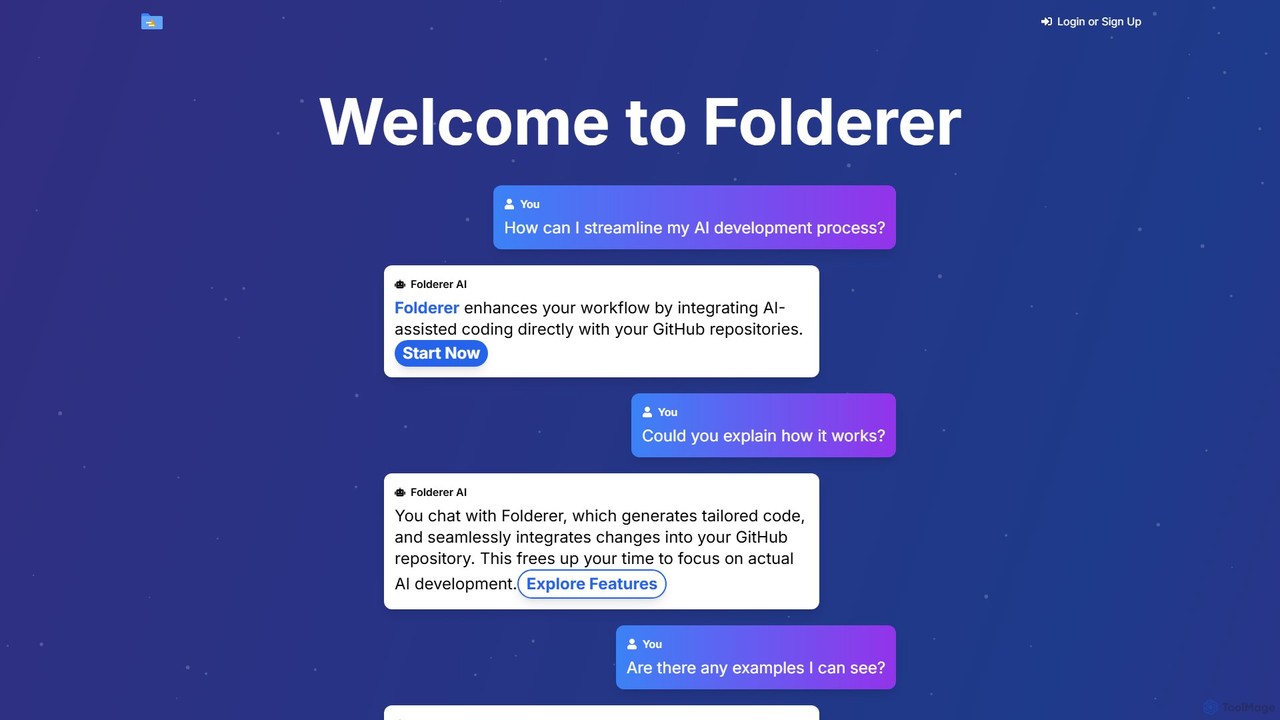
Folderer Product overview

Folderer is an AI-powered coding assistant that integrates directly with your GitHub repositories. It uses a conversational chat interface to generate, refine, and commit high-quality code, streamlining the entire development workflow from idea to deployment.

Preview

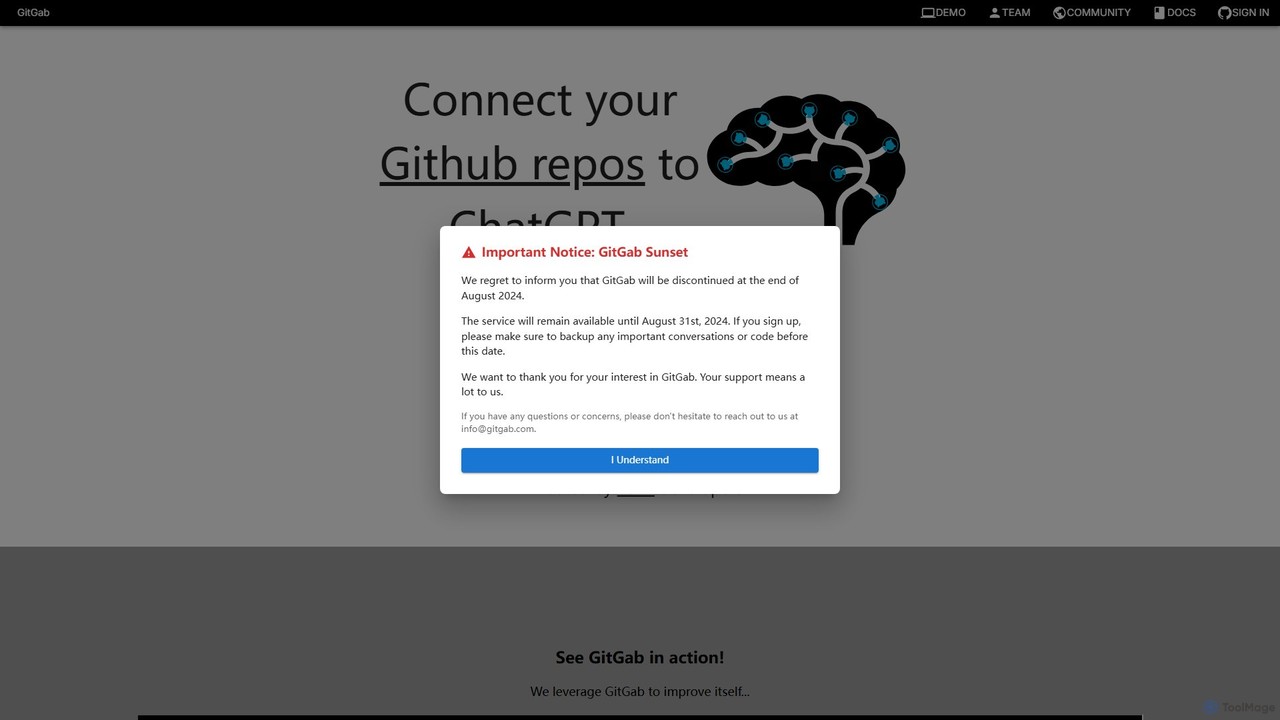
GitGab Product overview

GitGab is an advanced AI code assistant that leverages top models like ChatGPT, Claude, and Gemini. It uniquely contextualizes your entire codebase, including multiple repositories and local files, to help you implement features, find bugs, write documentation, and optimize code with unparalleled accuracy.

Preview

Quick facts

Compare product focus, pricing models and audiences. Highlighted rows indicate different listed information; unknown pricing does not mean free.

Folderer VS GitGab — Quick facts
Quick factsFoldererGitGab
Pricing modelFreemiumFreemium
Product typeWebWeb
Primary focusCode GenerationCode Generation
Audience and rolesNo data availableNo data available
CategoriesCode Generation · Code Assistant · AutomationCode Generation · Code Assistant · Automation
AddedAug 1, 2025Aug 6, 2025
UpdatedNov 19, 2026Nov 19, 2026

Features, usage and use cases

Explore the listed product descriptions, features and workflows. Taxonomy labels alone are not feature evaluations.

Folderer

Folderer is an innovative AI development tool designed to significantly accelerate the software creation process. It acts as an intelligent partner for developers, bridging the gap between a conceptual idea and production-ready code. By leveraging a sophisticated AI model, Folderer understands natural language prompts to generate custom code tailored to your project's specific needs. Its core strength lies in its seamless and direct integration with GitHub, which automates the often tedious process of code implementation, refinement, and version control.

Instead of manually writing boilerplate code or spending hours on component setup, developers can simply describe their requirements to the Folderer AI in a chat. The AI then generates the necessary code, whether it's a simple React component, a complete landing page structure, or a functional backend service. This conversational approach allows for iterative development, where you can continuously chat with the AI to refine and perfect the code until it meets your exact specifications. The entire process is designed to keep you focused on the creative and logical aspects of development, rather than the repetitive, time-consuming tasks.

How to use Folderer

The workflow for using Folderer is designed to be intuitive and efficient, integrating directly into a developer's existing habits. The process can be broken down into four simple steps:

  1. Describe Your Idea: Start by opening a chat with the Folderer AI. Clearly explain what you want to build. For example, you could say, "Create a responsive landing page for a SaaS product with a hero section, features, and pricing table," or "Generate a React component for a to-do list with state management."
  2. AI Code Generation: Based on your description, the Folderer AI analyzes your requirements and generates high-quality, customized code. It can create file structures, write component logic, and apply styling using modern frameworks like Next.js and Tailwind CSS.
  3. Refine and Iterate: Review the generated code. If you need changes or additions, you can continue the conversation with the AI. For instance, you might ask it to "add a delete function to each to-do item" or "change the color scheme of the landing page." The AI will understand and apply the modifications.
  4. Direct GitHub Integration: Once you are satisfied with the code, Folderer seamlessly commits the changes directly to your connected GitHub repository. This eliminates the need for manual copy-pasting and streamlines version control, keeping your project in sync.

Core Features of Folderer

  • AI-Powered Code Generation: Transforms natural language descriptions into high-quality, production-ready code, adapting to your project's context and coding style.
  • Direct GitHub Integration: Connects to your GitHub repositories to read your existing codebase and commit new, AI-generated code directly, simplifying the entire workflow.
  • Conversational AI Assistant: A chat-based interface allows for intuitive interaction, making it easy to request, refine, and iterate on code in a natural way.
  • Smart Version Control: Automates the process of committing code, potentially assisting with commit messages and branch management to maintain a clean version history.
  • Rapid Prototyping: Enables the quick creation of functional prototypes and Minimum Viable Products (MVPs) to test and validate ideas without extensive manual coding.

Use Cases for Folderer

Folderer is versatile and can be applied to a wide range of development scenarios:

  • Web Application Development: Build complete, modern web applications from scratch, such as the demonstrated business card maker or product landing pages using Next.js and Tailwind CSS.
  • Component Creation: Quickly generate individual UI/UX components for existing projects, like forms, navigation bars, data tables, or interactive elements.
  • Prototyping and MVPs: Rapidly build and deploy a functional version of a new product idea, such as the AI Job Impact Calculator, to gather user feedback.
  • Automating Boilerplate: Eliminate the repetitive task of setting up new projects by having the AI generate the initial file structure, dependencies, and configuration.
  • Learning and Exploration: Developers can use Folderer to explore new frameworks or libraries by asking the AI to generate example code and explain its structure.

Advantages of Folderer

Using Folderer provides a significant competitive edge in software development:

  • Enhanced Productivity: By automating code generation and repository management, it drastically reduces development time.
  • Streamlined Workflow: The deep integration with GitHub eliminates context switching and manual steps, creating a fluid development experience.
  • Focus on Innovation: Frees up developers' mental energy to concentrate on complex problem-solving, architecture design, and creating unique features.
  • Reduced Errors: AI-generated code often adheres to best practices and consistent styling, minimizing the risk of human error and bugs.
  • Improved Accessibility: Lowers the barrier for developers to build complex applications, enabling them to work with modern technologies more easily.

Pricing and Plans

As of now, specific pricing and plan details for Folderer are not publicly listed on the website. Tools of this nature often launch with a freemium model, which may include a free tier with certain limitations (e.g., a limited number of AI interactions or private repositories) and premium paid plans for individuals, teams, and enterprises offering more advanced features, higher usage limits, and priority support. To get the most accurate and current information on pricing, it is recommended to visit the official Folderer website and sign up or contact their sales team.

GitGab

GitGab is a state-of-the-art AI-powered development partner designed to supercharge a developer's workflow. It integrates seamlessly with your coding environment by understanding the full context of your projects. Unlike other tools that may be limited to a single file or repository, GitGab can draw insights from multiple repositories and local files simultaneously. This allows it to provide highly accurate and relevant assistance for complex tasks. By harnessing the power of leading Large Language Models (LLMs) such as OpenAI's ChatGPT, Anthropic's Claude, and Google's Gemini, GitGab offers a versatile and powerful solution for modern software development.

The platform is built with developer productivity at its core. Whether you're building a new feature from scratch, hunting down a tricky bug that spans across microservices, or trying to understand a legacy codebase, GitGab acts as an expert pair programmer. It contextualizes your requests with the relevant code snippets, dependencies, and architectural patterns from your entire codebase, leading to suggestions that are not just syntactically correct but also contextually appropriate.

How to use GitGab

Using GitGab is a straightforward process designed to get you up and running quickly:

  1. Sign Up and Connect: Create a free account on the GitGab website. Connect your Git provider (like GitHub, GitLab, or Bitbucket) to grant GitGab access to your repositories. The process is secure and uses standard OAuth protocols.
  2. Select Repositories: Choose the specific repositories you want GitGab to use as context for your conversation. You can select multiple repos, which is ideal for projects with microservices or shared libraries.
  3. Connect Local Files (Optional): For projects or files not yet pushed to a remote repository, you can securely connect local directories. GitGab can then analyze this local code, providing a complete picture of your work-in-progress.
  4. Start a Conversation: Open the chat interface and start asking questions in natural language. You can ask it to perform a wide range of tasks, such as "Implement a new API endpoint for user authentication based on the existing schema in the 'auth-service' repo" or "Find potential null pointer exceptions in the 'payment-processor' module."
  5. Iterate and Refine: GitGab will provide code, explanations, and suggestions. You can then ask follow-up questions to refine the output, ask for alternative implementations, or request a detailed explanation of the proposed solution.

Core Features of GitGab

  • Multi-Repo Context: The ability to analyze and understand code across multiple repositories in a single conversation, providing holistic insights for complex systems.
  • Local File Integration: Securely connects to your local machine to include uncommitted changes and local projects in its context.
  • State-of-the-Art LLM Support: Leverages multiple top-tier AI models (ChatGPT, Claude, Gemini), allowing you to choose the best model for your specific task.
  • Feature Implementation: Generates functional code for new features based on high-level descriptions and existing codebase patterns.
  • Advanced Bug Detection: Intelligently scans your code to identify subtle bugs, race conditions, and security vulnerabilities by understanding the interactions between different parts of your code.
  • Automated Documentation: Creates comprehensive and accurate documentation, including README files, API docs, and in-line code comments.
  • Code Optimization and Refactoring: Analyzes your code for performance bottlenecks and suggests refactoring improvements to enhance readability, maintainability, and speed.
  • Privacy and Security First: Your code is never shared with third parties, and all sensitive data is stored with state-of-the-art encryption.

Use Cases for GitGab

GitGab is versatile and can be applied in numerous development scenarios:

  • Onboarding New Engineers: New team members can quickly get up to speed on a large, complex codebase by asking GitGab questions about architecture, data flow, and functionality.
  • Microservices Development: When building a feature that touches multiple microservices, developers can use GitGab to understand dependencies and ensure consistency across different repositories.
  • Legacy Code Modernization: Safely refactor and document old codebases with limited existing documentation by having GitGab analyze the code and explain its behavior.
  • Complex Debugging: Trace bugs that originate in one service and cause issues in another by providing GitGab with the full context of both services.
  • Rapid Prototyping: Quickly scaffold new applications or features by describing the requirements to GitGab and letting it generate the boilerplate code.

Advantages of GitGab

GitGab offers significant advantages over traditional coding assistants:

  • Superior Contextual Understanding: Its multi-repo and local file capabilities provide a deeper understanding than tools limited to a single repo.
  • Higher Accuracy: More context leads to more accurate, relevant, and useful suggestions, reducing the time spent correcting AI-generated code.
  • Increased Productivity: Automates tedious tasks like writing documentation, finding bugs, and implementing boilerplate, allowing developers to focus on high-level problem-solving.
  • Enhanced Code Quality: Helps maintain high standards by suggesting optimizations and identifying potential issues before they become problems.
  • Flexible and Powerful: Access to multiple leading AI models ensures you always have the best tool for the job.

Pricing and Plans

GitGab operates on a freemium model, making it accessible to everyone.

  • Free Plan: Perfect for individual developers, students, and hobbyists. This plan is free to use and includes a generous monthly token limit, allowing you to experience the core features of AI-powered code assistance.
  • Pro Plan (Hypothetical): Aimed at professional developers and small teams, this plan would offer significantly higher token limits, priority access to new models, and enhanced support.
  • Enterprise Plan (Hypothetical): Designed for large organizations, this plan would provide unlimited usage, dedicated support, advanced security features like SSO, and options for on-premise or private cloud deployment. Pricing is typically available upon request by contacting the sales team.

Positioning

Their taxonomy shows where the products overlap and where each one has a more distinct focus. Unknown fields are shown explicitly and are never filled with assumptions.

Categories

Shared
Code GenerationCode AssistantAutomation
Only Folderer
No listed items
Only GitGab
No listed items

Tags

Shared
code generationcodinggithub
Only Folderer
AI assistantautomationdeveloper toolNextJSsoftware developmentTailwind CSSweb development
Only GitGab
bug detectionchatgptClaudecode assistantdeveloperdocumentationgeminiGitprogrammingrefactoring

Audience and roles

Shared
No listed items
Only Folderer
No listed items
Only GitGab
No listed items

Traffic comparison

Traffic is shown on the same scale so differences in market visibility are not visually understated.

How to interpret the traffic data

Both charts share the same months and vertical scale. Each tool identifies its latest reporting month; missing months are left blank, not counted as zero. Regional and source visit counts are estimates calculated from the reported shares.

Folderer

No data available

GitGab

No data available

Community signals

Ratings, comments, favorites, and likes are community signals—not a substitute for product fit.

Folderer

Rating
No data available
Comments
0
Favorites
174
Likes
154

GitGab

Rating
No data available
Comments
0
Favorites
185
Likes
200

Folderer vs GitGab · Comparison FAQ

What do Folderer and GitGab have in common?
Both tools are listed under Code Generation、Code Assistant、Automation. These categories indicate overlapping use cases; compare their detailed descriptions for workflows, capabilities and limitations.
Are Folderer and GitGab free?
Listed pricing models: Folderer — Freemium; GitGab — Freemium. Missing pricing is not proof of a free plan, and freemium does not mean every feature is free. Check official sites for current plans, limits and trials.
How should I choose between Folderer and GitGab?
The primary listed category is Code Generation for Folderer, and Code Generation for GitGab. Compare features, steps and use cases, then verify pricing, data permissions and deployment needs. This page does not include hands-on testing and does not declare a winner from traffic or tags.

Sources and comparison methodology

This page is assembled from ToolMage product listings, taxonomy, traffic statistics and on-site user feedback. It is not a hands-on test or an independent review.

  • Feature and plan descriptions reflect information in the listings, not real-time guarantees. Verify pricing, quotas, availability and privacy terms on the official sites.
  • Traffic uses the reporting months shown. Missing statistics do not mean zero visits, and different periods do not establish growth or superiority. Regional and source visit counts are estimates based on shares.
  • Different tags indicate differences in the listings, not proof that the other product lacks a capability. Ratings, favorites and visits are not used to declare a winner.

Related comparisons