GravityWrite is an all-in-one AI-powered content creation platform designed to accelerate your workflow. It offers over 250 specialized tools for generating SEO-optimized blog posts, unique AI images, and automated social media content. By integrating multiple AI models like GPT-4 and Claude, it helps marketers, creators, and businesses produce high-quality, on-brand content that drives engagement and growth, all from a single, unified dashboard.
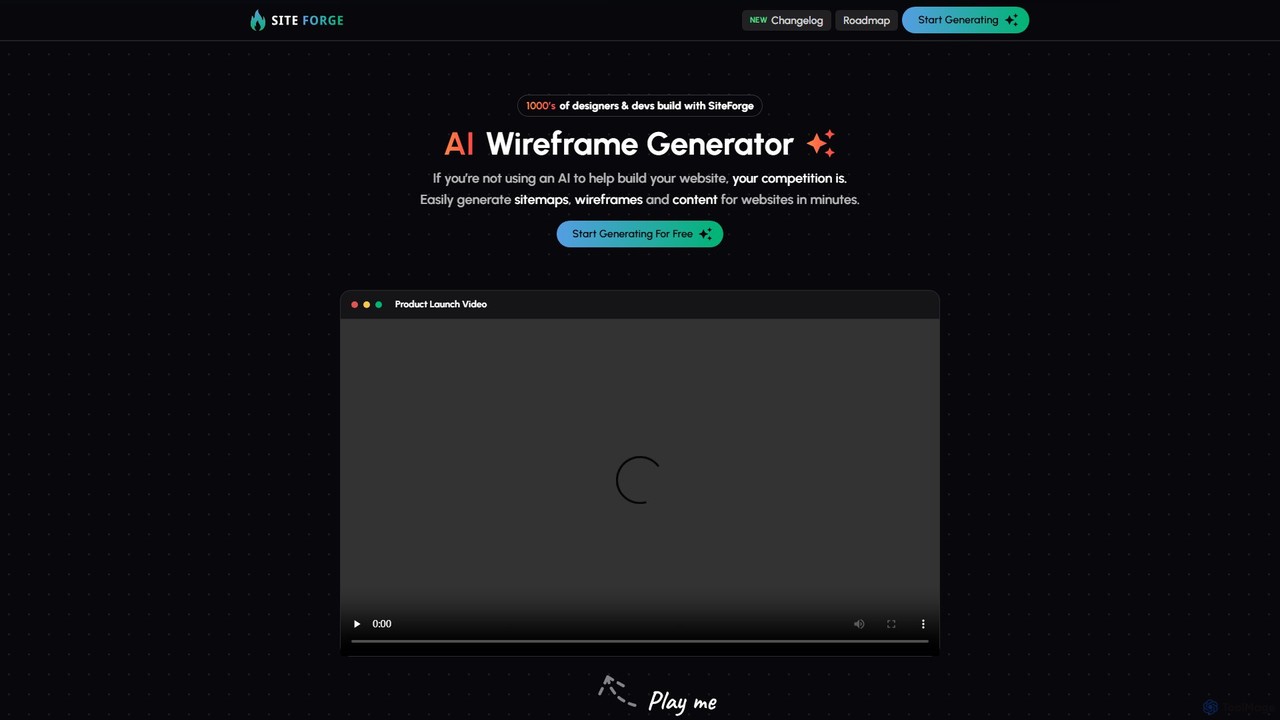
SiteForge is an AI-powered platform designed to accelerate the web development process. It enables users to generate sitemaps, interactive wireframes, and SEO-optimized content in minutes. Ideal for designers, developers, and marketing agencies, it streamlines workflow, ensures brand consistency, and transforms ideas into structured website plans with ease.
Product overview
GravityWrite Product overview
GravityWrite is an all-in-one AI-powered content creation platform designed to accelerate your workflow. It offers over 250 specialized tools for generating SEO-optimized blog posts, unique AI images, and automated social media content. By integrating multiple AI models like GPT-4 and Claude, it helps marketers, creators, and businesses produce high-quality, on-brand content that drives engagement and growth, all from a single, unified dashboard.

SiteForge Product overview
SiteForge is an AI-powered platform designed to accelerate the web development process. It enables users to generate sitemaps, interactive wireframes, and SEO-optimized content in minutes. Ideal for designers, developers, and marketing agencies, it streamlines workflow, ensures brand consistency, and transforms ideas into structured website plans with ease.
Detailed feature comparison
| Feature | GravityWrite | SiteForge |
|---|---|---|
| Primary category | Image Generation | Prototyping |
| Added | 2025-08-04 | 2025-08-04 |
| Pricing | Freemium | Freemium |
| Official website | gravitywrite.com | siteforge.io |
| Product type | Website | Website |
| Performance data | ||
| User rating | Not verified | Not verified |
| Comments | 0 | 0 |
| Monthly visits | 232.6K | 3.4K |
| Monthly growth | -12.1% | Not verified |
| Favorites | 131 | 105 |
| Details | View details | View details |
GravityWrite vs SiteForge monthly traffic
Compare GravityWrite and SiteForge by monthly reach, traffic trend, visit depth, top regions, and acquisition sources.
How to interpret the traffic data
In the GravityWrite vs SiteForge monthly traffic comparison, GravityWrite currently shows 232.6K visits and SiteForge shows 3.4K; GravityWrite has about 67.9 times the visible traffic of SiteForge, an absolute difference of about 229.2K visits. This reflects visible reach, not feature quality or paid users.
Only GravityWrite has complete third-party traffic details; SiteForge uses visits recorded inside ToolMage. These scopes cannot estimate market share directly, and on-site views should not be treated as the product’s total website traffic.
GravityWrite monthly traffic:
Latest traffic
Monthly traffic trend
- 2025/9: 460.4K Monthly visits
- 2026/1: 360.3K Monthly visits
- 2026/2: 336.5K Monthly visits
- 2026/3: 331K Monthly visits
- 2026/4: 264.7K Monthly visits
- 2026/5: 232.6K Monthly visits
Top regions
Top 5 countries/regions
| Country/region | Percentage | Traffic |
|---|---|---|
| 🇮🇳India | 58.28% | 135.6K |
| 🇺🇸United States | 14.53% | 33.8K |
| 🇵🇰Pakistan | 14.51% | 33.8K |
| 🇧🇩Bangladesh | 9.64% | 22.4K |
| 🇻🇳Vietnam | 3.04% | 7.1K |
Traffic sources
| Source type | Percentage | Traffic |
|---|---|---|
| Direct | 85.09% | 198K |
| Referral | 12.06% | 28.1K |
| 2.85% | 6.6K |
Search keywords
SiteForge monthly traffic:
Latest traffic
Usage comparison
Compare the core capabilities of GravityWrite and SiteForge
GravityWrite Core features
SiteForge Core features
Use cases
GravityWrite Use cases
SiteForge Use cases
GravityWrite vs SiteForge:In-depth comparison and selection guidance
First decide whether the products solve the same kind of need
This in-depth GravityWrite vs SiteForge comparison uses only the product records, taxonomy, audience, traffic, and community signals available on this page. GravityWrite is primarily listed under “Image Generation”, while SiteForge is primarily listed under “Prototyping”, so the first decision is whether your actual task matches their recorded scope.
The structured fields currently show these decision-relevant differences: Primary category (GravityWrite: Image Generation; SiteForge: Prototyping); Monthly visits (GravityWrite: 232.6K; SiteForge: 3.4K); Favorites (GravityWrite: 131; SiteForge: 105); Website (GravityWrite: gravitywrite.com; SiteForge: siteforge.io). These facts are more useful for selection than brand visibility alone.
What market visibility and monthly traffic mean
In the GravityWrite vs SiteForge monthly traffic comparison, GravityWrite currently shows 232.6K visits and SiteForge shows 3.4K; GravityWrite has about 67.9 times the visible traffic of SiteForge, an absolute difference of about 229.2K visits. This reflects visible reach, not feature quality or paid users.
Only GravityWrite has complete third-party traffic details; SiteForge uses visits recorded inside ToolMage. These scopes cannot estimate market share directly, and on-site views should not be treated as the product’s total website traffic.
The current traffic scope is not sufficient for a reliable product ranking. Treat monthly visits as a market-interest signal, then decide using taxonomy, use cases, pricing, and a like-for-like trial rather than reading exposure as product capability.
Product positioning, use cases, and roles
GravityWrite and SiteForge currently overlap in shared categories: Content Creation; shared tags: content creation, marketing, SEO, and website builder. This can place both on the same shortlist, but it does not prove equal implementation, depth, or cost.
GravityWrite's unique categories/tags are Image Generation, Social Media Marketing, Writing, ai writer, blog writer, content marketing, copywriting, and image generator; SiteForge's are Prototyping, Website Builder, ai design, no-code, prototyping, sitemap generator, web design, and wireframe generator. These unique fields are the strongest differentiators: validate the product whose recorded scope matches the task instead of following traffic alone.
What ratings, comments, and favorites can tell you
GravityWrite has no verified rating, 0 comments, 131 favorites, and 139 likes;SiteForge has no verified rating, 0 comments, 105 favorites, and 104 likes。
Neither product has enough rating or comment samples for a credible reputation ranking.
Selection guidance by actual need
When to evaluate GravityWrite first
Put GravityWrite on the priority trial list when the task aligns with “Image Generation” and especially Image Generation, Social Media Marketing, Writing, ai writer, blog writer, and content marketing. This follows recorded positioning and does not imply unlisted capabilities are absent.
GravityWrite also currently records: pricing is freemium, product type is website, 232.6K verified monthly visits, no verified user rating. Verify any hard requirement around price, platform, or reach before trial, and do not let sparse review data substitute for testing.
When to evaluate SiteForge first
Put SiteForge on the priority trial list when the task aligns with “Prototyping” and especially Prototyping, Website Builder, ai design, no-code, prototyping, and sitemap generator. This follows recorded positioning and does not imply unlisted capabilities are absent.
SiteForge also currently records: pricing is freemium, product type is website, 3.4K on-site monthly views, no verified user rating. Verify any hard requirement around price, platform, or reach before trial, and do not let sparse review data substitute for testing.
How to validate the recommendation before deciding
The available data describes positioning, public visibility, and community signals, but it cannot prove output quality, speed, integration effort, privacy, or long-term cost in your workflow. Before deciding, run the same representative tasks in GravityWrite and SiteForge, then record completion time, accuracy, manual corrections, and the real paid threshold. A like-for-like trial turns this comparison into a defensible adoption decision.