ToolMage
Sign in

AI TOOL COMPARISON

Polymet vs Uizard

What is the difference, and which fits your workflow? Compare features, usage, pricing models and traffic side by side.

Jump to key differences

Product overview

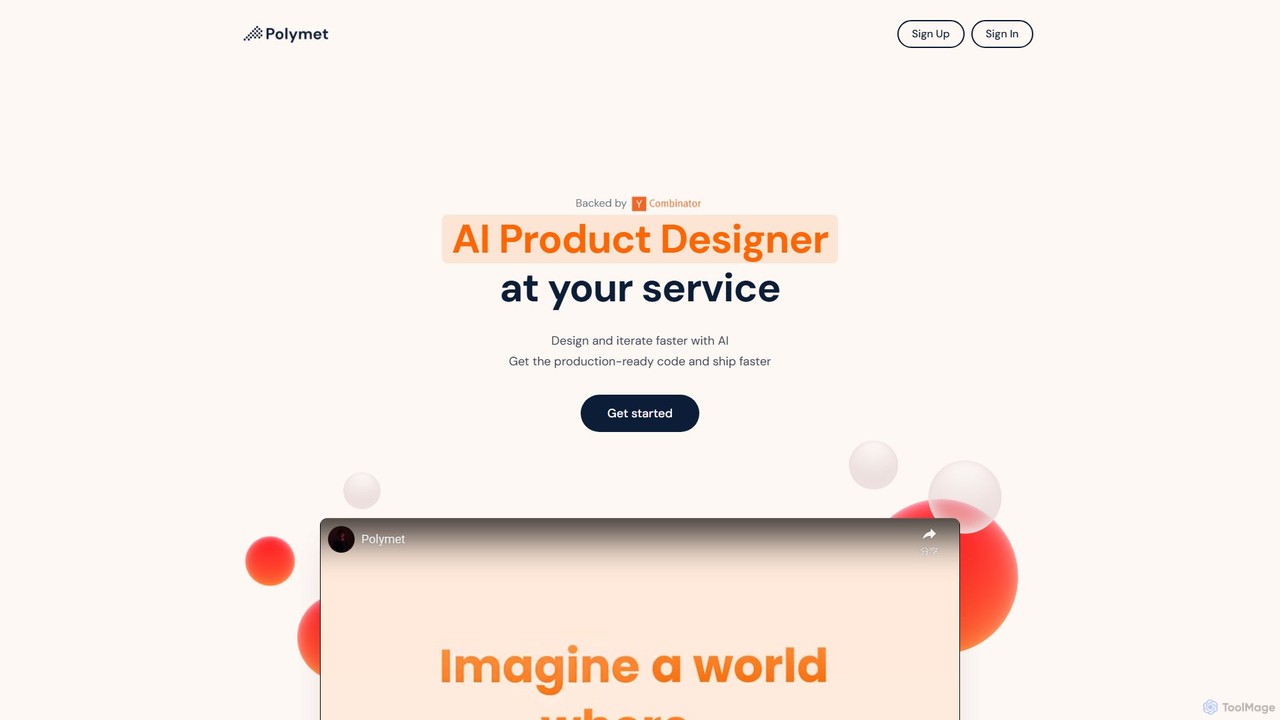
Polymet Product overview

Polymet is an AI-powered product designer that transforms ideas, text descriptions, or images into interactive prototypes with production-ready code in seconds. It streamlines the design and development workflow, integrating seamlessly with Figma and existing codebases.

Preview

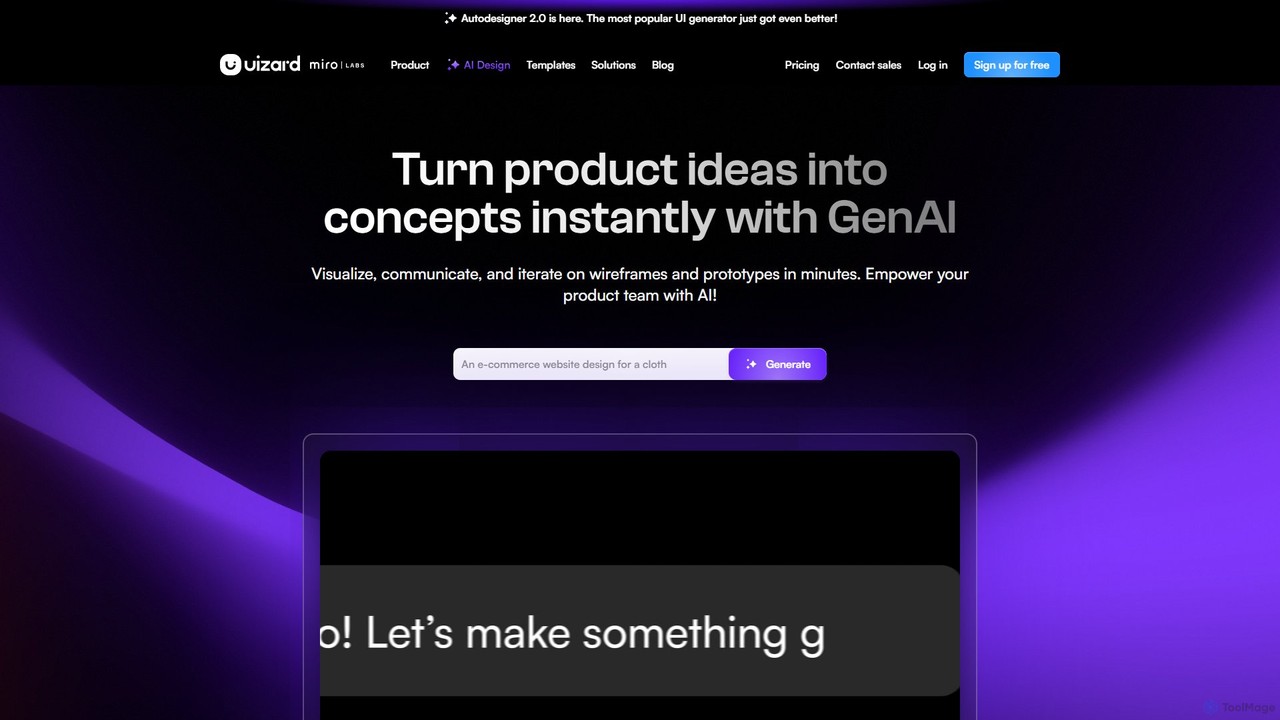
Uizard Product overview

Uizard is an AI-powered UI design tool that empowers both designers and non-designers to create stunning websites, web apps, and mobile app mockups in minutes. Transform text prompts, hand-drawn sketches, or screenshots into editable, interactive prototypes. It's designed for rapid ideation, real-time collaboration, and streamlining the entire product design workflow from concept to handoff.

Preview

Quick facts

Compare product focus, pricing models and audiences. Highlighted rows indicate different listed information; unknown pricing does not mean free.

Polymet VS Uizard — Quick facts
Quick factsPolymetUizard
Pricing modelFreemiumFreemium
Product typeWebWeb
Primary focusUi UxUi Ux
Audience and rolesNo data availableNo data available
CategoriesUi Ux · Code Generation · PrototypingUi Ux · Low Code No Code · Prototyping
AddedAug 5, 2025Aug 5, 2025
UpdatedNov 19, 2026Nov 19, 2026

Features, usage and use cases

Explore the listed product descriptions, features and workflows. Taxonomy labels alone are not feature evaluations.

Polymet

Polymet is a revolutionary AI-powered platform designed to dramatically accelerate the product development lifecycle. It acts as an AI product designer, enabling users to go from a simple idea to a fully functional, interactive prototype within seconds. By interpreting natural language descriptions, sketches, or even existing images, Polymet generates high-fidelity designs and the corresponding production-ready code, effectively bridging the gap between design and engineering.

The platform is built for speed and efficiency, allowing for rapid iteration. Once an initial design is generated, users can easily edit and refine it, ensuring the final output perfectly aligns with their vision. This iterative process is intuitive, making it accessible to a wide range of users, from seasoned designers and developers to product managers and entrepreneurs without a technical background.

How to use Polymet

The workflow in Polymet is streamlined into three simple steps:

  1. Describe or Upload: Start by describing your desired interface in plain English (e.g., "Create a user dashboard with a sidebar menu and data visualization cards"). Alternatively, you can upload a wireframe, a hand-drawn sketch, or a screenshot of an app you admire to provide visual context for the AI.
  2. Edit and Iterate: The AI will instantly generate a design based on your input. You can then enter the interactive editor to make changes. Modify layouts, change colors, adjust text, or swap components. Polymet supports using your own custom component libraries, ensuring brand consistency. This collaborative environment allows teams to provide feedback and iterate in real-time.
  3. Preview and Export Code: Once you are satisfied with the design, you can generate an interactive preview link to share with stakeholders for feedback. The final step is to export the production-ready code. Polymet provides clean, well-structured code (e.g., React, Vue, HTML/CSS) that can be directly integrated into your development projects, saving countless hours of manual coding.

Core Features of Polymet

  • AI-Powered Design Generation: Converts text prompts, sketches, and images into sophisticated UI/UX designs.
  • Production-Ready Code Export: Generates clean, high-quality frontend code for various frameworks, ready for implementation.
  • Seamless Figma Integration: Connects directly with your Figma projects, allowing for a smooth two-way workflow between design and generation.
  • Custom Component Support: Allows users to integrate and use their own existing component libraries and design systems.
  • Interactive Prototyping: Instantly creates shareable, interactive prototypes to visualize user flows and gather feedback.
  • Iterative Design Editor: An intuitive editor for real-time modifications and refinements to the AI-generated designs.
  • Team Collaboration: Designed for teams to work together, share projects, and iterate on designs efficiently.

Use Cases for Polymet

Polymet is a versatile tool suitable for various roles and scenarios:

  • Startups and Entrepreneurs: Quickly build and test Minimum Viable Products (MVPs) to validate business ideas without significant upfront investment in design and development.
  • Product Managers: Create high-fidelity, interactive prototypes to clearly communicate product vision to developers and stakeholders, facilitating better alignment and faster decision-making.
  • UI/UX Designers: Automate the creation of initial mockups and wireframes, freeing up time to focus on complex user experience challenges and creative solutions. It also streamlines the handoff process to developers.
  • Frontend Developers: Generate boilerplate code for components and pages instantly, significantly reducing development time and allowing focus on logic and functionality.

Advantages of Polymet

The primary advantage of Polymet is its incredible speed, reducing a process that typically takes days or weeks to mere seconds. It democratizes design by empowering non-technical users to create professional-grade interfaces. By automating the design-to-code pipeline, it enhances productivity, reduces errors, and ensures consistency between the final design and the implemented product. Its integration with existing tools like Figma means it fits into established workflows rather than disrupting them.

Pricing and Plans

Polymet's pricing information is available on their official website. They typically offer a tiered pricing model to suit different needs, which may include a free trial or a limited free plan for individuals to explore the core features. Paid plans are often structured for individuals, teams, and enterprises, offering more advanced features, higher usage limits, and dedicated support. For large-scale or custom needs, a demo can be booked directly through their site.

Uizard

Uizard is a revolutionary AI-powered design platform built to democratize UI/UX design. Its mission is to empower everyone—from product managers and startup founders to marketers and developers—to visualize and build digital products, regardless of their design experience. With Uizard, you can transform simple ideas into fully-realized, interactive prototypes for mobile apps, websites, and web applications in a matter of minutes. It bridges the gap between imagination and a tangible design, making the creative process faster, easier, and more collaborative than ever before.

How to use Uizard

The workflow in Uizard is designed for speed and simplicity, allowing users to bring their ideas to life through various methods:

  1. Start with an Idea: Begin your project in multiple intuitive ways. Use Autodesigner by typing a simple text prompt (e.g., "a mobile app for a pet adoption service") to generate a multi-screen design automatically.
  2. Use Existing Inspiration: Upload a screenshot of an app or website you like using the Screenshot Scanner. Uizard's AI will analyze it and convert it into a fully editable mockup in your project.
  3. Digitize Your Sketches: If you prefer to start on paper, take a photo of your hand-drawn wireframes. The Wireframe Scanner will transform them into a clean, digital, and editable design.
  4. Iterate and Refine: Once you have a base design, you can easily modify any component. Select an element, describe the changes you want in plain English, and let the AI update it for you. You can generate new screens, change color themes, or use the Text Assistant to write compelling copy.
  5. Collaborate and Prototype: Invite your team members to collaborate in real-time. Add comments, make changes together, and link screens to create a clickable, interactive prototype to test user flows and present to stakeholders.
  6. Handoff to Developers: When your design is finalized, you can export it as a high-resolution image (PNG, JPG, PDF) or use the developer handoff feature to get CSS and React code snippets, streamlining the transition from design to development.

Core Features of Uizard

  • Autodesigner 2.0: A powerful generative AI that creates multi-screen, editable projects, individual screens, and complete design themes from simple text descriptions.
  • Screenshot Scanner: Instantly converts any screenshot of a website or app into a fully editable Uizard mockup, allowing you to iterate on existing designs.
  • Wireframe Scanner: Digitizes hand-drawn sketches and wireframes from paper or whiteboards into clean, digital designs.
  • AI Design Assistant Suite: A collection of AI tools including a Text Assistant for generating UI copy, an Image Assistant for creating visuals, and an Attention Heatmap generator to predict where users will focus their attention.
  • Rapid Prototyping and Wireframing: Easily create interactive prototypes by linking screens and components. Switch between high-fidelity mockups and low-fidelity wireframe modes with a single click.
  • Real-time Collaboration: Work simultaneously with your team on the same project, with features for multiplayer editing, commenting, and sharing to streamline feedback.
  • Extensive Template Library: Access a wide range of pre-made, professionally designed templates for mobile apps, websites, web apps, and tablets to kickstart your projects.
  • Developer Handoff: Export designs with automatically generated CSS and React code to accelerate the development process and ensure design-to-code accuracy.

Use Cases for Uizard

  • Product Managers & Teams: Quickly create and share mockups to validate ideas, communicate requirements clearly, and align the entire team on a visual direction.
  • Startup Founders: Develop a minimum viable product (MVP) design or a clickable prototype to pitch to investors and gather early user feedback without needing a large design budget.
  • Designers & UX Professionals: Accelerate the brainstorming and iteration process. Use AI to generate initial concepts and spend more time on user research, strategy, and complex problem-solving.
  • Marketers & Agencies: Rapidly produce design concepts and mockups for client presentations, marketing campaigns, and landing pages, delivering results at high speed.
  • Developers: Use Uizard as a launchpad for projects. Start with an AI-generated design and get the corresponding code to begin front-end development immediately.

Advantages of Uizard

  • Speed and Efficiency: Drastically reduces design time from days or weeks to just minutes, allowing for rapid iteration and faster time-to-market.
  • Accessibility for Non-Designers: Its intuitive, AI-driven interface empowers anyone to create professional-quality designs without needing specialized skills or complex software training.
  • Seamless Collaboration: Fosters better teamwork by providing a centralized platform where all stakeholders can contribute to the design process in real-time, reducing miscommunication.
  • Cost-Effective: Provides a powerful design solution at a fraction of the cost of traditional design software or hiring external designers, making it ideal for startups and small businesses.
  • Versatile Ideation: Supports multiple starting points—text, screenshots, and sketches—to fit any creative workflow and turn inspiration into reality effortlessly.

Pricing and Plans

Uizard offers a freemium model with plans tailored to different needs:

  • Free: $0. Ideal for students and hobbyists. Includes 3 AI generations per month (using Autodesigner 1.5), up to 2 projects, 10 free templates, and unlimited viewers.
  • Pro: $12 per creator/month (billed annually). Designed for startups and small organizations. Includes 500 AI generations per month (using Autodesigner 2.0), up to 100 projects, full template access, and developer handoff for React and CSS.
  • Business: $39 per creator/month (billed annually). Suited for larger organizations. Includes everything in Pro, plus 5,000 AI generations per month, unlimited projects, custom brand kits, and priority support.
  • Enterprise: Custom pricing. A tailored solution for large businesses needing advanced features. Includes everything in Business, plus unlimited AI generations, design system setup, SSO integration, and dedicated whiteglove onboarding support.

Positioning

Their taxonomy shows where the products overlap and where each one has a more distinct focus. Unknown fields are shown explicitly and are never filled with assumptions.

Categories

Shared
Ui UxPrototyping
Only Polymet
Code Generation
Only Uizard
Low Code No Code

Tags

Shared
app designprototypingtext to uiui designux design
Only Polymet
code generationfigmafrontend developmentimage to uilow-codeweb design
Only Uizard
ai design assistantcollaborationmockup generatorno-codeproduct designwebsite designwireframing

Audience and roles

Shared
No listed items
Only Polymet
No listed items
Only Uizard
No listed items

Traffic comparison

Traffic is shown on the same scale so differences in market visibility are not visually understated.

How to interpret the traffic data

Both charts share the same months and vertical scale. Each tool identifies its latest reporting month; missing months are left blank, not counted as zero. Regional and source visit counts are estimates calculated from the reported shares.

Polymet monthly traffic:

Latest traffic · 2026-05

Monthly visits
7.7K
Avg. visit duration
0:57
Pages per visit
3.08
Bounce rate
38.97%
Data updated 2026-06-15

Monthly traffic trend

  • 2025-09: 19.6K
  • 2026-01: 14.9K
  • 2026-02: 8.3K
  • 2026-03: 5.3K
  • 2026-04: 12.7K
  • 2026-05: 7.7K

Top regions

Top 5 countries/regions
Country/regionPercentageEstimated visits
🇺🇸United States87.38%6.8K
🇳🇬Nigeria4.44%343
🇧🇷Brazil3.72%288
🇵🇭Philippines3.32%257
🇨🇦Canada1.14%88

Traffic sources

Source typePercentageEstimated visits
Direct97.92%7.6K
Referral2.08%161

Search keywords

polymetpolymet ai

Uizard monthly traffic:

Latest traffic · 2026-05

Monthly visits
543K
Avg. visit duration
1:41
Pages per visit
4.39
Bounce rate
37.99%
Data updated 2026-06-15

Monthly traffic trend

  • 2025-09: 818.9K
  • 2026-01: 785.6K
  • 2026-02: 676.2K
  • 2026-03: 722.3K
  • 2026-04: 599.7K
  • 2026-05: 543K

Top regions

Top 5 countries/regions
Country/regionPercentageEstimated visits
🇮🇳India52.45%284.8K
🇺🇸United States20.63%112K
🇨🇳China9.99%54.2K
🇵🇰Pakistan9.88%53.7K
🇮🇩Indonesia7.05%38.3K

Traffic sources

Source typePercentageEstimated visits
Direct83.13%451.4K
Referral13.69%74.3K
Email3.18%17.3K

Search keywords

screenshot editorui design templatesuizarduizard aiuizard io

Community signals

Ratings, comments, favorites, and likes are community signals—not a substitute for product fit.

Polymet

Rating
No data available
Comments
0
Favorites
228
Likes
221

Uizard

Rating
No data available
Comments
0
Favorites
158
Likes
155

Polymet vs Uizard · Comparison FAQ

What do Polymet and Uizard have in common?
Both tools are listed under Ui Ux、Prototyping. These categories indicate overlapping use cases; compare their detailed descriptions for workflows, capabilities and limitations.
Are Polymet and Uizard free?
Listed pricing models: Polymet — Freemium; Uizard — Freemium. Missing pricing is not proof of a free plan, and freemium does not mean every feature is free. Check official sites for current plans, limits and trials.
How should I choose between Polymet and Uizard?
The primary listed category is Ui Ux for Polymet, and Ui Ux for Uizard. Compare features, steps and use cases, then verify pricing, data permissions and deployment needs. This page does not include hands-on testing and does not declare a winner from traffic or tags.

Sources and comparison methodology

This page is assembled from ToolMage product listings, taxonomy, traffic statistics and on-site user feedback. It is not a hands-on test or an independent review.

  • Feature and plan descriptions reflect information in the listings, not real-time guarantees. Verify pricing, quotas, availability and privacy terms on the official sites.
  • Traffic uses the reporting months shown. Missing statistics do not mean zero visits, and different periods do not establish growth or superiority. Regional and source visit counts are estimates based on shares.
  • Different tags indicate differences in the listings, not proof that the other product lacks a capability. Ratings, favorites and visits are not used to declare a winner.

Related comparisons