ToolMage
Sign in

AI TOOL COMPARISON

Stacker vs Tabidoo

What is the difference, and which fits your workflow? Compare features, usage, pricing models and traffic side by side.

Jump to key differences

Product overview

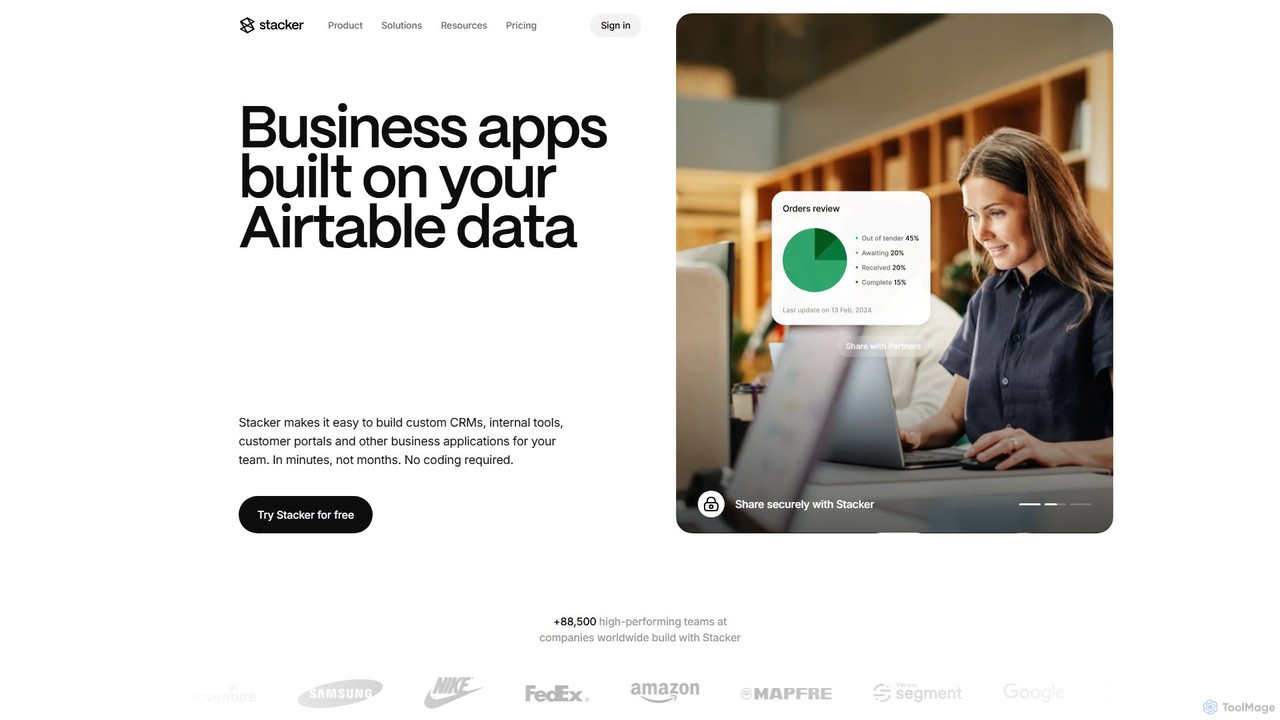
Stacker Product overview

Stacker is a no-code platform that allows you to build custom business applications, such as CRMs, internal tools, and customer portals, directly from your data in Airtable or Google Sheets. Empower your team with software that perfectly fits your unique workflows, without writing a single line of code.

Preview

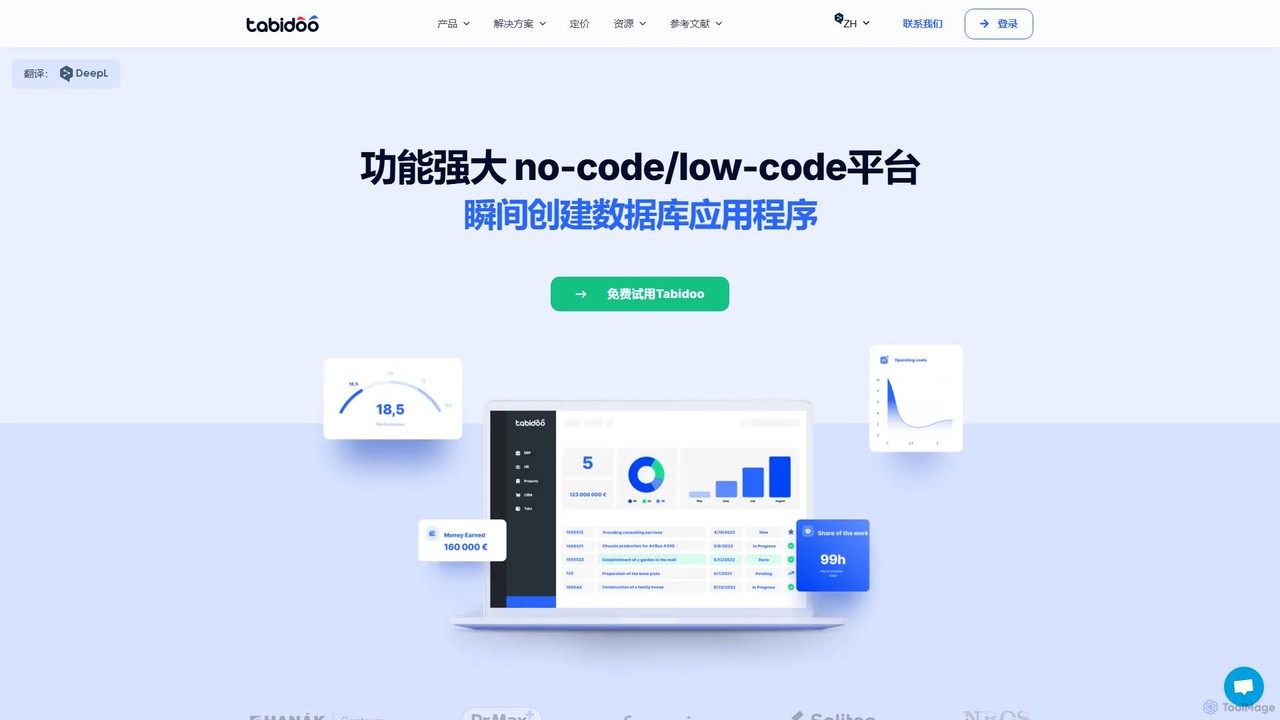
Tabidoo Product overview

Tabidoo is a powerful low-code/no-code platform that allows you to build custom business applications and databases without programming. Easily manage data, automate workflows, and create solutions for CRM, project management, HR, and more. It's a flexible, scalable, and user-friendly alternative to complex software and scattered spreadsheets.

Preview

Quick facts

Compare product focus, pricing models and audiences. Highlighted rows indicate different listed information; unknown pricing does not mean free.

Stacker VS Tabidoo — Quick facts
Quick factsStackerTabidoo
Pricing modelFreemiumFreemium
Product typeWebWeb
Primary focusCrmCrm
Audience and rolesNo data availableNo data available
CategoriesCrm · Database · No Code Platform · Project ManagementCrm · No Code Platform · Database · Project Management
AddedAug 8, 2025Aug 14, 2025
UpdatedNov 19, 2026Nov 19, 2026

Features, usage and use cases

Explore the listed product descriptions, features and workflows. Taxonomy labels alone are not feature evaluations.

Stacker

Stacker is a powerful no-code application builder designed to transform your spreadsheets and databases into fully functional, interactive business applications. It empowers teams to create custom software solutions like CRMs, customer portals, internal tools, and project management dashboards in minutes, not months. By connecting directly to your existing data sources such as Airtable, Google Sheets, or using its own Stacker Tables, it ensures that your app is always up-to-date and serves as a single source of truth for your operations. Trusted by over 88,500 teams at companies like TED, Zapier, and Segment, Stacker provides an intuitive way to build software that is as unique as your business, enhancing productivity and collaboration.

How to use Stacker

Using Stacker is a straightforward process designed for users of all technical levels. First, you connect your data source, which can be an existing Airtable base, a Google Sheet, or you can start fresh with Stacker's built-in tables. Once your data is connected, Stacker automatically generates a basic app. From there, you can customize the interface using the drag-and-drop builder. You can choose different layouts like lists, Kanban boards, or detailed views. Next, you configure user permissions to control who can see and edit what data, ensuring security and proper access levels for team members, clients, or partners. You can enhance functionality by adding action buttons to create custom workflows, such as approving requests or updating statuses. Finally, you can brand your app with a custom domain and CSS, and then publish it to share with your users.

Core Features of Stacker

  • No-Code App Builder: Create custom applications with an intuitive drag-and-drop interface without any coding knowledge.
  • Data Integration: Seamlessly connect to Airtable, Google Sheets, and other data sources, or use the built-in Stacker Tables.
  • Customizable Layouts: Design your app's interface with various views, including lists, cards, tables, Kanban boards, and inbox views.
  • Granular Permissions: Set up detailed user roles and permissions to control data access for internal teams and external users.
  • External Portals: Build secure, branded portals for customers, partners, or contractors to interact with your data.
  • Workflow Automation: Create custom action buttons to automate processes like approvals, status updates, and notifications.
  • Real-Time Collaboration: Enable teams to work together with features like comments, notifications, and live data updates.
  • Custom Branding: Personalize your apps with custom domains, logos, colors, and custom CSS for a fully branded experience.

Use Cases for Stacker

Stacker's flexibility makes it suitable for a wide range of applications. For example, TED uses Stacker to manage their entire fellowship application program, saving each team member about 8 hours per week. Zapier utilizes it to manage individual development budgets for their team. Segment powers a self-serve portal for its startup program. Other common use cases include:

  • Flexible CRM: Build a CRM that perfectly matches your sales process.
  • Customer Portals: Allow customers to log in, view their data, track orders, and submit requests.
  • Work Management: Create project trackers, task managers, and team collaboration hubs.
  • Process Tracking: Manage internal workflows like ticket systems, approval processes, and work orders seamlessly.
  • Partner Hubs: Share data and collaborate securely with external partners.

Advantages of Stacker

The primary advantage of Stacker is its ability to empower non-technical users to build the exact software they need, eliminating reliance on expensive development resources and off-the-shelf solutions that don't quite fit. This leads to rapid iteration and deployment, allowing businesses to adapt their tools as their processes evolve. It centralizes data, creating a single source of truth and eliminating scattered spreadsheets. The platform is built for scale, offering enterprise-grade security and performance, making it a reliable choice for businesses of all sizes.

Pricing and Plans

Stacker offers a 30-day free trial to test all features. Its pricing is structured into several tiers, typically billed monthly or annually (with a 12% discount for annual billing).
Starter Plan: Starting at $59/month, this plan is for small teams and includes 1 app, 5 collaborator seats, and up to 10,000 records.
Plus Plan: Starting at $149/month, this plan is for growing teams and includes 3 apps, 10 collaborator seats, 50,000 records, and additional features like Kanban & Inbox views.
Pro Plan: Starting at $290/month, this plan is for larger teams with complex needs. It includes unlimited apps, 20 collaborator seats, 100,000 records, advanced permissions, and custom branding options like custom domain and CSS.
Enterprise plans are also available for organizations with more extensive requirements.

Tabidoo

Tabidoo is a versatile low-code/no-code platform designed to digitize and streamline business operations. It empowers users, regardless of their technical expertise, to create custom database applications tailored to their specific needs. Think of it as a set of digital Lego bricks: you can build anything from a simple task manager to a complex, company-wide information system. By centralizing data and automating processes, Tabidoo helps businesses eliminate chaotic spreadsheets and inefficient workflows, fostering collaboration and data-driven decision-making.

How to use Tabidoo

Getting started with Tabidoo is a straightforward process designed for rapid deployment:

  1. Sign Up & Choose a Path: Start with a generous free plan. You can either select from a wide range of pre-built application templates (like CRM, Helpdesk, or Project Management) to get a head start or begin with a blank slate to build from scratch.
  2. Design Your Database: Define your data structure by creating tables and adding fields. Customize field types (text, number, date, attachments, links to other tables) to capture the exact information you need for your business.
  3. Visualize Your Data: Switch between multiple views to work with your data in the most effective way. Use the classic Table view for a spreadsheet-like experience, a Kanban board for tracking progress, a Calendar for scheduling, or build custom Dashboards with charts and widgets for a high-level overview.
  4. Automate Your Processes: Set up powerful workflow automations to handle repetitive tasks. For example, automatically send a notification when a task is due, change a record's status when a condition is met, or trigger an email when a new customer is added.
  5. Integrate & Connect: Use the native API or integrate with thousands of other applications like Slack, Google Workspace, and Mailchimp through Zapier and Make. This allows you to create a single source of truth for all your business data.
  6. Collaborate with Your Team: Invite users to your applications and use granular access controls to define roles and permissions. Ensure that team members only see and edit the information relevant to their job, enhancing security and focus.

Core Features of Tabidoo

  • No-Code/Low-Code Application Builder: Create sophisticated custom applications with an intuitive drag-and-drop interface.
  • Flexible Data Views: Includes Tables, Kanban, Calendar, and fully customizable Dashboards to visualize data your way.
  • Powerful Workflow Automation: Automate routine tasks and complex multi-step business processes without writing a single line of code.
  • Extensive Integration Capabilities: Connect to any application via a full-featured API, Zapier, and Make (formerly Integromat).
  • Ready-to-Use Templates: A marketplace of pre-built applications for various business functions including CRM, HR, Finance, Project Management, and more.
  • Granular Access Control: Define user roles and permissions with precision to ensure data security and confidentiality.
  • Advanced Reporting & Analytics: Generate custom reports, save them as PDFs, and visualize key performance indicators on live dashboards.
  • Full Audit History: Track all changes made to records, including who made the change, when it was made, and what was altered.
  • Multi-Language Support: The platform is available in numerous languages, facilitating seamless international collaboration.
  • Flexible Deployment Options: Choose between Cloud, Hybrid, or On-Premise hosting to meet your specific security and infrastructure requirements.
  • JavaScript Scripting: For advanced users, Tabidoo allows for deep customization of application behavior using JavaScript.

Use Cases for Tabidoo

Tabidoo's flexibility makes it suitable for a wide array of business needs:

  • CRM & Sales Management: Build a custom CRM to track leads, manage customer relationships, and monitor sales pipelines from start to finish.
  • Project & Task Management: Create a centralized system to manage projects, assign tasks, track deadlines, and collaborate effectively with team members.
  • HR & Recruitment: Develop a comprehensive HR system for managing employee data, tracking applicants through the hiring process, and streamlining onboarding.
  • Operations & Inventory: Digitize operational workflows, manage inventory levels, track orders, and coordinate logistics in real-time.
  • Helpdesk & Customer Support: Set up a custom ticketing system to manage customer inquiries and support requests efficiently.
  • Digital Transformation: Replace outdated legacy systems and multiple disconnected Excel files with a single, integrated, and scalable platform.

Advantages of Tabidoo

Tabidoo offers significant advantages over traditional software solutions:

  • Unmatched Flexibility: Highly adaptable to any business process or industry, from architecture and logistics to non-profits and e-commerce.
  • Rapid Development & Deployment: Go from an idea to a fully functional application in a fraction of the time and cost of traditional software development.
  • Cost-Effective Pricing: A unique pricing model that is not based on the number of users, making it incredibly affordable for growing teams.
  • Data Centralization: Consolidate information from various sources into one organized, accessible, and reliable place.
  • Enhanced Security & Compliance: Features like GDPR tools, regular data backups, and high-availability infrastructure ensure your data is always safe and secure.
  • Empowers Non-Technical Users: Enables business users and citizen developers to build the tools they need without relying on overloaded IT departments.

Pricing and Plans

Tabidoo offers a transparent and highly competitive pricing structure. There is a Free Plan that is fully functional and perfect for individuals or small teams starting out. For larger needs, paid plans are available with a key advantage: they are not priced per user. The Standard Plan and Unlimited Plan offer a set monthly fee for the entire company, providing access for an unlimited number of users. This makes it incredibly scalable and cost-effective as your team grows. No credit card is required to start with the free trial or the free plan.

Positioning

Their taxonomy shows where the products overlap and where each one has a more distinct focus. Unknown fields are shown explicitly and are never filled with assumptions.

Categories

Shared
CrmProject Management
Only Stacker
DatabaseNo Code Platform
Only Tabidoo
No Code PlatformDatabase

Tags

Shared
CRMdatabaseno-codeworkflow automation
Only Stacker
airtableapp builderbusiness applicationcustomer portalinternal tools
Only Tabidoo
Airtable alternativeapplication builderbusiness intelligencedata visualizationlow-codeproject managementspreadsheet alternative

Audience and roles

Shared
No listed items
Only Stacker
No listed items
Only Tabidoo
No listed items

Traffic comparison

Traffic is shown on the same scale so differences in market visibility are not visually understated.

How to interpret the traffic data

Both charts share the same months and vertical scale. Each tool identifies its latest reporting month; missing months are left blank, not counted as zero. Regional and source visit counts are estimates calculated from the reported shares.

Stacker monthly traffic:

Latest traffic · 2026-05

Monthly visits
93.4K
Avg. visit duration
3:34
Pages per visit
5.83
Bounce rate
35.83%
Data updated 2026-06-15

Monthly traffic trend

  • 2025-09: 144.3K
  • 2026-01: 97.8K
  • 2026-02: 83.1K
  • 2026-03: 110.7K
  • 2026-04: 85.5K
  • 2026-05: 93.4K

Top regions

Top 5 countries/regions
Country/regionPercentageEstimated visits
🇬🇧United Kingdom47.39%44.2K
🇪🇬Egypt33.77%31.5K
🇺🇸United States10.69%10K
🇳🇬Nigeria4.77%4.5K
🇻🇪Venezuela3.38%3.2K

Traffic sources

Source typePercentageEstimated visits
Direct86.33%80.6K
Referral9.9%9.2K
Email3.77%3.5K

Search keywords

flixrstackerstacker ai agentsstackerhqstackerhq login

Tabidoo monthly traffic:

Latest traffic · 2026-05

Monthly visits
25.4K
Avg. visit duration
3:13
Pages per visit
2.67
Bounce rate
57.41%
Data updated 2026-06-15

Monthly traffic trend

  • 2025-09: No data available
  • 2026-01: 55.4K
  • 2026-02: 42.3K
  • 2026-03: 31.6K
  • 2026-04: 30.2K
  • 2026-05: 25.4K

Top regions

Top 5 countries/regions
Country/regionPercentageEstimated visits
🇨🇿Czech Republic89.54%22.8K
🇿🇦South Africa4.18%1.1K
🇹🇷Turkey2.94%747
🇺🇦Ukraine1.69%429
🇮🇹Italy1.65%419

Traffic sources

Source typePercentageEstimated visits
Direct98.6%25.1K
Referral1.4%356

Search keywords

excel onlinefree ai app builder no creditsglidehow to build an a mobile app completly free without paywalltabidoo

Community signals

Ratings, comments, favorites, and likes are community signals—not a substitute for product fit.

Stacker

Rating
No data available
Comments
0
Favorites
188
Likes
180

Tabidoo

Rating
No data available
Comments
0
Favorites
172
Likes
176

Stacker vs Tabidoo · Comparison FAQ

What do Stacker and Tabidoo have in common?
Both tools are listed under Crm、Project Management. These categories indicate overlapping use cases; compare their detailed descriptions for workflows, capabilities and limitations.
Are Stacker and Tabidoo free?
Listed pricing models: Stacker — Freemium; Tabidoo — Freemium. Missing pricing is not proof of a free plan, and freemium does not mean every feature is free. Check official sites for current plans, limits and trials.
How should I choose between Stacker and Tabidoo?
The primary listed category is Crm for Stacker, and Crm for Tabidoo. Compare features, steps and use cases, then verify pricing, data permissions and deployment needs. This page does not include hands-on testing and does not declare a winner from traffic or tags.

Sources and comparison methodology

This page is assembled from ToolMage product listings, taxonomy, traffic statistics and on-site user feedback. It is not a hands-on test or an independent review.

  • Feature and plan descriptions reflect information in the listings, not real-time guarantees. Verify pricing, quotas, availability and privacy terms on the official sites.
  • Traffic uses the reporting months shown. Missing statistics do not mean zero visits, and different periods do not establish growth or superiority. Regional and source visit counts are estimates based on shares.
  • Different tags indicate differences in the listings, not proof that the other product lacks a capability. Ratings, favorites and visits are not used to declare a winner.

Related comparisons