ToolMage
Sign in

AI TOOL COMPARISON

Studio.Design vs Webflow

What is the difference, and which fits your workflow? Compare features, usage, pricing models and traffic side by side.

Jump to key differences

Product overview

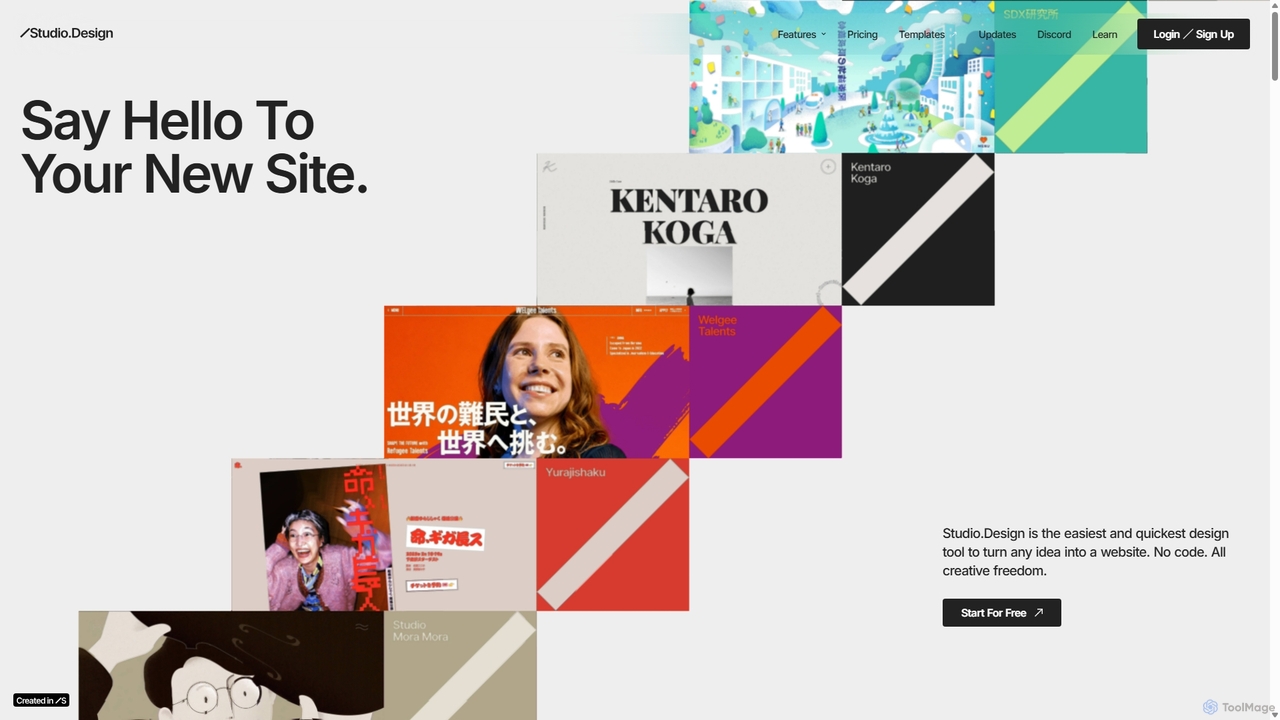
Studio.Design Product overview

Studio.Design is a powerful no-code website builder that empowers designers and creators to turn ideas into fully responsive, animated websites with complete creative freedom. It features an intuitive visual editor, real-time collaboration, an integrated CMS, and AI-powered SEO tools, allowing you to publish professional sites in a single click.

Preview

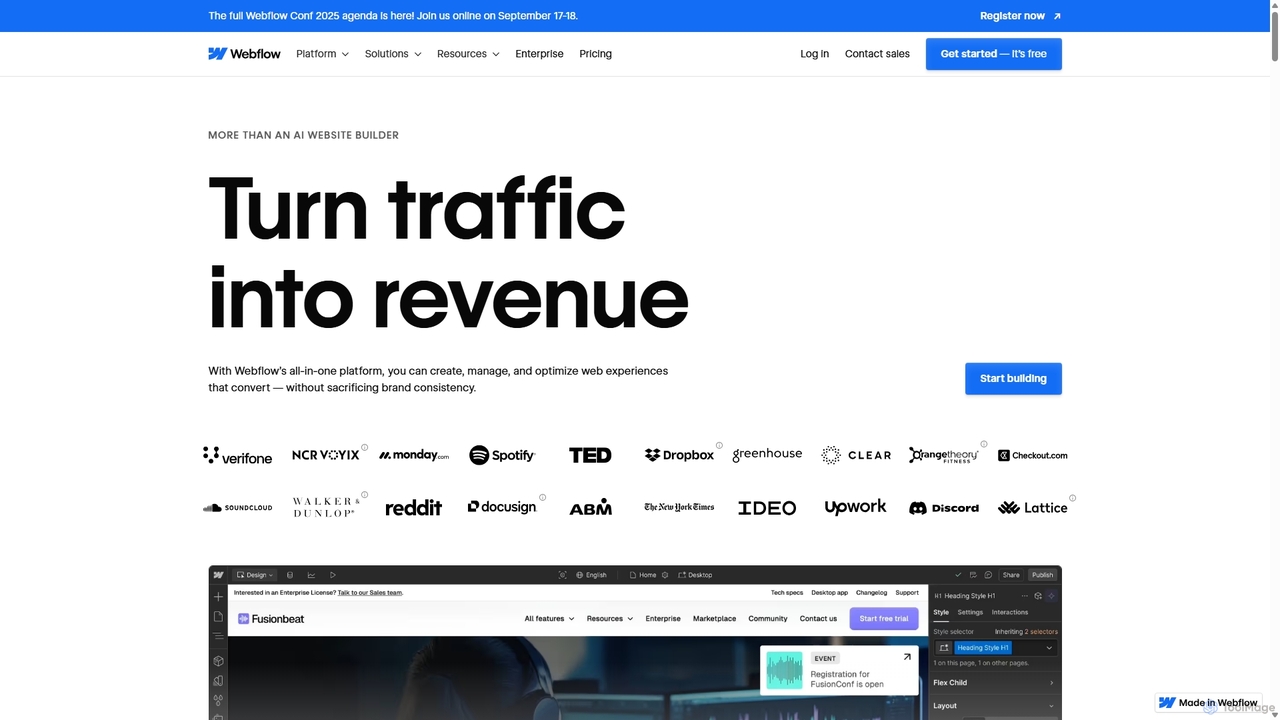
Webflow Product overview

Webflow is a visual development platform that empowers users to design, build, and launch professional, custom websites without writing code. It combines a powerful visual designer, a flexible CMS, and high-performance hosting into a single platform, enhanced with AI features for faster creation and optimization.

Preview

Quick facts

Compare product focus, pricing models and audiences. Highlighted rows indicate different listed information; unknown pricing does not mean free.

Studio.Design VS Webflow — Quick facts
Quick factsStudio.DesignWebflow
Pricing modelFreemiumFreemium
Product typeWebWeb
Primary focusWeb DesignWeb Design
Audience and rolesContent Creator · Graphic Designer · Marketing Manager · Product Manager · Small Business Owner · Startup Founder · UX Designer · Web DesignerCMO · Content Creator · Entrepreneur · Graphic Designer · Marketing Manager · Product Manager · Small Business Owner · Software Developer · UI/UX Designer · Web Designer
CategoriesWeb Design · Collaboration · No Code BuilderWeb Design · No Code · Landing Page Builder · Builder
AddedSep 10, 2025Sep 7, 2025
UpdatedNov 19, 2026Nov 19, 2026

Features, usage and use cases

Explore the listed product descriptions, features and workflows. Taxonomy labels alone are not feature evaluations.

Studio.Design

Studio.Design is an all-in-one, no-code platform designed for creators who want to build professional, custom websites without writing a single line of code. It bridges the gap between powerful design tools and user-friendly website builders, offering unparalleled creative freedom. With its intuitive interface, users can transform their creative visions into reality, from pixel-perfect adjustments to dynamic, immersive animations.

How to use Studio.Design

Getting started with Studio.Design is a seamless process designed for efficiency and creativity:

  1. Start Your Project: Begin with a blank canvas, choose from a wide range of professionally designed templates, or import your existing designs directly from Figma. The Figma import feature automatically generates responsive breakpoints, saving significant time.
  2. Design with the Visual Editor: Use the powerful and intuitive Design Editor. The box layout system makes it easy to structure pages by stacking elements like blocks. Fine-tune every detail with on-canvas controls for margins and padding.
  3. Create and Reuse Components: Transform frequently used design elements into 'Symbols' to efficiently reuse them across multiple pages, ensuring consistency and speeding up your workflow.
  4. Manage Content: Utilize the built-in, mess-free Content Management System (CMS). Collaborate with your team on content creation in one central location, edit in real-time, and publish updates anytime. You can even connect to external data from Notion and Airtable to design with real content from the start.
  5. Add Interactivity: Bring your site to life with animations. Easily import Lottie files or use the built-in animation tools to create engaging user experiences. Embed videos, maps, and other third-party services using iframes.
  6. Optimize for Search Engines: Leverage the built-in SEO tools. The platform features an AI-powered function to instantly generate optimized meta titles and descriptions, helping your site rank higher in search results.
  7. Publish: Once your design is complete, publish your live website with a single click. Studio.Design handles all the technical aspects of coding and server setup.

Core Features of Studio.Design

  • Intuitive Design Editor: A powerful yet easy-to-use visual editor with a box layout system, responsive design controls, and pixel-perfect adjustments.
  • No-Code Platform: Full creative control to build complex layouts and animations without writing any code.
  • Real-time Collaboration: Work with team members on the same project simultaneously, leave comments, and resolve feedback directly within the editor.
  • Integrated CMS: A clean and simple CMS for managing dynamic content like blog posts or portfolios, with support for real-time collaborative editing.
  • Figma to Site Import: Seamlessly import Figma designs, which are automatically converted into responsive websites.
  • Advanced Animations: Built-in support for Lottie files and a powerful animation timeline to create immersive, interactive experiences.
  • AI-Powered SEO: Automatically generate optimized meta titles and descriptions for your pages to improve search engine visibility.
  • Customizable Forms: Create beautiful, engaging forms to capture visitor information, with full control over animations, colors, and layout.
  • Extensive Integrations: Connect to Notion and Airtable for data, access thousands of Google Fonts, and use millions of free images from Unsplash directly in the editor.

Use Cases for Studio.Design

Studio.Design is versatile and suitable for a wide range of users and projects:

  • Designers & Creatives: Building stunning online portfolios to showcase their work.
  • Startups & Small Businesses: Creating professional marketing websites, landing pages, and company blogs quickly and affordably.
  • Marketing Agencies: Developing custom websites for clients with a fast turnaround time and without relying on developers.
  • Content Creators: Launching personal blogs, publications, or project showcases with a powerful and flexible CMS.
  • Entrepreneurs: Prototyping and launching web applications or product sites with full design control.

Advantages of Studio.Design

Studio.Design stands out by combining power with simplicity. Its primary advantage is offering the creative freedom of a professional design tool like Figma with the accessibility of a no-code website builder. The real-time collaboration features make it ideal for teams, streamlining the feedback and design process. The all-in-one nature of the platform—encompassing design, CMS, hosting, and SEO—eliminates the need for multiple tools and complex setups. Finally, its focus on modern design capabilities like advanced animations and Figma integration makes it a top choice for visually-driven projects.

Pricing and Plans

Studio.Design operates on a freemium model, offering plans for individuals and teams:

  • Free Plan: $0/month. Includes design tools, up to 2,000 monthly visitors, and publishing to a studio.site subdomain. A Studio badge is displayed.
  • Mini Plan: Starts at $5/month (billed annually). Ideal for one-page sites, includes a custom domain, 2 pages, and 100 form responses.
  • Personal Plan: Starts at $10/month (billed annually). Perfect for portfolios, offering up to 20,000 visitors, 150 pages, 1,000 form responses, and password protection.
  • Business Plan: Starts at $25/month (billed annually). Designed for startups, with 400,000 visitors, 300 pages, 10,000 form responses, and basic permissions.
  • Business Plus Plan: Starts at $80/month (billed annually). For scale-ups, offering 1,000,000 visitors, advanced permissions, and a longer version history.

Workspace plans are also available for teams needing to manage multiple projects and members collaboratively.

Webflow

Webflow is a comprehensive Website Experience Platform designed to revolutionize the web development process. It provides a visual canvas that translates design decisions into clean, semantic code, effectively bridging the gap between designers and developers. This allows teams to create sophisticated, production-ready websites with unparalleled creative freedom. From simple landing pages to complex enterprise-level sites with dynamic content, Webflow offers the tools to build, manage, and scale digital experiences efficiently.

The platform is built around a powerful visual designer that gives users granular control over HTML, CSS, and JavaScript without needing to write it manually. It's further enhanced by an integrated AI Assistant that can generate page sections, write content, and apply existing design systems, significantly accelerating the building process. Webflow is not just a builder; it's a complete ecosystem that includes a composable CMS, managed hosting, e-commerce capabilities, and advanced tools for SEO, analytics, and optimization.

How to use Webflow

Using Webflow involves a streamlined, visual-first workflow:

  1. Start a Project: Begin with a blank canvas for complete control or choose from hundreds of professionally designed templates to get a head start.
  2. Design and Build: Use the drag-and-drop interface of the Webflow Designer. Add elements like containers, text, images, and forms. Style every element with precise control over properties like padding, margin, typography, and colors. Build responsive layouts that look perfect on any device using the intuitive breakpoints.
  3. Create Interactions: Bring your site to life with Webflow's powerful interactions and animations tool. Create scroll-based animations, multi-step interactions, and complex effects without writing any JavaScript.
  4. Manage Content with the CMS: Define your content structure using CMS Collections for items like blog posts, team members, or projects. Non-technical team members can then easily add, edit, and manage content through the user-friendly Editor.
  5. Leverage AI: Use the Webflow AI Assistant to generate layouts and write copy directly on the canvas. Utilize AI-powered personalization in Webflow Optimize to deliver tailored experiences to different audience segments.
  6. Optimize and Analyze: Use the built-in SEO controls to manage meta titles, descriptions, and Open Graph settings. Monitor site performance with Webflow Analyze and run A/B tests with Webflow Optimize to improve conversion rates.
  7. Launch: Publish your website with a single click to Webflow's fast, secure, and reliable global hosting infrastructure, powered by AWS and Cloudflare.

Core Features of Webflow

  • Visual Designer: A professional-grade design tool that writes clean HTML5, CSS3, and JavaScript as you build visually.
  • Webflow AI Assistant: An integrated AI tool to accelerate site creation, content generation, and design system application.
  • Composable CMS: A flexible and powerful content management system that allows you to structure content exactly as you need it and enables easy updates for your team.
  • Interactions & Animations: A robust engine for creating rich, complex animations and interactions based on user actions like scrolling, clicking, and hovering.
  • Localization: Native tools to design, translate, and launch fully localized websites for a global audience, complete with SEO best practices for each language.
  • Managed Hosting: Enterprise-grade, scalable hosting with a global CDN, ensuring fast load times and 99.99% uptime.
  • Webflow Optimize & Analyze: Built-in tools for A/B testing, AI-powered personalization, and unified visitor analytics to make data-driven decisions.
  • E-commerce Platform: A fully customizable e-commerce solution to build and scale your online store.
  • Integrations and APIs: Extensive APIs and a rich ecosystem of apps and integrations to connect Webflow with your favorite tools.

Use Cases for Webflow

Webflow is versatile enough for a wide range of projects:

  • Marketing Websites: Companies build their primary marketing sites on Webflow to achieve unique branding and fast iteration cycles.
  • Landing Pages: Marketers can quickly design, test, and launch high-converting landing pages for campaigns without developer dependency.
  • Blogs and Publications: The powerful CMS makes it ideal for content-rich sites, blogs, and online magazines.
  • Portfolios: Designers, photographers, and artists create stunning, visually-rich portfolios to showcase their work.
  • E-commerce Stores: Businesses build custom online stores to sell products with a unique brand experience.
  • Enterprise Solutions: Large organizations use Webflow Enterprise for its scalability, security, and advanced collaboration features to manage their web presence.

Advantages of Webflow

Webflow offers significant advantages over traditional development and other website builders:

  • Unmatched Design Freedom: Build completely custom designs without being constrained by templates.
  • Empowerment of Non-Developers: Marketing and design teams can build and manage websites independently, freeing up engineering resources for more complex product development.
  • All-in-One Platform: It combines design, CMS, hosting, e-commerce, and optimization tools, eliminating the need to manage multiple services and plugins.
  • Clean, Exportable Code: The code generated by Webflow is semantic and clean, which is great for performance and SEO. You can even export it for use on other platforms.
  • Speed and Performance: Websites are hosted on a world-class infrastructure, ensuring they are fast, secure, and reliable.
  • Scalability: From a simple one-page site to a large-scale enterprise platform with thousands of CMS items, Webflow scales with your business needs.

Pricing and Plans

Webflow operates on a freemium model with a variety of plans tailored to different needs:

  • Starter Plan (Free): Perfect for learning Webflow and building small projects. You can build up to two sites with Webflow.io staging domains.
  • Site Plans (Paid): These plans are required to connect a custom domain and unlock additional features. They are priced per site and are tiered into Basic, CMS, Business, and Enterprise 1, offering increasing levels of CMS items, form submissions, and bandwidth.
  • Workspace Plans (Paid): Designed for teams and freelancers, these plans allow for collaboration, code export, and managing multiple projects. Tiers include Core, Growth, and Enterprise 2.
  • Enterprise Plans: Custom solutions for large organizations requiring advanced security, scalability, dedicated support, and guaranteed uptime.

Positioning

Their taxonomy shows where the products overlap and where each one has a more distinct focus. Unknown fields are shown explicitly and are never filled with assumptions.

Categories

Shared
Web Design
Only Studio.Design
CollaborationNo Code Builder
Only Webflow
No CodeLanding Page BuilderBuilder

Tags

Shared
cmsno-coderesponsive designSEOweb designwebsite builder
Only Studio.Design
animationcollaborationfigma importlanding page buildervisual editor
Only Webflow
AI website buildere-commercehostinglanding pageportfolio buildervisual development

Audience and roles

Shared
Content CreatorGraphic DesignerMarketing ManagerProduct ManagerSmall Business OwnerWeb Designer
Only Studio.Design
Startup FounderUX Designer
Only Webflow
CMOEntrepreneurSoftware DeveloperUI/UX Designer

Traffic comparison

Traffic is shown on the same scale so differences in market visibility are not visually understated.

How to interpret the traffic data

Both charts share the same months and vertical scale. Each tool identifies its latest reporting month; missing months are left blank, not counted as zero. Regional and source visit counts are estimates calculated from the reported shares.

Studio.Design monthly traffic:

Latest traffic · 2026-05

Monthly visits
716.6K
Avg. visit duration
12:40
Pages per visit
10.7
Bounce rate
24.97%
Data updated 2026-06-15

Monthly traffic trend

  • 2025-09: 590K
  • 2026-01: 702.9K
  • 2026-02: 686.1K
  • 2026-03: 719.1K
  • 2026-04: 713.1K
  • 2026-05: 716.6K

Top regions

Top 5 countries/regions
Country/regionPercentageEstimated visits
🇯🇵Japan98.02%702.5K
🇺🇸United States0.94%6.7K
🇮🇳India0.43%3.1K
🇻🇳Vietnam0.34%2.4K
🇫🇷France0.27%1.9K

Traffic sources

Source typePercentageEstimated visits
Direct80.51%577K
Referral17.36%124.4K
Email2.13%15.3K

Search keywords

studiostudio テンプレートstudio プランstudio ログインスタジオ

Webflow monthly traffic:

Latest traffic · 2026-05

Monthly visits
6.4M
Avg. visit duration
5:02
Pages per visit
3.83
Bounce rate
56.34%
Data updated 2026-06-15

Monthly traffic trend

  • 2025-09: 6.6M
  • 2026-01: 7.6M
  • 2026-02: 6.7M
  • 2026-03: 7.2M
  • 2026-04: 6.8M
  • 2026-05: 6.4M

Top regions

Top 5 countries/regions
Country/regionPercentageEstimated visits
🇺🇸United States57.23%3.7M
🇬🇧United Kingdom15.2%971.7K
🇮🇳India13.18%842.6K
🇫🇷France7.31%467.3K
🇨🇦Canada7.08%452.6K

Traffic sources

Source typePercentageEstimated visits
Direct80.9%5.2M
Referral16.76%1.1M
Email2.34%149.6K

Search keywords

airbudsdewatogelfrenk.iorawkumarumblr

Community signals

Ratings, comments, favorites, and likes are community signals—not a substitute for product fit.

Studio.Design

Rating
No data available
Comments
0
Favorites
162
Likes
191

Webflow

Rating
No data available
Comments
0
Favorites
161
Likes
188

Studio.Design vs Webflow · Comparison FAQ

What do Studio.Design and Webflow have in common?
Both tools are listed under Web Design. These categories indicate overlapping use cases; compare their detailed descriptions for workflows, capabilities and limitations.
Are Studio.Design and Webflow free?
Listed pricing models: Studio.Design — Freemium; Webflow — Freemium. Missing pricing is not proof of a free plan, and freemium does not mean every feature is free. Check official sites for current plans, limits and trials.
How should I choose between Studio.Design and Webflow?
The primary listed category is Web Design for Studio.Design, and Web Design for Webflow. Compare features, steps and use cases, then verify pricing, data permissions and deployment needs. This page does not include hands-on testing and does not declare a winner from traffic or tags.

Sources and comparison methodology

This page is assembled from ToolMage product listings, taxonomy, traffic statistics and on-site user feedback. It is not a hands-on test or an independent review.

  • Feature and plan descriptions reflect information in the listings, not real-time guarantees. Verify pricing, quotas, availability and privacy terms on the official sites.
  • Traffic uses the reporting months shown. Missing statistics do not mean zero visits, and different periods do not establish growth or superiority. Regional and source visit counts are estimates based on shares.
  • Different tags indicate differences in the listings, not proof that the other product lacks a capability. Ratings, favorites and visits are not used to declare a winner.

Related comparisons