Best of the Year 4 results Academia AI Tools

Popular AI tools in the Academia field include Gatsbi、SciPub+、Latext AI、Researchthegap, etc., helping you quickly improve efficiency.

Researchthegap

Researchthegap

A specialized tool designed for medical researchers, academics, and students to efficiently identify gaps in existing medical research, …

2.4K
Latext AI

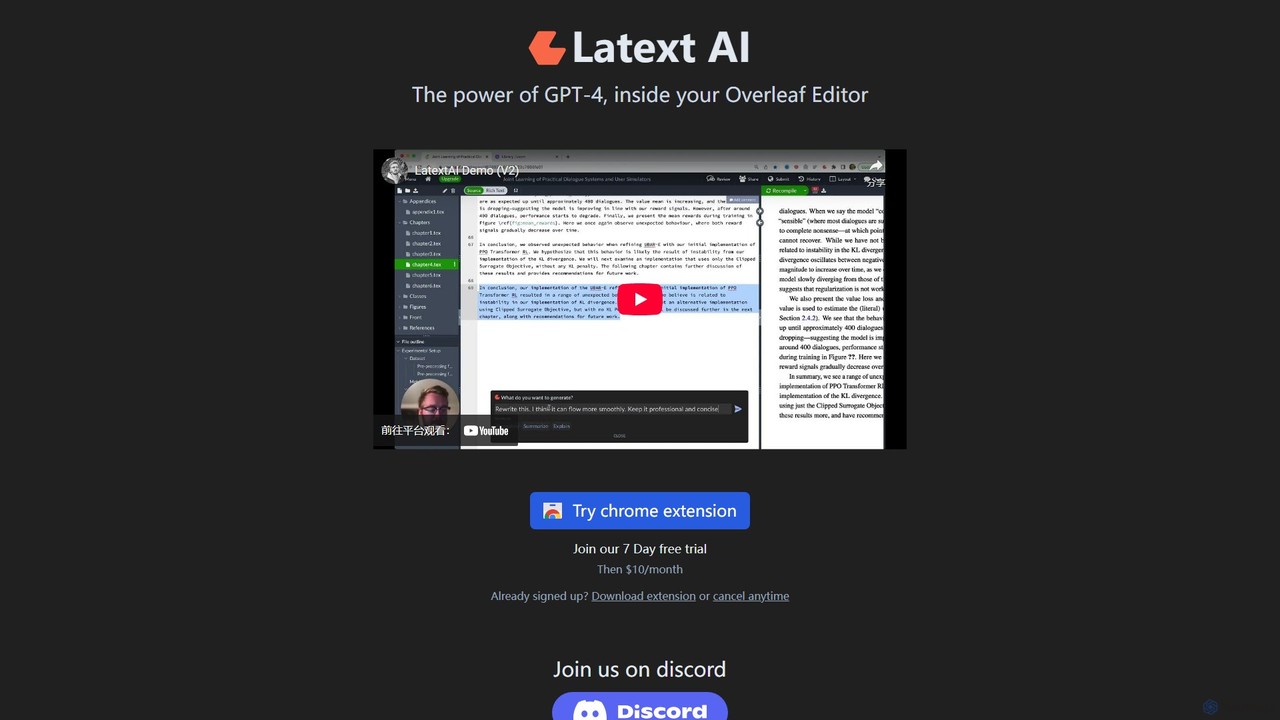
Latext AI

Latext AI is a powerful Chrome extension that integrates GPT-4 directly into your Overleaf editor. It helps you …

8.3K
Gatsbi

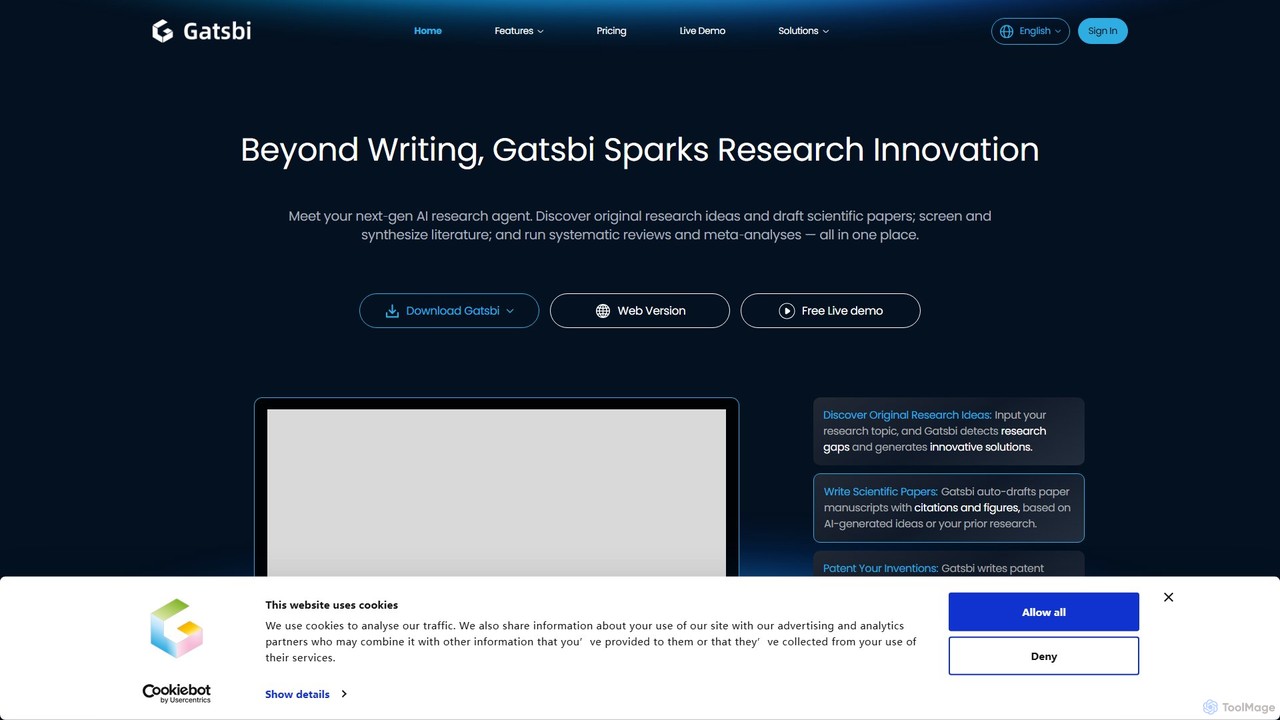
Gatsbi

Gatsbi is an all-in-one AI research assistant designed to accelerate innovation. It helps researchers, engineers, and students discover …

69.3K
SciPub+

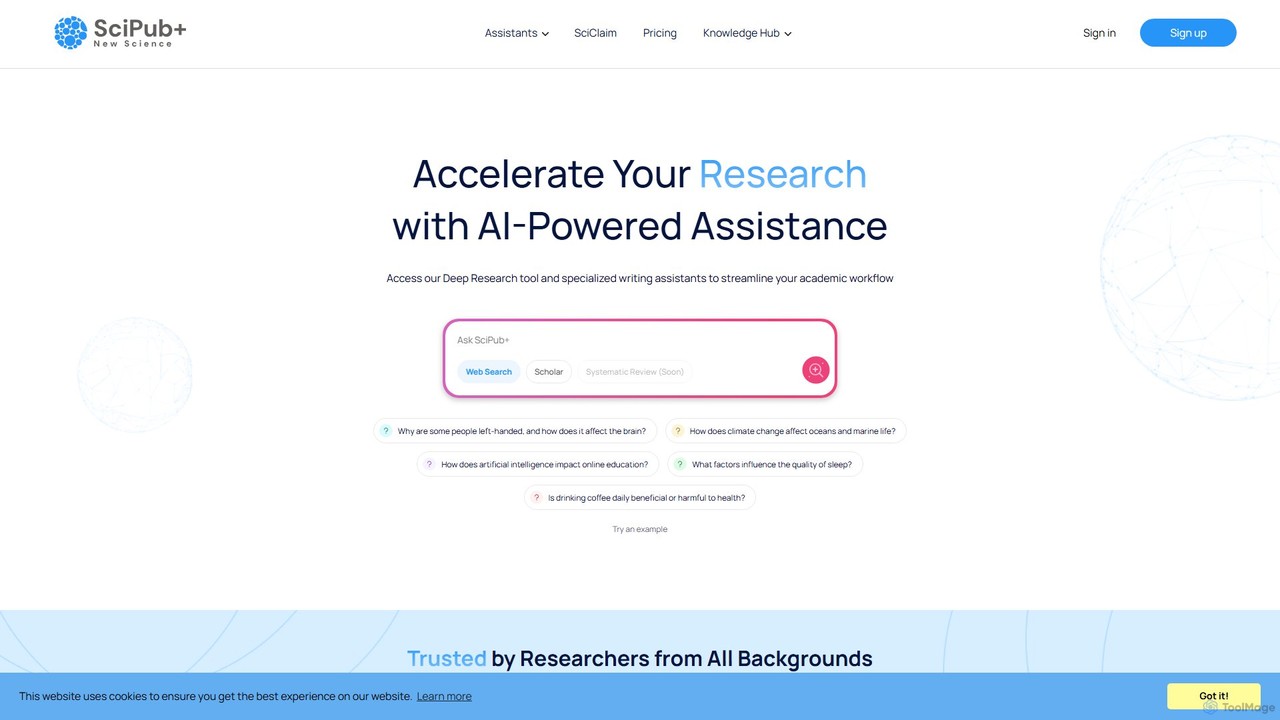
SciPub+

SciPub+ is an AI-powered academic writing platform designed by researchers for researchers. It offers a suite of 10 …

9.7K

About Academia

AI Academia tools are a suite of specialized applications designed to assist researchers, students, and educators in their scholarly activities. These tools leverage natural language processing (NLP) and machine learning to automate and enhance tasks such as literature review, data analysis, and manuscript preparation. They streamline the entire research lifecycle, from discovering relevant papers to drafting and polishing articles, ultimately improving productivity and the quality of academic work. The core value lies in managing information overload and accelerating the path from data to publication.

Core Features

  • Literature Discovery & Summarization: Intelligently searches academic databases and provides concise summaries of research papers, identifying key themes and findings.
  • Academic Writing Assistant: Offers advanced grammar correction, style suggestions for scholarly tone, and paraphrasing capabilities to improve clarity.
  • Automated Citation Management: Automatically formats citations and bibliographies in various styles (APA, MLA, Chicago, etc.), integrating with reference managers.
  • Data Analysis & Visualization: Processes complex datasets, performs statistical analysis, and generates charts and graphs to represent research findings.
  • Plagiarism & AI Content Detection: Scans documents against vast databases to ensure academic integrity and identify potential AI-generated text.

Use Cases

These tools are widely used by PhD students for conducting comprehensive literature reviews, professors for drafting grant proposals and research papers, and university libraries for providing students with advanced research support. In STEM fields, they assist in analyzing experimental data, while in the humanities, they help with thematic analysis of texts.

How to Choose

When selecting an AI Academia tool, consider its specialization for your discipline (e.g., support for scientific formulas or legal citations). Evaluate its integration capabilities with your existing software like Zotero, Mendeley, or Word. Data privacy and security are paramount, so review their policies on handling sensitive research data. Finally, assess the accuracy of its summarization and analysis features through trials or user reviews.

AcademiaUse Cases

1

Accelerating Literature Reviews for Theses

A PhD student in sociology needs to review hundreds of academic papers for their dissertation. Instead of spending weeks manually reading each one, they use an AI tool to search multiple databases, filter articles based on relevance, and generate concise summaries of the top 50 papers. The tool also identifies recurring themes and gaps in the existing literature, helping the student to refine their research question. This process reduces the literature review time from over a month to a single week, ensuring a more comprehensive and well-structured foundation for their thesis.

2

Enhancing Academic Manuscript Writing

A post-doctoral researcher in biology is preparing a manuscript for a high-impact journal. They use an AI writing assistant to improve the manuscript's quality. The tool checks for grammatical errors, suggests alternative phrasing for better clarity and academic tone, and ensures consistent terminology throughout the document. It also helps paraphrase sentences to avoid repetition and self-plagiarism. Finally, it automatically formats the entire bibliography into the journal's specific citation style, saving hours of manual work and increasing the manuscript's chances of acceptance.

3

Analyzing Qualitative Research Data

A team of social scientists has conducted 50 in-depth interviews for a study on community engagement. Manually coding and analyzing these transcripts would be extremely time-consuming. They upload the transcripts to an AI analysis platform that performs thematic analysis. The AI identifies key concepts, categorizes responses, and visualizes the connections between different themes. This allows the researchers to quickly grasp the main findings and identify nuanced patterns that might have been missed, accelerating their data analysis phase by over 60%.

4

Streamlining Grant Proposal Preparation

A principal investigator (PI) is writing a grant proposal for a major funding agency. Under a tight deadline, the PI uses an AI tool to assist in the process. The tool helps find and summarize the most recent and relevant studies to support the proposal's background section. It also assists in drafting the methodology section by suggesting standard protocols and language. Finally, the tool checks the entire proposal against the funder's guidelines for formatting, length, and required components, ensuring compliance and producing a more polished, competitive application in less time.

5

Creating Interactive Learning Materials

An educator designing an online history course wants to create engaging study materials. They input a chapter from a digital textbook into an AI tool. The tool automatically generates a set of flashcards with key terms and dates, a multiple-choice quiz to test comprehension, and a concise summary of the chapter's main points. This allows the educator to quickly produce a variety of high-quality, interactive learning aids for their students, saving hours of content creation time and providing a more dynamic learning experience than static text alone.

6

Validating Experimental Data and Results

A chemistry research lab generates large datasets from a mass spectrometer daily. A researcher uses an AI analysis tool to process this raw data automatically. The tool identifies peaks, calculates concentrations, and flags any anomalous readings that might indicate an experimental error. It then performs statistical analysis on the results from multiple runs and generates publication-ready graphs. This automates a previously manual and error-prone process, ensuring higher accuracy and reproducibility while freeing up the researcher's time to focus on interpreting the results and designing new experiments.

AcademiaFrequently Asked Questions