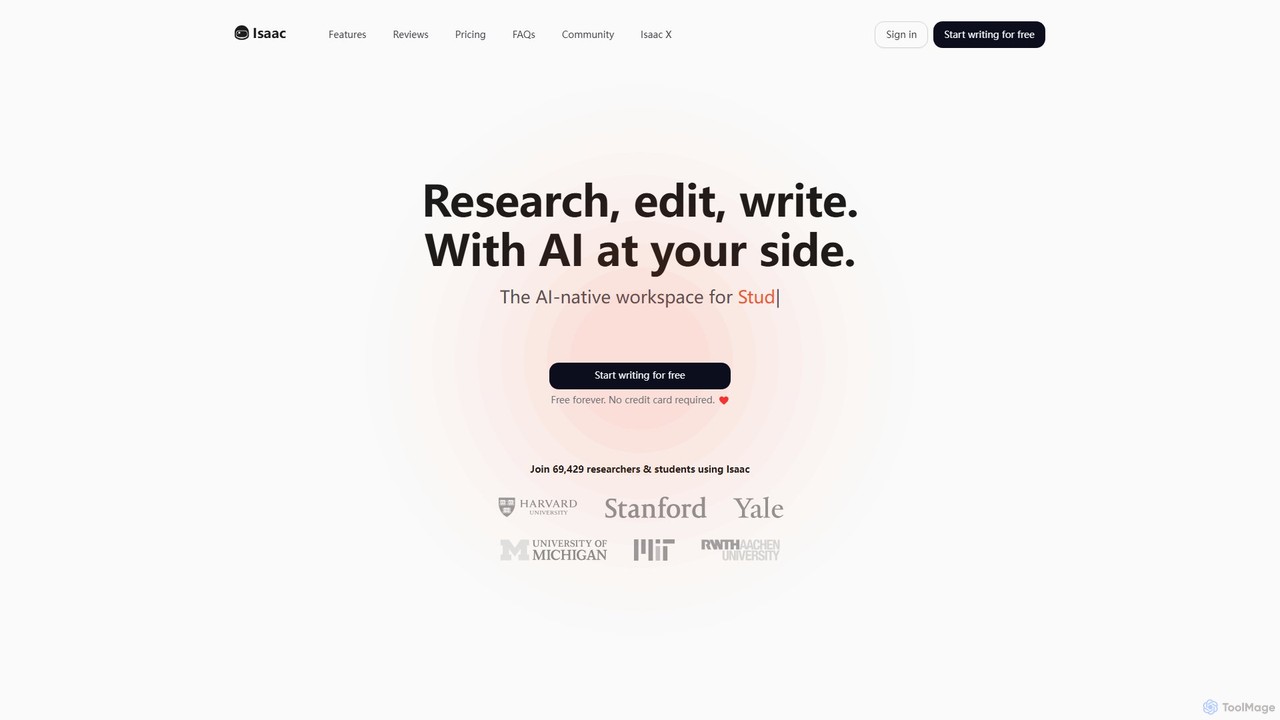
Isaac
Isaac is an AI-native workspace designed for scientists, researchers, and students. It integrates the entire academic writing workflow, …
Isaac is an AI-native workspace designed for scientists, researchers, and students. It integrates the entire academic writing workflow, from literature search and reference management to AI-assisted writing and document analysis. Think of it as a specialized ChatGPT for academia, helping you research, edit, and write more efficiently while maintaining high academic standards. Start for free to revolutionize your research process.

ThesisAI
ThesisAI is an AI-powered research assistant designed to streamline academic writing. It processes up to 100 research papers …
ThesisAI is an AI-powered research assistant designed to streamline academic writing. It processes up to 100 research papers simultaneously to generate a comprehensive, well-structured scientific document or literature review with accurate inline citations from a single prompt, saving researchers and students hundreds of hours.
ResearchBuddy
ResearchBuddy is an AI-powered platform designed to automate and streamline the literature review process for researchers, students, and …
ResearchBuddy is an AI-powered platform designed to automate and streamline the literature review process for researchers, students, and academics. It helps users quickly discover relevant papers, extract key insights, synthesize information, and generate comprehensive literature review drafts, saving countless hours of manual work.
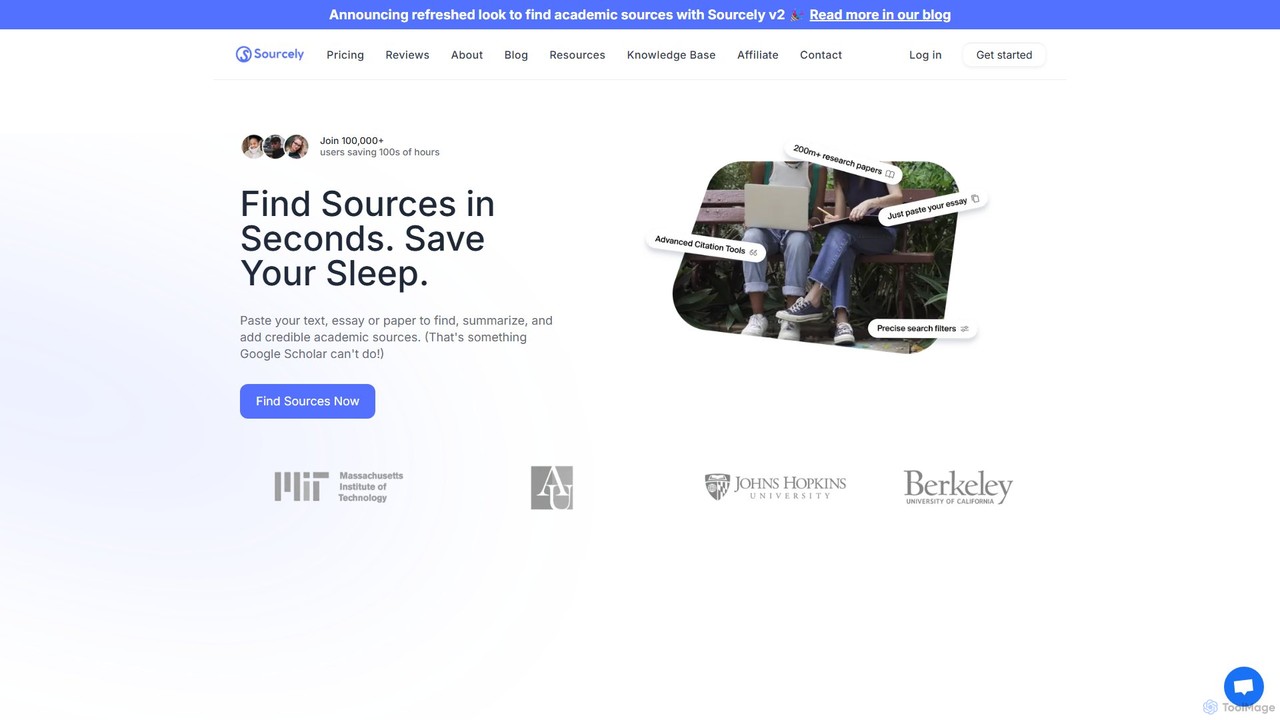
Sourcely
Sourcely is an AI-powered academic research assistant for students and researchers. It streamlines finding, summarizing, and citing credible …
Sourcely is an AI-powered academic research assistant for students and researchers. It streamlines finding, summarizing, and citing credible sources. By pasting your text, essay, or paper, Sourcely automatically discovers relevant academic articles from a database of over 200 million, saving countless hours and improving your work's quality.
About Literature Review
Literature Review AI tools are specialized platforms that leverage artificial intelligence to streamline and enhance the process of identifying, analyzing, and synthesizing scholarly literature. These tools employ natural language processing (NLP) and machine learning to help researchers efficiently navigate vast academic databases, extract key information, and organize findings. They significantly reduce the manual effort involved in traditional literature reviews, enabling academics, students, and professionals to focus more on critical analysis and synthesis within the broader Academic field.
Core Features
- Automated Paper Discovery: AI-driven search and recommendation engines to find relevant articles across databases.
- Intelligent Summarization: Generate concise summaries of research papers, abstracts, or specific sections.
- Thematic Analysis & Keyword Extraction: Identify recurring themes, concepts, and keywords across multiple documents.
- Citation & Reference Management: Organize citations, generate bibliographies, and track references automatically.
- Knowledge Graph Visualization: Create visual maps of interconnected research, authors, and concepts for better understanding.
Use Cases
Academic researchers conducting systematic reviews for dissertations or publications, students preparing essays, theses, or research proposals, and professionals needing to quickly grasp the state-of-the-art in a specific domain all benefit from these tools.
How to Choose
When selecting a tool, consider its compatibility with your primary academic databases, the accuracy of its AI summarization and thematic analysis, integration capabilities with reference managers, and the overall user interface and learning curve for efficient adoption.
Literature ReviewUse Cases
Systematic Review Acceleration
A PhD student needs to conduct a systematic literature review for their thesis. AI tools can rapidly screen thousands of abstracts, identify relevant papers based on inclusion/exclusion criteria, and extract data points. This significantly reduces the initial screening time from weeks to days, allowing the student to focus on deeper analysis and writing.
Rapid Field Overview
A new researcher entering an unfamiliar field needs to quickly understand the key theories, influential authors, and seminal works. AI tools can generate a knowledge map, summarize foundational papers, and highlight emerging trends, providing a comprehensive overview in a fraction of the time compared to manual exploration.
Grant Proposal Preparation
A research team is preparing a grant proposal and needs to demonstrate a thorough understanding of existing research to justify their project. AI tools help identify gaps in current literature, synthesize findings from related studies, and quickly generate a compelling background section, enhancing the proposal's credibility and completeness.
Keeping Up with New Publications
An active academic wants to stay updated with the latest research in their niche without manually browsing countless journals. AI literature review tools can provide personalized alerts, summarize new publications, and highlight their relevance to the academic's existing work, ensuring they remain at the forefront of their field with minimal effort.
Identifying Research Gaps
A master's student is struggling to find a unique research question for their thesis. AI tools can analyze existing literature, pinpoint areas with limited research, and suggest potential avenues for novel contributions. This guidance helps the student identify viable research gaps and formulate a strong, original thesis topic, saving significant time and effort.
Cross-Disciplinary Research Synthesis
A scientist is working on a project that spans biology and computer science, requiring synthesis of diverse terminologies and concepts. AI tools can help bridge the terminology gap, identify common themes across disparate fields, and synthesize findings from various disciplines into a coherent review. This facilitates interdisciplinary understanding and accelerates complex research projects.