Academic Writing Best in category 1 results Content Generation AI Tool

Popular AI tools in the Content Generation field of Academic Writing include Koke, etc., helping you quickly improve efficiency.

Koke

Koke

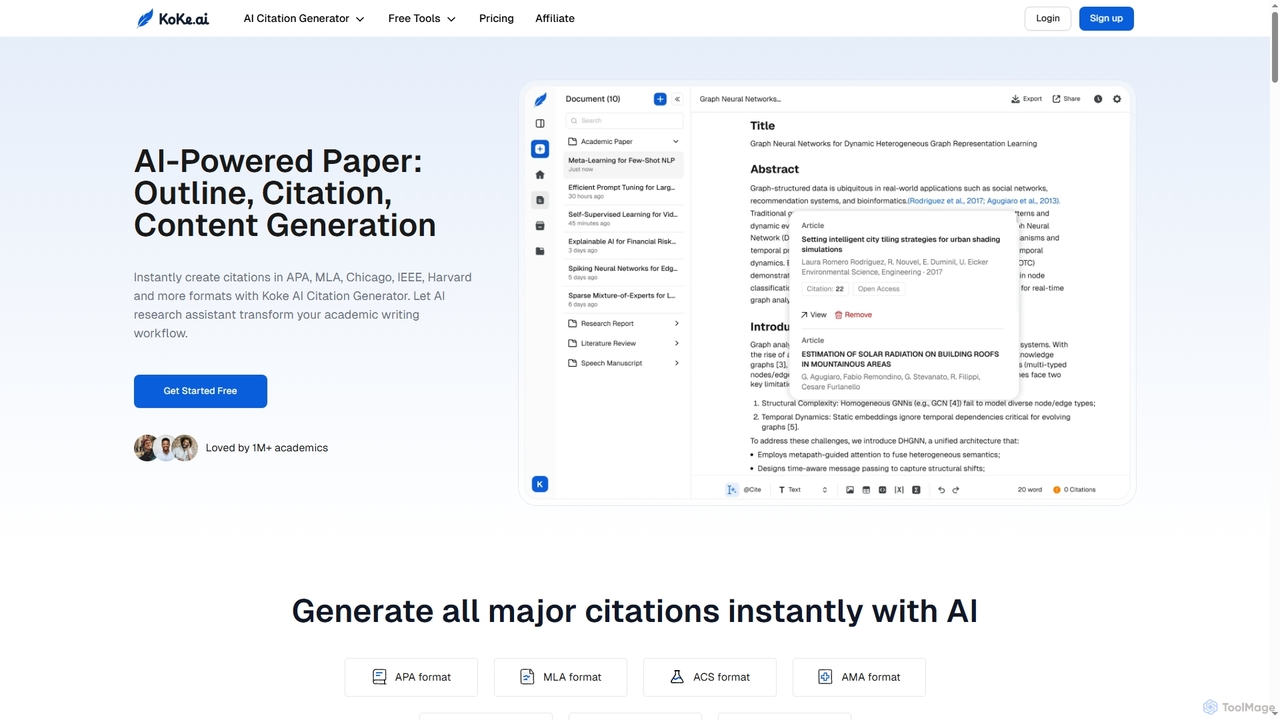
Koke is an AI-powered academic writing assistant that streamlines the entire paper creation process. It offers an instant …

9.2K

About Content Generation

Content Generation tools are AI-powered systems designed to automatically produce diverse forms of textual and multimedia content, often leveraging advanced natural language processing (NLP) and machine learning models. Within the broader context of academic writing, these tools specifically assist in drafting, expanding, and refining research papers, essays, and reports. They streamline the initial stages of content creation, helping users overcome writer's block and accelerate the production of high-quality, structured text.

Core Features

  • Automated Text Drafting: Generates initial drafts, sections, or entire articles based on user prompts and specified parameters.
  • Idea & Outline Generation: Assists in brainstorming topics, creating structured outlines, and expanding on core concepts for various content types.
  • Summarization & Expansion: Condenses lengthy texts into concise summaries or elaborates on brief points to create detailed content.
  • Paraphrasing & Rewriting: Rephrases existing content to improve originality, clarity, or adapt it for different audiences while maintaining meaning.
  • Style & Tone Adjustment: Modifies the writing style, tone, and formality to match specific requirements, such as academic, journalistic, or casual.

Use Cases

These tools are invaluable for academics, students, researchers, and professional writers who need to produce large volumes of text efficiently. They are used for accelerating literature reviews by summarizing papers, drafting initial sections of research proposals, generating structured outlines for dissertations, and rephrasing complex academic concepts for clarity in presentations or teaching materials.

How to Choose

When selecting a Content Generation tool, consider its accuracy in producing factually correct information, its ability to generate original and plagiarism-free content, and the level of customization it offers for style and tone. Evaluate its integration capabilities with existing writing workflows, the ethical guidelines it promotes for academic integrity, and its overall ease of use for complex tasks.

Content GenerationUse Cases

1

Drafting Research Paper Sections

Researchers can utilize content generation tools to produce initial drafts for specific sections of their academic papers, such as introductions, methodology descriptions, or discussion paragraphs. By inputting key concepts, data points, and desired arguments, the AI can quickly assemble coherent text, saving significant time in the preliminary writing phase and providing a structured starting point for further human refinement.

2

Generating Literature Review Summaries

Academics and students can leverage these tools to efficiently summarize multiple research articles, books, or reports for a comprehensive literature review. By feeding the AI relevant texts, it can extract key findings, methodologies, and conclusions, presenting them in a concise format. This accelerates the process of understanding existing scholarship and identifying gaps for new research.

3

Brainstorming Essay Topics & Outlines

Students and content creators often face writer's block when starting new projects. Content generation tools can assist by suggesting diverse essay topics based on a broad theme or generating detailed, structured outlines for academic papers, presentations, or articles. This helps in organizing thoughts, ensuring logical flow, and providing a solid framework before the actual writing begins.

4

Paraphrasing & Rephrasing Academic Text

To enhance originality, improve clarity, or avoid unintentional plagiarism, authors can use content generation tools to rephrase complex sentences, paragraphs, or even entire sections of academic text. The AI can suggest alternative phrasings while preserving the original meaning, making the content more accessible or suitable for different contexts, and aiding in proper attribution.

5

Creating Study Notes & Flashcards

Students can transform lengthy lecture notes, textbook chapters, or research articles into condensed study notes or interactive flashcards using content generation tools. The AI can extract essential information, define key terms, and formulate questions, thereby streamlining the revision process and making complex subjects easier to digest and memorize for exams or presentations.

6

Developing Grant Proposal Narratives

Researchers and project managers can employ content generation tools to draft compelling narratives for grant applications. By providing project objectives, methodologies, and expected outcomes, the AI can help articulate the proposal's value, impact, and feasibility in a structured and persuasive manner. This supports the creation of high-quality proposals that effectively communicate research goals to funding bodies.

Content GenerationFrequently Asked Questions