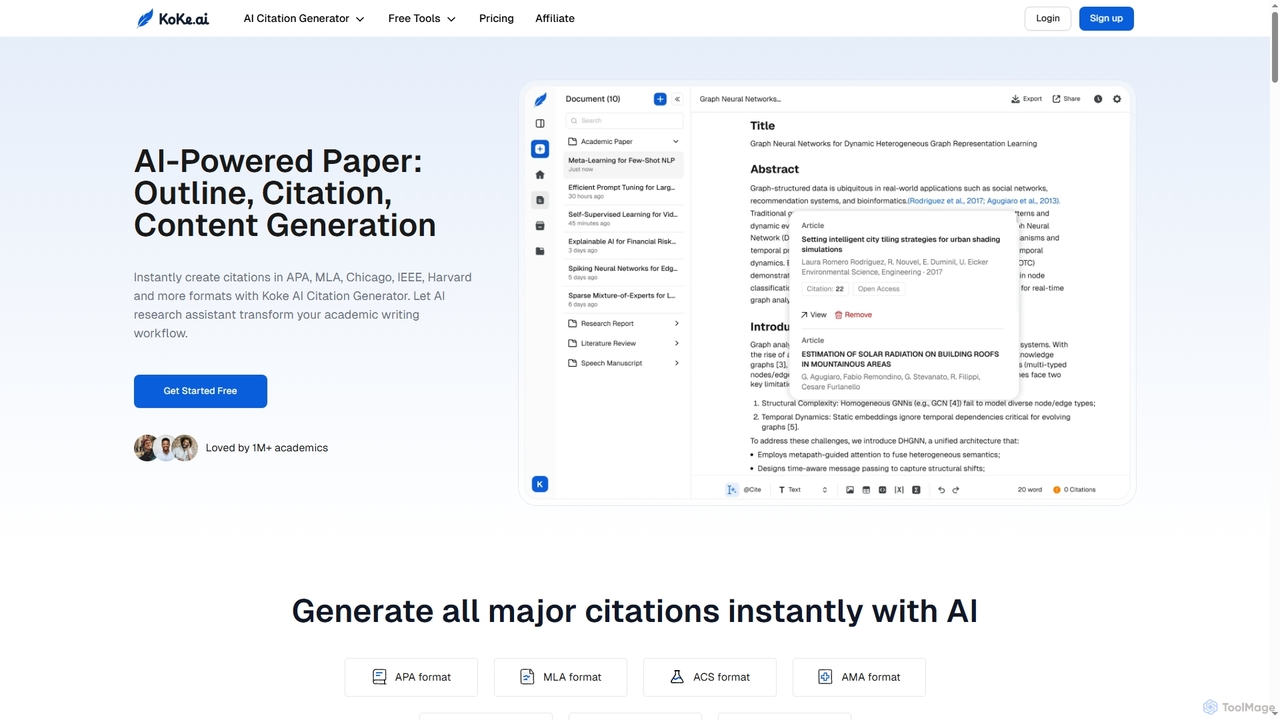
AI Research Assistants are specialized tools designed to automate and accelerate the process of gathering, understanding, and synthesizing academic information. Leveraging natural language processing (NLP), these tools scan vast databases of scholarly articles, summarize complex papers, and extract key data points. They are invaluable for students, academics, and R&D professionals who need to conduct thorough literature reviews and build a strong evidence base. Unlike general academic writing tools, their primary focus is on the discovery and analysis phase of research, not just the final composition.
Core Features
- Automated Literature Search: Efficiently finds relevant papers and articles from vast scientific databases.
- Intelligent Summarization: Condenses long research papers or multiple sources into concise, understandable summaries.
- Data Extraction & Synthesis: Identifies and collates key findings, methodologies, and conclusions from various texts.
- Citation Management: Automatically generates and formats citations in various academic styles like APA, MLA, and Chicago.
Use Cases
These tools are primarily used by PhD students, university researchers, and corporate R&D teams. Common applications include preparing comprehensive literature reviews for a thesis, writing evidence-based grant proposals, and conducting market intelligence by quickly analyzing scientific papers and technical reports.
How to Choose
When selecting an AI Research Assistant, consider the scope of its database access (which journals it covers), the accuracy of its summarization, its ability to integrate with reference managers like Zotero or Mendeley, and its support for your specific field of study.