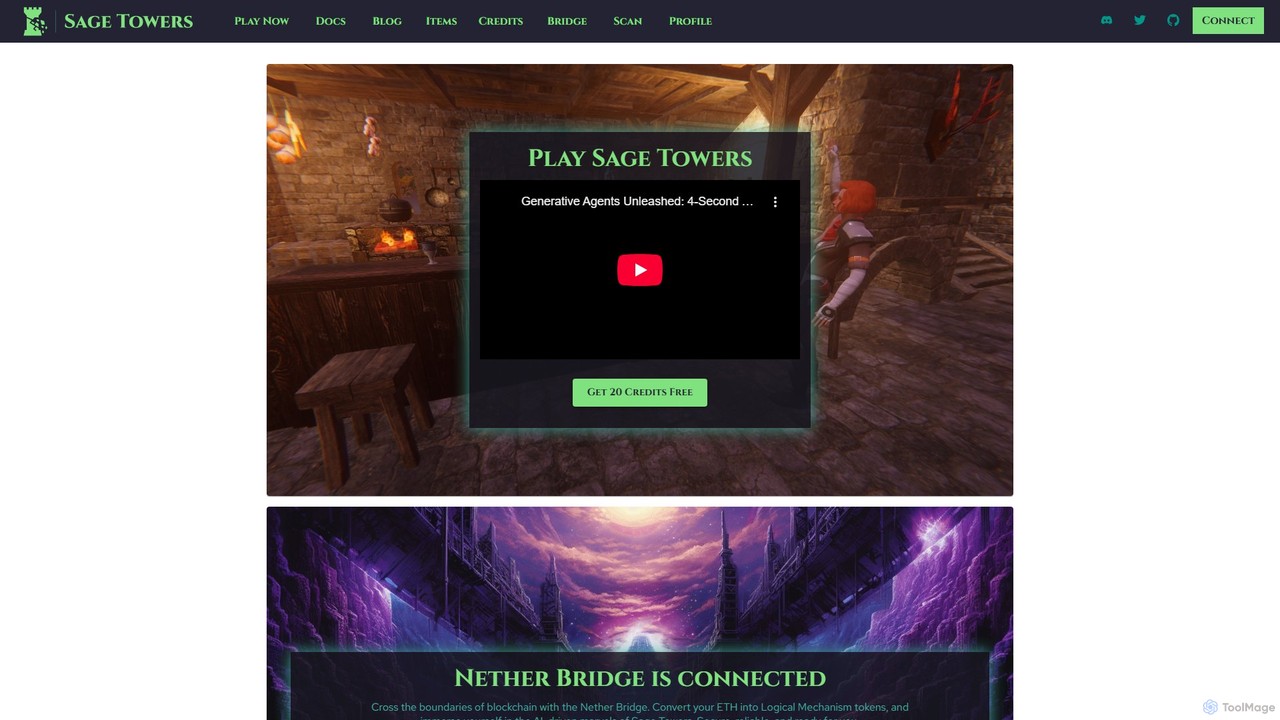
Sage Towers
Sage Towers is a revolutionary User-Generated MMO that merges AI-driven gameplay with blockchain technology. Players can interact with …
Sage Towers is a revolutionary User-Generated MMO that merges AI-driven gameplay with blockchain technology. Players can interact with 'living' NPCs through voice, create unique items using generative AI, and participate in a player-driven economy powered by the Logical Mechanism (LLM) token.
About Generative Art
Generative Art tools are AI-powered platforms that create novel artistic outputs, such as images, illustrations, and visual designs, from textual prompts or other input parameters. These tools leverage advanced machine learning models, including diffusion models and Generative Adversarial Networks (GANs), to synthesize unique visual content that often reflects specific styles or themes. They empower artists, designers, and enthusiasts to explore new creative frontiers, transforming abstract ideas into tangible digital artworks with unprecedented ease and speed, making complex artistic expression more accessible.
Core Features
- Text-to-Image Generation: Converts descriptive text prompts into unique visual artworks.
- Style Transfer: Applies the artistic style of one image to the content of another.
- Image-to-Image Transformation: Modifies existing images based on new prompts or parameters.
- Iterative Refinement: Allows users to fine-tune generated outputs through successive prompts or adjustments.
- Diverse Output Generation: Produces multiple variations of an artwork from a single input, offering creative options.
Use Cases
Generative Art tools are widely adopted across various creative industries. Graphic designers use them to rapidly prototype visual concepts for branding or marketing campaigns. Game developers leverage these tools for generating unique textures, character concepts, or environmental assets, accelerating the initial design phase. Digital artists and illustrators utilize them to explore new styles, overcome creative blocks, or produce large volumes of unique artwork for portfolios and exhibitions.
How to Choose
When selecting a Generative Art tool, consider the quality and diversity of its output styles, as some excel in photorealism while others specialize in abstract or painterly aesthetics. Evaluate the ease of use and the level of control offered through prompt engineering and customization options. Assess the available resolution and upscaling capabilities, as well as the licensing terms for commercial use. Finally, compare pricing models, including subscription costs and credit-based systems, to match your budget and usage frequency.

Generative ArtUse Cases
Concept Art for Game Development
Game artists and designers can input textual descriptions of characters, environments, or props into Generative Art tools. The AI then rapidly generates multiple visual concepts and stylistic variations, allowing the design team to iterate quickly on ideas, explore diverse aesthetics, and accelerate the initial conceptualization phase of game development, saving significant time compared to manual sketching.
Marketing Campaign Visuals
Marketing teams and content creators can leverage Generative Art tools to produce unique, eye-catching images for social media posts, advertisements, and website banners. By simply describing their desired themes, aesthetics, and product features, they can generate a wide array of visuals tailored to specific campaigns, enhancing engagement and brand appeal without the need for extensive photography or graphic design resources.
Personalized Digital Art & NFTs
Individual artists and collectors can generate one-of-a-kind digital artworks using Generative Art tools, often for sale as Non-Fungible Tokens (NFTs). These tools allow for the exploration of unique styles, themes, and artistic expressions without requiring traditional artistic skills, democratizing art creation and enabling a new wave of digital artists to produce and monetize their unique visions.
Fashion Design & Textile Patterns
Fashion designers can utilize Generative Art tools to visualize new garment styles, fabric patterns, or print designs based on textual descriptions or mood boards. This accelerates the ideation phase, allowing designers to quickly experiment with countless variations of colors, textures, and motifs, leading to innovative and unique collections that stand out in the competitive fashion industry.
Architectural Visualization & Interior Design
Architects and interior designers can generate conceptual renderings of buildings, rooms, or landscapes using Generative Art tools. By inputting parameters for materials, lighting, and stylistic preferences, they can quickly experiment with different design options, visualize complex structures, and present diverse aesthetic possibilities to clients, streamlining the early stages of project development and client feedback.
Storyboarding & Comic Book Creation
Illustrators and writers can utilize Generative Art tools to create visual panels or character poses from script descriptions, significantly streamlining the storyboarding process for comics, animations, or films. This allows for rapid visualization of scenes, experimentation with different compositions and character expressions, and a more efficient workflow from script to visual narrative, enhancing creative output.