Ai Lab Best in category 1 results Experimental Tools AI Tool

Popular AI tools in the Experimental Tools field of Ai Lab include Google Labs, etc., helping you quickly improve efficiency.

Free
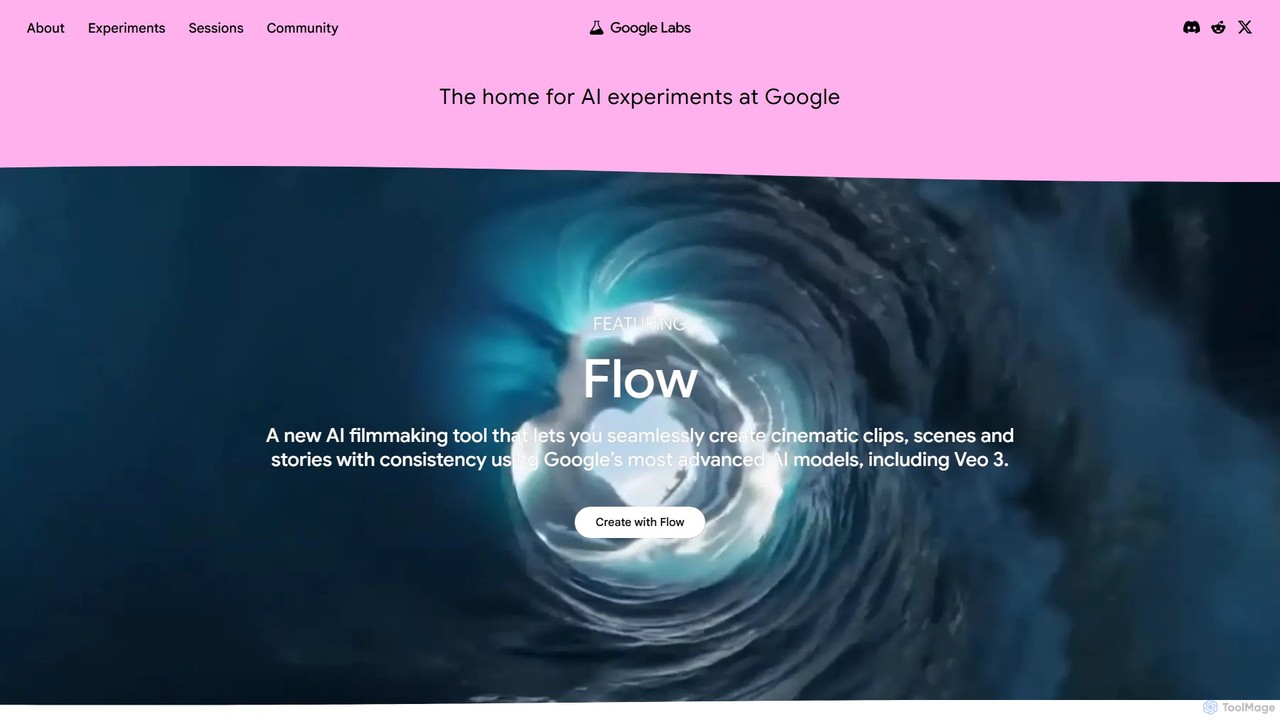
Google Labs

Google Labs

Google Labs is the official hub for Google's AI experiments, offering early access to a diverse range of …

62.0M

About Experimental Tools

Experimental Tools are a class of AI applications that showcase novel, cutting-edge, or unproven concepts. These tools often provide early access to the latest research models and algorithms, allowing users to explore the future possibilities of artificial intelligence. While they may lack the polish and stability of production-ready software, they serve as a crucial platform for innovation, feedback, and testing groundbreaking ideas. Their primary value lies in pushing boundaries and demonstrating what's next in AI development.

Core Features

  • Access to Novel Models: Interact with the latest AI architectures and algorithms, often before they are widely available.
  • Unique Capabilities: Explore functions and generate outputs that are not yet possible with mainstream tools.
  • Rapid Prototyping Environment: Quickly test new concepts and ideas without the need for complex setup or development.
  • Direct Feedback Channels: Users can often directly influence the development trajectory by providing feedback to researchers and developers.

Use Cases

These tools are primarily used by AI researchers, developers, creative technologists, and early adopters. They are ideal for academic research, prototyping futuristic products, exploring new forms of digital art, and testing the limits and safety of emerging AI models. They are less suited for mission-critical business operations that require high reliability.

How to Choose

When selecting an Experimental Tool, consider the specific technology or concept you wish to explore. Evaluate the tool's documentation, community support (like Discord or GitHub), and data privacy policy. Be prepared for potential instability, frequent updates, or even discontinuation. The best choice depends on your tolerance for risk and your goal of exploration over production efficiency.

Experimental ToolsUse Cases

1

Academic Research on AI Capabilities

An AI researcher uses an experimental language model to investigate emergent abilities, such as multi-step reasoning or theory of mind. They design specific prompts to test hypotheses about the model's internal mechanisms. The tool allows them to interact directly with a novel architecture, gathering data that would be impossible to obtain from more restricted, commercial APIs. This research contributes to a deeper understanding of how large models work and helps guide future development.

2

Prototyping a Next-Generation Application

A startup developer wants to build a proof-of-concept for an app that generates interactive 3D environments from text descriptions. Instead of building a model from scratch, they use an experimental text-to-3D tool. This allows them to quickly create a working demo to showcase to potential investors and test user reactions. While the tool is not stable enough for a final product, it validates the core concept and saves months of development time in the initial phase.

3

Exploring New Frontiers in Digital Art

A digital artist is looking for a unique aesthetic that cannot be achieved with mainstream AI image generators. They turn to an experimental image synthesis model known for its unusual and unpredictable outputs. By combining unconventional prompts and adjusting obscure parameters, the artist generates a series of images with a truly novel style. These pieces are then exhibited as examples of human-machine collaboration in exploring new creative territories.

4

AI Model Safety and Ethics Testing

An AI ethics auditor is tasked with evaluating a new type of model for potential biases and harmful outputs. They use an experimental tool that provides open access to the model's parameters and behavior. The auditor performs 'red teaming' by crafting adversarial prompts designed to elicit toxic or biased responses. The findings are compiled into a report that helps the model's developers identify and mitigate safety risks before a wider public release.

5

Hands-On Tech Journalism and Review

A technology journalist gains early access to an experimental AI tool that claims to generate coherent short stories. To write an in-depth review, they spend hours testing its capabilities with various genres and plot points. They document its strengths, such as creative world-building, and its weaknesses, like inconsistent character development. Their published article provides the public with a first look at a new technology, offering a balanced perspective on its current state and future potential.

6

Educational Exploration of AI Principles

A computer science student uses an experimental tool that visualizes the attention mechanisms within a transformer model. By inputting different sentences, they can observe how the model allocates 'attention' between words to understand context. This hands-on experience provides a more intuitive understanding of complex AI concepts than textbooks alone. It helps bridge the gap between theoretical knowledge and practical application, preparing them for a career in AI development.

Experimental ToolsFrequently Asked Questions