ToolMage
Sign in

Best 1 Ai Voice AI tools

Popular Ai Voice AI tools include ACE Studio, helping you work more efficiently.

ACE Studio
Freemium

ACE Studio

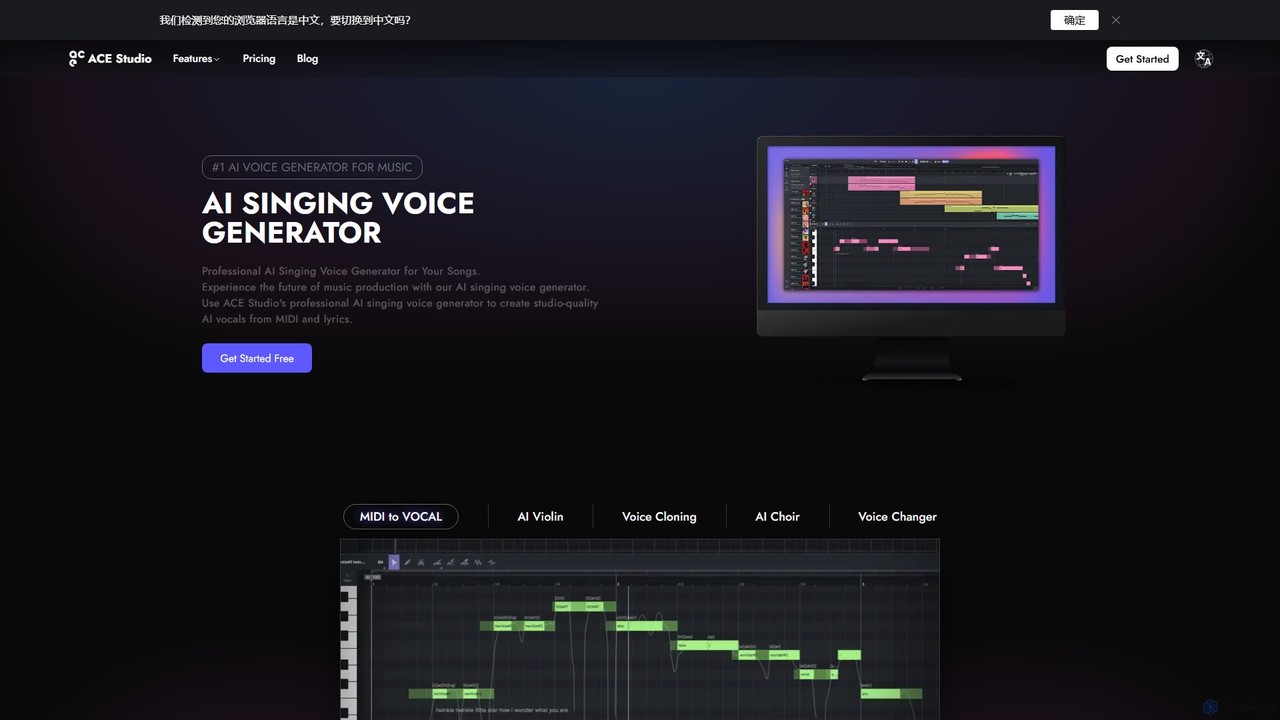
ACE Studio is a professional AI singing voice generator for music production. It allows users to create studio-quality, royalty-free vocals from MIDI and lyrics using a library of over 80 AI singers or by cloning their own voice. It features advanced vocal editing, a unique voice designer, a stem splitter, and seamless integration with DAWs via VST3/AU/AAX plugins.

Voice Synthesis
Visits 812.3KFavorites 148Likes 149

About Ai Voice

AI Voice tools are AI-powered applications that generate human-like speech from text or synthesize voices based on audio inputs. Leveraging advanced deep learning and neural network technologies, these tools convert written content into natural-sounding audio, often with customizable tones, emotions, and languages. They offer significant value by automating audio production, enhancing accessibility, and enabling personalized vocal interactions across various digital platforms.

Core Features

  • Text-to-Speech (TTS): Converts written text into natural-sounding spoken audio in various voices and languages.
  • Voice Cloning: Replicates a specific person's voice from a short audio sample, allowing it to speak new text.
  • Emotion & Style Control: Adjusts the emotional tone (e.g., happy, sad, angry) and speaking style of the generated voice.
  • Multilingual Support: Provides a wide range of languages and accents, enabling global content localization.
  • API Integration: Offers interfaces for developers to embed AI voice capabilities directly into their applications and services.

Use Cases

AI Voice tools are widely adopted by content creators, marketers, and developers. They are used for generating voiceovers for videos, podcasts, and advertisements, creating interactive voice assistants for customer service, and producing accessible audio versions of articles and e-learning materials. These tools streamline audio production workflows, reduce costs, and ensure consistent brand voice.

How to Choose

When selecting an AI Voice tool, consider the quality and naturalness of the generated voices, the breadth of language and accent support, and the available customization options for emotion and speaking style. Evaluate the pricing model based on your usage volume, assess API integration capabilities for seamless workflow, and check for ease of use and the availability of pre-built voices or voice cloning features.

Ai Voice use cases

1

Generate Professional Video Voiceovers

Content creators and marketers can use AI Voice tools to quickly produce high-quality voiceovers for explainer videos, marketing campaigns, and social media content. By simply inputting text, they can generate natural-sounding narration in various voices and languages, saving significant time and cost compared to traditional human voice actors, and ensuring consistent brand messaging across all video assets.

2

Create Engaging E-learning & Audiobook Content

Educators and publishers leverage AI Voice technology to transform written educational materials and books into engaging audio formats. This allows for the rapid creation of accessible e-learning modules, audiobooks, and interactive lessons, catering to diverse learning styles and visually impaired audiences. The ability to customize voices and tones enhances the overall learning experience.

3

Develop Interactive AI Assistants & Chatbots

Businesses integrate AI Voice tools into their customer service platforms to power natural-sounding virtual assistants and chatbots. This enables automated, conversational interactions with customers, providing instant support, answering FAQs, and guiding users through processes. The human-like voices improve user engagement and satisfaction, making automated interactions feel more personal.

4

Localize Content for Global Audiences

Companies expanding into international markets utilize AI Voice tools for efficient content localization. They can translate and generate voiceovers for videos, presentations, and marketing materials in multiple languages and regional accents. This significantly reduces the time and expense of reaching diverse global audiences, ensuring cultural relevance and broader market penetration.

5

Personalize Brand Communication with Voice Cloning

Brands and public figures can use voice cloning features to create a unique, recognizable AI voice that mirrors their own or a specific brand persona. This personalized voice can then be used across all digital touchpoints, from advertisements and podcasts to interactive experiences, fostering stronger brand identity and a more consistent, intimate connection with their audience.

6

Enhance Accessibility for Visually Impaired Users

Developers and content providers employ AI Voice tools to convert websites, documents, and digital content into spoken audio. This crucial application makes information accessible to individuals with visual impairments or reading difficulties, promoting inclusivity. Users can consume information audibly, improving their access to online resources and digital services.

Ai Voice FAQ

What are AI Voice tools?

AI Voice tools are software applications that use artificial intelligence, specifically deep learning and neural networks, to generate human-like speech from text (Text-to-Speech) or to synthesize new speech in a cloned voice. They aim to create natural, expressive, and often customizable audio outputs for various applications, from content creation to virtual assistants.

How do AI Voice generators work?

AI Voice generators typically work by taking text input and processing it through a neural network model trained on vast amounts of human speech data. This model learns patterns of pronunciation, intonation, rhythm, and emotion. For voice cloning, it first analyzes a short audio sample of a target voice to capture its unique characteristics, then applies these to new text inputs to synthesize speech in that specific voice.

What are the key benefits of using AI Voice technology?

The key benefits of AI Voice technology include significant time and cost savings in audio production, enhanced accessibility for visually impaired users and those with reading difficulties, and the ability to localize content quickly for global audiences. It also offers consistent voice branding, scalability for large-volume audio generation, and the flexibility to customize voices and emotions.

How do I choose the best AI Voice tool for my needs?

To choose the best AI Voice tool, evaluate the naturalness and quality of the generated voices, the range of languages and accents supported, and the available customization options for emotion and speaking style. Consider your budget and the tool's pricing model, check for seamless API integration if you need to embed it into existing systems, and assess the ease of use and the availability of specific features like voice cloning.

Can AI Voice tools replicate human emotions and nuances?

Modern AI Voice tools have made significant advancements in replicating human emotions and nuances. Many tools now offer features for emotion control, allowing users to specify tones like happy, sad, angry, or excited. While they may not perfectly capture every subtle human nuance, they can produce highly expressive and contextually appropriate speech, continuously improving with ongoing AI research and development.