Analytics Best in category 1 results Customer Insights AI Tool

Popular AI tools in the Customer Insights field of Analytics include Custocom, etc., helping you quickly improve efficiency.

Custocom

Custocom

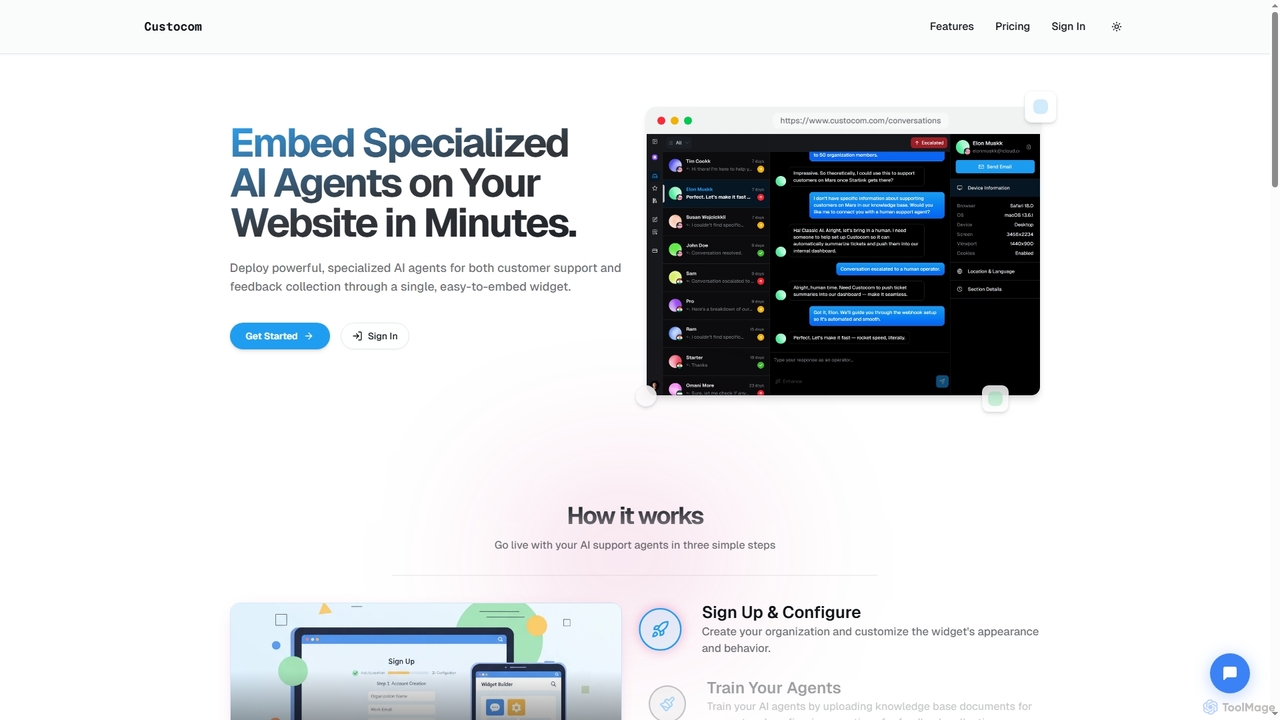
Custocom is an AI-powered B2B SaaS platform that integrates customer support and feedback collection into a single, easy-to-embed …

2.6K

About Customer Insights

Customer Insights tools are AI-powered solutions designed to analyze vast amounts of customer data, revealing patterns, preferences, and behaviors. These tools leverage machine learning and natural language processing to transform raw data into actionable intelligence, enabling businesses to make data-driven decisions. They provide a deeper understanding of the customer journey, from initial interaction to post-purchase feedback, optimizing strategies across marketing, sales, and product development.

Core Features

  • Sentiment Analysis: Automatically gauge customer emotions and opinions from text data (reviews, social media, surveys).
  • Predictive Modeling: Forecast future customer behavior, such as churn risk or purchase likelihood, using historical data.
  • Customer Segmentation: Group customers into distinct segments based on demographics, behavior, and preferences for targeted strategies.
  • Journey Mapping: Visualize and analyze customer touchpoints across various channels to identify pain points and opportunities.
  • Feedback Analysis: Extract key themes and insights from customer surveys, support tickets, and open-ended responses.

Use Cases

Businesses across various sectors utilize Customer Insights tools to enhance their understanding of their target audience. Marketing teams employ them to personalize campaigns and identify emerging trends, while product developers use insights to refine features and prioritize roadmaps. Customer service departments leverage these tools to proactively address issues and improve satisfaction.

How to Choose

When selecting Customer Insights tools, consider the breadth of data sources it can integrate (CRM, social media, web analytics), the depth of analytical capabilities (predictive, prescriptive), the ease of use and visualization features, and its scalability to handle growing data volumes. Data privacy compliance and integration with existing tech stacks are also crucial.

Customer InsightsUse Cases

1

Optimizing Marketing Campaign Personalization

Marketing managers use AI Customer Insights to analyze past purchase history, browsing behavior, and demographic data. This allows them to segment audiences precisely and tailor ad creatives and messaging for individual customer groups, significantly increasing conversion rates and ROI.

2

Predicting Customer Churn and Retention

Subscription-based businesses deploy Customer Insights tools to identify early warning signs of customer dissatisfaction or inactivity. By analyzing usage patterns, support interactions, and feedback, they can proactively engage at-risk customers with targeted offers or support, reducing churn and improving long-term retention.

3

Enhancing Product Development with User Feedback

Product teams leverage these tools to process large volumes of customer reviews, forum discussions, and support tickets. AI identifies common pain points, feature requests, and sentiment trends, providing data-backed insights to prioritize new features, fix bugs, and guide future product roadmap decisions.

4

Improving Customer Service Efficiency and Satisfaction

Customer service departments utilize AI to analyze interaction transcripts, call recordings, and chat logs. This helps identify recurring issues, agent performance gaps, and customer sentiment during interactions, leading to better training, optimized FAQs, and more personalized support experiences.

5

Identifying Emerging Market Trends and Opportunities

Market analysts use Customer Insights platforms to monitor social media conversations, news articles, and competitor activities. AI algorithms detect subtle shifts in consumer preferences, new product demands, and competitive threats, enabling businesses to adapt strategies and capitalize on new market opportunities ahead of rivals.

6

Mapping and Optimizing the Customer Journey

UX designers and customer experience specialists employ these tools to visualize the entire customer journey across multiple touchpoints, from initial discovery to post-purchase support. By pinpointing friction points and moments of delight, they can redesign interactions to create a smoother, more satisfying, and ultimately more loyal customer experience.

Customer InsightsFrequently Asked Questions