
getalpaca.io
getalpaca.io is a powerful AI plugin for Adobe Photoshop that integrates Stable Diffusion's image generation capabilities directly into …
getalpaca.io is a powerful AI plugin for Adobe Photoshop that integrates Stable Diffusion's image generation capabilities directly into your workflow. Create stunning visuals, concepts, and assets from text prompts without ever leaving Photoshop, streamlining your creative process.
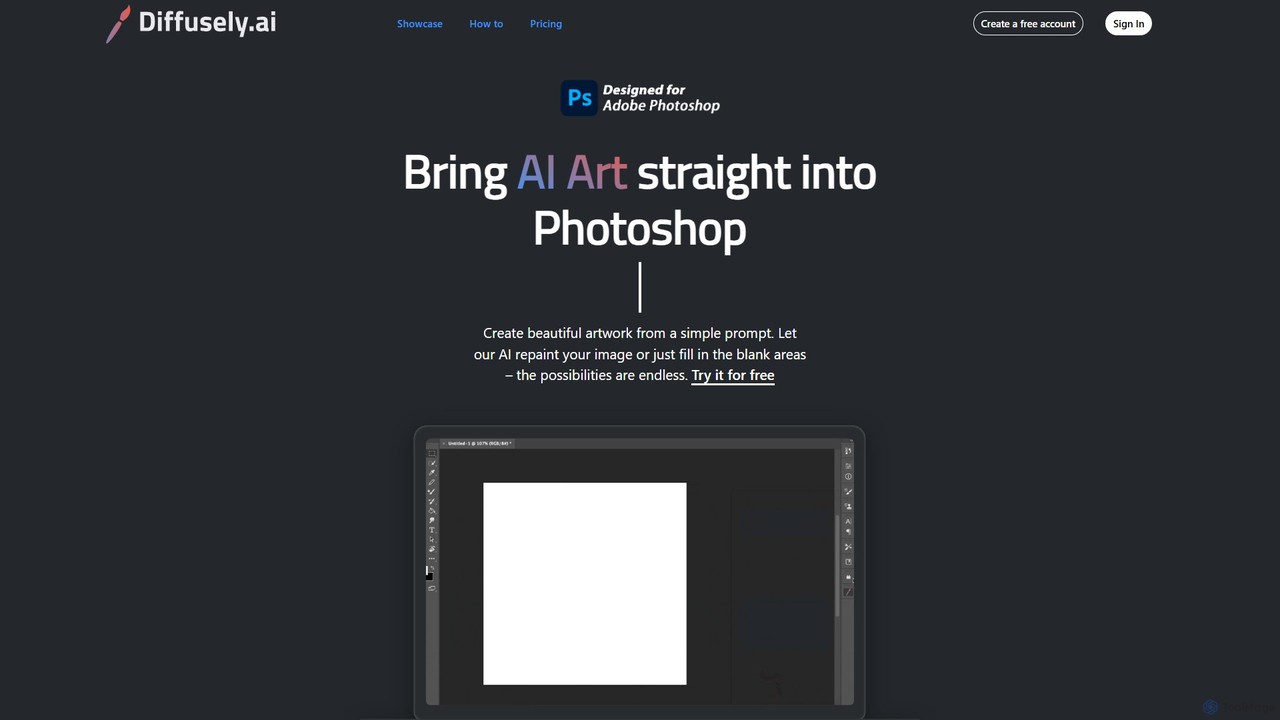
diffusely
An AI art generation plugin for Adobe Photoshop that allows you to create, edit, and enhance images directly …
An AI art generation plugin for Adobe Photoshop that allows you to create, edit, and enhance images directly within your workflow using simple text prompts. Ideal for artists, designers, and photographers.
About Generative Art
Generative Art tools are a class of AI applications that autonomously create unique visual artworks from algorithms and user inputs. They leverage complex models like GANs or diffusion models to translate text prompts, parameters, or even random data into novel images, patterns, and animations. These tools empower artists and designers to explore new creative frontiers, rapidly prototype visual concepts, and produce art that would be impossible to create by hand. Their core strength lies in generating endless variations and unexpected aesthetic outcomes from a single idea.
Core Features
- Algorithmic Creation: Generates artwork from text prompts, code, or specific parameters.
- Style Control & Transfer: Applies specific artistic styles or controls elements like color, composition, and texture.
- Iterative Variation: Produces numerous unique variations from a single prompt for creative exploration.
- High-Resolution Output: Exports artworks in formats suitable for digital display, print, or further editing.
- Parameter Manipulation: Allows fine-tuning of variables like randomness, detail level, and model version for precise control.
Use Cases
Generative Art tools are widely used by digital artists for concept art and inspiration, graphic designers for creating unique backgrounds and textures, and NFT creators for generating large-scale collections. They are also valuable for architects in early-stage visualization and for hobbyists seeking a new medium for creative expression without needing traditional drawing skills.
How to Choose
When selecting a Generative Art tool, consider the underlying AI model, as it heavily influences the aesthetic output. Evaluate the level of control offered over parameters—some tools are simple prompt-in, image-out, while others offer advanced settings. Also, check the supported output resolutions, the tool's policy on commercial use of generated images, and the pricing model (e.g., subscription vs. pay-per-generation credits).
Generative ArtUse Cases
Creating Concept Art for Video Games
A concept artist working on a new sci-fi video game needs to quickly generate a wide range of character designs. Instead of sketching dozens of variations by hand, they use a Generative Art tool. By inputting detailed text prompts like 'cyberpunk warrior, female, intricate chrome armor, neon-lit rainy city background, cinematic lighting,' the artist can produce hundreds of unique visual concepts in minutes. This allows the art director and team to review multiple styles and directions, significantly accelerating the pre-production phase and fostering greater creative exploration.
Generating Unique Textures and Patterns
A graphic designer is tasked with creating branding materials for a luxury brand that requires a unique, non-stock background pattern. Using a Generative Art tool, they can input prompts like 'abstract marble texture, gold veins, dark teal, seamless pattern.' The AI generates various high-resolution, tileable patterns. The designer can then fine-tune parameters like 'vein thickness' or 'color randomness' to achieve the perfect aesthetic, ensuring the final design is completely original and tailored to the brand's identity, avoiding generic stock imagery.
Producing Large-Scale NFT Collections
An NFT artist plans to launch a collection of 10,000 unique profile picture (PFP) characters. Manually creating each one is unfeasible. By using a Generative Art tool, often combined with scripting, they can define a base character and multiple layers of traits (e.g., hats, glasses, backgrounds). The tool then algorithmically combines these traits with varying rarities to generate the entire collection. This process ensures each NFT is unique while maintaining a cohesive artistic style, automating what would otherwise be months of manual labor.
Architectural and Interior Design Ideation
An architect is in the early stages of designing a modern residential building. To explore different facade styles quickly, they use a Generative Art tool. They can upload a basic 3D model or sketch of the building and apply prompts like 'facade in the style of Zaha Hadid, flowing organic curves, glass and white concrete' or 'brutalist facade, raw concrete, geometric patterns, minimalist windows.' This allows them to generate dozens of photorealistic visualizations in various architectural styles, helping them and their client to make design decisions much faster than traditional rendering methods would allow.
Creating Animated Visuals for Music Videos
A motion graphics artist is producing an abstract music video for an electronic music track. They use a Generative Art tool that supports animation features. By setting initial prompts and then defining how those prompts evolve over time (e.g., changing colors, morphing shapes, shifting camera angles), they can generate a long sequence of interconnected images. When played back, this sequence creates a fluid, dream-like animation that is perfectly synchronized with the music's progression. This method allows for the creation of complex visuals that would be incredibly time-consuming to animate frame by frame.
Designing Personalized Art for Home Decor
An individual wants a unique piece of art for their living room that matches their specific taste and color scheme. Instead of searching through galleries or print shops, they use a Generative Art tool. They can enter a prompt like 'large abstract painting, style of Mark Rothko, deep blues and burnt orange, textured canvas effect.' After generating a few options, they can select their favorite, have it rendered in high resolution, and send it to a local printing service to be put on a canvas. This provides a highly personalized and affordable way to acquire custom artwork that perfectly fits their interior design vision.